

Drivers of Vietnam-Malaysia trade
According to data from Vietnam Customs, in the first nine months of 2025, the total import and export turnover between Vietnam and Malaysia reached US$12.06 billion, an increase of 12.89% compared to the same period last year. Of this, exports reached US$3.89 billion, an increase of 1.3%, while imports reached US$8.18 billion, an increase of 19.37%. The trade balance continued to heavily favor Malaysia, with Vietnam's deficit reaching US$4.29 billion, an increase of 42.36% compared to the same period.
On the export side, the structure of Vietnamese goods exported to Malaysia continues to shift in a positive direction, linked to the advantages of the processing and manufacturing industries. Computers, electronic products, and components have risen to the top, accounting for 16.9% of total export value and showing a strong increase of 40% compared to the same period last year. Following closely behind is the machinery, equipment, tools, and spare parts group with a share of 9.6%, an increase of 21.9%. Notably, transportation vehicles and parts recorded a growth rate of 65.2%, indicating an expansion of the industrial supply chain between the two countries.
These growth figures are inseparable from the impact of the CPTPP. The deep tariff reductions according to the committed roadmap, along with transparent regulations on origin, technical standards, customs, etc., have given Vietnamese businesses a more favorable legal "runway" when accessing the Malaysian market. This is a key advantage compared to the period before the CPTPP came into effect, when many industries still faced high tariff and non-tariff barriers.
However, conversely, exports of many traditional Vietnamese goods to Malaysia, such as iron and steel, chemical products, and rice, continued to decline sharply, decreasing by 28.4%, 69.7%, and 53.3% respectively. This reflects both fierce competition in the market and the pressure to improve the quality, standards, and added value of Vietnamese goods in the increasingly stringent CPTPP arena.
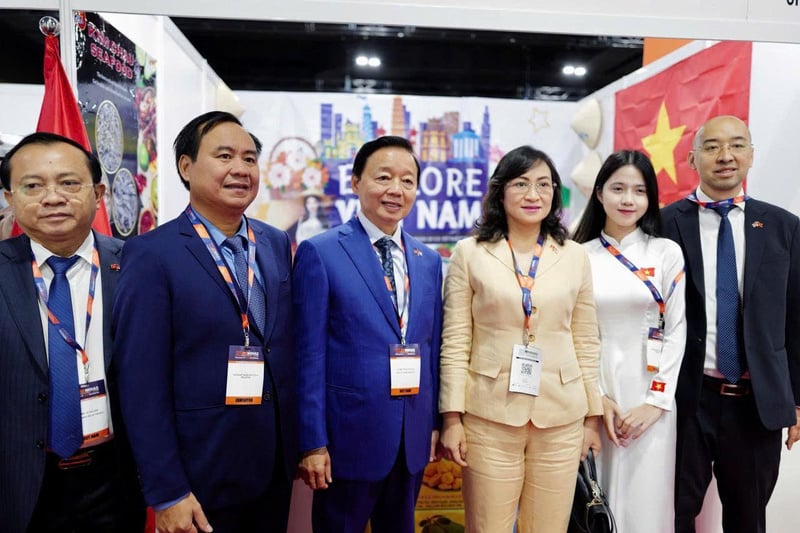
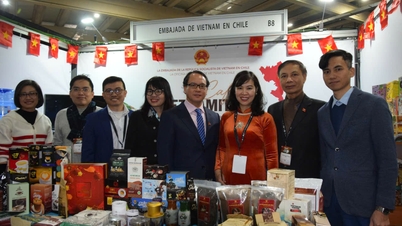
Deputy Prime Minister Tran Hong Ha, Deputy Minister of Industry and Trade Phan Thi Thang, along with representatives from various ministries and agencies, visited the booths of Vietnamese businesses participating in the Trade Fair.
According to a report by the Vietnam Trade Office in Malaysia, the Malaysian market is considered to have considerable purchasing power, diverse consumer demand, and many similarities in consumer culture with Vietnam. In particular, participation in numerous free trade agreements, including the CPTPP, has created a high degree of openness and relatively low barriers to entry for Vietnamese goods. Furthermore, Malaysia also faces domestic supply shortages for some essential goods such as rice and seafood – areas where Vietnam has a competitive advantage.
However, an open market also means intense competition. As a highly open economy , Malaysia imports goods from many countries such as China, Thailand, and Indonesia, forcing Vietnamese goods to compete directly on price, quality, and standards.
In particular, food products face significant barriers regarding Halal certification – while currently in Vietnam, only one non- governmental organization is recognized by JAKIM to issue this certification. This is a considerable bottleneck hindering the expansion of Vietnamese food products' market share in Malaysia.
Besides technical barriers, many Vietnamese businesses are hesitant to access the market due to differences in foreign languages and business culture; in some cases, they have even been victims of trade fraud due to not going through official verification channels. These limitations show that the CPTPP will only truly be effective when the integration capacity of businesses is raised accordingly.
Promoting brand building for businesses.
One of the highlights of Vietnam-Malaysia cooperation in recent times has been trade promotion activities, directly supported by the Trade Office system. In early October 2025, the Vietnamese Trade Office in Malaysia brought 21 Malaysian logistics companies to Vietnam to attend the World Congress of the International Federation of Freight Forwarders Associations (FIATA 2025), creating an important bridge for the logistics sector of the two countries. Following this, from October 16-19, 2025, the Trade Office participated with a booth at the Malacca International Halal Fair (MIHF 2025) – one of the largest Halal fairs in Malaysia.
These activities demonstrate that, for the CPTPP to truly flourish, it cannot remain merely a commitment on paper; it requires substantive promotional programs that closely align with market and business needs. The CPTPP's scope will only truly expand when Vietnamese goods are concretely present in distribution systems, trade fairs, and supply chains in partner countries.
Besides tariff and technical factors, the CPTPP also places Vietnamese businesses in a new competitive environment regarding branding and cultural values. Market insights show that, despite having comparable product quality, many Vietnamese brands are at a disadvantage due to limitations in packaging, design, and brand storytelling.
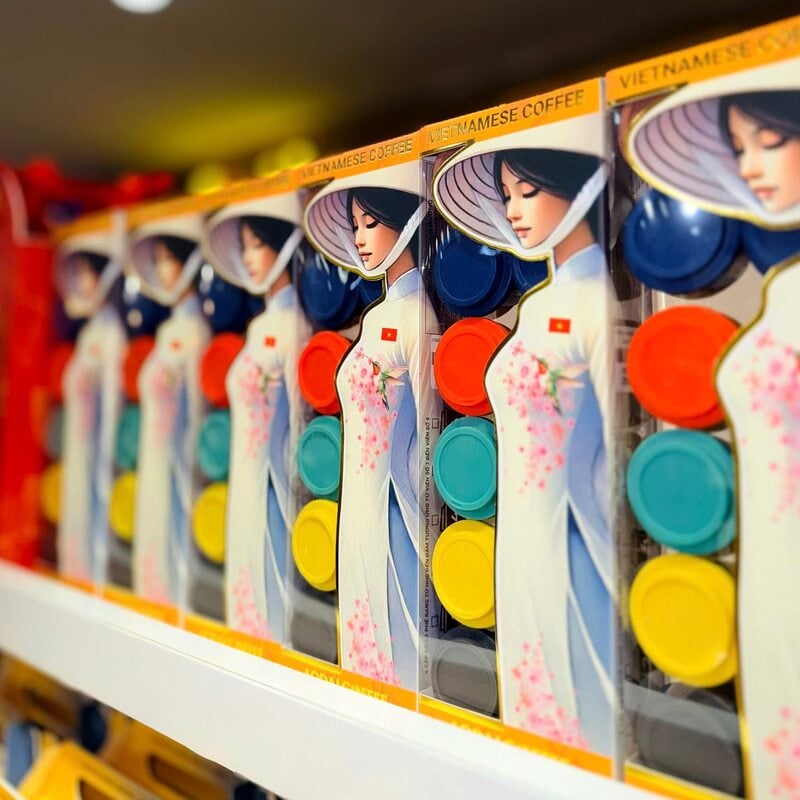
Aodai Coffee products conquered the Malaysian market not only with their quality but also with their brand story, telling the story of Vietnamese culture through their product packaging.
The story of Nonla Vietnam Global and its Aodai Coffee product is a prime example. Building a product image based on the cultural identity of the Aodai (Vietnamese traditional dress) has helped this brand make a strong impression in the Malaysian market. Mr. Nguyen Trung Chinh, Founder & CEO of NONLA Vietnam Global Co., Ltd., said that in the fiercely competitive retail environment, businesses only have "three golden seconds" to impress customers when they stand in front of the counter. When product quality is combined with a professional image and a clear story of cultural identity, Vietnamese goods can absolutely compete with international brands.
From the perspective of state management agencies, the First Secretary and Head of the Vietnamese Trade Office in Malaysia, Ngo Quang Hung, highly appreciated the creative ideas linking exports with cultural narratives, viewing this as a strategic direction to enhance the value of Vietnamese goods in the context of increasingly fierce global competition. Especially as Vietnam and Malaysia aim for a bilateral trade turnover of 20 billion USD by 2030, elevating brand value becomes even more crucial.
To achieve this goal, the Vietnam Trade Office in Malaysia recommends that Vietnamese businesses focus on very specific points: Thoroughly verify partners before transactions; prioritize exporting products with Halal certification; boldly invest in distribution channels, send samples, and participate in trade fairs; innovate product designs to suit local consumer tastes; and cooperate in displaying goods at the Trade Office's sample showroom.
In other words, the CPTPP has opened doors, but how wide those doors are depends largely on the capabilities of each individual business. Only when businesses master standards, branding, logistics, and product storytelling will the CPTPP truly become a "strategic leverage" for Vietnamese goods in Malaysia.
Source: https://moit.gov.vn/tin-tuc/cptpp-ho-tro-hang-viet-tang-hien-dien-tai-thi-truong-malaysia.html

















![[Video] The craft of making Dong Ho folk paintings has been inscribed by UNESCO on the List of Crafts in Need of Urgent Safeguarding.](https://vphoto.vietnam.vn/thumb/402x226/vietnam/resource/IMAGE/2025/12/10/1765350246533_tranh-dong-ho-734-jpg.webp)




















































Comment (0)