

Vietnamese goods are making strong progress in Chile.
In the Latin American region, Chile has emerged as one of Vietnam's leading partners. Not only was it the first country in the region to sign a free trade agreement with Vietnam in 2011, but Chile is also an active member of the Comprehensive and Progressive Trans- Pacific Partnership (CPTPP). Participation in the CPTPP has created a broad, stable, and in-depth framework for bilateral trade between Vietnam and Chile amidst a volatile global economy.
Together with the Vietnam-Chile Bilateral Free Trade Agreement (VCFTA), the CPTPP forms a strategic "pillar" for economic relations between the two countries. While the VCFTA laid the foundation early on, the CPTPP expands the scope of cooperation to a higher level, with extensive commitments on tariffs, services, investment, public procurement, state-owned enterprises, intellectual property, labor, and the environment.
Thanks to the strong tariff reduction commitments under the CPTPP, most of Vietnam's key export items to Chile now enjoy a 0% tariff rate. This is a particularly important competitive advantage for Vietnamese goods compared to many competitors in the Latin American market.
The effectiveness of the CPTPP is clearly reflected in trade figures. According to Chilean Customs data, in the first nine months of 2025, bilateral trade reached US$1.41 billion, an increase of 25.2% compared to the same period last year. Notably, Vietnam continues to maintain a large trade surplus with Chile, reaching nearly US$958 million, one of the highest surpluses Vietnam has achieved in the Latin American region today.
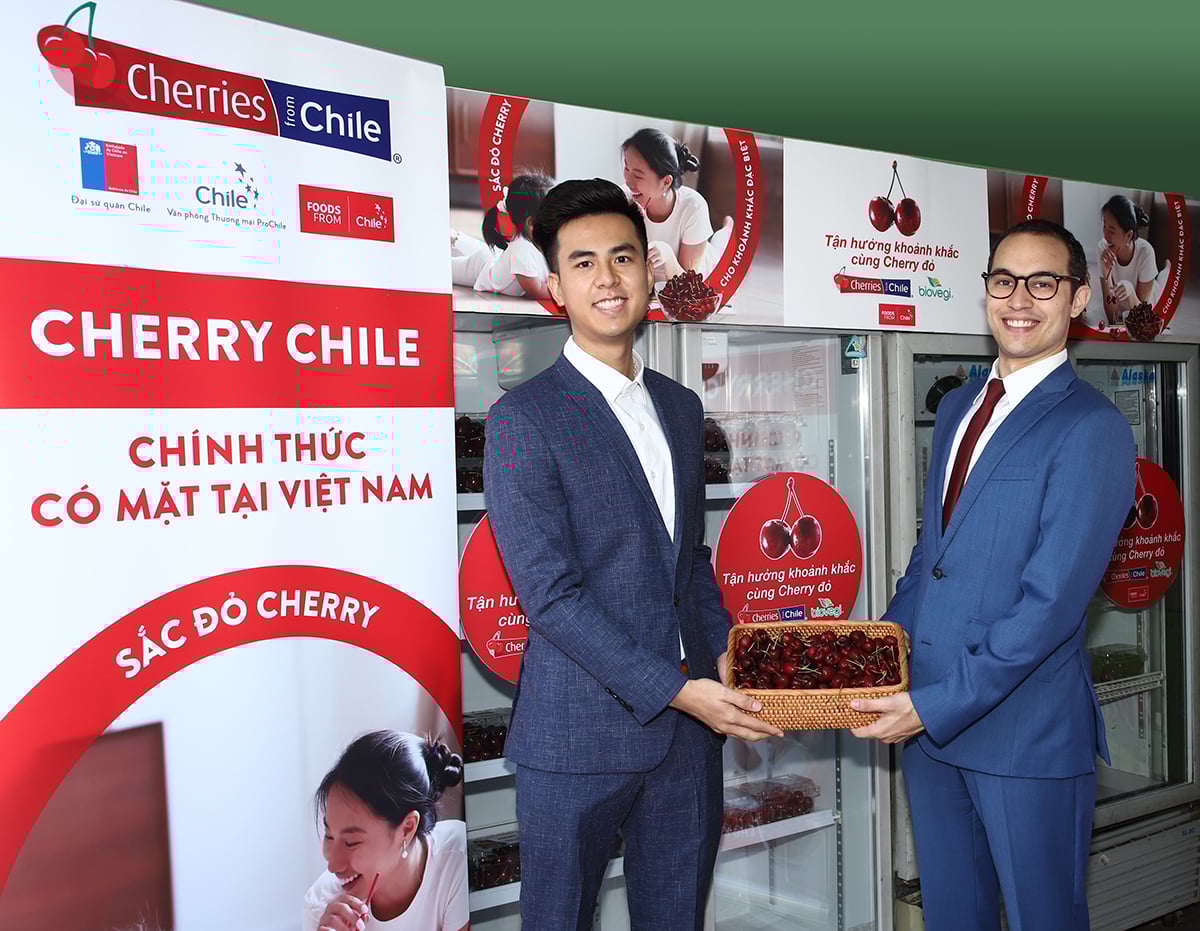
Cherry Chile is available in the Vietnamese market and has been well received by many consumers.
Of the total trade value mentioned above, Chile's imports from Vietnam reached US$1.18 billion, an increase of 31.5% compared to the same period in 2024. This figure even surpasses Chile's total imports from Vietnam for the entire year of 2024 and is significantly higher than the overall increase in Chile's imports from the world (which only increased by about 5.9%).
Vietnam has now risen to become the 12th largest supplier of goods to Chile, accounting for 1.8% of the country's total import market share. The main product groups that continue to play a "backbone" role in exports include: machinery and equipment, telephones, footwear, computer equipment, and textiles.
In particular, many items experienced very high growth rates, indicating significant market potential in Chile for Vietnamese goods: Electric motors and generators increased by 1,444.8%; chassis, bodywork, parts and accessories for motor vehicles increased by 513.7%; optical fibers and cables increased by 341.4%; refrigerators and freezers increased by 112.2%; tires increased by 109.6%; rice increased by 92.6%; and computers and components increased by 71%.
These figures show that not only traditional product groups but also industrial, electrical, electronic, mechanical, and processed agricultural products from Vietnam are expanding their market share strongly in Chile, with the CPTPP playing a key role as a crucial "tariff key".
Conversely, Chile's exports to Vietnam reached $224.87 million, mainly consisting of salmon, cherries, and sawn timber. Salmon continued to be the main export item, accounting for 31.7% of Chile's total export value to Vietnam.
Expanding export opportunities for Vietnamese goods.
Chile is a market with an import structure that is very well suited to Vietnam's production capacity. In 2024 alone, Chile imported approximately: $2.5 billion worth of footwear, $1 billion worth of textiles and garments, and $7.5 billion worth of food.
Meanwhile, Vietnam's market share in many categories remains modest: rice accounts for only 0.1%, furniture 2.9%, shrimp 2.5%, textiles 3.4%, and beverages and juices only about 1.9%... This shows that the market is still wide open; the challenge lies in the ability to organize production to meet standards, connect with markets, and take advantage of FTA preferences.
Besides consumer goods, Chile also has a huge demand for machinery and equipment for mining, agriculture, refrigeration, and freezer storage, with total imports of this group amounting to approximately US$14 billion per year. This is precisely the "low-lying area" where Vietnamese businesses can participate more deeply in Chile's industrial supply chain.
According to the Vietnamese Trade Office in Chile, the importance of the CPTPP lies not only in promoting exports, but also in opening up opportunities for two-way cooperation in raw materials, technology, and investment.
Because Chile is currently the world's largest exporter of copper, the second largest producer and exporter of lithium globally, and one of the leading renewable energy hubs in Latin America, Vietnam can increase its imports of sawn timber from Chile for furniture production, and import copper for the electronics industry, computer components, and equipment.
In particular, cooperation in the extraction and processing of lithium – a strategic raw material for electric vehicle batteries and digital devices – is opening a new direction in the long-term industrial cooperation between the two countries.
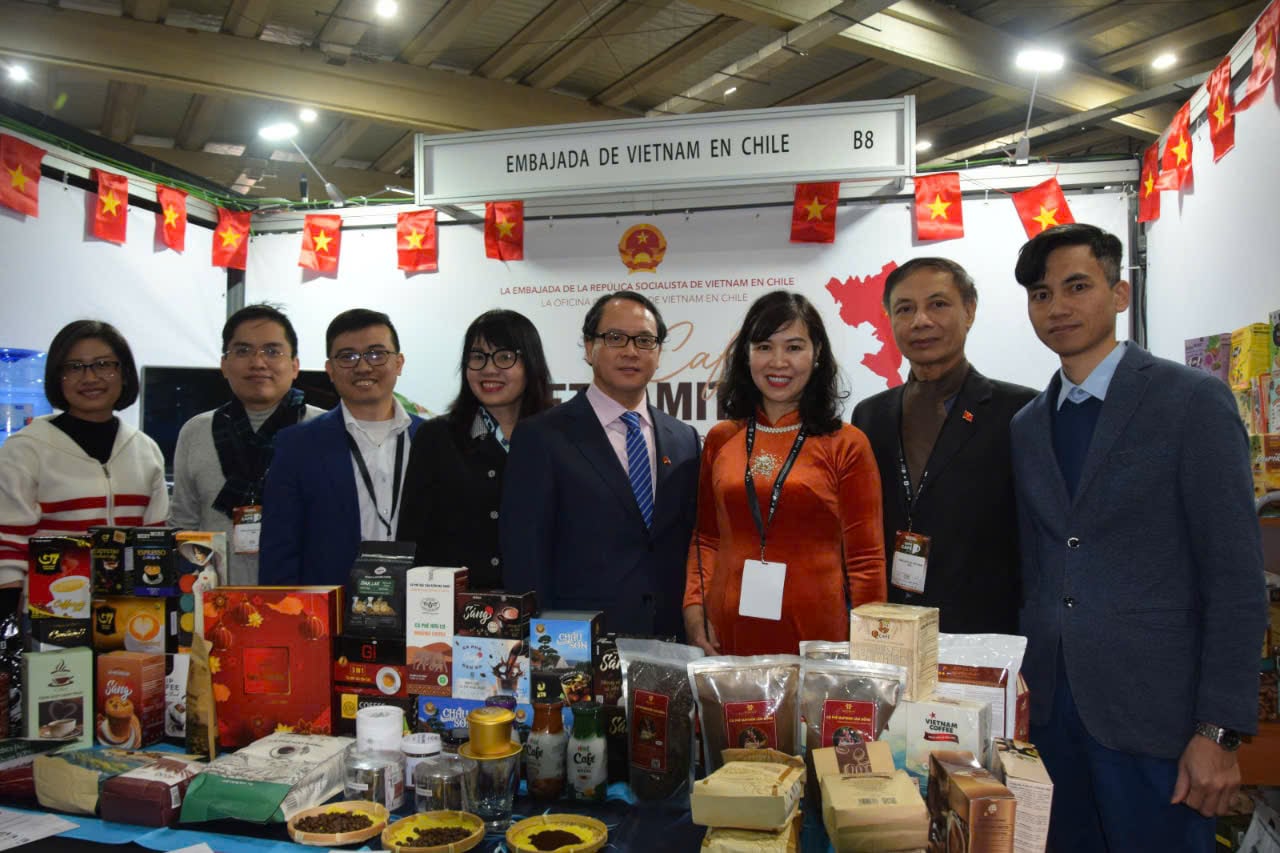
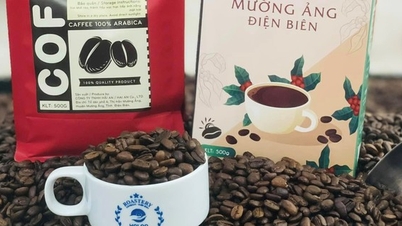
Vietnamese products will be showcased at Chile's largest coffee trade fair, Expocafé Chile 2025.
In the renewable energy sector, wind and solar power currently account for approximately 40% of Chile's total electricity production. The country is also a leader in the development of "green hydrogen," with the potential to produce up to 13% of global output. These are areas where Vietnam can learn from experience, cooperate in investment, and transfer technology, given the increasingly urgent need for energy transition.
One of the notable points in the current period is that Vietnamese goods can fully access the Chilean market through cross-border e-commerce. Chile is an open economy with a developed logistics system and an increasingly popular online shopping habit.
Platforms like Mercado Libre, Shein, Temu… are growing rapidly, with reasonably priced, traceable products and packaging that suit consumer tastes in Chile being the preferred choice. This presents a “new gateway” for Vietnamese businesses to reduce intermediary costs and directly access local consumers, especially for fast-moving consumer goods, processed agricultural products, textiles, wood products, and packaged foods.
Challenges that cannot be ignored
Despite the significant opportunities presented by the CPTPP, exports to Chile still face numerous practical obstacles. The biggest disadvantage is the geographical distance, resulting in long shipping times of 45-60 days and high logistics costs, directly impacting the competitiveness of Vietnamese goods, especially agricultural products.
At the same time, Chile also applies extremely strict quarantine, food safety, and traceability standards. Customs clearance and specialized inspections can take up to 1-2 months. This is a significant burden for small and medium-sized enterprises.
Competition in the Chilean market is also fierce, especially from China and countries in the Americas, which have advantages in geography, culture, and logistics. In addition, language barriers (Spanish) and the local distribution system also pose significant challenges for many Vietnamese businesses.
Despite numerous challenges, the reality shows that the CPTPP is playing a strategic role in promoting trade and investment between Vietnam and Chile. Not only does it help eliminate tariff barriers, but the CPTPP also creates a transparent and stable legal framework, giving businesses in both countries confidence to expand long-term cooperation.
In the context of Vietnam's efforts to diversify its markets and reduce dependence on traditional markets, Chile, along with other CPTPP countries in the Americas, continues to play a strategic role as a gateway for Vietnamese goods to penetrate deeper into the Latin American market.
Source: https://moit.gov.vn/tin-tuc/cptpp-nang-cao-suc-canh-tranh-cho-hang-viet-nam-tai-thi-truong-chile.html




















![[Video] The craft of making Dong Ho folk paintings has been inscribed by UNESCO on the List of Crafts in Need of Urgent Safeguarding.](https://vphoto.vietnam.vn/thumb/402x226/vietnam/resource/IMAGE/2025/12/10/1765350246533_tranh-dong-ho-734-jpg.webp)
































































Comment (0)