

To realize that vision, Vietnam is facing numerous challenges in energy, technology, institutions, finance, and human resources. In this journey, higher education institutions, with the Ho Chi Minh City University of Technology – Vietnam National University Ho Chi Minh City being one of the pioneering forces, play a particularly important role in research, training, and the transfer of solutions serving the green transformation.
Green transformation – restructuring the development model in the low-carbon era.
According to the National Strategy on Green Growth for the period 2021–2030, with a vision to 2050 (Decision No. 1658/QD-TTg dated October 1, 2021), green growth is defined as the process of innovating the growth model, restructuring the economy associated with improving environmental quality, efficiently using resources and energy, reducing greenhouse gas emissions, and moving towards a low-carbon economy and sustainable development.
With a vision extending to 2050, Vietnam strives to build a green, carbon-neutral economy. This means that green transformation is not merely about tightening environmental regulations, but rather a comprehensive restructuring of the socio-economic development model, encompassing production, consumption, spatial planning, and resource mobilization and allocation. Throughout this process, science , technology, and innovation are fundamental to enhancing productivity, reducing emissions, efficiently utilizing resources, and increasing the competitiveness of the economy.
The national strategy for green growth has systematically identified pillars of action. Greening the economy is considered central, through transforming production models, restructuring industries towards energy, water, and raw material conservation; developing environmentally friendly industries and products; and encouraging businesses to invest in clean technologies, renewable energy, and circular economy models. Greening lifestyles and sustainable consumption aims to foster a green consumption culture in society through policy tools such as eco-labeling, energy labeling, green public procurement, and community education and communication.
Furthermore, reducing the intensity of greenhouse gas emissions and increasing carbon sequestration capacity have been identified as key pillars for realizing the commitment to carbon neutrality by 2050.
The strategy emphasizes the strong development of renewable energy, the application of energy-saving technologies in production, transportation, and agriculture; gradually establishing a domestic carbon market and carbon credit mechanism, combined with reforestation and conservation of greenhouse gas-absorbing ecosystems. Greening infrastructure and urban areas is the material foundation of the transformation process, requiring the development of low-emission public transportation, smart cities – green cities, upgrading water supply and drainage systems, waste treatment, and technical infrastructure to adapt to extreme weather events.
Major "bottlenecks" on the path to green transition
To realize the objectives of the Strategy, Vietnam is facing numerous technical, institutional, and implementation capacity barriers.
The first challenge is that the energy structure remains heavily reliant on fossil fuels. To date, the majority of Vietnam's electricity production still comes from coal and natural gas; renewable energy sources such as offshore wind and green hydrogen are still in the pilot phase and lack stable long-term operating mechanisms. Given the continued increase in energy demand, ensuring energy security while reducing emissions is a very difficult task without breakthroughs in technology and mechanisms.
Technological performance in many key industries remains low compared to international standards. In the cement, steel, textile, and chemical industries, most businesses still use second-hand equipment or outdated technologies, consuming a lot of energy and emitting large amounts of pollutants. The number of businesses adopting advanced energy management systems is limited. Without attractive financial, tax, and credit mechanisms for green technology investment, the goal of "greening" key economic sectors will be very difficult to achieve.
The data gap and capacity for monitoring emissions are core technical challenges. Decree 06/2022/ND-CP has laid the foundation for operating a domestic carbon market, but implementation requires an accurate system for measuring, reporting, and assessing greenhouse gas emissions at the enterprise and local levels. In reality, data is currently fragmented, lacks standardization, and is still collected manually in many places. The lack of a unified data platform makes it very difficult to assess the effectiveness of emission reductions or carbon credit certification on a large scale.
Technical human resources for green technology industries are not meeting the demand. The need for personnel in renewable energy, green materials, environmental management, and carbon measurement is rapidly increasing, but the university and vocational training systems are only partially meeting it. Many training programs stop at introducing concepts, failing to adequately focus on practical skills and international technical standards. The gap between the demand for human resources for green transformation and the supply capacity of the education and science and technology system means that the implementation of renewable energy, waste treatment, and green urban projects often relies on foreign experts.
The green finance mechanism is still in its nascent stage. The proportion of green credit in total outstanding loans remains low; the issuance of green bonds and carbon certificates is still in the testing phase. The system of criteria for evaluating green projects is not yet unified and not closely aligned with international standards, limiting the ability to attract foreign capital. The lack of industry data on emission avoidance costs and climate risks also makes assessing green finance risks difficult.
Another challenge is the institutional framework and multi-sectoral coordination mechanisms. Green transformation is an interdisciplinary and inter-regional process, but the current coordination mechanisms are fragmented; strategies and plans at the ministerial and sectoral levels are sometimes inconsistent, even overlapping. Without a sufficiently strong coordinating institution, the implementation of policies, data sharing, and monitoring of results are unlikely to achieve the desired effectiveness.
These challenges demonstrate that green transformation is not merely a technological or financial issue, but a comprehensive one encompassing institutions, human resources, and governance capacity. An interdisciplinary approach, with science, technology, and higher education at its center, is a prerequisite for resolving the current bottlenecks.
Ho Chi Minh City University of Technology: From laboratories to solutions for the green economy.
In this context, higher education institutions, especially engineering schools, play a crucial role in generating new knowledge, new technologies, and green human resources. Ho Chi Minh City University of Technology – Vietnam National University Ho Chi Minh City has recently developed and implemented many key research directions, forming a research and innovation ecosystem linked to the country's green transformation.
In the field of green energy, the University's research groups focus on renewable energy solutions, clean energy, and emission management. The National University's A-level research project, "Research on CO₂ storage solutions in the geological formations of oil and gas fields in Vietnam" (2024–2026), analyzes the potential application of carbon capture and storage (CCS) technology in basins such as the Cuu Long basin, opening up a direction for combining CCS with enhanced oil extraction, bringing both economic benefits and contributing to emission reduction. A collaborative project with a Japanese partner on geothermal heat pumps, tested right on the University campus, shows the ability to save nearly a quarter of energy compared to conventional cooling systems, suggesting the potential for widespread application in tropical cities.
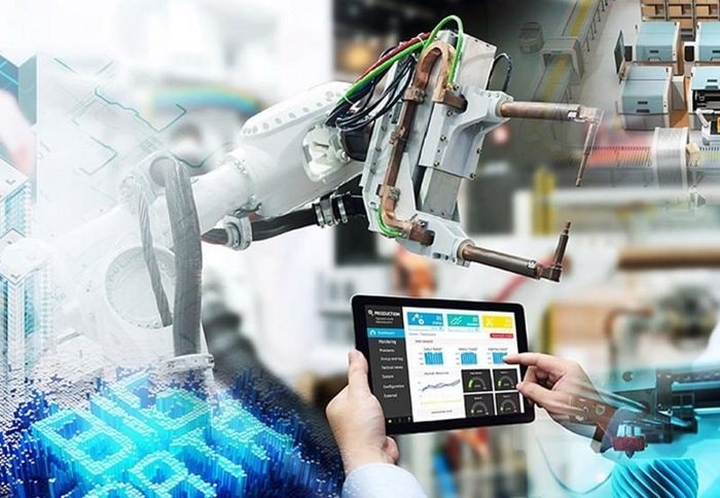
Projects in collaboration with GIZ (Germany) have supported the assessment and improvement of Vietnam Electricity Group's database for operating a grid with a high proportion of rooftop solar power, aiming towards a smart distributed grid model. They have also proposed a quality standard framework for the photovoltaic industry, contributing to the development of a national technical standards system for renewable energy. The clean grid model on a farm scale in the Vietnamese Farm Clean Microgrid project, combining solar power, biogas, and recycled batteries, demonstrates the potential to provide a stable, low-cost power source and reduce emissions in rural areas. The DV-WIND project, in collaboration with a Danish partner, is developing a geotechnical map of the seabed to support offshore wind power planning, contributing to a sustainable wind energy development strategy.
In the field of green production and sustainable materials, the School's research groups are pursuing various approaches linked to the circular economy. The "Carbon Budgets of Tropical Coastal Ecosystems" project studies the CO₂ absorption and conversion capacity of tropical coastal ecosystems, particularly the Can Gio mangrove forest, thereby providing a scientific basis for ecosystem conservation and the development of green biochar technology. Research focuses on enhancing H₂S adsorption in biogas from industrial sludge, and the production of blue-green and green algae with the goal of utilizing greenhouse gases, creating high-value biological products, and contributing to the development of low-carbon, even negative-carbon, production cycles.
In the field of materials science, research topics on self-healing polymers, organic fluorescence sensors, and nanocarbon-coated composite nanofiltration membranes have shown potential applications in water treatment, biological extraction, and environmental monitoring. Research on the formulation and production line of non-fired bricks from fly ash and industrial slag has successfully developed a standard-compliant building material, utilizing industrial waste and thereby reducing CO₂ emissions in the construction industry.
These research findings are not only academically valuable, but more importantly, they have the potential to be translated into concrete solutions for businesses, localities, and industries. When linked to innovation activities, technology incubators, spin-off businesses, and pilot models, research products from universities can be put into practice more quickly, creating sustainable financial resources for R&D activities and directly contributing to the green transformation process.
Science and technology – the strategic "engine" of green transformation.
Green transformation is a long and complex journey, requiring a synchronized combination of institutional improvement, resource allocation, governance model innovation, and the effective use of science and technology. For Vietnam, achieving the commitment of net zero emissions by 2050 can only be accomplished if it is accompanied by strong investment in science and technology infrastructure, an innovation ecosystem, and the development of high-quality human resources.
In this context, the Ho Chi Minh City University of Technology – VNU-HCM in particular, and higher education institutions in general, need to continue to play a pioneering role in several directions: building interdisciplinary laboratories, simulation facilities, and data platforms to serve research and testing of Net Zero technology; strengthening tripartite cooperation between universities, businesses, and localities to implement pilot models on renewable energy, waste treatment, and green production; developing training programs for "green" human resources that meet international standards; promoting international cooperation and participating more deeply in regional and global research programs and networks to mobilize resources for sustainable development goals.
With that orientation, the University of Technology – VNU-HCM aims to become one of the leading science and technology centers in Vietnam and the region in the fields of energy, environment, and green production, contributing to the country's commitment to achieving net-zero emissions by 2050. Green transformation is a major challenge, but also an opportunity for Vietnam to break through through knowledge, technology, and innovation. Science and technology, if properly organized and invested in, will truly become the "main engine" driving the economy onto a path of green, inclusive, and sustainable growth.
Source: https://mst.gov.vn/chuyen-doi-xanh-go-nut-that-va-phat-huy-vai-role-dau-tau-cua-khoa-hoc-cong-nghe-197251210181747433.htm
















![[Video] The craft of making Dong Ho folk paintings has been inscribed by UNESCO on the List of Crafts in Need of Urgent Safeguarding.](https://vphoto.vietnam.vn/thumb/402x226/vietnam/resource/IMAGE/2025/12/10/1765350246533_tranh-dong-ho-734-jpg.webp)























































Comment (0)