

The "three-party" linkage – a key driving force for the Mekong Delta to break through in the era of innovation.
The Mekong Delta, with over 17.3 million inhabitants and approximately 4.1 million hectares of natural area, has long been considered the "pillar" of the country in terms of agriculture , food security, and agricultural exports.
The reorganization of provincial-level administrative units according to Resolution No. 202/2025/QH15 is opening up opportunities for localities in the region to collaborate on a more unified scale, especially in areas requiring inter-regional coordination such as science and technology (S&T), innovation, and digital transformation.
In the national development landscape, after nearly 40 years of reform, the Party has determined that Vietnam is entering a "national leap forward era" with the goal of becoming a developed, high-income country by 2045. To achieve this goal, Resolution No. 57-NQ/TW (December 22, 2024) emphasizes science and technology, innovation, and digital transformation as strategic breakthroughs, placing people and businesses at the center, scientists as key factors, and the State playing a leading and facilitating role.
The "three-party" linkage model—the State, schools (research institutes), and businesses—is affirmed with the principle of "joint design, joint implementation, and joint sharing." Simultaneously, Resolution No. 68-NQ/TW on the development of the private economy and the Law on Science, Technology, and Innovation 2025 further institutionalize the view of building an innovation system centered on businesses, closely linked with research institutes, schools, and management agencies.
For the Mekong Delta, a region still lagging behind in scientific infrastructure, high-quality human resources, and business scale, implementing the spirit of Resolution 57 depends heavily on genuine cooperation among these three entities.
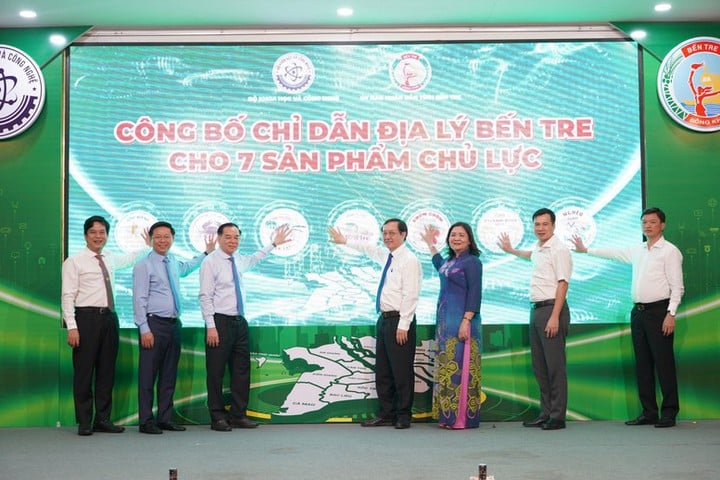
In recent times, localities in the region have proactively implemented central government resolutions on science and technology, innovation, and digital transformation. Many provinces and cities, such as Can Tho and Vinh Long, have issued science and technology development programs, built digital transformation portals, supported startups, and promoted technology trade. The telecommunications infrastructure has developed strongly, and the percentage of businesses using the internet has reached a high level, creating a favorable foundation for digital transformation.
However, policy implementation remains fragmented and largely driven by initiatives. Each province implements policies in its own way, lacking a sufficiently strong regional coordination mechanism to allocate resources, define responsibilities, and avoid duplication. The budget for science and technology is limited, while the procedures for granting, reviewing, and settling research funding remain cumbersome, creating difficulties for both scientists and businesses.
The university system in the Mekong Delta has strengths in research on agriculture, fisheries, environment, and climate change.
Numerous research projects have been implemented, along with programs to promote innovative entrepreneurship such as the Mekong Delta Research Institutions Alliance and the INNOBE competition.
However, the gap in links with businesses remains significant. Many research topics are still heavily academic, lacking a foundation in real-world problems. The commercialization of research results is limited, with most products remaining at the level of reports and scientific papers. Training programs are still heavily theoretical, leaving students without practical experience; and the incentive mechanisms are not strong enough to retain talented experts, leading to a brain drain.
Businesses, the central actors in the innovation ecosystem, are also facing numerous obstacles. While some bright spots have emerged in the application of IoT, management software, and digital technology in agriculture and aquaculture, businesses in the Mekong Delta region are generally small in scale, have weak financial capacity, and invest little in systematic R&D and digital transformation. A reluctance to innovate, a lack of long-term strategies, and limited cooperation with universities mean that the three stakeholders (farmers, scientists, businesses, and research institutions) remain on separate paths, failing to form a sufficiently strong interconnected ecosystem.
To change this situation, many experts believe that the Mekong Delta needs four fundamental groups of solutions. First, it is necessary to build specific mechanisms and policies and establish a regional "conductor" to coordinate innovation and digital transformation efforts.
A regional innovation council or steering committee, headed by Can Tho or a central locality, will help coordinate resources, unify programs, and act as a focal point for businesses and scientists to access policies. Tax incentives, credit, and regional public-private venture capital funds will encourage research and technology transfer activities.
Simultaneously, universities and research institutions need to transform themselves into "solution centers" for local communities and businesses. Training must be more closely linked to business needs; each key research project should have business partners and specific commercialization goals. Mechanisms for autonomy, collaboration with businesses, expansion of startup incubators, and incorporating revenue from technology transfer into the criteria for evaluating scientists are all necessary and should be strongly implemented.
From the business perspective, the mindset must change: innovation is not the exclusive privilege of large corporations, but a path to survival. Consulting programs, training, green credit support, organizing "Technology-Business Day" forums, and building online technology exchange platforms will help businesses access suitable solutions.
Ultimately, digital and data infrastructure must be considered strategic infrastructure, just like transportation or energy. The region needs to build a shared data platform for agriculture, fisheries, environment, population, and businesses, based on open data, standardized connectivity, ensuring security while being convenient for universities and businesses to utilize. A risk-sharing fund for new technology projects will empower businesses and scientists to boldly experiment.
In the context of the entire region undergoing organizational and development model transformation, Can Tho, a driving force, is expected to become the "innovation capital" of the Mekong Delta: a hub for regional research centers, venture capital funds, technology exchanges, startup spaces, and a bridge connecting with Ho Chi Minh City, Hanoi, and major scientific centers in the region.
Successfully implementing Resolution 57-NQ/TW in the Mekong Delta is not just about slogans or strategies on paper, but is demonstrated in concrete results: research contracts between businesses and universities; scientific projects commercialized into products; student startups succeeding from research results; and farmers benefiting from digital solutions and technology consulting services.
When the State creates opportunities, schools provide support, and businesses dare to innovate, the linkage of these "three stakeholders" will become a powerful driving force helping the Mekong Delta to break through and make a worthy contribution to the country's journey into a "new era of development".
Source: https://mst.gov.vn/lien-ket-ba-nha-o-dong-bang-song-cuu-long-chia-khoa-thuc-hien-nghi-quyet-57-nq-tw-197251210193803117.htm
















![[Video] The craft of making Dong Ho folk paintings has been inscribed by UNESCO on the List of Crafts in Need of Urgent Safeguarding.](https://vphoto.vietnam.vn/thumb/402x226/vietnam/resource/IMAGE/2025/12/10/1765350246533_tranh-dong-ho-734-jpg.webp)





















































Comment (0)