

In recent years, concepts such as "green transition," ESG, carbon neutrality, Net Zero, greenhouse gases, and climate change have appeared increasingly frequently in the media and in socio- economic life. This trend has become even more pronounced as the Party and State have issued numerous resolutions, strategies, and major policies oriented towards green and sustainable development, in line with global trends.
Public awareness campaigns have contributed to raising social awareness, but in reality, there are still many misconceptions about the concept, understanding, and especially concerns within the business community, particularly small and medium-sized enterprises, and those in the agricultural and rural sectors. The biggest challenge today is mobilizing financial resources and selecting appropriate technological solutions to fulfill ESG obligations, reduce greenhouse gas emissions, and simultaneously meet international market pressures and domestic development requirements.
According to the Institute for Planning and Development Research, if green transition and ESG are only viewed as a cost burden, and remain merely calls for responsible action, then the goal of net zero emissions by 2050 will be very distant. In particular, from 2026, mandatory ESG and carbon emission reporting requirements for goods exported to major markets such as the EU, Japan, South Korea, China, and the Middle East will become a significant challenge for Vietnamese businesses. Failure to adapt will threaten the export targets of $70 billion for agricultural products by 2026 and $100 billion by 2030, while international aviation and maritime transport will also face pressure to achieve carbon neutrality.
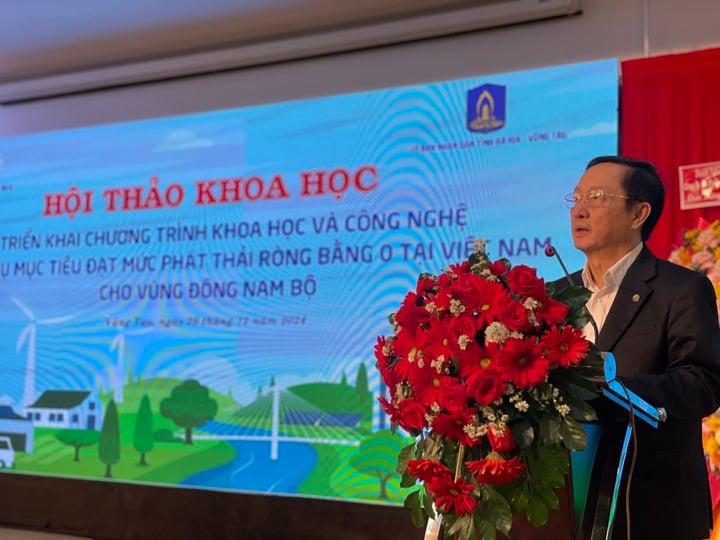
In this context, the establishment of the Vietnam Green Transformation Association is considered a significant step. The founding members are urgently completing the procedures for the Association to soon become operational, serving as a central hub to gather the intellect, technology, and resources of scientists , inventors, research institutes, universities, and businesses both domestically and internationally, forming a core force to support the government on its green transformation journey.
It can be seen that digital transformation and green transformation can be likened to two "new engines" of the economy, each of which, if properly utilized, can contribute approximately 1% to GDP growth annually. This forms the basis for Vietnam to aim for double-digit growth in the coming years, provided it has a strategic vision, makes the right choices, and acts promptly and decisively. Therefore, green transformation should not only be viewed as a challenge, but also as an opportunity for businesses to enhance their competitiveness, increase value added to global green supply chains, and thereby make a practical contribution to the country's sustainable growth.
Analysis shows that belief in the green transformation process is not based on sentimental optimism, but on solid foundations. Many new, groundbreaking technological solutions have emerged globally and in Vietnam, readily accessible and applicable to businesses, creating momentum for breakthroughs in the digital and green development era. The key is to "connect correctly" between technology and market demand, and between the supply of innovation and specific production and business sectors.
At the event commemorating the first anniversary of Vietnam's Innovation Day on October 1, 2025, held at the National Innovation Center (NIC), General Secretary To Lam emphasized the need for the State to proactively create domestic and international markets for scientific and technological products, innovation, and digital transformation. He also affirmed that "the best technologies must be applied and utilized." This directive is of particular importance and has been warmly received by the scientific community and the startup community, as reality shows that any technology, no matter how advanced, cannot be successfully commercialized without a sufficiently large market.
Technology only truly comes into play when the product has a stable output and a market size large enough to lower costs, making it affordable for businesses and consumers. At that point, technology can generate revenue to recoup research and development investments and pave the way for further innovation. When many scientists, inventors, and investors can become wealthy from technology, the message of "legitimate wealth creation through science and technology" will become a powerful driving force spreading throughout society, helping to realize Resolution 57 in practice.
Conversely, the anxiety of many businesses regarding green transition is understandable. Many businesses, especially small and medium-sized enterprises, cooperatives, farm owners, and agricultural export businesses, view ESG reporting and greenhouse gas emission inventories as a cost burden, or even a barrier to their production and business operations. Even large corporations, if they lack the appropriate technological solutions, may struggle to meet the new requirements of the green market.
The key issue lies in two points. First, it is necessary to identify, evaluate, and verify truly groundbreaking, high-tech, and advanced technologies for reducing greenhouse gas emissions, in order to apply them in production, business, and daily life. Secondly, a sufficiently large market must be established to effectively commercialize these technologies, avoiding fragmented and small-scale implementation that leads to high costs and low efficiency.
The success of green transformation must first be measured by its green economic efficiency. The green economy includes both direct income from generated carbon credits and indirect income from enhanced competitiveness, increased value, and higher selling prices of green-certified products. Until green transformation yields concrete economic benefits for businesses, individuals, and the entire economy, it cannot be considered a true success.
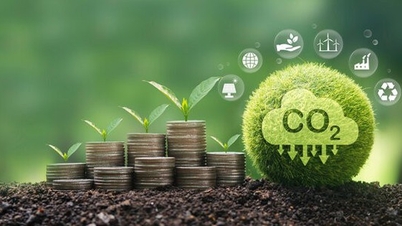
Green economic efficiency can only be achieved on a high-tech platform that reduces greenhouse gas emissions, generates carbon credits, and produces green products. The global carbon credit market is currently considered a very large potential source of revenue. The value of carbon credits varies significantly depending on quality and technological platform. By 2025, high-quality, naturally occurring carbon credits are valued at an average of approximately US$14.80/ton, while lower-quality credits of the same type are only about US$3.50/ton. Credits from carbon removal projects based on advanced technology can reach US$170–500/ton, much higher than credits from renewable energy (approximately US$2–5/ton).
According to current trends, businesses and organizations purchasing carbon credits are increasingly prioritizing high-quality credits with clear impact, transparent assessment, and ranking. This opens opportunities for countries capable of developing carbon sequestration and absorption projects using advanced technologies or high-quality biological models.
For Vietnam, according to the Institute for Planning and Development Research, the good news is that technologies for carbonizing biomass and organic waste through gasification and pyrolysis have emerged, capable of generating high-quality carbon credits with significant value. The carbonization process produces syngas, a clean renewable energy source, and biochar, without generating fly ash or bottom ash, contributing to the formation of a truly circular economy model. Each ton of high-quality biochar can be equivalent to 2–3 tons of CO₂ removed from the atmosphere.
Biochar is considered a form of "almost permanent carbon storage," so the carbon credits generated from biochar are often valued very highly, around $150–200 per ton. Meanwhile, burning municipal solid waste, biomass, or landfilling organic waste results in significant greenhouse gas emissions, simultaneously "burning" the value of the carbon credits that could be generated. With approximately 100,000 tons of organic waste per day (including 70,000 tons of municipal solid waste and 30,000 tons of agricultural waste), burning or landfilling alone could generate tens to hundreds of millions of tons of CO₂-equivalent greenhouse gas emissions annually. Conversely, by applying modern carbonization technology, Vietnam could generate tens to hundreds of millions of high-quality carbon credits, bringing in billions of USD in revenue each year, while simultaneously building a truly green and circular economy.
Similarly, in the field of wastewater treatment, some countries have implemented methane recovery technology at centralized wastewater treatment plants. Investors invest capital in implementation, collect carbon credits to recoup their investment, while plant owners benefit environmentally and are recognized as carbon-neutral facilities without incurring initial investment costs. If industrial zones uniformly apply advanced solid waste and wastewater treatment technologies, greenhouse gas recovery, combined with energy saving, the use of renewable energy, and environmentally friendly materials, they will form green, low-emission industrial zones.
Similarly, if urban areas are planned comprehensively, focusing development around urban railway stations, utilizing renewable energy and new materials, and incorporating emission reduction solutions, they can become truly green cities, moving towards carbon neutrality.
Based on this, the goal of building green cities, green industrial zones, and green agriculture is no longer a distant vision, but is entirely achievable from 2026 onwards, if Vietnam proactively applies existing technologies in a timely manner, knows how to organize the market, and mobilizes the synchronized participation of all stakeholders in the economy.
For the green transformation journey to succeed, in addition to the role of the State in creating, coordinating, and enacting mechanisms and policies, the role of associations and socio-professional organizations, including the Vietnam Green Transformation Association, is considered extremely important. These associations will act as a bridge between the state, scientists, and businesses, contributing to the discovery, verification, dissemination, and replication of advanced technologies, while also participating in creating and expanding application markets, reducing costs, and increasing economic efficiency for all participating parties.
From a policy perspective, the formula for successful green transformation can be summarized in two pillars: breakthrough, advanced high-tech emission reduction; and expanding the market for applying these technologies nationwide, avoiding fragmentation and small-scale implementation. When these two conditions are met, green transformation will no longer be a cost burden, but an opportunity for Vietnam to break through and build a new era of greener, more sustainable, and more prosperous development.
Source: https://mst.gov.vn/chuyen-doi-xanh-co-hoi-va-giai-phap-de-phat-trien-dat-nuoc-197251210182632254.htm

![[Photo] Prime Minister Pham Minh Chinh holds a phone call with the CEO of Russia's Rosatom Corporation.](/_next/image?url=https%3A%2F%2Fvphoto.vietnam.vn%2Fthumb%2F1200x675%2Fvietnam%2Fresource%2FIMAGE%2F2025%2F12%2F11%2F1765464552365_dsc-5295-jpg.webp&w=3840&q=75)

![[Photo] Closing Ceremony of the 10th Session of the 15th National Assembly](/_next/image?url=https%3A%2F%2Fvphoto.vietnam.vn%2Fthumb%2F1200x675%2Fvietnam%2Fresource%2FIMAGE%2F2025%2F12%2F11%2F1765448959967_image-1437-jpg.webp&w=3840&q=75)






































![[OFFICIAL] MISA GROUP ANNOUNCES ITS PIONEERING BRAND POSITIONING IN BUILDING AGENTIC AI FOR BUSINESSES, HOUSEHOLDS, AND THE GOVERNMENT](https://vphoto.vietnam.vn/thumb/402x226/vietnam/resource/IMAGE/2025/12/11/1765444754256_agentic-ai_postfb-scaled.png)












































Comment (0)