

Over the past decade, the Party and State have issued numerous policies and guidelines that have shaped the green transformation process, from Resolution No. 24-NQ/TW on proactively responding to climate change, to the National Strategy on Green Growth for the period 2021–2030, with a vision to 2050, along with major programs on smart cities, digital transformation, and comprehensive energy planning.
Against this policy backdrop, standards emerge as a key technical tool to concretize objectives into measurable regulations, create a "common language" among stakeholders, and support the shift in production and consumption patterns towards greener, cleaner, more resource-efficient, and more environmentally responsible practices.
Standards are not only serving as technical guidelines, but are increasingly involved directly in policy planning, from energy labeling and green public procurement to carbon market mechanisms and smart city indicators.
To date, Vietnam has issued more than 14,200 Vietnamese National Standards (TCVN), with a harmonization rate of approximately 63% with international standards, covering almost all socio -economic fields. About 400 of these directly relate to green growth, green transformation, and sustainable development, ranging from environmental management, energy efficiency, renewable energy, and sustainable agriculture to circular economy, smart cities, and new energy.
Within the group of standards on environmental management and greenhouse gas emissions, standards based on ISO 14000, ISO 14064, or ISO 46001 are providing a foundation for businesses to build environmental management systems, conduct inventories and reduce emissions, prepare for the domestic carbon market, and connect with international green finance. As a result, these standards become a bridge between national Net Zero commitments and concrete actions of individual production and business establishments.
In the field of energy efficiency, more than 40 Vietnamese National Standards (TCVN), including 37 standards on energy performance, have contributed to shaping the energy management framework for large-scale consumers, promoting technological innovation, and supporting energy labeling policies. These standards are also effective tools for reducing emission intensity per unit of GDP while maintaining growth.
Renewable energy is one of the fastest-growing sectors in terms of standardization. Vietnam currently has dozens of standards for wind power, solar power, battery storage, and fuel cells, developed in harmony with IEC standards. These standards specify requirements for safety, testing, connectivity, and operation of renewable energy sources, creating a crucial "soft infrastructure" for implementing the National Energy Master Plan and increasing the proportion of clean energy.
In agriculture , the green transformation is clearly reflected in the Vietnamese National Standards (TCVN) on organic farming, VietGAP in crop production, livestock farming, aquaculture, and food traceability and safety systems. As a result, the reduction of harmful chemicals and the protection of soil, water, and biodiversity have become more systematic, while also expanding export opportunities for clean and organic agricultural products from Vietnam.
The circular economy – a key pillar of green growth – is being supported by standards for green packaging design, labeling, recycling, recovery, and plastic management. Alongside these are standards for assessing the product lifecycle, eco-design, and the use of recycled materials, helping businesses transition to circular production models, reduce waste, and save costs.
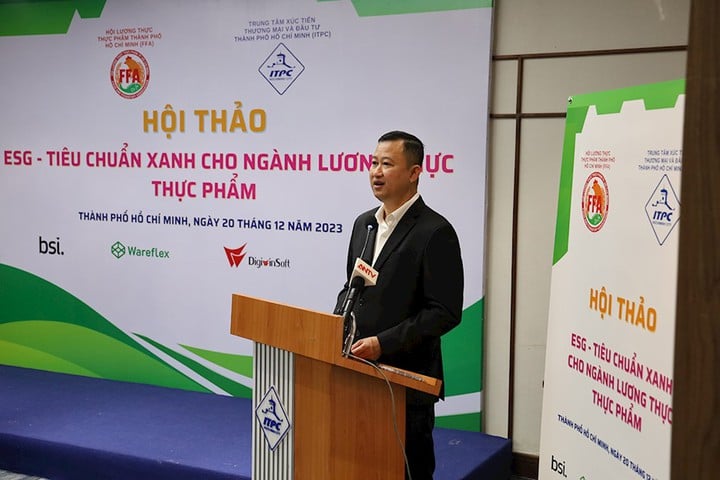
Meanwhile, smart city and green transportation standards are forming the technical foundation for the future management of urban infrastructure, energy, transportation, and the environment.
The Ministry of Science and Technology has published more than 30 related Vietnamese National Standards (TCVN), many of which are equivalent to international standards such as ISO 37120 or ISO 37122.
In the transportation sector, standards for electric vehicles, battery storage, and charging stations are crucial to the electrification of transport. While standards for hydrogen and green fuels are still limited, proactively adopting international standards is a preparatory step for a deeper phase of low-carbon development in the future.
It can be affirmed that the current Vietnamese National Standards (TCVN) system is making a practical contribution to green growth in Vietnam, helping to reduce energy costs, increase productivity, expand export markets, and enhance the technological capacity of businesses.
However, given the rapid development of new sectors such as green energy, digitally integrated smart cities, carbon markets, and environmental data management, standardization activities still face many challenges, ranging from standard gaps and resource limitations to testing and evaluation capabilities that have not kept pace with requirements, as well as difficulties for small and medium-sized enterprises in accessing and applying these standards.
In the coming period, the development of Vietnamese National Standards (TCVN) to support green transition needs to be comprehensive, interdisciplinary, and integrated, ensuring consistency between standards, measurement, and conformity assessment, avoiding fragmentation. Strategic areas such as new energy, recycled materials, carbon management, smart cities, and the circular economy should be prioritized. International cooperation needs to be strengthened to shorten the time for developing standards and ensure harmonization with international practices. Along with this, there is a need to strengthen the capacity of technical committees, invest in laboratories and certification bodies, and support businesses – especially small and medium-sized enterprises – in applying standards and using them as tools to enhance competitiveness.
Standards are not just "technical barriers" in trade, but more importantly, they are the "technical runway" that helps Vietnam take off on a green growth trajectory, realize its Net Zero commitment by 2050, and affirm its position in the global green, clean, and sustainable value chain.
Source: https://mst.gov.vn/tieu-chuan-quoc-gia-nen-tang-ky-thuat-cho-chuyen-doi-xanh-ben-vung-o-viet-nam-197251210185251307.htm


















![[Video] The craft of making Dong Ho folk paintings has been inscribed by UNESCO on the List of Crafts in Need of Urgent Safeguarding.](https://vphoto.vietnam.vn/thumb/402x226/vietnam/resource/IMAGE/2025/12/10/1765350246533_tranh-dong-ho-734-jpg.webp)



























































Comment (0)