

The High-Tech Law (amended), comprising 6 chapters and 27 articles, will come into effect on July 1, 2026, marking the first comprehensive revision since the High-Tech Law of 2008 was enacted.
Presenting a summary report on the amendments to the draft Law on High Technology, Minister of Science and Technology Nguyen Manh Hung stated that the draft has fully incorporated the opinions of National Assembly deputies, relevant agencies, and the conclusions of the National Assembly Standing Committee.
Compared to the current Law, this draft has been streamlined, reducing 8 articles while enhancing the quality and feasibility of each provision. The revised content is designed to closely follow the new policies and directions of the Party and State on the development of science , technology, and innovation. In particular, it emphasizes the need to build technological self-reliance, strengthen domestic capabilities, and participate more deeply in global value chains.

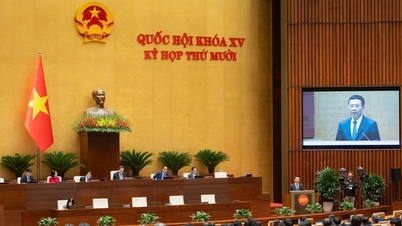
Minister of Science and Technology Nguyen Manh Hung presented the summary report and the revised draft of the High-Tech Law.
Clarifying the concept and innovating the incentive system towards a tiered approach.
One of the breakthroughs of the amended High-Tech Law is the clarification of the concepts of high technology and strategic technology, an issue considered fundamental to all future technology development policies.
According to the Law, strategic technology is a breakthrough and widespread technology that the State identifies as a priority for investment and development to enhance technological self-reliance, create national competitiveness, ensure national defense and security, and promote sustainable socio -economic development. This is an important step in clearly defining the scope of priority investment areas, avoiding scattered investments, and improving the effectiveness of the policy.
Along with clarifying the concept, the Law adds a system of quantitative criteria to identify high-tech and strategic technologies. The new criteria include the localization rate, the proportion of spending on research and development (R&D), the level of technology mastery, and the ability to be self-reliant in strategic technologies.
Adding quantitative criteria makes the selection and evaluation of technologies more transparent, scientifically grounded, and measurable in terms of investment efficiency, while also helping to guide businesses to increase investment in research and technology localization.
The High-Tech Law (amended) also marks a significant shift in the design of incentive policies.
Instead of applying a single preferential rate as before, the Law designs a tiered incentive mechanism, in which businesses with a high localization rate and large investments in R&D will receive higher incentives.
This is the first time a tiered incentive mechanism has been applied in the high-tech sector, aiming to encourage businesses to make genuine investments, truly master their own technologies, and genuinely enhance their technological capabilities. Notably, strategic technology research and development centers and enterprises will be the group receiving the highest level of incentives. At the same time, the Law adds businesses producing high-tech products to the list of those eligible for tax incentives, encouraging the commercialization of these products and the development of the domestic high-tech market.
Changes in incentive policies demonstrate the State's clear direction: incentives must create motivation for innovation, encourage businesses to invest in advanced technologies, gradually master technology, and increase national competitiveness.
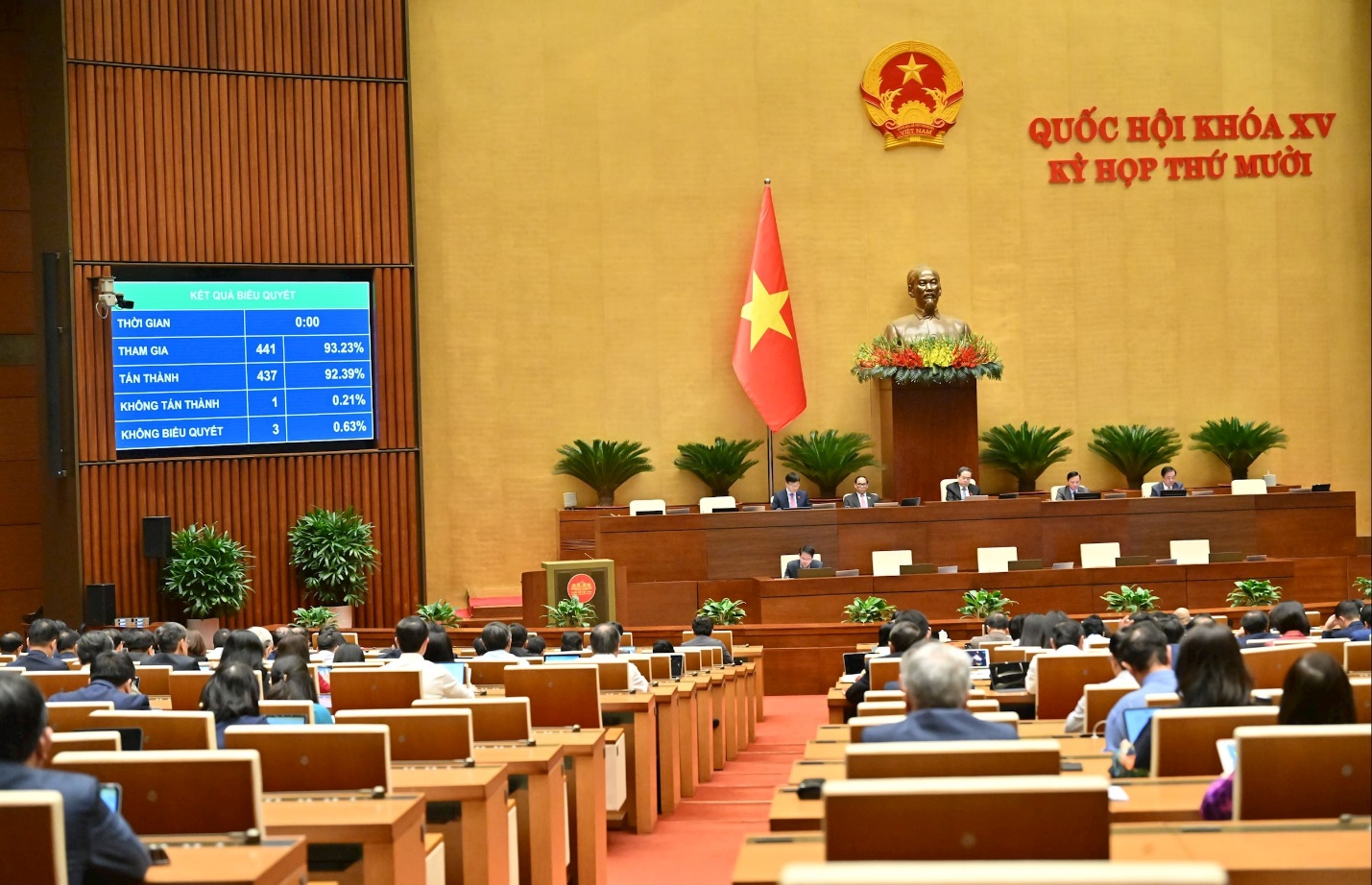
The National Assembly voted to pass the amended High-Tech Law, with 437 out of 441 attending deputies voting in favor.
Improve the mechanism for developing high-tech zones, increase decentralization to local authorities, and prioritize budget allocation for innovation.
The High-Tech Law (amended) further refines the legal framework related to the development of high-tech zones and high-tech agricultural zones, which are important spaces in the innovation ecosystem.
The law restores regulations on high-tech agricultural zones and applies similar incentive mechanisms to high-tech zones, except for some provisions that are not suitable for the specific characteristics of agricultural production. This is an important adjustment to promote the development of high-tech agriculture, a sector predicted to play a major role in green transformation and increasing the added value of Vietnam's agricultural industry.
In addition, the Law adds the function of conducting pilot production of high-tech and strategic technology products in high-tech zones, creating conditions to promote the commercialization of research products.
In particular, the Law grants provincial People's Committees the authority to decide on the establishment, expansion, adjustment, and management of high-tech zones as well as high-tech agricultural zones. This strong decentralization is expected to contribute to shortening implementation time, increasing flexibility, and creating conditions for localities to proactively attract investment, develop infrastructure, and form innovation ecosystems according to their own potential.
The law also officially adds the concept of "high-tech city" to the policy system, laying the groundwork for the development of urban models linked to innovation, high-tech manufacturing, and research and development in the future.

Delegates attending the meeting.
At the macro level, the amended High-Tech Law continues to affirm the State's consistent stance on prioritizing investment in science, technology, and innovation.
The State will prioritize allocating budget for research, development, testing, application, and commercialization of high-tech and strategic technologies; investing in digital infrastructure, technical infrastructure, and technological infrastructure to serve digital transformation, green transformation, and improve the productivity, quality, and competitiveness of products, goods, and services.
The law also focuses on developing a high-tech ecosystem through mechanisms connecting research institutes, universities, and businesses; promoting technology localization; and forming high-tech enterprises, strategic technology enterprises, and technology startups.
Specifically, the Law mandates the Government to develop mechanisms for evaluating the effectiveness of high-tech and strategic technology projects through a set of measurement indicators, independent audits, and mechanisms for recovering incentives when projects fail to meet commitments, ensuring transparent and efficient use of public resources.
Transitional provisions have also been added to ensure legal stability and protect the rights of organizations and individuals who submitted applications before the Law came into effect.
Source: https://mst.gov.vn/hoan-thien-the-che-mo-duong-cho-but-pha-cong-nghe-chien-luoc-197251211090834319.htm























































































Comment (0)