

Before proceeding to the vote, the National Assembly heard Minister of Construction Tran Hong Minh, authorized by the Prime Minister, present the report explaining, accepting, and revising the draft Resolution of the National Assembly on the investment policy for the Gia Binh International Airport construction project.
Subsequently, the National Assembly proceeded to vote electronically. With 410 out of 427 participating delegates voting in favor (representing 86.68% of the total number of National Assembly delegates), the National Assembly passed the Resolution on the investment policy for the construction project of Gia Binh International Airport.

The results of the vote on the National Assembly's Resolution on the investment policy for the Gia Binh International Airport construction project have been approved.
According to the Report explaining, receiving feedback, and revising the draft Resolution of the National Assembly on the investment policy for the Gia Binh International Airport construction project, Minister of Construction Tran Hong Minh stated that, firstly, regarding the assessment of the impact of Gia Binh International Airport on transportation modes and neighboring airports, during the process of developing the national transportation sector plan for five areas, the Ministry of Construction directed the calculation of transportation demand between transportation modes in general and air transport demand in the Northern region, especially the relationship between Gia Binh International Airport and Noi Bai International Airport, to ensure efficient operation between these two airports.
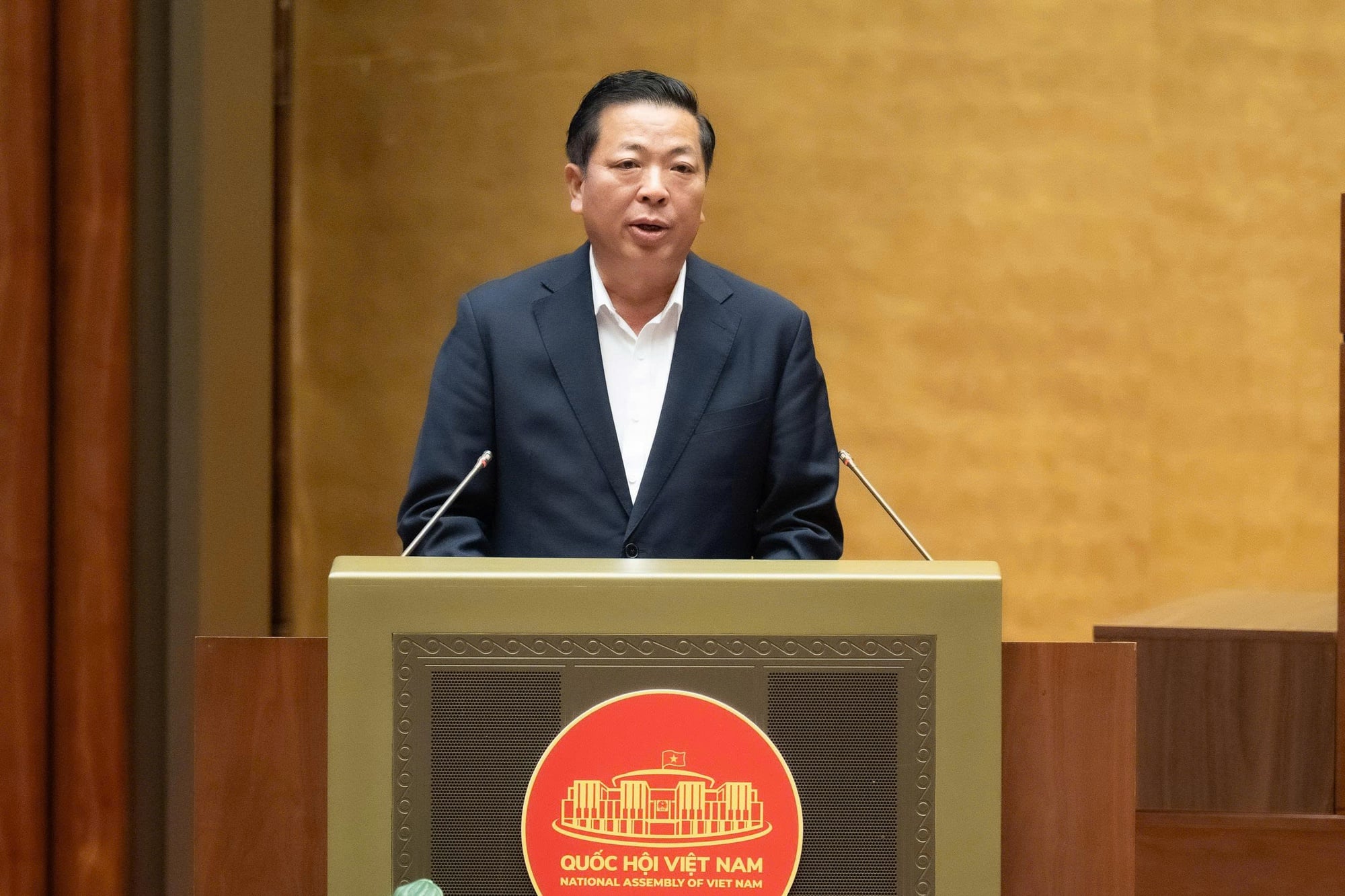
Minister of Construction Tran Hong Minh presented the Report explaining, receiving feedback, and revising the draft Resolution of the National Assembly on the investment policy for the Gia Binh International Airport construction project.
Secondly, regarding the project's progress. For land clearance, according to the report from the Bac Ninh Provincial People's Committee, with approximately 922 hectares of agricultural land, the province aims to complete land clearance by December 2025. The remaining areas are expected to be completed in 2026. To date, Bac Ninh province has handed over nearly 700 hectares to the investor for construction.
Regarding resettlement, Bac Ninh province has planned two resettlement areas with a total area of 337 hectares, and two cemetery park areas. Currently, Bac Ninh province is closely coordinating with investors to implement the construction of infrastructure for the resettlement areas, expected to be completed in the first quarter of 2026. Public works and religious buildings are expected to be completed by the end of 2026.
Regarding the project's progress, the investor is currently constructing facilities to serve APEC 2027, such as the runway, taxiway, aircraft parking area, VIP terminal, and air traffic control tower. Last November, the National Assembly delegation conducted a site survey and noted that the investor has mobilized significant machinery, equipment, and personnel to carry out earthworks, soil stabilization, and mass piling. According to the schedule, construction is expected to be completed by the end of 2026 for trial operation in February 2027.

Delegates attending the Session
Thirdly, regarding the assessment of the project's impact, the report states that the relocation of historical and cultural relics affects 25 relics, including 1 national relic and 11 provincial relics. The relocation of historical and cultural relics will be carried out in close coordination between ministries, departments, the People's Committee of Bac Ninh province, and the investor, based on the principle: "Resettled people will be connected to the relics in the area where they are relocated." Community consultation will be conducted throughout the process. The relocation of classified relics will not affect their original constituent values.
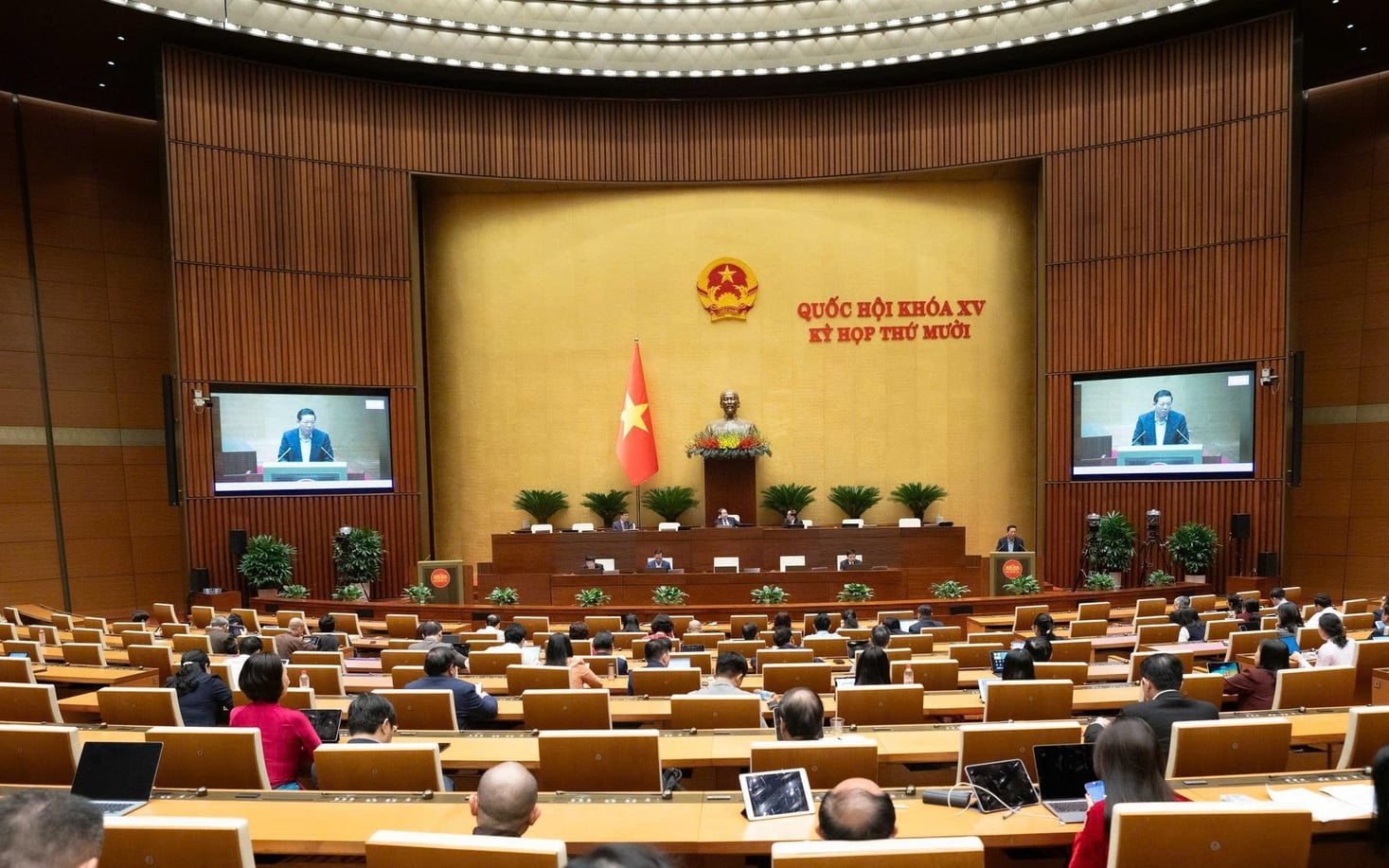
Construction of Gia Binh International Airport: Relocation of historical and cultural relics must preserve their original value.
Regarding the impact assessment on food security, according to information from the Ministry of Agriculture and Environment, the conversion of rice-growing land for the project is included in the revised national land use plan submitted by the Government to the National Assembly. The People's Committee of Bac Ninh province stated that the project will not significantly affect the province's food needs. Therefore, the implementation of the project will not affect national or provincial food security.
Regarding creating livelihoods for the local people, according to the project documents, the construction phase will require approximately 1,200 to 1,500 workers, the majority of whom will be local laborers. Simultaneously, once operational, it is expected to create around 10,000 jobs, employing at least 30% local workers. Currently, the investor is coordinating with the local authorities to organize career guidance and training to meet the workforce's needs.

Delegates attending the Session
Fourth, regarding the planning and investment progress of the connecting transportation system. The report emphasizes that, in terms of planning, the transportation system connecting to Gia Binh International Airport is planned to conveniently connect with the Hanoi - Lang Son, Hanoi - Thai Nguyen - Cao Bang, and Hanoi - Hai Phong - Quang Ninh expressways; the Capital Region's Ring Road 4; and the route connecting to Hanoi. In addition, it will also provide access to two high-speed railway lines: Hanoi - Quang Ninh and the urban railway.
Regarding investment, in addition to the existing expressways, the Government has assigned the People's Committee of Hanoi City and Bac Ninh Province to invest in a route connecting Hanoi to Gia Binh International Airport under the BT (Build-Transfer) model, with a length of 37 km and a cross-section of 120 m, expected to be completed in the 2026-2027 period.
The Ring Road 4 has also been invested in by Hanoi city. The railway line through the area is being urgently constructed, improving connectivity between Gia Binh International Airport and Hanoi and neighboring provinces.
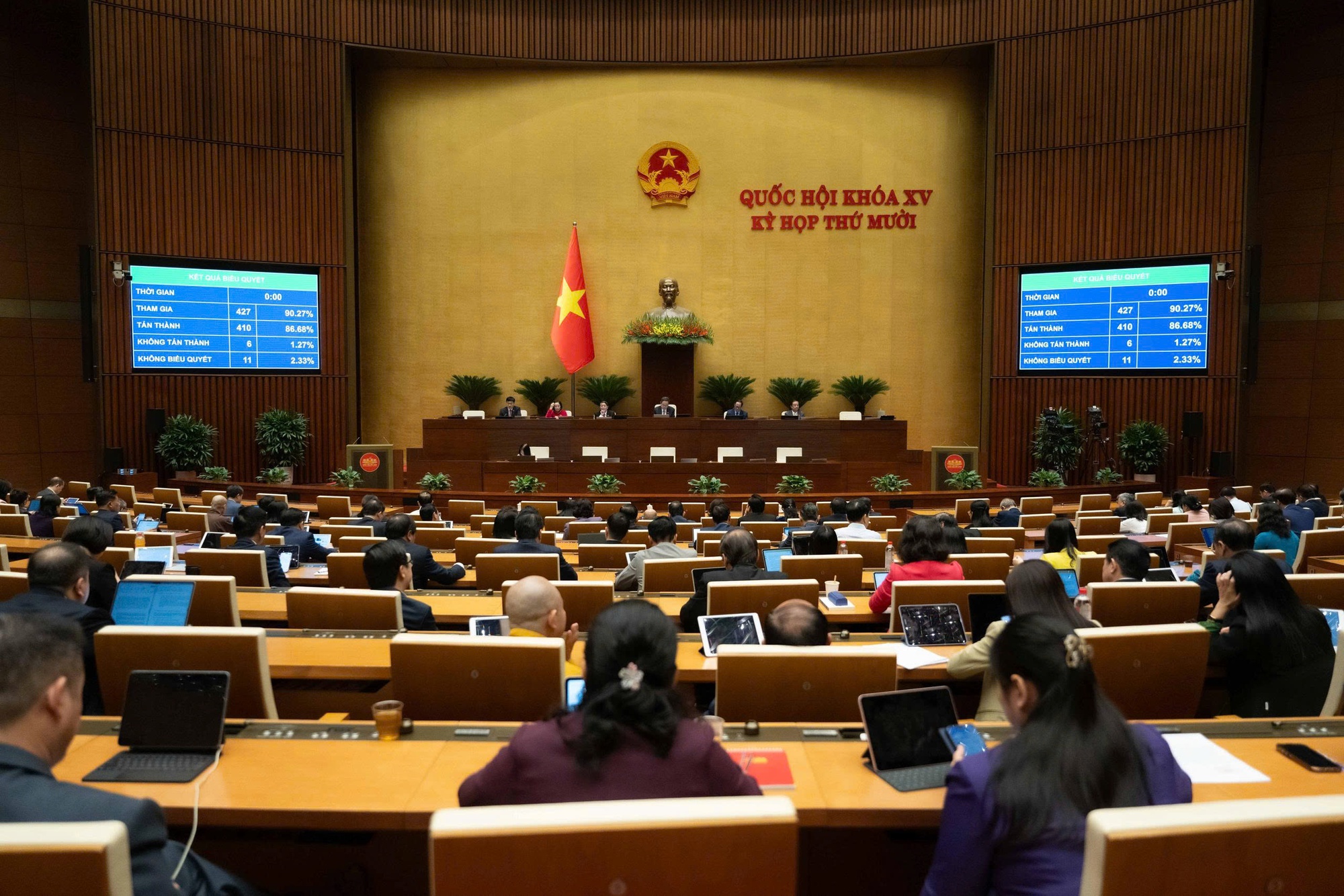
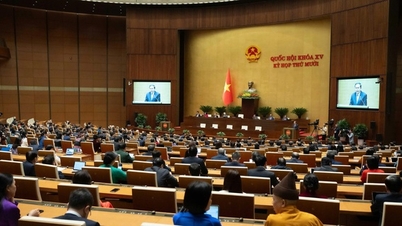
Scene from the session to approve the National Assembly's Resolution on the investment policy for the Gia Binh International Airport construction project.
The resolution on the investment policy for the Gia Binh International Airport construction project consists of three articles and was voted on and approved at the session. The project is a strategic and groundbreaking step, contributing to the restructuring of the Capital Region's aviation network according to the "dual hub" model, which has been successfully implemented in many major cities worldwide. Gia Binh International Airport will play a strategic supporting role to Noi Bai, leveraging its advantages in space, connectivity, and infrastructure, while creating momentum for the development of industries, logistics, e-commerce, tourism, and services.
Source: https://bvhttdl.gov.vn/dau-tu-du-an-dau-tu-xay-dung-cang-hang-khong-quoc-te-gia-binh-nguoi-dan-tai-dinh-cu-o-dau-se-duoc-gan-voi-di-tich-o-do-20251211102150692.htm

![[Photo] Closing Ceremony of the 10th Session of the 15th National Assembly](/_next/image?url=https%3A%2F%2Fvphoto.vietnam.vn%2Fthumb%2F1200x675%2Fvietnam%2Fresource%2FIMAGE%2F2025%2F12%2F11%2F1765448959967_image-1437-jpg.webp&w=3840&q=75)

![[Photo] Prime Minister Pham Minh Chinh holds a phone call with the CEO of Russia's Rosatom Corporation.](/_next/image?url=https%3A%2F%2Fvphoto.vietnam.vn%2Fthumb%2F1200x675%2Fvietnam%2Fresource%2FIMAGE%2F2025%2F12%2F11%2F1765464552365_dsc-5295-jpg.webp&w=3840&q=75)






































![[OFFICIAL] MISA GROUP ANNOUNCES ITS PIONEERING BRAND POSITIONING IN BUILDING AGENTIC AI FOR BUSINESSES, HOUSEHOLDS, AND THE GOVERNMENT](https://vphoto.vietnam.vn/thumb/402x226/vietnam/resource/IMAGE/2025/12/11/1765444754256_agentic-ai_postfb-scaled.png)











































Comment (0)