

Rice exports have achieved positive results but face challenges.
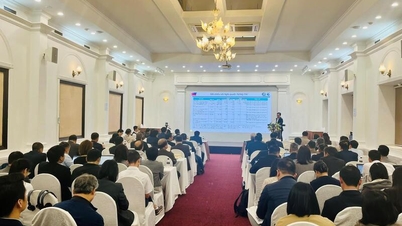
At the conference, delegates focused on discussing key issues such as solutions to boost rice exports ; the potential for utilizing tariff preferences from FTAs; improving the capacity of traders; and building and developing large value chains in the rice industry. Many presentations clearly analyzed market potential, quality requirements, and the rapid changes in global trade policies.
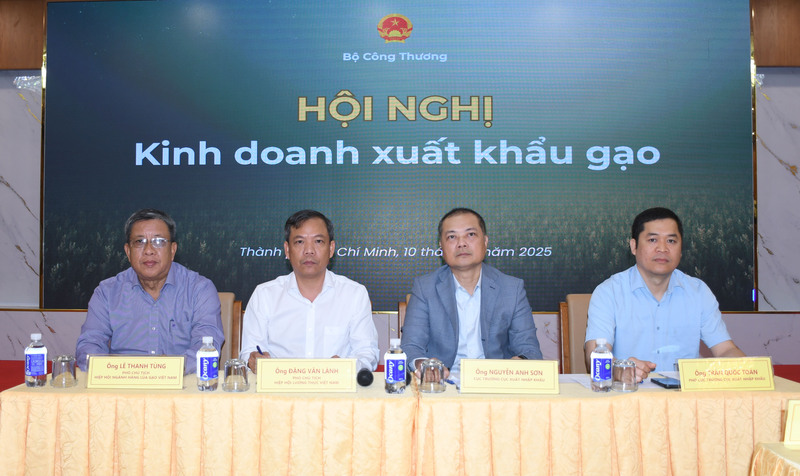
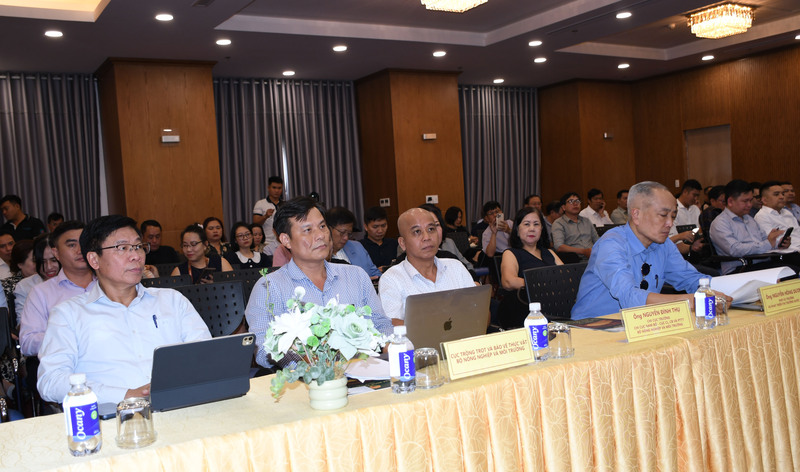
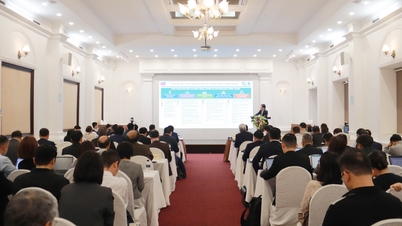
Delegates attending the conference. Photo: Minh Khue.
In addition, the conference recorded many frank opinions, clearly assessing the current situation, pointing out bottlenecks in production, business, and export, and proposing feasible solutions to improve efficiency and expand markets in the future. Delegates also recommended strengthening coordination mechanisms between ministries, sectors, localities, and associations; and promoting the role of industry organizations in supporting businesses and developing large-scale export value chains.
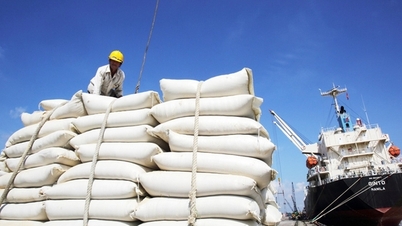
In his closing remarks at the conference, Mr. Nguyen Anh Son, Director of the Import-Export Department ( Ministry of Industry and Trade ), emphasized that the working program had provided a comprehensive picture of Vietnam's rice export situation in the first 11 months of 2025. Despite the volatile global market, Vietnam's rice exports maintained impressive results with 7.53 million tons, a value of 3.85 billion USD, and an average price of 511.09 USD/ton.
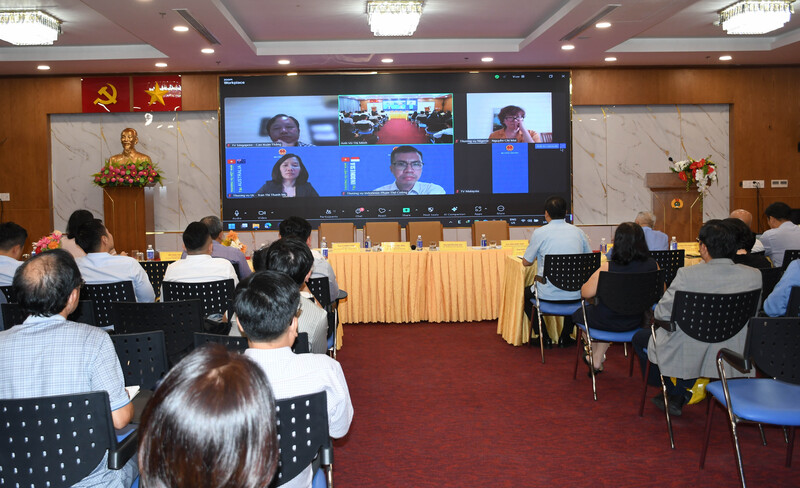
Vietnamese trade offices in key markets such as the Philippines, Indonesia, China, Malaysia, and Africa shared information about the rice import needs of these countries with delegates at the conference. Photo: Minh Khue.
According to the Director of the Import-Export Department, this result stems from the synchronized direction of the Government , the coordination of ministries and agencies, and the persistent efforts of businesses. However, the rice industry still faces many challenges as global food trade is unpredictable, importing countries apply many new technical regulations, and purchasing policies are becoming more complex. This requires businesses to proactively adapt, diversify markets, and effectively utilize commitments under Free Trade Agreements (FTAs) .
This year's conference also saw deeper participation from e-commerce and digital economy organizations, along with direct connections between Vietnamese trade offices abroad and markets with high rice import demand.
完善 mechanisms and develop high-quality raw material areas.
Representatives from the Ministry of Industry and Trade highly appreciated the quality of the discussions, as delegates clearly stated market needs, potential, bottlenecks, and offered many practical recommendations. They also stated that the Import-Export Department would compile all opinions to advise on appropriate solutions for each ministry, including the Ministry of Agriculture and Environment, the Ministry of Finance, and the State Bank of Vietnam, in order to improve the efficiency of rice exports.
Regarding the Ministry of Agriculture and Environment, the representative from the Ministry of Industry and Trade suggested continuing to ensure the area of land used for rice cultivation, restructuring the rice industry towards high quality, promoting the application of science and technology, and developing production standards suitable for integration requirements. In addition, emphasis should be placed on attracting investment to develop new varieties, establishing raw material areas, and developing production and consumption linkage models to create a stable supply and enhance competitiveness.
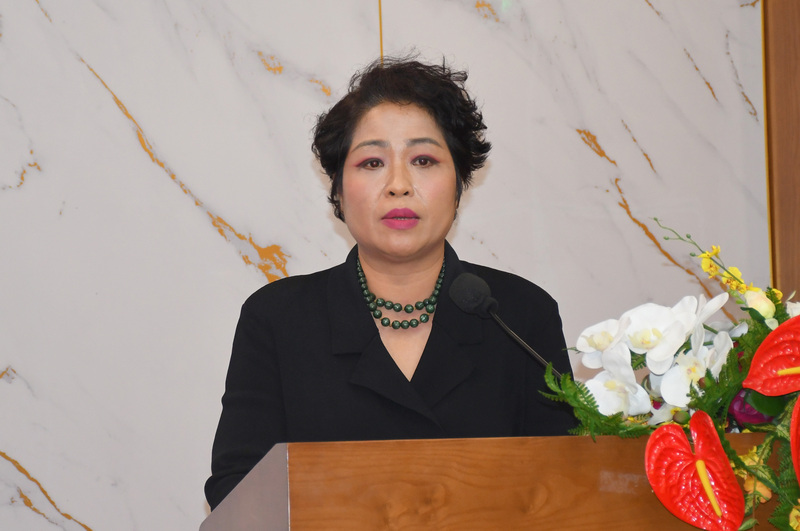
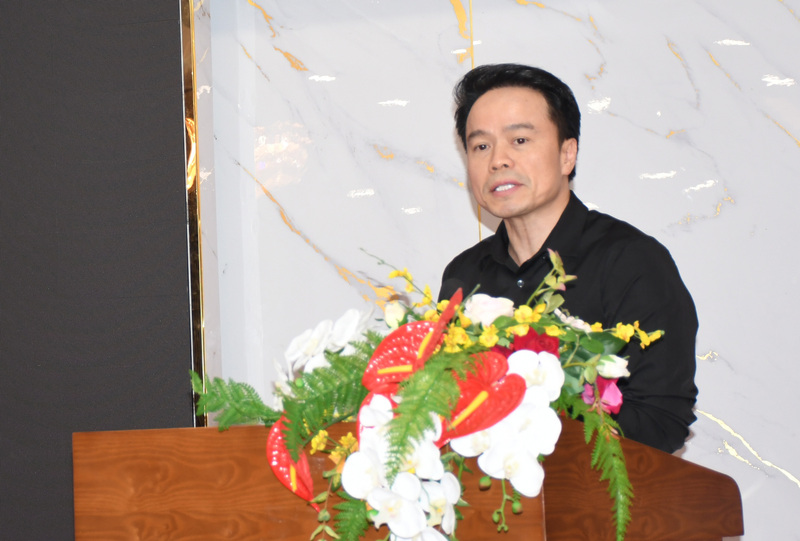
Representatives from departments and divisions under the Ministry of Industry and Trade delivered speeches at the conference. Photo: Minh Khue.
The agricultural sector also needs to guide businesses and localities to strictly comply with quality standards; proactively negotiate and remove technical and plant quarantine barriers; exploit carbon credit trading mechanisms; and effectively implement the Sustainable Development Plan for one million hectares of high-quality, low-emission rice in the Mekong Delta by 2030.
The Ministry of Finance, the State Bank of Vietnam, and other relevant ministries and agencies are requested to proactively propose timely financial solutions to support rice farmers and traders involved in rice production and export, based on the tasks assigned in Government Decree No. 107/2018/ND-CP dated August 15, 2018. These agencies should harmonize export and domestic consumption goals to promote the consumption of paddy and rice at the most favorable prices for the people, while simultaneously enhancing export efficiency and ensuring national food security and stabilizing domestic paddy and rice prices.
Businesses, associations, and local authorities are working together to develop the rice value chain.
For local authorities, it is recommended that they focus on effectively implementing rice cultivation area planning according to the direction of the Ministry of Agriculture, based on the soil conditions, climate, and advantages of each locality. The goal is to improve the quality of rice to meet the increasingly high demands of domestic and international markets. Localities need to actively integrate infrastructure investment programs and projects; create favorable conditions for businesses to invest in and upgrade facilities, storage systems, processing, preservation, transportation, and distribution technologies. At the same time, they should focus on supporting businesses in building and replicating models of rice production and consumption linkages in the spirit of "harmonious benefits, shared risks," ensuring a stable and sustainable value chain .
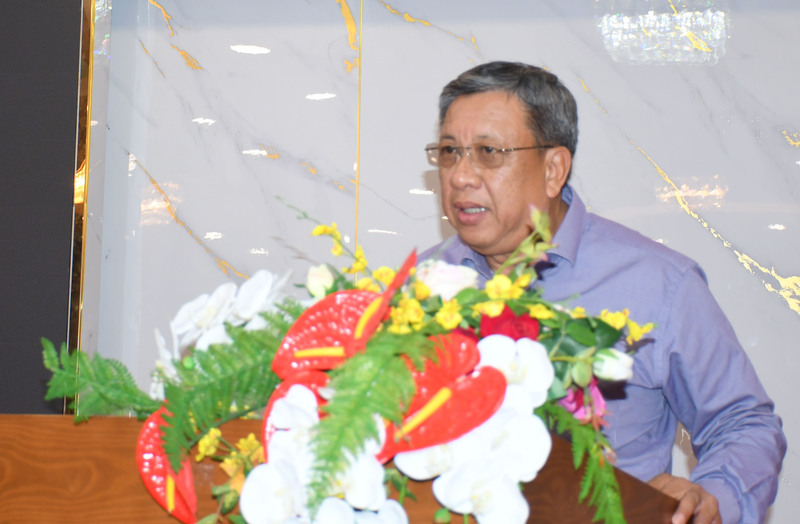
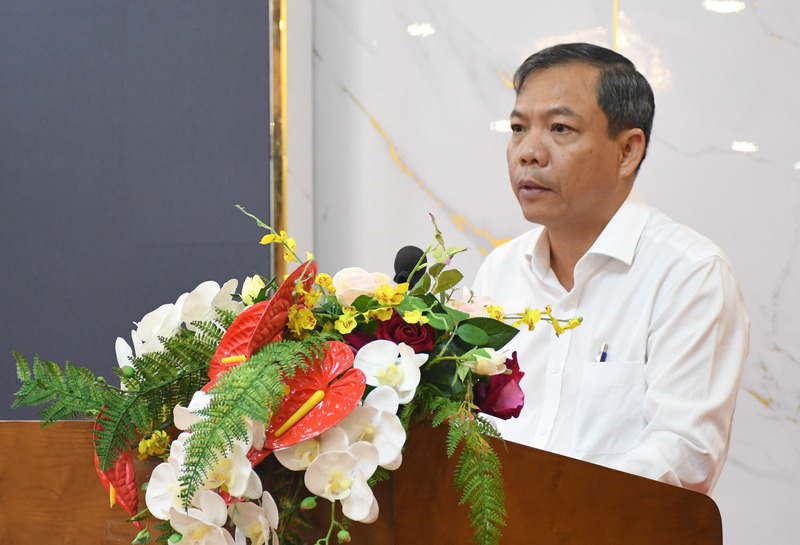
The Vietnam Rice Industry Association and the Vietnam Food Association contributed their opinions at the conference. Photo: Minh Khue.
Local authorities need to strengthen supervision and inspection of the implementation of Decree No. 107/2018/ND-CP, Decree No. 01/2025/ND-CP, and the upcoming amendments to the Decree on the production, maintenance of business conditions, and consumption of paddy and rice, as well as maintaining the minimum circulating reserve level of rice export businesses in the area, ensuring compliance with State regulations. At the same time, they must resolutely prevent and handle speculation and hoarding that cause market fluctuations; promptly report on practical situations and propose corrective solutions to contribute to improving the quality of rice export traders.
Local authorities also need to proactively monitor and understand the developments in rice procurement in their areas; organize regular updates and dissemination of market information so that farmers and businesses have a basis for building appropriate production and business plans. At the same time, regularly updating and disseminating market information will help farmers and businesses accurately assess the market situation and develop appropriate and effective rice production and business plans.
In addition, it is necessary to promptly report, on a regular or ad hoc basis as required by the Government and relevant ministries and agencies, on the volume and types of paddy and rice in stock, and the projected yield and harvest volume of paddy and rice for each type and production season in the area, to serve the management of rice exports nationwide.
For the Vietnam Food Association and the Vietnam Rice Industry Association, it is recommended that they strengthen coordination with the Ministry of Industry and Trade and other ministries and agencies to update and disseminate information on policies, market demand, supply and demand fluctuations, and new regulations from import markets. The associations should strengthen monitoring of their members' activities, promptly propose solutions for violations, and advise localities on planning growing areas and organizing production according to modern standards to ensure export requirements are met.
For rice exporters, especially the Northern and Southern Food Corporations, it is required to maintain full reserves and procure food as stipulated to ensure food security in all situations. Businesses must seriously fulfill their responsibilities according to Decree No. 107/2018/ND-CP and Decree No. 01/2025/ND-CP: purchasing paddy and rice for export, participating in market stabilization, linking production and building raw material areas, and complying with reporting and circulating reserve requirements.
Businesses need to proactively update information from the Ministry of Industry and Trade, relevant agencies, and the Vietnam Food Association to take advantage of the benefits of free trade agreements that have been and will be signed between Vietnam and its partners, in order to diversify markets and develop new markets with high potential.
In addition, traders must closely monitor the global rice trade, exercise caution in signing contracts, especially regarding delivery and payment, to avoid the risk of fraud. Coordination with diplomatic missions and Vietnamese trade offices abroad is necessary to verify information and handle any arising issues.
Rice exporting businesses need to strengthen links with local authorities and farmers to ensure a stable supply of goods that meet food safety standards; at the same time, they should enhance intra-industry cooperation to avoid unfair competition that destabilizes the market. Simultaneously, businesses must focus on maintaining quality, conducting market research, and building the brand of Vietnamese rice. They should also actively seek and access new markets with significant potential (Africa, the Middle East, West Asia, South Asia, etc.), especially those markets where the Government and relevant ministries and agencies have already reached agreements on rice trade.
On the part of the Ministry of Industry and Trade, functional units continue to closely monitor the market and policy developments of major importing countries to propose timely adjustments; support businesses in taking advantage of FTA preferences, improving negotiation, signing and contract implementation capabilities… At the same time, coordinate with ministries, sectors and localities to build a rice supply chain linked to logistics, promote Vietnamese rice brands and promote trade in traditional and potential markets.
In addition, we need to strengthen trade promotion activities, develop markets, and flexibly and effectively combine traditional and modern forms of trade to promote cooperation in rice trade with traditional markets (such as the Philippines, Indonesia, the African region, and China) and exploit niche markets with fragrant rice and high-quality rice varieties that we have penetrated in recent years (such as the EU, South Korea, the United States, and the North American region...).
On the afternoon of December 10th, in Ho Chi Minh City, the Ministry of Industry and Trade organized a conference on rice export business with the goal of enhancing the capacity of traders, meeting market demands, and aiming for sustainable export development. This was also an opportunity to disseminate new legal regulations in the field of rice export, helping businesses stay updated on policies and improve implementation efficiency.
Qingming Festival
Source: https://congthuong.vn/hoan-thien-chuoi-gia-tri-de-thuc-day-xuat-khau-gao-ben-vung-434275.html































































![[Infographic] Many activities at the 96th anniversary commemoration of the death of Deputy Scholar Nguyen Sinh Sac](https://vphoto.vietnam.vn/thumb/402x226/vietnam/resource/IMAGE/2025/12/11/1765441454787_infographic-nhieu-hoat-dong-tai-le-gio-lan-thu-96-cua-cu-pho-bang-nguyen-sinh-sac20251211010322.webp)












Comment (0)