

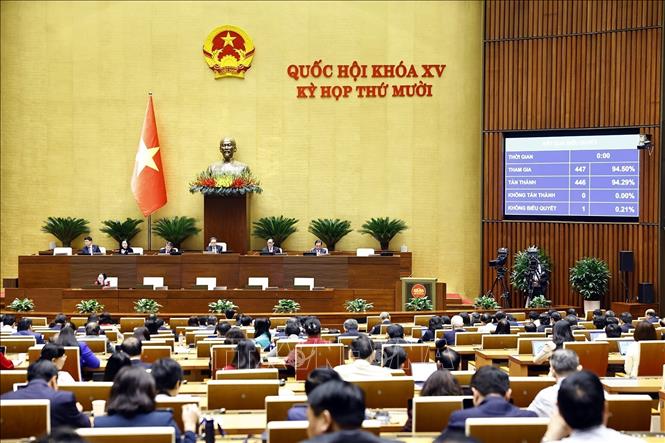
Controlling state power through supervision.
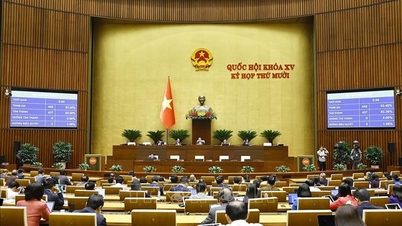
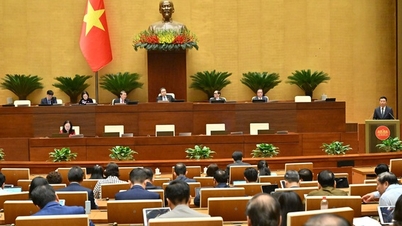
With 446 out of 447 participating delegates voting in favor, representing 94.29% of the total number of delegates, the National Assembly passed the Law on Supervisory Activities of the National Assembly and People's Councils (amended). The law consists of 5 chapters and 45 articles; it will take effect from March 1, 2026.
The law regulates the supervisory activities of the National Assembly and People's Councils; the rights and responsibilities of supervisory entities, agencies, organizations, and individuals subject to supervision, and other agencies, organizations, and individuals related to supervisory activities; and the assurance of supervisory activities. The law clearly stipulates six principles of supervisory activities: ensuring the comprehensive and direct leadership of the Communist Party of Vietnam ; adhering to the Constitution and laws; ensuring objectivity, openness, transparency, and effectiveness; comprehensive supervision with a focus on key areas, meeting the requirements of reality; ensuring the connection between supervisory activities and the improvement of policies, laws, and decisions on important national and local issues; and not hindering the normal operation of agencies, organizations, and individuals subject to supervision.
The law also stipulates that the supervisory resolutions of the National Assembly, the Standing Committee of the National Assembly, and the People's Councils have legally binding force.
Clearly define the responsibilities of each entity involved in online sales.
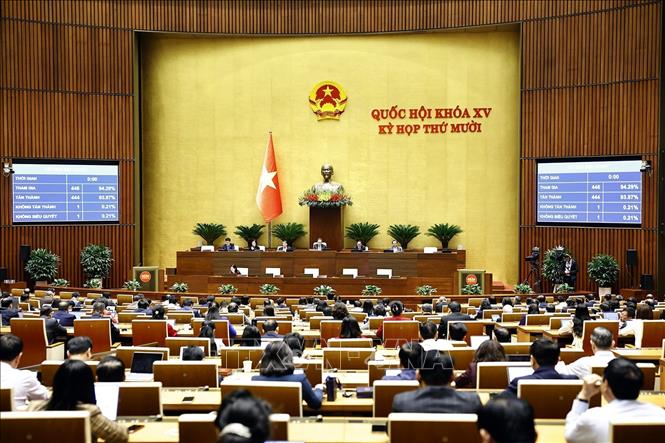
With 444 out of 446 participating delegates voting in favor, representing 93.87%, the National Assembly passed the Law on E-commerce. The law, comprising 7 chapters and 41 articles, regulates policies for e-commerce development; e-commerce platforms and the responsibilities of organizations and individuals in e-commerce activities; e-commerce with foreign elements; the responsibilities of organizations providing e-commerce support services; and the application of technology in managing and handling violations in e-commerce.
This law applies to domestic and foreign organizations and individuals participating in e-commerce activities in Vietnam and will take effect from July 1, 2026.
One of the notable provisions of the Law is the clear definition of the responsibilities of each entity involved in the livestreaming sales process (including the seller, the livestreamer, and the platform owner) to enhance information transparency, improve the legal accountability of all parties, and provide a basis for inspection, supervision, and handling of violations.
For social networks engaging in e-commerce, the Law has defined them as a separate, independent type of platform, designed with a system of obligations appropriate to their nature. Regulations applied mechanically to intermediary e-commerce platforms are not applied mechanically, but rather ensure there are no gaps in responsibility, particularly in managing business content, coordinating the handling of violations, and protecting consumer rights.
Urgent need to control air quality in Hanoi and Ho Chi Minh City.
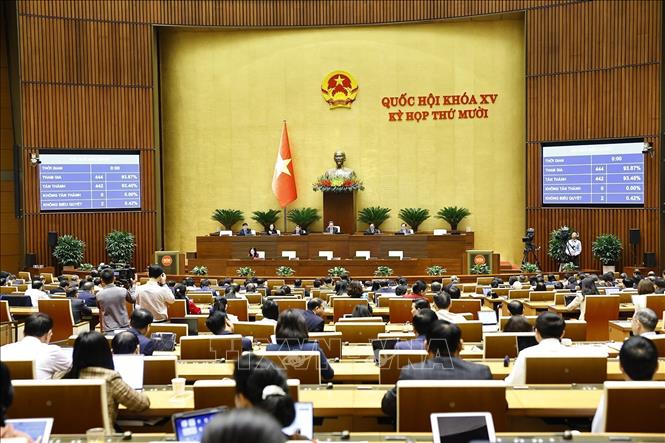
With 442 out of 444 votes in favor, the National Assembly passed a Resolution on the results of the thematic supervision of "The implementation of policies and laws on environmental protection since the Law on Environmental Protection 2020 came into effect." A notable point in the Resolution is the National Assembly's request for Hanoi and Ho Chi Minh City to immediately implement urgent measures to control and improve air pollution, a problem considered to have been complex for many years.
The National Assembly's resolution requires the Government and local authorities to focus on implementing a group of breakthrough tasks and solutions to overcome existing limitations and shortcomings, especially in air quality control in the two largest cities in the country. The focus is on addressing and improving pollution levels immediately in the 2025-2026 period, while simultaneously developing a roadmap for emission reduction and enhancing monitoring capacity in subsequent years.
The resolution sets a quantitative target for Hanoi and neighboring provinces for the first time. By 2030, the average annual PM2.5 concentration in Hanoi must decrease by approximately 20% compared to the 2024 average at all monitoring points of the national monitoring network.
In the provinces and cities surrounding Hanoi, including Thai Nguyen, Phu Tho, Bac Ninh, Hung Yen, Hai Phong, and Ninh Binh, the minimum reduction is 10%. For Ho Chi Minh City and other urban areas, air quality must be maintained at a stable level, preventing an increase in pollution. To achieve this goal, the National Assembly requires strict control of vehicle emissions, restrictions on polluting vehicles in major cities according to environmental zoning, and the removal of substandard vehicles from circulation.
Along with traffic, the National Assembly has also called for strict control over many other sources of pollution, such as managing waste generated in construction and transportation; restricting the burning of agricultural by-products, especially in suburban areas; and strengthening the collection and treatment of domestic wastewater to reduce widespread pollution in urban areas.
Regarding environmental quality monitoring and management, the National Assembly requested the urgent completion and operation of a national environmental information system and database, integrating environmental quality maps, making them publicly available, and applying them in major cities such as Hanoi and Ho Chi Minh City. This system will connect with national data and provide real-time information, serving management, monitoring, and early warning purposes.
Building a modern, transparent, and efficient technology market.
With 421 out of 427 votes cast, representing 89.01%, the National Assembly approved the draft Law amending and supplementing several articles of the Law on Technology Transfer. The law will take effect from April 1, 2026, except for the provisions on the procedures for approving and granting technology transfer licenses, which will take effect immediately from the date the law is passed.
After receiving feedback, providing explanations, and making revisions, the draft Law submitted to the National Assembly for voting has been amended in 21 articles, one new article has been added, and nine articles have been repealed. The content of the articles and clauses of the draft Law has institutionalized the new guidelines and policies of the Party, meeting the requirements and objectives of amending and supplementing the law.
The law aims to build a modern, transparent, and efficient technology market, while promoting innovation, enhancing technological capabilities, and increasing competitiveness in the context of globalization and digital transformation.
Source: https://baotintuc.vn/thoi-su/cap-bach-cai-thien-o-nhiem-khong-khi-o-ha-noi-thanh-pho-ho-chi-minh-20251210152812475.htm

![[Photo] The captivating scenery of the fragrant maple forest in Quang Tri](/_next/image?url=https%3A%2F%2Fvphoto.vietnam.vn%2Fthumb%2F1200x675%2Fvietnam%2Fresource%2FIMAGE%2F2025%2F12%2F10%2F1765353233198_lan09046-jpg.webp&w=3840&q=75)

![[Photo] Explore the US Navy's USS Robert Smalls warship](/_next/image?url=https%3A%2F%2Fvphoto.vietnam.vn%2Fthumb%2F1200x675%2Fvietnam%2Fresource%2FIMAGE%2F2025%2F12%2F10%2F1765341533272_11212121-8303-jpg.webp&w=3840&q=75)


















![[Video] The craft of making Dong Ho folk paintings has been inscribed by UNESCO on the List of Crafts in Need of Urgent Safeguarding.](https://vphoto.vietnam.vn/thumb/402x226/vietnam/resource/IMAGE/2025/12/10/1765350246533_tranh-dong-ho-734-jpg.webp)





























































Comment (0)