

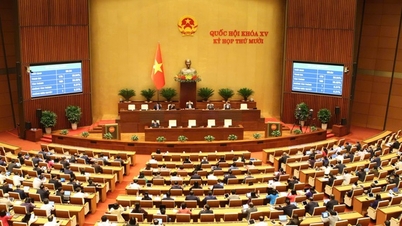
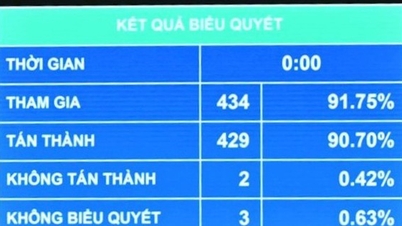
After nearly 2 years of implementing Resolution 98 on special mechanisms for the development of Ho Chi Minh City , although there have been changes, it seems that the "locomotive" Ho Chi Minh City is still being held back by invisible "bottlenecks" that need to be removed. The draft Resolution of the National Assembly amending and supplementing Resolution 98 is expected to be approved by the National Assembly today, December 10, with many new mechanisms to create a breakthrough for this "super city".
Speaking to Thanh Nien newspaper , Dr. Tran Khac Tam, a member of the 13th National Assembly, said that with this resolution, the National Assembly and the Government need to bravely "unleash" and allow Ho Chi Minh City to proactively experiment with policies different from those stipulated in the regulations.
"Only when Ho Chi Minh City, the 'high-speed locomotive,' has its own fuel source and test track can the city truly make a breakthrough and become a megacity – a regional and global center for finance, manufacturing, logistics, and innovation," Mr. Tam said.

Dr. Tran Khac Tam believes that Ho Chi Minh City needs to shed its outdated institutional framework, creating a breakthrough for this "megacity" in the coming period.
PHOTO: GIA HAN
Ho Chi Minh City needs a comprehensive institutional "surgery".
* The revised Resolution 98, currently being submitted to the National Assembly, proposes the addition of a series of special mechanisms, particularly for Ho Chi Minh City. How do you assess the "dose" of this revision?
* Dr. Tran Khac Tam: Ho Chi Minh City has now become a "super city" with more than 13 million people, with an economic scale and a leading role in the entire Southeast region. Such a huge entity cannot operate smoothly with the machinery and processes of a normal "institutional shirt", even though that shirt has been tailored and modified many times.
Therefore, I believe it is time for Ho Chi Minh City to undergo a comprehensive institutional "surgery" to "remove the institutional cloak that has too many patches." Only then can Ho Chi Minh City truly achieve breakthrough development.
* During the discussions, concerns were raised that allowing Ho Chi Minh City to retain 100% of the revenue from land in areas designated for transport-oriented development (TOD) would violate the Budget Law. What is your opinion on this?
* I fully support this proposal and believe that the National Assembly needs to be decisive. We must look at it squarely: where does the money come from to build urban railways? The capital requirement for the metro system in Ho Chi Minh City is up to tens of billions of USD. The central budget cannot handle it, and the local budget according to the current decentralization is also not enough.
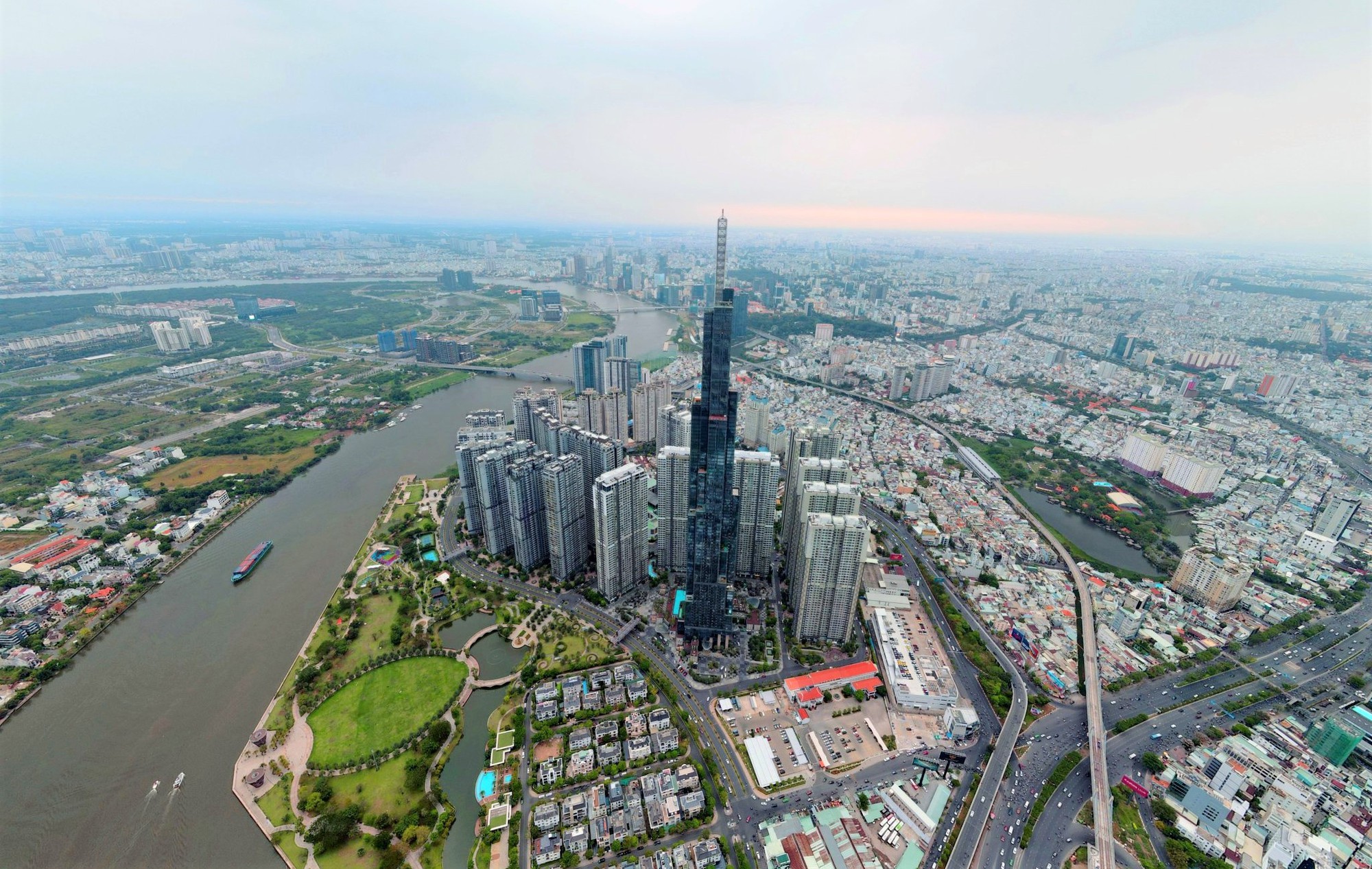
Ho Chi Minh City needs special mechanisms to contribute more to the whole country.
PHOTO: NHAT THINH
The TOD mechanism is the key to this problem. When Ho Chi Minh City spends budget capital or mobilizes capital to compensate, clear the land, and create clean land around the station, the land value increases many times. That added value (differential rent) must be retained 100% to reinvest in the transport infrastructure itself. If regulated to the Central Government at the usual rate, Ho Chi Minh City will lose motivation and will not have enough resources to rotate capital for the next metro lines.
Perhaps we should not be afraid of violating the Budget Law. The National Assembly Resolution is a legal document to solve practical problems that the law has not kept up with or is not suitable for. This is not Ho Chi Minh City "asking for money" from the Central Government, but asking for a mechanism to create its own resources. If we are mechanically concerned about the uniformity of the legal system, we will miss the opportunity to form a modern transportation network for this megacity.
* Another highlight of the resolution is the Free Trade Zone (FTZ) associated with Cai Mep Ha port. However, many experts and National Assembly representatives argue that tax incentives alone are not enough to compete with Singapore or Dubai. According to you, what "weapons" does Ho Chi Minh City need for this FTZ?
* If we only offer a 10% tax incentive for 20 years or a personal income tax exemption, we have only touched the "tip". Strategic investors, technology "eagles" or international finance will need more than that. They need a superior institutional ecosystem. Ho Chi Minh City's FTZ must be considered a "national institutional laboratory" that dares to apply unprecedented mechanisms.
Instead of the State taking care of each detailed planning procedure, let's give the overall development authority to a strategic investor with global capacity. They have the right to make zoning plans, detailed plans, invest in infrastructure and call for secondary investors. The State only manages by output indicators (KPIs) on environment, technology and construction density.
At the same time, thoroughly "post-audit" administrative procedures. The current draft allowing for no investment registration certificate before establishing an economic organization is a step forward, but needs to be bolder. Allow for exemption from specialized inspections and from non-tariff barriers within the bloc in a substantial way.
Furthermore, financial mechanisms and cash flow are necessary. Transactions in foreign currencies must be permitted, and profits and capital must be freely convertible within the region. Without the freedom of capital and data flows, we cannot dream of a regional-level financial or logistics hub.
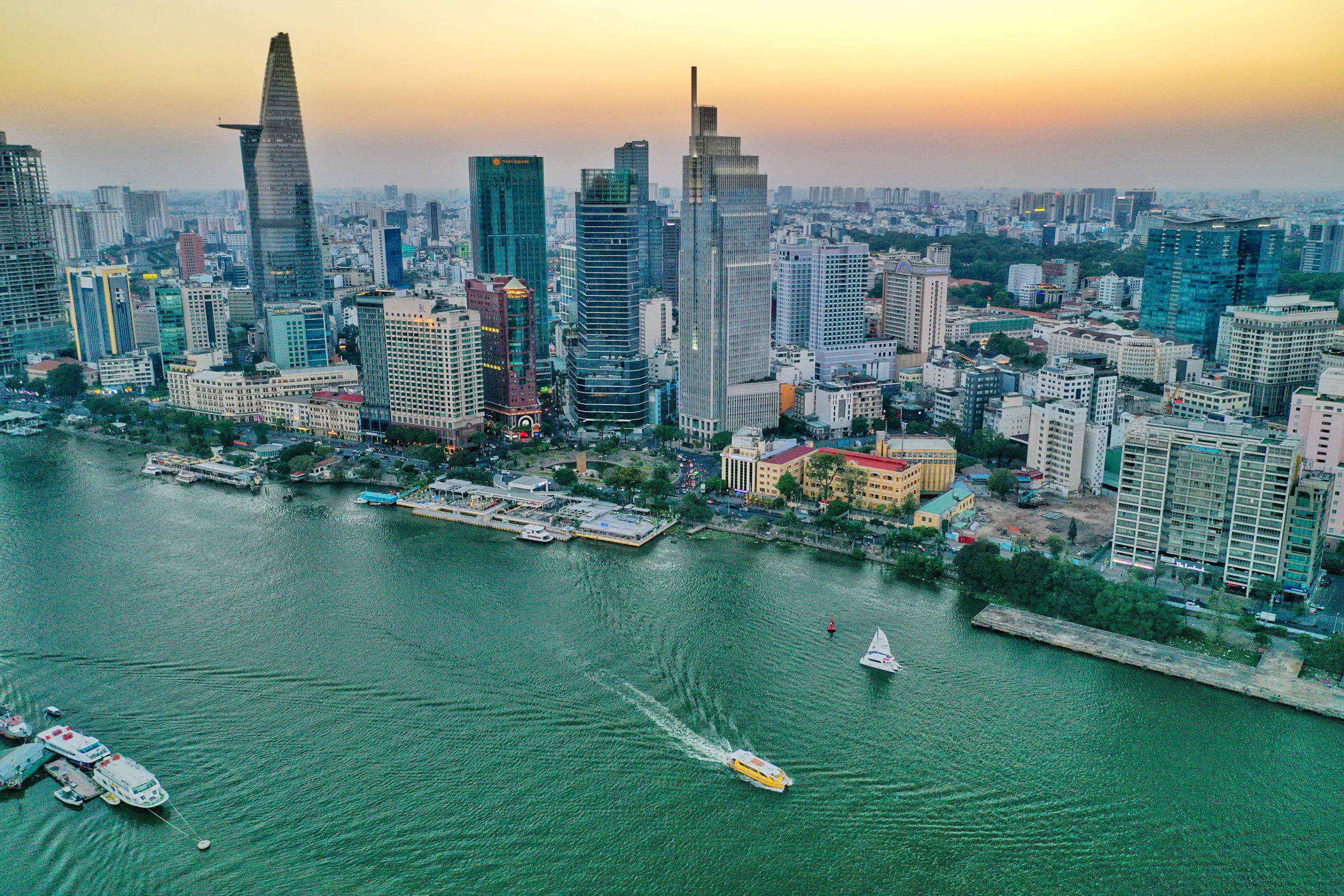
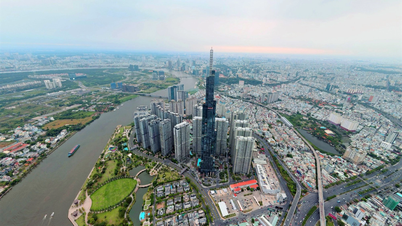
The series of special and specific mechanisms in Resolution 98 are expected to usher in a breakthrough development phase for Ho Chi Minh City, the "megacity".
PHOTO: INDEPENDENCE
Allow Ho Chi Minh City to proactively pilot policies different from those stipulated in the regulations.
* One of the proposals in this revised Resolution 98 is to expand the list of projects attracting strategic investors. However, many argue that expanding by listing each type of project is rigid and easily becomes outdated.
* It's true that when drafting laws, we often get bogged down in listing things. Today we see the need for a waste incineration project, so we include it. Tomorrow, new technologies or new projects emerge, and we have to revise them again.
I think, instead of listing the "fish", let's give Ho Chi Minh City a "fishing rod" and the right to choose the "water area". The resolution should only stipulate qualitative and quantitative criteria (for example: high technology, investment capital from what level, spillover effects, R&D commitment...). Then, decentralize the "whole package" to the Ho Chi Minh City People's Council to decide on the specific project list.
In addition, the process of selecting strategic investors in the draft is still "heavy" on administrative procedures. We need an "investment agreement" or "investment contract" mechanism like developed countries are doing. What the investor commits to, what incentives the State offers, all are included in the contract. Whoever violates is responsible. That is the market mindset.
* A frequently mentioned keyword is "maximum decentralization." However, in reality, the draft still contains many provisions that Ho Chi Minh City must "report," "submit," or "agree upon" with ministries and agencies. How can Ho Chi Minh City truly have its own dedicated railway line, as you mentioned?
- If we want Ho Chi Minh City to fly, we must cut off the invisible ties. Many National Assembly delegates have proposed a separate law for Ho Chi Minh City. If we cannot have a law immediately, I think that the revised Resolution 98 this time needs to have a principled provision: allowing Ho Chi Minh City to proactively pilot new mechanisms and policies that are not yet regulated by law or are different from current regulations.
When implementing these mechanisms, Ho Chi Minh City only needs to report to the Government for supervision, instead of having to seek the consensus of each ministry and agency before proceeding. If it has to wait for the consensus of all ministries according to a "restrictive" process, investment opportunities will be lost.
Granting Ho Chi Minh City special and unique mechanisms is not about favoritism for the city alone, but about creating room for Ho Chi Minh City to contribute more to the whole country. I hope the National Assembly and the Government will bravely "unleash" the city's potential, so that it no longer has to wear a restrictive garment on its journey to reach out to the wider world.
Thank you!
thanhnien.vn
Source: https://thanhnien.vn/coi-bo-chiec-ao-the-che-qua-nhieu-mieng-va-tphcm-moi-co-the-dot-pha-185251209213823599.htm


![[Photo] Explore the US Navy's USS Robert Smalls warship](/_next/image?url=https%3A%2F%2Fvphoto.vietnam.vn%2Fthumb%2F1200x675%2Fvietnam%2Fresource%2FIMAGE%2F2025%2F12%2F10%2F1765341533272_11212121-8303-jpg.webp&w=3840&q=75)





























![[Video] The craft of making Dong Ho folk paintings has been inscribed by UNESCO on the List of Crafts in Need of Urgent Safeguarding.](https://vphoto.vietnam.vn/thumb/402x226/vietnam/resource/IMAGE/2025/12/10/1765350246533_tranh-dong-ho-734-jpg.webp)























































Comment (0)