

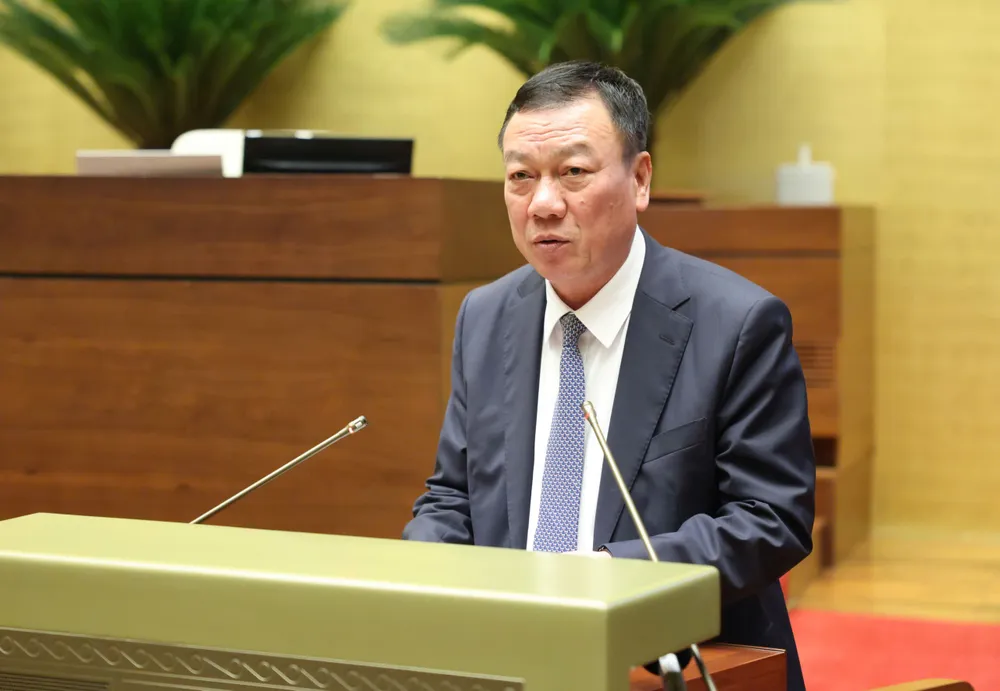
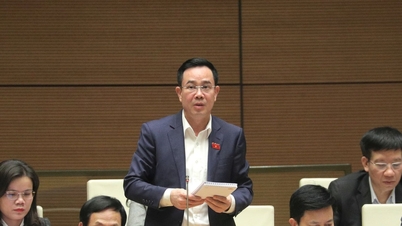
Before the National Assembly delegates voted to approve the two draft laws, the Inspector General of the Government, Doan Hong Phong, presented a report on the incorporation of feedback, explanations, and revisions to the two draft laws.
According to the Inspector General of the Government , the draft Law amending and supplementing a number of articles of the Law on Prevention and Combat of Corruption, after incorporating the opinions of delegates, has undergone many changes and revisions aimed at overcoming the shortcomings of the current law and aligning with the Party's regulations.
Specifically, the draft law retains the provision that the Party's Inspection Commission is the body responsible for controlling assets and income; the National Assembly Office controls subjects under its jurisdiction and the National Assembly's agencies. Similarly, the Central Committee of the Vietnam Fatherland Front controls subjects under its management and political and social organizations at the central level.
According to Mr. Doan Hong Phong, in order to meet the requirements of anti-corruption work in the current context and to be consistent with the provisions of the Enterprise Law and the Law on Management and Use of State Capital Invested in Production and Business at Enterprises, the regulation that individuals assigned to participate in the management and operation of state-owned enterprises holding more than 50% of the charter capital have the obligation to declare their assets and income is appropriate.
Based on that, the Government will stipulate that those required to declare assets and income in state-owned enterprises are the direct owners, representatives of state capital, and certain positions and titles within state-owned enterprises, excluding foreigners or individuals from the non-state sector.
The draft law amending and supplementing several articles of the Law on Prevention and Combat of Corruption has also raised the thresholds for assets that must be declared. Accordingly, the value of assets and income that must be declared for the first time/annually has increased from 50 million VND to 150 million VND. The threshold for asset changes during the year that must be declared additionally has increased from 300 million VND to 1 billion VND. The reason for the adjustment is due to the fact that the basic salary has increased three times and socio-economic conditions have developed, with prices fluctuating nearly three times compared to 2018. Regarding "digital assets," the draft does not include them in the declaration list due to the lack of a complete legal framework.
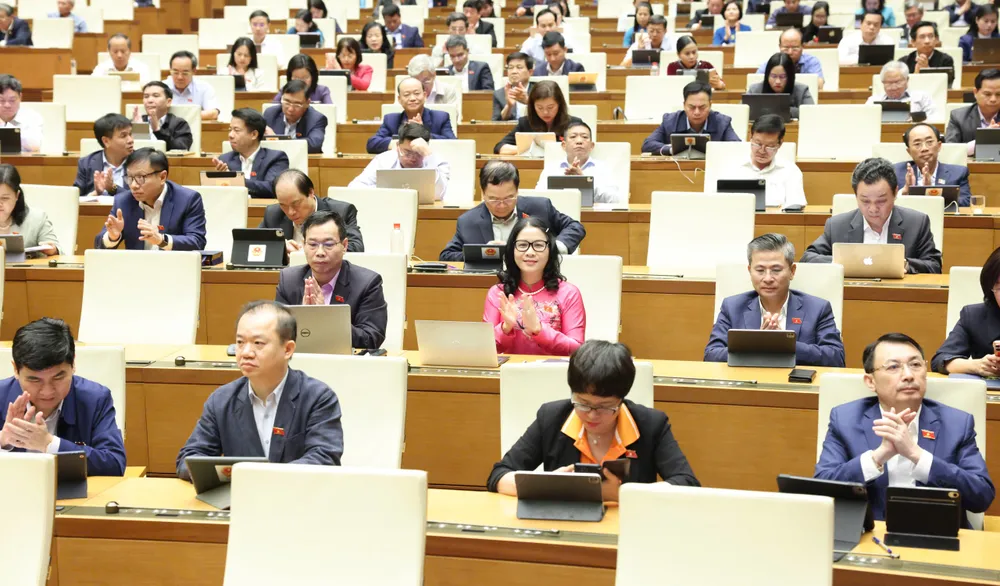
The draft Law amending and supplementing a number of articles of the Law on Prevention and Combat of Corruption also includes a provision to maintain the method of random verification of assets and income (at least 20% of agencies, 10% of people/units) combined with verification when there are signs of violations to ensure objectivity and deterrence.
In addition, measures will be taken against those who make false declarations of assets. Accordingly, those who make false declarations or provide false explanations of the source of increased assets will be: removed from the list of candidates, not appointed/reappointed, or subject to disciplinary action depending on the nature and severity of the offense.
To protect those who report and denounce acts of corruption, Taking into account the opinions of the National Assembly Standing Committee, the draft law has added and specified prohibited acts to protect whistleblowers, including: prohibiting threats, violence, slander, isolation, and insults against whistleblowers; prohibiting violations of their homes, property, health, and personal safety; prohibiting retaliation and discrimination in personnel matters (evaluation, rewards, disciplinary actions, transfers, etc.); prohibiting creating difficulties in carrying out administrative procedures, professional work, employment, or education; and prohibiting the suppression or destruction of evidence or the disclosure of confidential information during the protection process.
Meanwhile, the draft Law amending and supplementing several articles of the Law on Citizen Reception, the Law on Complaints, and the Law on Denunciations has incorporated online citizen reception into the law to align with the current digital transformation. Detailed information on organization, procedures, etc., will be specifically regulated in the guiding decree.
Regarding organizational structure, the Law on Citizen Reception maintains a streamlined approach, not establishing new citizen reception committees at the commune level. Instead, this task will be handled by a suitable civil servant department of the commune-level People's Committee at the headquarters or a location decided by the chairman of the commune-level People's Committee; delegating citizen reception to deputies is not permitted, in order to emphasize the direct responsibility of the head of the agency…
The Law on Complaints stipulates that withdrawn complaints will not be reconsidered or resolved again unless it can be proven that the withdrawal was due to coercion or threat. Measures to protect the identity of whistleblowers will be detailed in the decree to align with the Party's regulations...
Source: https://www.sggp.org.vn/cam-de-doa-gay-kho-khan-doi-voi-nguoi-to-cao-tham-nhung-post827941.html



























![[Video] The craft of making Dong Ho folk paintings has been inscribed by UNESCO on the List of Crafts in Need of Urgent Safeguarding.](https://vphoto.vietnam.vn/thumb/402x226/vietnam/resource/IMAGE/2025/12/10/1765350246533_tranh-dong-ho-734-jpg.webp)






















































Comment (0)