

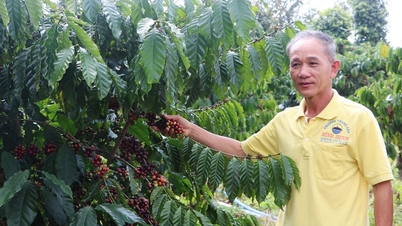
Khe Sanh Arabica coffee is associated with nearly a century of development in the red basalt soil of Khe Sanh. This coffee variety has been cultivated since 1926, laying the foundation for Quang Tri to become one of the coffee capitals of Central Vietnam. In 1978, the Khe Sanh Coffee Plantation was established, contributing to making coffee a key crop in the locality.
Over the years, Khe Sanh coffee has consistently affirmed its quality and position in both domestic and international markets.
In 2019, the product was nominated by VietTop as one of Vietnam's top specialty coffees. Since 2021, Khe Sanh coffee has won numerous awards at the "Vietnamese Specialty Coffee" competition, including two consecutive first-place wins and ranking among the world's top 5 specialty coffees in 2023. In 2022, Pun Coffee, representing the region, won a Silver and an Encouragement Award at the international AVPA competition (France), surpassing nearly 200 coffee samples from 25 countries. The product has also been exported to the United States, further solidifying the international reputation of the Khe Sanh Arabica brand.
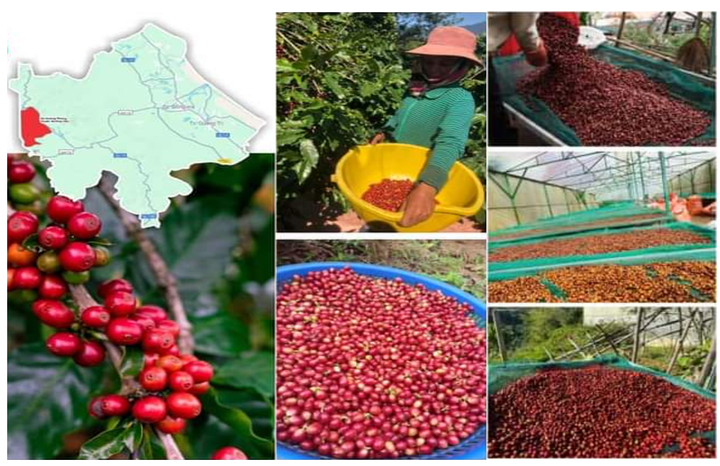
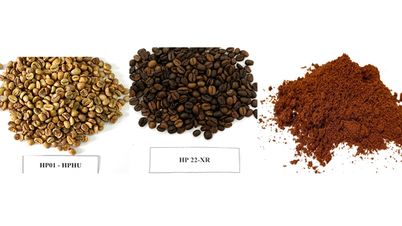
The geographical indication “Khe Sanh” was granted based on the distinctive quality characteristics clearly demonstrated in each product group. For green coffee beans, the size ranges from 4.75 to 6.30 mm, the endosperm is greenish-yellow, the caffeine content is at least 1.35%, and the crude protein content is high, ranging from 11.39% to 13.80%. In roasted bean and ground coffee form, the brewed product is clear, amber brown in color, with a natural aroma tinged with sweet fruit and spices; a mild bitterness, a refreshing acidity, and a pleasant aftertaste. The minimum caffeine content is 1.56%, while the water-soluble content is between 29.72% and 36.99%, indicating stable quality and high specialty value.
The geographical area of the geographical indication spans several communes and towns in Huong Hoa district, Quang Tri province, according to the map confirmed by the Provincial People's Committee. This is a unique plateau region, influenced by a tropical monsoon climate and the impact of two air currents from the West and East Truong Son Mountains. Despite its altitude of only 450–680 m – not ideal for Arabica coffee – Khe Sanh boasts an average temperature of 20–23°C, a large diurnal temperature range, and high humidity year-round. These conditions help the coffee plants grow well, bear fruit evenly, and accumulate a unique flavor.
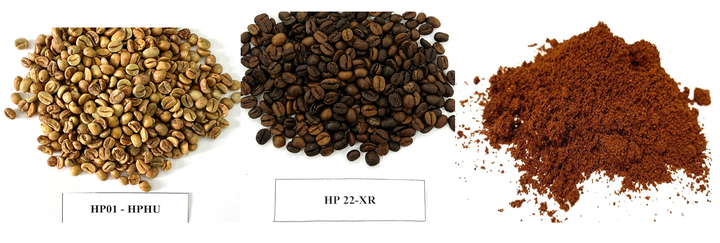
Compared to other Arabica-growing regions like Son La or Di Linh, Khe Sanh coffee has a higher caffeine content, resulting in a deep yet mild bitterness and a rich aftertaste. Its high and consistent protein and mineral content helps maintain consistent quality and diverse aromas. The beans are small in size and rich in soluble matter, making them suitable for light to medium roasting methods to preserve their natural flavor.
Nearly 100 years of formation and development, combined with unique geographical conditions and traditional farming techniques, the Khe Sanh coffee region has created a product with its own distinct identity, becoming a typical representative of Vietnamese specialty coffee.
Geographical indication protection is not only a recognition of the quality and prestige of Khe Sanh coffee, but also an important opportunity to elevate the brand, expand the market, and promote sustainable local economic development.
Source: https://mst.gov.vn/bao-ho-chi-dan-dia-ly-khe-sanh-cho-san-pham-ca-phe-197251210194122927.htm















![[Video] The craft of making Dong Ho folk paintings has been inscribed by UNESCO on the List of Crafts in Need of Urgent Safeguarding.](https://vphoto.vietnam.vn/thumb/402x226/vietnam/resource/IMAGE/2025/12/10/1765350246533_tranh-dong-ho-734-jpg.webp)

























































Comment (0)