


The National Assembly voted to pass the Law amending and supplementing a number of articles of the Law on Intellectual Property.
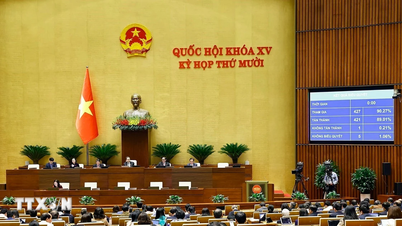
On the afternoon of December 10, 2025, continuing the program of the 10th Session, the 15th National Assembly voted to pass the Law amending and supplementing a number of articles of the Law on Intellectual Property with 432 out of 438 participating delegates voting in favor (accounting for 91.33%).
Before the National Assembly proceeded with the vote, Minister of Science and Technology Nguyen Manh Hung, on behalf of the Prime Minister, presented a summary report on the acceptance, revision, and explanation of the draft Law amending and supplementing a number of articles of the Law on Intellectual Property. Accordingly, the draft Law submitted to the National Assembly for approval at this session has fully incorporated the opinions of relevant agencies, members of the Government, National Assembly deputies, and the conclusions of the Standing Committee of the National Assembly.
After receiving feedback and explanations, the draft Law was revised to amend and supplement 71 articles and repeal 8 articles, ensuring the institutionalization of the Party's new guidelines and policies; meeting the requirements and objectives set for amending and supplementing the Intellectual Property Law.
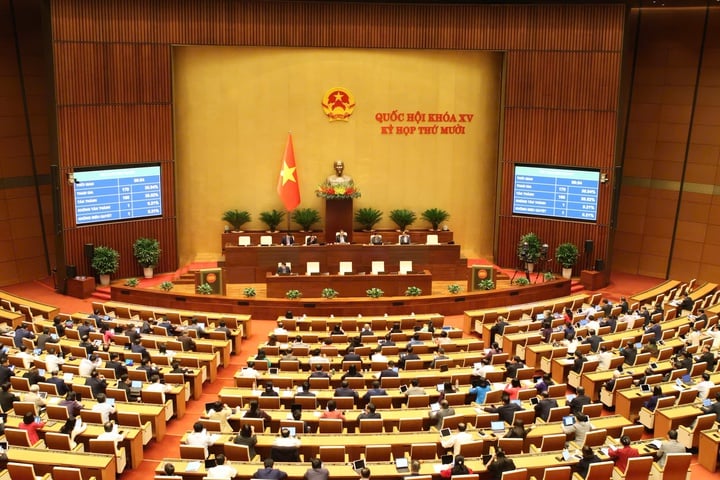
Overview of the meeting
Shifting from "protecting rights" to "proprietaryization and commercialization" of intellectual property.
According to Minister Nguyen Manh Hung, the main idea behind this revision of the Intellectual Property Law is: Intellectual property must transform research results into tradable assets; it must become an asset of businesses, capable of being valued, bought and sold, accounted for in financial statements, and used as collateral for loans and capital contributions, especially for new technologies, digital technologies , and AI.
This represents a crucial shift from a mindset primarily focused on protecting rights to the assetization, commercialization, and marketization of intellectual property, aligning with laws on science, technology, innovation, digital technology, digital transformation, and artificial intelligence. Intellectual property thus becomes a strategic competitive tool for businesses and the nation. A developed nation is one where intangible assets, particularly intellectual property, account for a very large proportion of its total national assets.
Regarding the recognition and management of intellectual property in enterprises, the draft Law stipulates the development of a framework for the recognition and management of intellectual property in enterprises, and assigns the Government to provide detailed regulations on accounting, explanation, and valuation standards.
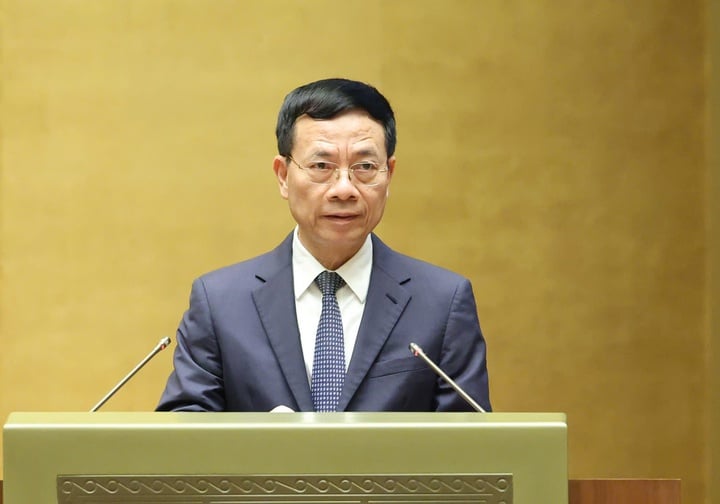
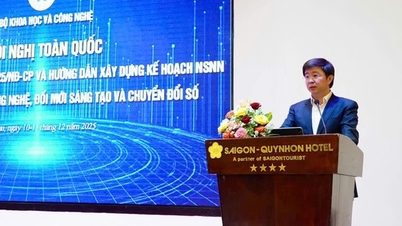
Minister of Science and Technology Nguyen Manh Hung reports at the 10th session of the 15th National Assembly.
For assets that do not qualify for recognition on the balance sheet, the law stipulates that they must be tracked in separate books for intellectual property assets, and while they may be self-valued, their value is only internal. This approach aims to encourage businesses to proactively inventory and fully manage their intellectual property assets.
Regarding administrative procedure reform, the Law stipulates comprehensive digital transformation in the registration and examination of industrial property rights, including patents. The time for examining the content of inventions has been shortened from 18 months to 12 months, and a fast-track examination mechanism within 3 months has been added, demonstrating a strong reform step.
Regarding products created by AI, the law affirms that AI is not a subject of intellectual property rights. If a product is automatically created by AI without human involvement, it is not protected by copyright or patent rights like works created by humans.
If humans use AI as a tool to create products and make significant creative contributions (ideas, guidance, selections, editing AI results, etc.), they can be recognized as authors or inventors. If the level of human contribution is low, using AI only as a "colleague," for example, only providing instructions or context, then they are not considered authors but still have the right to use and exploit it commercially. This approach is fundamentally consistent with the general trend in many countries around the world.
Regarding the use of information for AI training, the Law stipulates that legally published and publicly accessible information can be used for AI training purposes (as input data), provided that the AI's output does not infringe on copyright or intellectual property rights.
Expanding the scope of protection and strengthening the enforcement of intellectual property rights.
Regarding the expansion of the scope of protection, the Law adds the possibility of protecting industrial designs for non-physical products to adapt to new technological trends, especially digital technology; at the same time, it assigns the Government to specify the detailed conditions for protection of this type of product.
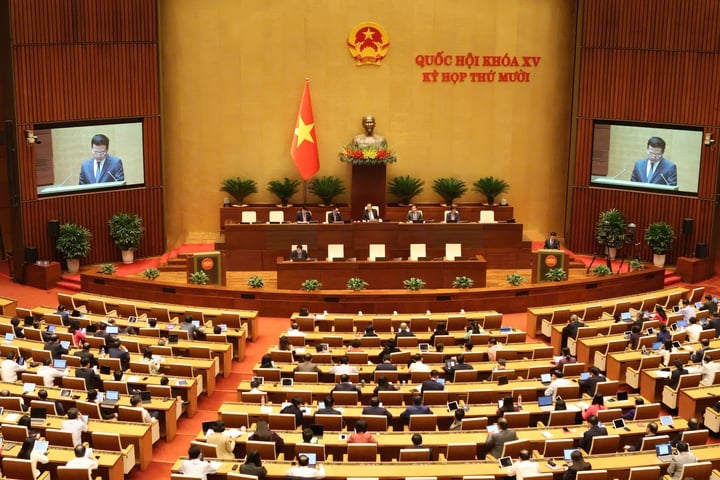
Overview of the meeting
Regarding raising awareness and strengthening enforcement, the Law emphasizes the need to raise social and business awareness of intellectual property as a fundamental solution. Intellectual property will be integrated into general and university education; at the same time, communication with businesses and the community will be strengthened.
The law expands the jurisdiction of courts regarding intellectual property; it adds deterrent sanctions, treating intellectual property infringement as similar to theft in the real world, and requiring strict punishment. Shifting enforcement to the digital environment is identified as a groundbreaking solution.
Aiming to build a dynamic innovation environment where intellectual property becomes a crucial growth driver, the revised Law on Intellectual Property is considered a comprehensive step forward with many notable changes. The law not only updates new international standards and resolves practical obstacles, but also establishes a legal framework to promote the commercialization of intellectual property, a field increasingly becoming a focal point in the era of the knowledge economy and digital transformation.
A key focus of the revised Law on Intellectual Property is strengthening support for the creation and commercial exploitation of intellectual property rights. In the context of intellectual property assets (such as inventions, software, data, designs, trademarks, etc.) increasingly accounting for a large proportion of enterprise value, the goal of transforming intellectual property into assets that can be valued, bought, sold, and mortgaged reflects a new mindset: Intellectual property should not only be protected on paper, but must be put into real circulation, contributing to economic growth and national development, especially in the era of digital transformation and AI.
The law also focuses on removing one of the major "bottlenecks": the complex procedures and lengthy processing times for intellectual property registration. The new regulations aim to reduce unnecessary procedures; review and standardize application forms to make them easier for applicants and minimize errors; and establish an online application and processing mechanism, moving towards the complete digitization of the registration process.
Furthermore, the Law amending and supplementing several articles of the Intellectual Property Law has codified new issues brought about by technology, such as AI generation, big data, blockchain, digital assets, etc., allowing organizations and individuals to use legally published documents and data on intellectual property rights, accessible to the public, for scientific research, testing, and training of artificial intelligence systems, provided that such use does not unreasonably affect the legitimate rights and interests of authors and owners of intellectual property rights. This helps the Law avoid becoming outdated in the face of technological development, while creating a safe and creative space for individuals and organizations.
In relation to international treaties and agreements, the Law amending and supplementing certain articles of the Intellectual Property Law also adjusts regulations on protection, renewal, and enforcement of rights to conform with the commitments that Vietnam has participated in. Ensuring compliance with international commitments is not only a legal requirement but also contributes to enhancing Vietnam's position in the global innovation supply chain.
The amended Law on Intellectual Property reflects a clear policy direction: to make intellectual property a crucial resource for the economy; to support innovative businesses; to protect authors and owners in the digital environment; and to ensure the full implementation of international commitments and timely adaptation to new global trends.
By focusing on the commercialization of intellectual property, simplifying procedures, and promoting the application of technology in state management of intellectual property, the Law amending and supplementing a number of articles of the Law on Intellectual Property is expected to be an important legal foundation, contributing to promoting innovation and enhancing national competitiveness in the new development phase.
Source: https://mst.gov.vn/quoc-hoi-thong-qua-luat-so-huu-tri-tue-sua-doi-tai-san-tri-tue-duoc-dinh-gia-mua-ban-the-chap-197251210173345713.htm






























![[Video] The craft of making Dong Ho folk paintings has been inscribed by UNESCO on the List of Crafts in Need of Urgent Safeguarding.](https://vphoto.vietnam.vn/thumb/402x226/vietnam/resource/IMAGE/2025/12/10/1765350246533_tranh-dong-ho-734-jpg.webp)



























































Comment (0)