

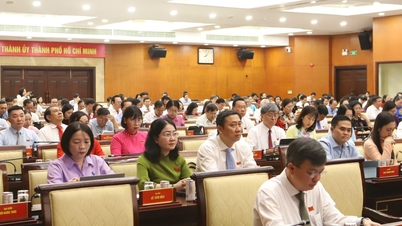
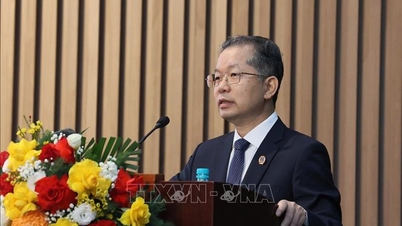
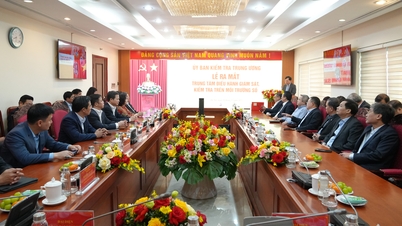
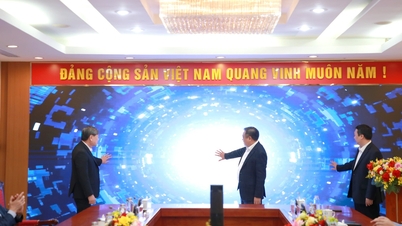
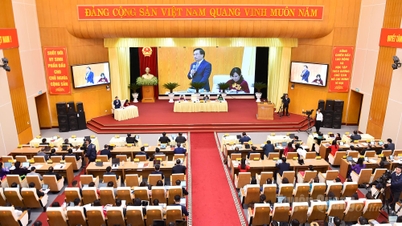
This is a statement by Mr. Le Hoang Chau, Chairman of the Ho Chi Minh City Real Estate Association (HoREA), at the first General Assembly of the Ho Chi Minh City Real Estate Association (HoREA) for the 2025-2030 term, which recently took place in Binh Duong ward. The General Assembly elected an executive committee of 61 members, including one chairman, 14 vice-chairmen, and other members. Mr. Le Hoang Chau was re-elected as Chairman of the Association.
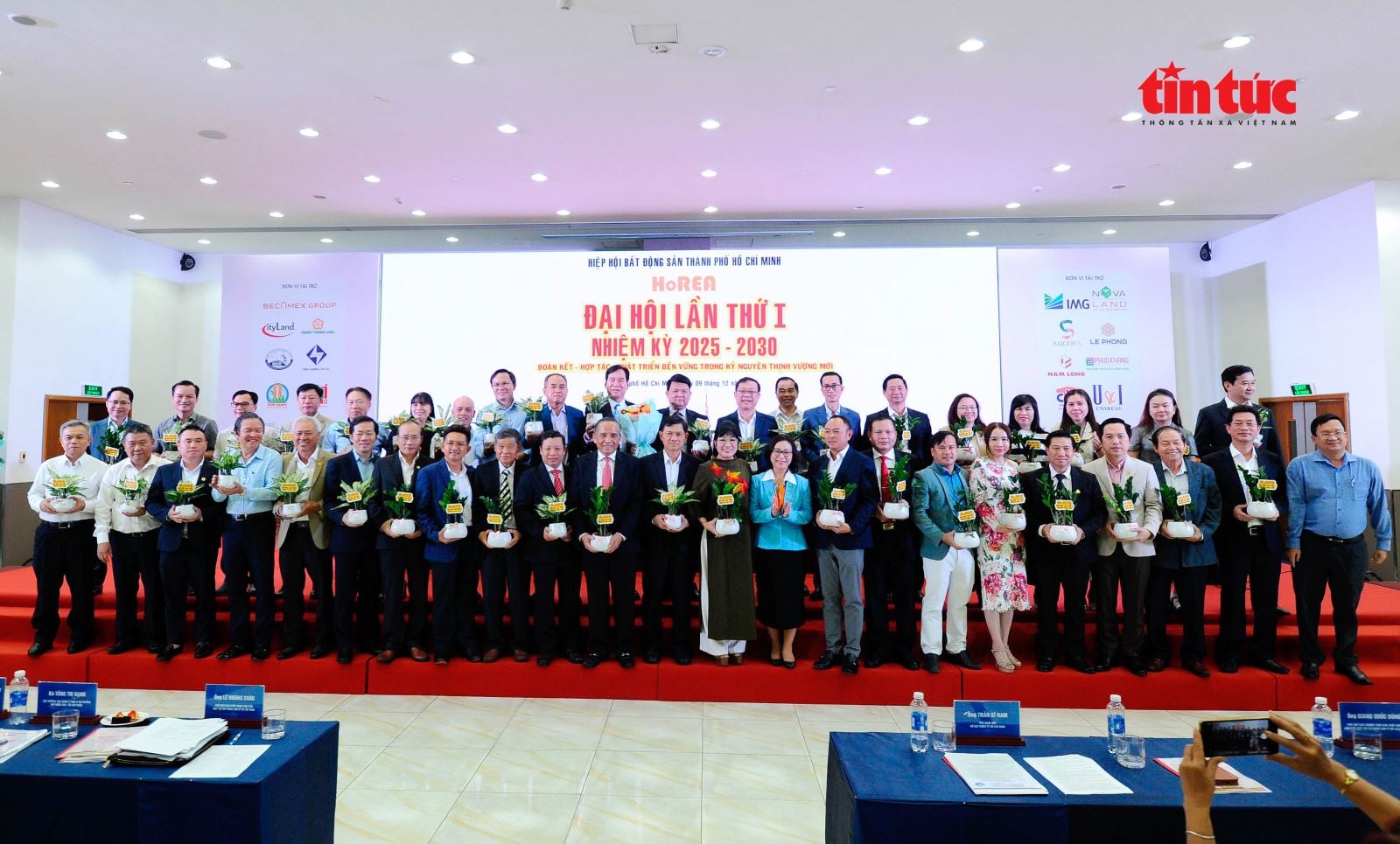
According to HoREA, the city's real estate market has continuously faced many difficulties over the past five years, with declining liquidity and a sharp drop in supply across all segments. In this context, industrial real estate and some high-end projects are rare "bright spots".
As of December 1st, the government and ministries are making efforts to remove institutional obstacles, creating significant changes. The Central Steering Committee has resolved more than 1,700 projects, accounting for 81% of the projects facing difficulties, contributing to unlocking resources for the real estate market.
Mr. Le Hoang Chau cited that the price of social housing is not rigidly controlled but depends on investment costs and incentives for investors. For example, a project in Long Thanh commune costs 21 million VND/m²; some projects in Hanoi reach 29 million VND/m². However, thanks to exemptions from procedures, taxes, and input incentives, the price of social housing is still about 15% lower than commercial products in the same area. Buyers of social housing can also borrow for up to 25 years; for a 70m² apartment priced at 2 billion VND, buyers only need to pay 20% upfront (about 400 million VND), with the remaining amount financed through preferential loans at an average rate of just over 8 million VND/month, equivalent to the cost of renting. "This is a genuine support policy for middle and low-income earners in large cities," Mr. Chau emphasized.
The government has set a target of developing at least 1 million social housing units nationwide; Ho Chi Minh City alone has been allocated 211,000 units by 2030, including an additional 15,000 units for the 2026 plan. This is seen as a positive sign, opening up opportunities for businesses to participate in implementing the General Secretary's directive on building a national housing fund and promoting the affordable housing segment (including social housing and affordable commercial housing).
"It is expected that at the first session of the 16th National Assembly in April 2026, when the amended Housing Law and Real Estate Business Law are considered and passed, we will propose adding a credit policy similar to the 145,000 billion VND package to support young people or first-time homebuyers," Mr. Chau said.
According to a report by HoREA, the recent "revolution" in legal institutions has been driven by the "four pillars" of Politburo Resolutions 57, 59, 66, and 68. These resolutions not only strengthen business confidence but also guide the improvement of the legal framework, creating a transparent and fair investment environment. The real estate market is therefore expected to develop more safely and sustainably, gradually overcoming the segment imbalance: an oversupply of high-end housing but a severe shortage of affordable and social housing.
In Ho Chi Minh City alone, in 2020 there were only 163 affordable commercial housing units (accounting for 1% of the supply); from 2021 to June 2025, this rate decreased to 0%. From the end of 2024 to the first half of 2025, the market will almost exclusively consist of high-end housing, causing housing prices to exceed the affordability of the majority of the population.
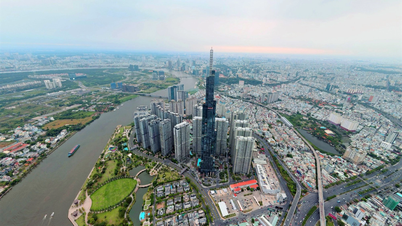
In line with its global urban development and international financial center orientation, Ho Chi Minh City is inviting investment in 309 projects, including metro projects, the renovation and relocation of over 40,000 houses along canals and waterways, the renovation and reconstruction of over 400 old apartment buildings, and a social housing development program of 211,000 units. This is not only an opportunity but also a responsibility for real estate businesses to contribute to building a livable, humane, and modern city.
Mr. Nguyen Xuan Quang, Chairman of the Board of Directors of Nam Long Group, commented that the supply imbalance partly stems from policy obstacles. However, the Ministry of Construction is studying mechanisms for developing affordable commercial housing. If the policy is approved, businesses will have a strong incentive to increase the supply of housing.
"To build affordable commercial housing, we need to ensure everything is properly planned, standardized, designed, and subject to fees and taxes. If this is streamlined, investors will be very enthusiastic and ready to start implementing projects. When supply is abundant, real estate prices will fall," Mr. Quang suggested.
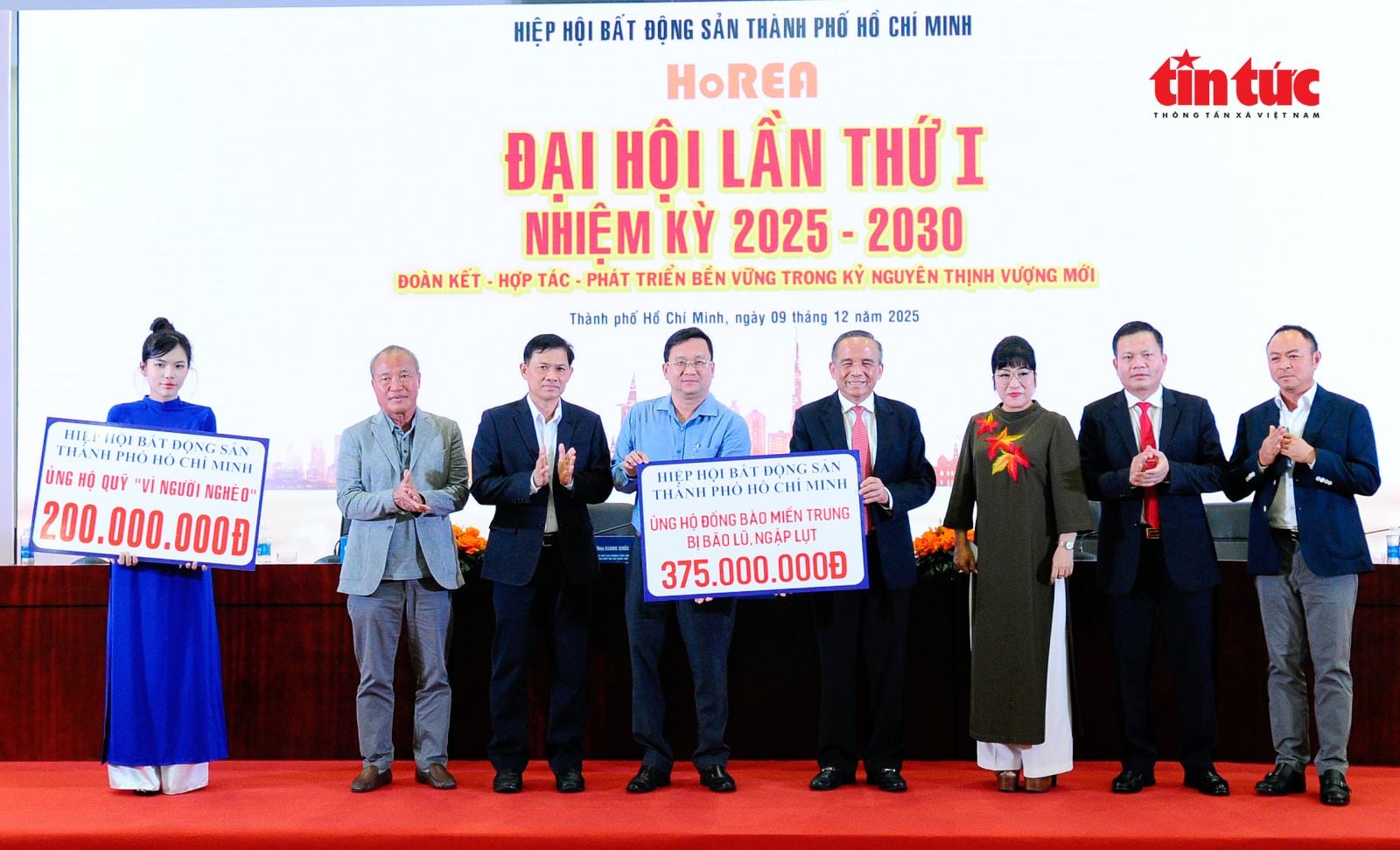
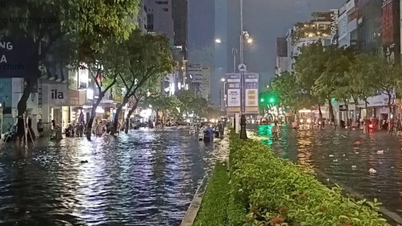
On this occasion, the Association and its members donated over 460 million VND and 200 USD to flood victims; and 200 million VND to the Ho Chi Minh City Fund for the Poor.
Source: https://baotintuc.vn/bat-dong-san/co-hoi-vang-cho-doanh-nghiep-bat-dong-san-but-pha-20251210152929671.htm

![[Photo] The captivating scenery of the fragrant maple forest in Quang Tri](/_next/image?url=https%3A%2F%2Fvphoto.vietnam.vn%2Fthumb%2F1200x675%2Fvietnam%2Fresource%2FIMAGE%2F2025%2F12%2F10%2F1765353233198_lan09046-jpg.webp&w=3840&q=75)


![[Photo] Explore the US Navy's USS Robert Smalls warship](/_next/image?url=https%3A%2F%2Fvphoto.vietnam.vn%2Fthumb%2F1200x675%2Fvietnam%2Fresource%2FIMAGE%2F2025%2F12%2F10%2F1765341533272_11212121-8303-jpg.webp&w=3840&q=75)






















![[Video] The craft of making Dong Ho folk paintings has been inscribed by UNESCO on the List of Crafts in Need of Urgent Safeguarding.](https://vphoto.vietnam.vn/thumb/402x226/vietnam/resource/IMAGE/2025/12/10/1765350246533_tranh-dong-ho-734-jpg.webp)



























































Comment (0)