

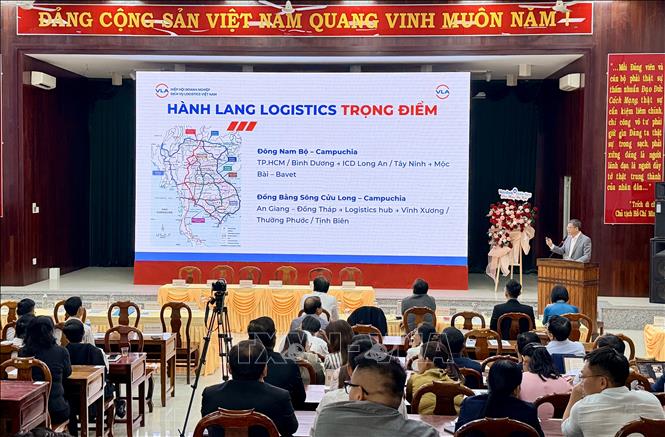
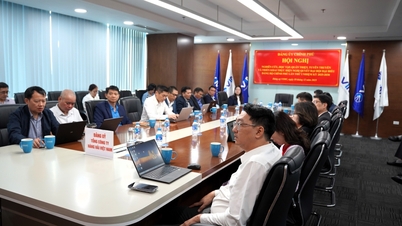
The conference provides an opportunity for leaders from ministries, departments, localities, and the business community to exchange views, assess the current state of border trade infrastructure, and propose appropriate development directions in the context of deep integration.
In 2021, the Prime Minister approved the Program for the Development of Border Trade Infrastructure for the period 2021-2025, with a vision to 2030, in a timely manner to create a fundamental shift in modernizing the system of border markets, warehouses, and logistics centers along the entire border between Vietnam and China, Laos, and Cambodia.
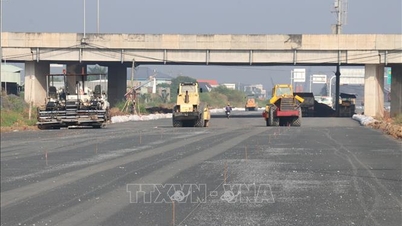
The program aims to develop border trade infrastructure in a synchronized, smart, and multimodal manner, ensuring customs clearance capacity, quality control of goods, and support for traders and border residents, strengthening national security and defense, and promoting sustainable trade.
According to the Ministry of Industry and Trade 's assessment, the trade infrastructure along Vietnam's borders with China, Laos, and Cambodia still relies mainly on border markets, warehouses, and convenience stores; while commercial centers, supermarkets, and logistics facilities are limited and not commensurate with the trade potential.
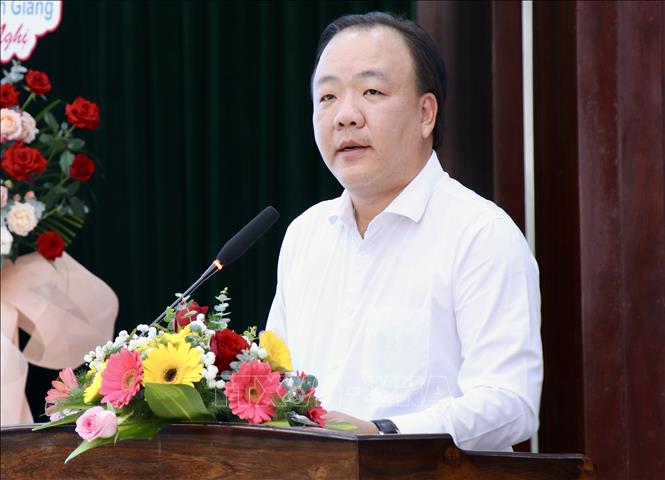
According to Mr. Tran Huu Linh, Director of the Department of Domestic Market Management and Development - Ministry of Industry and Trade, currently, along the three borders of Vietnam with China, Laos, and Cambodia, there are 218 markets, 72 warehouses, 13 commercial centers, 12 supermarkets, and 17 logistics centers. While meeting daily trading needs, the infrastructure still lacks modernity and has not created a breakthrough in the circulation of goods, especially agricultural products and seasonal goods.
According to Mr. Linh, trade activities through Vietnam's border gates with China, Laos, and Cambodia have been smooth and efficient in recent times, with trade turnover continuously growing and achieving remarkable results. The high growth in border trade turnover has contributed to increasing bilateral trade turnover between Vietnam and China, Laos, and Cambodia.
In the first nine months of 2025, Vietnam's total import and export turnover through land border gates with China, Laos, and Cambodia reached US$73.9 billion, an increase of 46.7% compared to the same period in 2024; of which, export turnover through land border gates with China, Laos, and Cambodia reached US$24 billion, an increase of 26.2%; import turnover reached nearly US$49.89 billion, an increase of 59.2% compared to the same period in 2024.
Ms. Vu Thi Minh Ngoc, Head of the Trade Infrastructure Department, Domestic Market Management and Development Agency - Ministry of Industry and Trade, assessed that border trade infrastructure helps businesses reduce logistics costs, improve market access, and shorten delivery times, especially for seasonal agricultural products. For border localities, border trade infrastructure promotes the development of services and trade, creates jobs, increases budget revenue, improves the lives of border residents, and contributes to social and security stability.
"In the context of deep integration and increasing demand for cross-border import and export, perfecting the legal framework for border trade infrastructure is a key task. Therefore, border localities need to closely adhere to the legal framework and practical situation to formulate appropriate development directions," Ms. Ngoc noted.
According to Le Trung Ho, Vice Chairman of the People's Committee of An Giang province, amidst regional economic fluctuations, the border provinces of Vietnam and Cambodia have maintained stable trade growth. An Giang, in particular, continues to be a bright spot, with import and export turnover increasing by an average of 12.7% per year during the 2021-2025 period; exporting over 500 million USD to Cambodia and importing over 600 million USD annually.
According to Mr. Le Trung Ho, An Giang province focuses on investing in warehouses and infrastructure to support customs clearance, with eight businesses currently operating at locations for goods collection, inspection, and monitoring. However, border gate infrastructure and logistics are still not synchronized; customs clearance times are sometimes unstable, especially for agricultural and aquatic products; and cross-border e-commerce and digital payments have not developed proportionally. In the future, the province will create the most favorable conditions for businesses to invest and expand sustainable trade.
According to the Ministry of Industry and Trade, Vietnam aims to modernize its border trade infrastructure to international standards by 2030, in line with transportation and logistics. Simultaneously, it aims to digitize management processes and establish multimodal connectivity to enhance import and export capabilities and increase economic and social value for border localities.
Specifically, along the Vietnam-China border, efforts are being intensified to implement "digital border gates" and "green lanes for agricultural products" to reduce congestion and shorten customs clearance times. Focus is being placed on upgrading international and key border gates such as Huu Nghi, Tan Thanh, Kim Thanh, and Mong Cai; linking investment in border trade infrastructure with the development of border tourism services and cross-border logistics.
The Vietnam-Laos route involves developing the infrastructure of the Cau Treo, Cha Lo, Lao Bao, and Bo Y international border gates into "logistics gateways" for the East-West corridor. Priority will be given to building logistics centers and warehouses in border gate areas connected to expressways and seaports in Central Vietnam. Infrastructure for quarantine, electronic customs, and data connectivity with Laos will be strengthened.
The Vietnam-Cambodia border route focuses on investing in border markets, logistics centers, and cold storage facilities at border gates such as Moc Bai, Xa Mat, Thuong Phuoc, Tinh Bien, and Le Thanh, aiming for a modern and civilized approach. The Vietnam-Cambodia Border Trade Agreement will be effectively implemented.
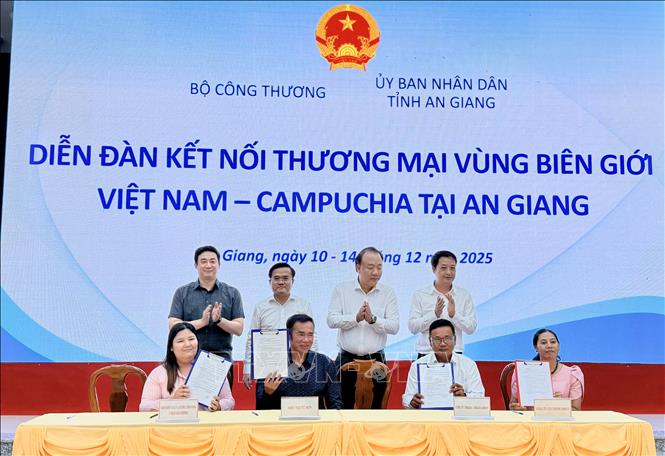
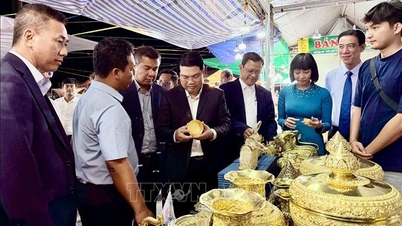
At the conference, Vietnamese and Cambodian businesses signed a memorandum of cooperation on trade and product distribution between businesses of the two countries.
Source: https://baotintuc.vn/kinh-te/hoan-thien-ha-tang-thuong-mai-bien-gioi-but-pha-giao-thuong-20251210175059573.htm











![[Infographic] Cross-exchange rates for determining taxable value from December 11-17](https://vphoto.vietnam.vn/thumb/402x226/vietnam/resource/IMAGE/2025/12/11/1765413245543_infographic-ty-gia-tinh-cheo-de-xac-dinh-tri-gia-tinh-thue-tu-11-1712-20251211021920.jpeg)









![[Video] The craft of making Dong Ho folk paintings has been inscribed by UNESCO on the List of Crafts in Need of Urgent Safeguarding.](https://vphoto.vietnam.vn/thumb/402x226/vietnam/resource/IMAGE/2025/12/10/1765350246533_tranh-dong-ho-734-jpg.webp)





























































Comment (0)