

Mr. Nguyen Duc Quan Tung, a member of the Board of Directors and General Director of OCBS Securities Joint Stock Company, believes that comprehensive improvements in institutions and infrastructure will transform the Vietnamese stock market into a "magnet" attracting proactive capital, creating momentum for a strong economic breakthrough.
2025: A solid foundation for the "Revaluation" cycle.
Looking back at the economic picture in 2025, it's clear that Vietnam has demonstrated remarkable resilience. Not only has it weathered shocks from the volatile global economic environment, but its economy has also effectively managed internal pressures to achieve an estimated GDP growth of 8% – a figure that places Vietnam among the leading countries in the ASEAN region.
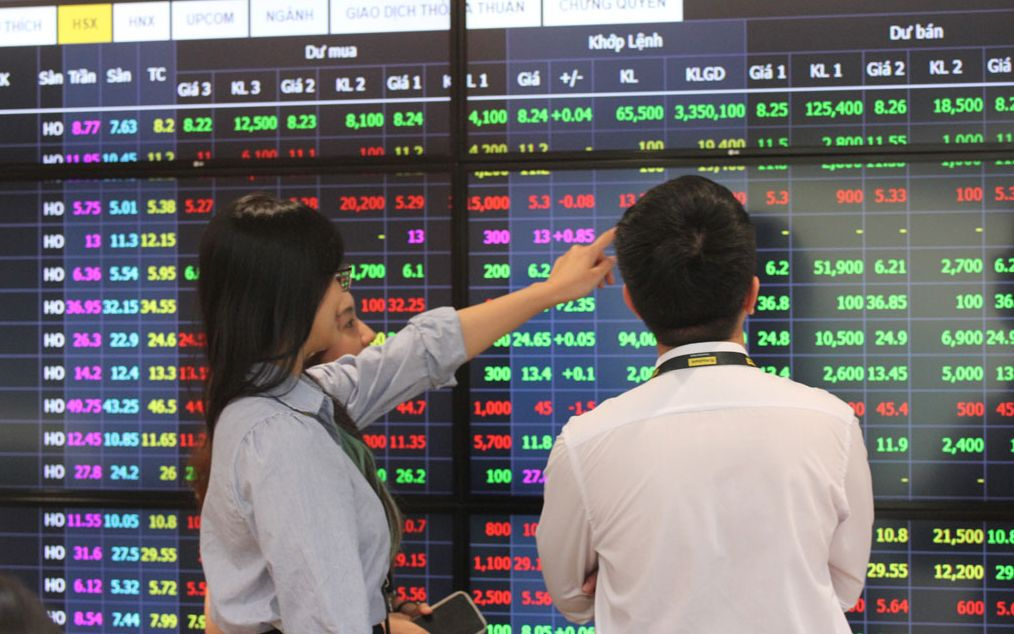
Analyzing the growth drivers in more detail, the CEO of OCBS pointed out the solid "three pillars" that supported the economy over the past year. Firstly, public investment was aggressively boosted with an impressive disbursement rate. Secondly, realized foreign direct investment (FDI) reached its highest level in the last five years. And the final, equally important piece, was the ability to keep inflation stable below 4%. This stable macroeconomic foundation created valuable consistency in the expectations of the business community and investors.
For the capital market, 2025 is considered a historic milestone as Vietnam is officially upgraded by FTSE Russell. This new position on the international financial map has had an immediate positive impact on market sentiment. Although liquidity has not yet exploded as some of the most optimistic expectations, the VN-Index has made a spectacular recovery from the 1,580-1,590 point range to reach 1,700 points in early December. With a growth rate of nearly 35% since the beginning of the year, Vietnamese stocks have joined the group of the best-performing markets globally.
However, Mr. Nguyen Duc Quan Tung also noted the profound divergence occurring. While large-cap sectors are leading the index, many stocks have recorded declines of 20-30% from their peaks. From an analytical perspective, this phenomenon has two important implications: on the one hand, the market is operating a rigorous self-screening and revaluation mechanism based on the intrinsic quality of businesses; on the other hand, this decline opens up a great opportunity to accumulate quality stocks at attractive valuations.
Overall, 2025 is not just a recovery story, but serves as a pivotal year, laying the foundation for growth in 2026 and triggering a long-term market re-rating process.
Three key areas of reform and the transformation of financial institutions.
Upgrading the market status is only a necessary condition. For large capital flows to truly and sustainably enter Vietnam, Mr. Tung emphasized three key reform priorities that the market needs to accelerate.
First, there's the institutional issue. "Bottlenecks" like pre-funding requirements are creating psychological barriers for foreign investors due to a lack of flexibility compared to international practices. Improving the non-pre-funding mechanism, increasing transparency regarding foreign ownership limits (FOL), and allowing online order placement through global securities firms are urgent steps. These reforms are not only aimed at meeting FTSE Russell's criteria for a formal upgrade to secondary emerging market status in September 2026, but also towards achieving MSCI standards in the 2028–2030 period.
The second key area lies in market infrastructure. The official operation of the KRX system from May 2025 is a major step forward, but not enough. The market needs to continue implementing the central counterparty (CCP) clearing model from 2027, enhance the capacity of the straight-through processing (STP) system, and especially expand exchange rate hedging products – an essential tool in the context of volatile global finance.
Thirdly, there are requirements for information transparency and product quality. International investors always prioritize markets with exemplary corporate governance and compliance with ESG (Environmental, Social, and Governance) standards. Although Decree 245 has shortened the IPO period from 90 days to 30 days, the market still needs stronger impetus to promote high-quality IPOs and loosen foreign ownership limits in non-sensitive sectors.
Notably, market dynamics compel participating members to upgrade themselves to adapt. At OCBS, the development strategy is designed to closely follow three directions of market reform. The company is implementing a strong capital increase plan, from VND 1,200 billion in 2025 to VND 3,200 billion in 2026, aiming to join the club of securities companies with a market capitalization of VND 10,000 billion. This financial resource is intended to expand margin lending capacity, increase proprietary trading scale, and proactively engage in underwriting and product distribution for institutional clients.
Simultaneously, OCBS is investing heavily in technology and automation to ensure seamless integration with KRX, STP, and the future CCP mechanism. In particular, OCBS has identified Wealth & Asset Management as its strategic direction. During this "transitional" phase of the capital market, securities companies cannot simply be order takers; they must become long-term financial partners, providing portfolio management solutions and in-depth investment advisory services to both large-scale individual clients and institutional investors.
2026 Scenario: A wave of IPOs and double-digit GDP targets.
Looking to the future, the issue of quality in the stock market is becoming more urgent than ever. With a market capitalization of approximately $260 billion, but with most fluctuations dependent on fewer than 30 large-cap stocks, the Vietnamese market is desperately in need of large-scale, transparent businesses that represent new key economic sectors.
The period from 2025 to 2027 is predicted to witness the largest wave of IPOs in history, offering opportunities for supply restructuring. The market will welcome businesses that dare to explore new markets and possess a genuine competitive position, rather than relying solely on "beautiful stories." Modern investors demand that businesses demonstrate their ability to create long-term value through market expansion strategies, technological innovation, and the ability to fulfill commitments.
On a macroeconomic level, Mr. Nguyen Duc Quan Tung believes that the target of 10% GDP growth in 2026 is entirely feasible based on current data.
Firstly, the 2025 economic outlook (8% GDP growth, a strong trade surplus, high FDI, and low inflation) allows Vietnam to maintain low interest rates to support growth without putting excessive pressure on the exchange rate. Secondly, external factors are shifting favorably as the US Federal Reserve (Fed) is expected to enter a cycle of interest rate cuts, helping to stabilize the VND/USD exchange rate and creating room for domestic policy tools. Thirdly, and most importantly, there is a determination to reform institutions to remove bottlenecks for approximately 2,200 stalled projects (accounting for nearly 50% of GDP). Unlocking this enormous resource will create a breakthrough growth impetus for the business sector.
Under this synergistic effect, the stock market in 2026 is projected to enter a new growth cycle, driven by two factors: corporate profits and attractive valuations. Earnings per share (EPS) growth is expected to reach 18% to 20% thanks to expanding macroeconomic conditions and positive credit growth. Regarding valuations, the projected P/E ratio for 2026 is 11-12 times – significantly lower than the average of 15 times over the past five years and lower than the rate of profit growth. A PEG ratio below 1 indicates significant room for revaluation, especially when compared to other emerging markets in the region.
Sectors expected to lead the rally include Banking (attractive valuations, stable profits), Securities (benefiting from IPOs and market upgrades), Consumer Goods - Retail (recovering domestic demand), along with Industrial Real Estate and Energy.
To capitalize on this cycle, financial institutions like OCBS are actively preparing resources along four key lines: increasing the depth of research and analysis; developing an investment banking (IB) team to support businesses in capital restructuring; providing high-end asset management solutions for VIP investors and institutions; and finally, applying AI and big data to optimize the investment experience.
When the government , regulatory agencies, and market participants coordinate decisive action, the Vietnamese stock market will not passively wait for capital, but will proactively become a "magnet" attracting quality capital, realizing the aspiration for rapid economic growth in the new era.
Source: https://daibieunhandan.vn/tu-buoc-ngoat-nang-hang-den-khat-vong-tang-truong-kep-can-chien-luoc-dong-von-cho-ky-nguyen-moi-tran-huong-10399975.html















![[Infographic] Cross-exchange rates for determining taxable value from December 11-17](https://vphoto.vietnam.vn/thumb/402x226/vietnam/resource/IMAGE/2025/12/11/1765413245543_infographic-ty-gia-tinh-cheo-de-xac-dinh-tri-gia-tinh-thue-tu-11-1712-20251211021920.jpeg)















![[Video] The craft of making Dong Ho folk paintings has been inscribed by UNESCO on the List of Crafts in Need of Urgent Safeguarding.](https://vphoto.vietnam.vn/thumb/402x226/vietnam/resource/IMAGE/2025/12/10/1765350246533_tranh-dong-ho-734-jpg.webp)


























































Comment (0)