

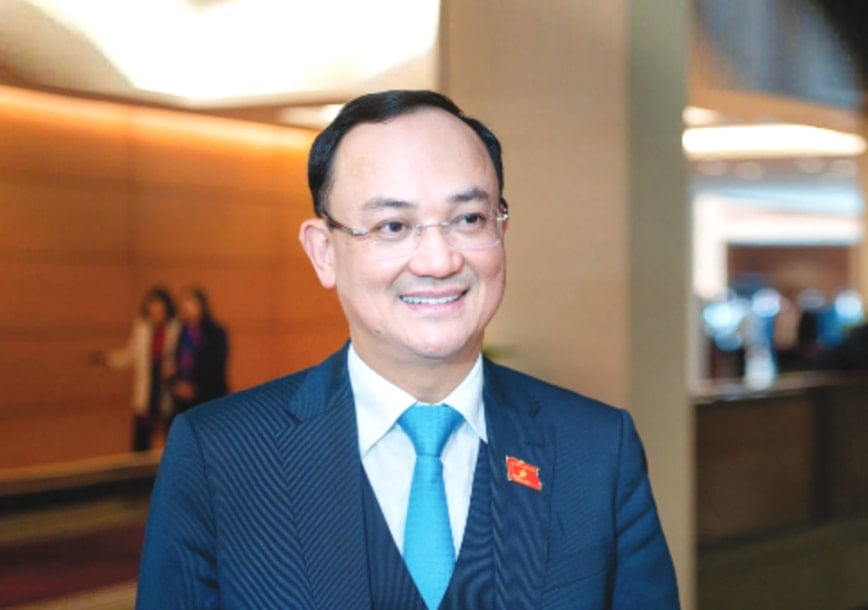
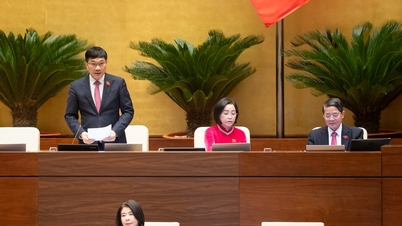
In an interview with the People's Representatives Newspaper, National Assembly Deputy Nguyen Thi Viet Nga ( Hai Phong ) expressed her belief that innovations in the methods of discussion and session conduct, as well as the solid foundation for the "Digital National Assembly" model, will provide a basis for the next National Assembly to continue to excellently fulfill the tasks entrusted by voters and the people.
Work at full capacity and with high intensity to complete the assigned tasks.
- Today, the Tenth Session enters its final day after a period of serious and responsible work. How do delegates assess this special session?
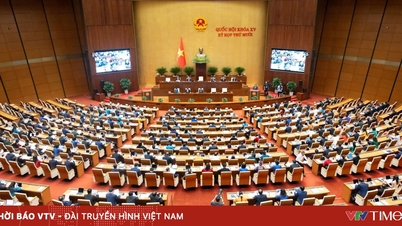
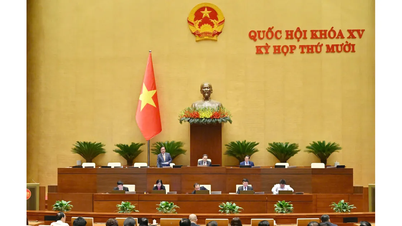
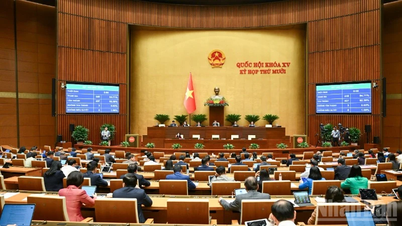
- The Tenth Session was the final regular session of the 15th National Assembly , thus leaving the delegates with many special emotions and impressions. This session set many records, both in terms of working time and the volume of content considered and decided upon.

Photo: Pham Thang
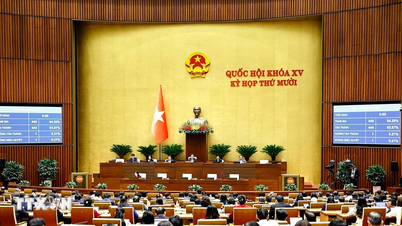
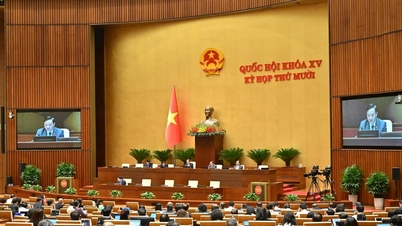
The session opened on October 20th and is scheduled to close this afternoon, December 11th, lasting nearly two consecutive months without a break, with many sessions even taking place on Saturdays. This is the longest session in the National Assembly's history. Furthermore, the volume of work that the National Assembly has to consider, discuss, and decide upon is unprecedented. Initially, the National Assembly planned to consider and pass approximately 49 laws and resolutions. However, due to the urgent demands of national development, the total number of issues under consideration has increased to around 80.
In that context, the National Assembly, the Standing Committee of the National Assembly, the National Assembly's agencies, and each delegate worked diligently with the highest sense of responsibility, maintaining a high intensity of work to promptly complete a record volume of work, contributing to ensuring the quality of policy decisions and the overall progress of the session.
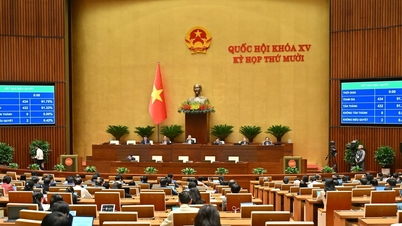
- At this session, especially yesterday, many laws and resolutions closely related to the lives, production, and business activities of citizens and enterprises were passed by the National Assembly with a high percentage of approval. How do you personally view these decisions?
- The laws and resolutions passed by the National Assembly at this session are closely related to people's lives, such as those concerning personal income tax, education , disease prevention, population, construction, and land. In education, the National Assembly's unification of a single set of textbooks, consideration of tuition fee exemption, provision of free textbooks for students, and policies on salaries and allowances for teachers are all issues that the public is interested in and closely monitoring.
In the healthcare sector, proposals and decisions related to waiving hospital fees, strengthening primary healthcare, and ensuring people's health care right from the front lines... are also highly appreciated by the public.
These are two areas that every family is involved in: health is a matter of life and death, while education is a long journey from preschool to university and postgraduate studies.
Overall, these social security policies directly bring practical benefits, helping people to have fuller access to education and healthcare services; clearly demonstrating the goal of improving people's rights and creating conditions for people to access better and fairer services.
Simultaneously, policies also prioritize the rights and interests of teachers and medical staff. To improve the quality of education and healthcare for the people, due attention must be paid to those directly involved in these tasks. New regulations on salary scales, incentives for medical staff, and policies on training medical personnel demonstrate efforts to address long-standing bottlenecks, from manpower shortages and brain drain to the overload of the healthcare system.
If implemented consistently upon taking effect, the new Laws and Resolutions will help overcome many long-standing difficulties. For example, primary healthcare has not received adequate attention, leading people to flock to higher-level facilities; and in education, quality remains uneven in some areas.
In particular, the regulations in the Law on Disease Prevention, recently passed by the National Assembly, emphasize disease prevention, lifestyle adjustments, and reducing the burden of disease in light of the current situation in our country – where non-communicable diseases account for a large proportion. Implementing these new regulations will help not only increase life expectancy but also increase the number of years people live in good health.
Shifting from quantity to quality and the "silver economy"
- The Population Law, recently passed by the National Assembly, marks a fundamental change, shifting the focus of population policy from family planning to population and development, isn't that right, delegates?
- Vietnam was the first country to enact a Population Law, a practice unmatched by any other country in the world to date. While the Population Law cannot encompass the needs of over 100 million people, it strives to meet their needs to the fullest extent. However, I acknowledge that the Law has significantly shifted the management mindset, moving from a focus on quantity to a greater emphasis on quality. Population is considered an invaluable national resource, determining the quality of the future workforce. An improved population quality translates into improved socio-economic growth.
A particularly progressive aspect of this Law is its emphasis on adapting to population aging. Vietnam is rapidly entering a stage of population aging – an irreversible trend. Therefore, along with policies to maintain replacement fertility rates, we need to prepare long-term adaptation solutions. This goes beyond simply caring for the elderly; it also aims at developing a "silver economy," promoting the role of older people – those with extensive experience, still capable of contributing, and eager to continue participating in social activities. This is a positive approach, avoiding viewing the elderly as a burden while simultaneously providing them with motivation and contributing to an improved quality of life.
For these regulations to be effectively implemented, specific policies and detailed guidance mechanisms are needed to encourage the continued participation and contribution of the elderly; to create conditions for them to play a role in the community and society, and to improve their spiritual well-being and that of their families.
- Faced with a large workload and numerous laws and resolutions to be considered and passed, the National Assembly continues to innovate strongly by organizing discussions on a number of draft laws and resolutions by sector. How does this innovation in the method of conducting these sessions affect the quality and effectiveness of the National Assembly's activities, delegates?
A new approach in the organizational method is to group together laws belonging to the same content category (such as education laws and national target programs) in the same session. This method helps delegates easily compare and contrast legal provisions, ensuring consistency and avoiding legal conflicts.
Currently, when discussing individual draft laws and resolutions, National Assembly deputies still review and compare them with related laws. However, this is more laborious and creates interruptions. When we place related draft laws, belonging to the same field, in discussion, there will be more opportunities for deputies to compare them, immediately identify conflicts and inconsistencies between laws, and make timely adjustments, contributing to ensuring the quality of laws passed by the National Assembly.
A notable point in these general discussions was the numerous practical obstacles, most notably the mechanisms for building a workforce of teachers and doctors for mountainous regions and ethnic minorities, and postgraduate training in the health sector (resident physicians, specialists). Delegates clearly identified these issues in specific laws and proposed thorough solutions. The demands from real life, entrusted by voters, were brought into the parliamentary arena. This convinced the drafting and reviewing bodies to incorporate these issues into the laws and resolutions.
Members of Parliament and voters strongly support this new method of discussion in the National Assembly.
The "Digital Parliament" model has a solid foundation starting today.
- The final session of the 15th National Assembly is drawing to a close, simultaneously ushering in a new term filled with trust and expectations, delegates?
- Looking ahead to the 16th National Assembly, the tasks ahead will be very challenging but glorious. The election of deputies to the 16th National Assembly and representatives to the People's Councils at all levels for the 2026-2031 term will take place earlier (March 2026) right after the 14th National Party Congress, promptly meeting the requirements for institutionalizing the Party's new policies and guidelines.
Furthermore, the global and domestic contexts are also undergoing rapid changes, from the impact of the fourth industrial revolution and shifts in global geopolitics to the effects of climate change, therefore the workload of the 16th National Assembly will likely be very heavy.
However, with the fine traditions of the Vietnamese National Assembly over the past 80 years, inheriting and building upon the achievements and experiences from the reforms, and improving the quality, efficiency, and effectiveness of the activities of previous National Assemblies, especially the 15th term, I believe that the 16th National Assembly will have a smooth continuation, successfully fulfilling the tasks set forth, especially implementing the "Digital National Assembly" model, which has been firmly established from today. The re-elected National Assembly deputies will continue to spread the spirit of reform to the deputies of the 16th National Assembly.
Thank you , delegates!
National Assembly Deputy Nguyen Ngoc Son, a full-time member of the Committee on Science, Technology and Environment, stated: "An important prerequisite, creating a foundation for Vietnam to make a strong breakthrough in the next decade."
The National Assembly has just passed a large volume of laws and resolutions, which are expected to have a profound impact on socio-economic life when they come into effect, marking an important step in completing the institutional system for the 2026-2031 development period of our country. Laws on taxes, prices, public debt management, national reserves, insurance, etc., are expected to contribute to strengthening the national finance and budget in a transparent and disciplined manner, creating room for macroeconomic stability and enhancing the resilience of the economy against "shocks".
The group of laws on land, planning, investment, and strategic infrastructure opens up new development opportunities, removes long-standing bottlenecks, thereby promoting the disbursement of public investment, attracting FDI, and creating momentum for regional growth.
Laws on population, disease prevention, residence, enforcement of judgments, and civil servants clarify the rights and obligations of citizens; improve the quality of public services; and strengthen social discipline and order. Meanwhile, laws on cybersecurity, state secrets, drug prevention, and the defense industry will create a comprehensive security "shield," ensuring a stable environment for economic development. In particular, laws related to science and technology, digital transformation, artificial intelligence, intellectual property, and education and training pave the way for innovation and the development of high-quality human resources – a decisive factor in national productivity and competitiveness. The resolution on monitoring the implementation of the Environmental Protection Law emphasizes the pillar of sustainable development, promoting the circular economy and the environmental industry. This is a prerequisite in the process of comprehensive institutional reform; if implemented seriously, it will create a foundation for Vietnam to make a strong breakthrough in the next decade.
Through its legislative work, the National Assembly not only perfects the legal system but also plays a constructive and guiding role, ensuring that all major policy decisions are directed towards building a modern, sustainable, and highly competitive Vietnam in the next decade.
Source: https://daibieunhandan.vn/ky-hop-thu-muoi-quoc-hoi-khoa-xv-no-luc-lam-viec-voi-trach-nhiem-cao-nhat-tao-nhieu-dau-an-doi-moi-noi-bat-dat-nen-tang-cho-quoc-hoi-so-10400027.html























![[Video] The craft of making Dong Ho folk paintings has been inscribed by UNESCO on the List of Crafts in Need of Urgent Safeguarding.](https://vphoto.vietnam.vn/thumb/402x226/vietnam/resource/IMAGE/2025/12/10/1765350246533_tranh-dong-ho-734-jpg.webp)






























































Comment (0)