

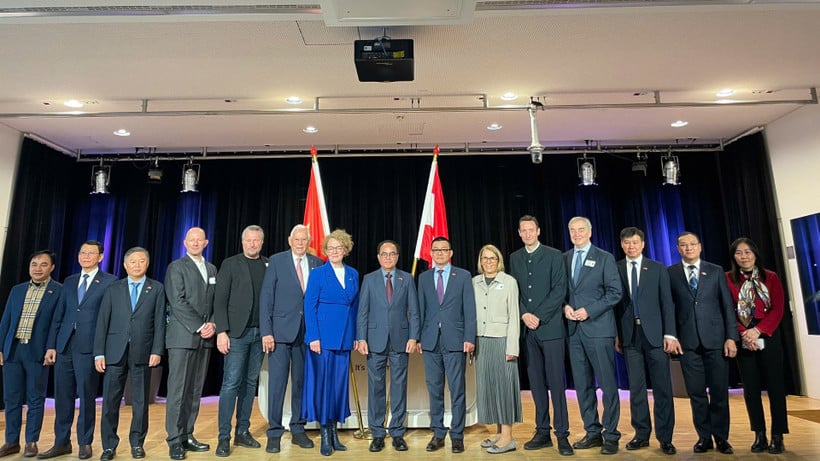
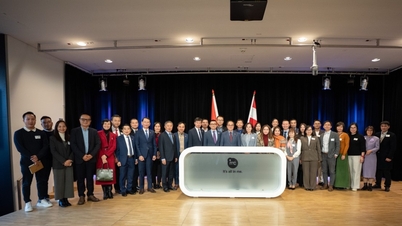
The Vietnam-Austria Cooperation Forum on Skilled Labor and Vocational Training was organized by the Vietnamese Embassy in Austria in collaboration with Krems University of Applied Sciences (IMC Krems), the Austrian Federal Chamber of Commerce (WKO), and the Austrian Agency for Business and Employment Promotion (ABA).
The forum was attended in person by 170 delegates and online by 150 delegates, including representatives from the Department of Vocational Education and Continuing Education, the Department of International Cooperation of the Ministry of Education and Training , and more than 30 Vietnamese companies and vocational schools.
Representing Austria were Margit Kreuzhuber, Deputy Director General for Labor at the Austrian Business and Labor Promotion Agency (ABA); Christiane Teschl-Hofmeister, Minister of Lower Austria for Social and Educational Affairs; and Peter Molnar, Mayor of Krems.
The forum included three sessions updating the policy and legal environment on labor in both countries, opportunities and challenges for cooperation in the fields of healthcare and nursing, tourism and hotel and restaurant management, information technology, and other industries.
In his opening remarks at the Forum, Ambassador Vu Le Thai Hoang highly appreciated the interest and active participation of numerous representatives from the governments, associations, businesses, and training institutions of both countries, thereby demonstrating the potential and need to open up the skilled labor market and cooperate in vocational training between Vietnam and Austria.
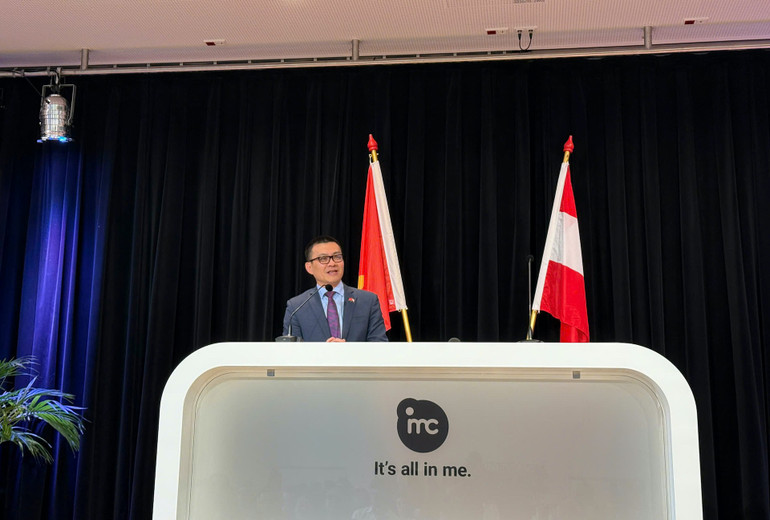
Minister Teschl-Hofmeister assessed the Forum as an important and timely initiative, reflecting the growing interest in the potential and strengths of labor cooperation and vocational training between the two countries, with IMC-Krems University being a symbol with 150 Vietnamese nursing students receiving full scholarships and efforts to expand vocational training cooperation with partners in Vietnam.
In his opening remarks, Deputy Minister Vu Chien Thang emphasized that Vietnam is currently in a period of "golden demographic structure" with 68% of its population in the working age group and a steady annual growth of 1 million people. With a comprehensive international integration orientation, Vietnam recognizes that sending workers abroad is not only a socio-economic solution but also an important "human resource diplomacy" channel, helping to improve the skills and industrial work ethic of its workforce.
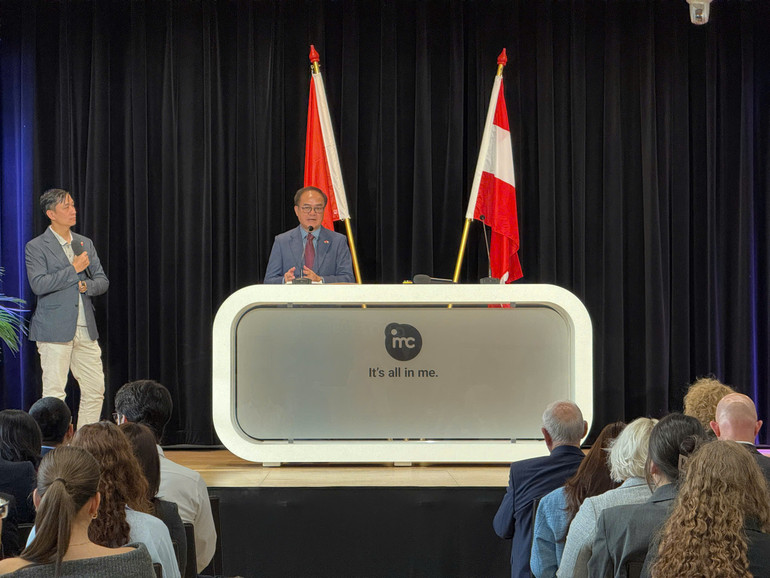
Currently, Vietnam has over 860,000 workers abroad in more than 40 different markets, working in sectors ranging from high technology and information technology to nursing and agriculture. Austria needs to supplement its high-quality workforce to compensate for shortages due to its aging population, while Vietnam has a young, intelligent, hardworking, and eager-to-learn workforce, thus creating significant mutual support between the two economies.
Deputy Minister Vu Chien Thang expressed his belief that the Vietnamese labor community in Austria will play a role as a bridge for cultural exchange, deepening and strengthening the comprehensive partnership between the two sides.
In a cooperative and open atmosphere, the Deputy Minister suggested that delegates at the Forum frankly exchange views, identify "bottlenecks," and propose specific solutions to overcome them, so that the activities of sending Vietnamese workers to Austria become more substantive, effective, and practical in the future.
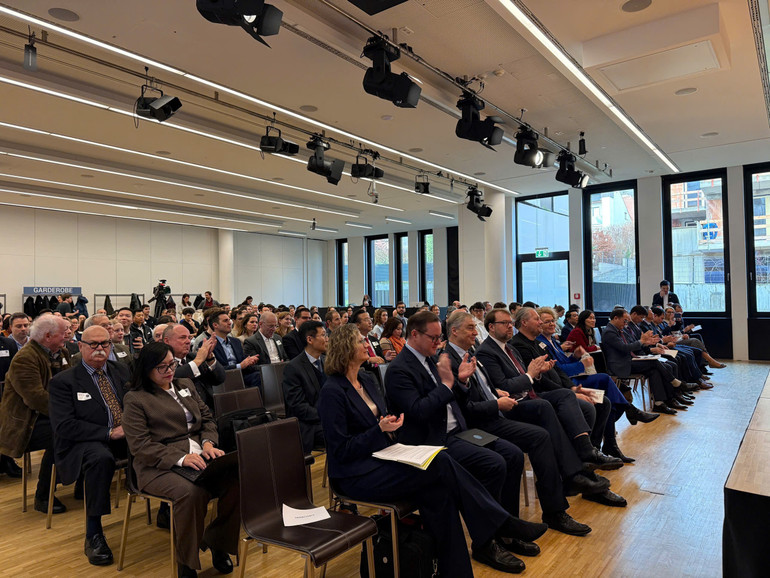
Also at the Forum, Mr. Vu Truong Giang, Acting Director of the Department of Overseas Labor Management (Ministry of Interior), said that although the two countries have not yet signed an official agreement, there have been positive signs with 55 Vietnamese workers currently working in Austria through three pilot enterprises. The workers have stable incomes (approximately 2,000 EUR/month) and are guaranteed good welfare benefits. Based on this, Mr. Vu Truong Giang proposed that the two sides soon negotiate and sign a labor cooperation agreement to create a legal framework in the near future.
Within the framework of the Forum and its side activities, Austrian partners proactively contacted, exchanged information, and asked numerous questions and made proposals to the Vietnamese Ministry of Interior delegation regarding the need for human resource training in sectors where Austria has a demand, such as information technology, nursing and healthcare, home care services, green farming, seasonal agriculture, and restaurant and hotel management and service.
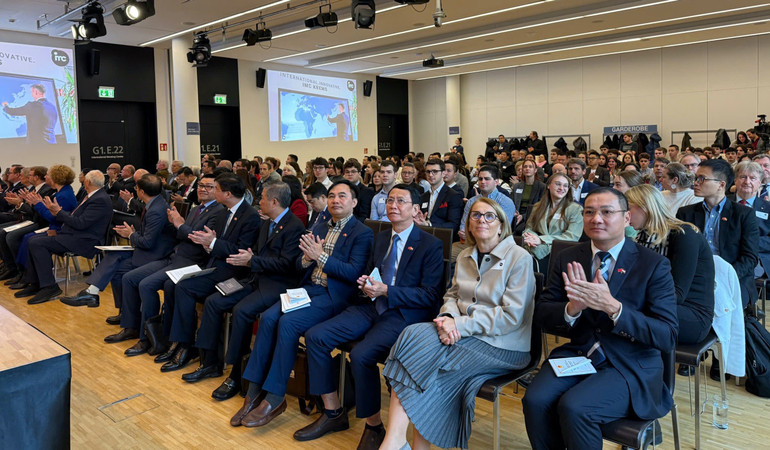
In discussions with potential partners in Austria, Deputy Minister Vu Chien Thang affirmed that the Forum is an opportunity for the two countries to enhance understanding of Vietnam's human resource needs and Austria's strengths in vocational training for Vietnam, opening up avenues for cooperation in industries requiring high skills, expertise, and a modern industrial work ethic.
Both sides will assign a focal point to continue researching, exchanging views, reaching consensus, and implementing the procedures correctly as prescribed, reporting to the competent authorities for consideration, with the aim of soon signing a bilateral labor cooperation agreement. This will create a formal and sustainable legal framework, paving the way for many concrete cooperation prospects, thereby contributing to realizing the goal of making labor cooperation an important pillar in the Vietnam-Austria partnership.
Source: https://nhandan.vn/thuc-day-hop-tac-lao-dong-viet-nam-ao-khai-mo-thi-truong-lao-dong-chat-luong-cao-post929421.html



![[Photo] Prime Minister Pham Minh Chinh holds a phone call with the CEO of Russia's Rosatom Corporation.](/_next/image?url=https%3A%2F%2Fvphoto.vietnam.vn%2Fthumb%2F1200x675%2Fvietnam%2Fresource%2FIMAGE%2F2025%2F12%2F11%2F1765464552365_dsc-5295-jpg.webp&w=3840&q=75)
![[Photo] Closing Ceremony of the 10th Session of the 15th National Assembly](/_next/image?url=https%3A%2F%2Fvphoto.vietnam.vn%2Fthumb%2F1200x675%2Fvietnam%2Fresource%2FIMAGE%2F2025%2F12%2F11%2F1765448959967_image-1437-jpg.webp&w=3840&q=75)






















































Comment (0)