

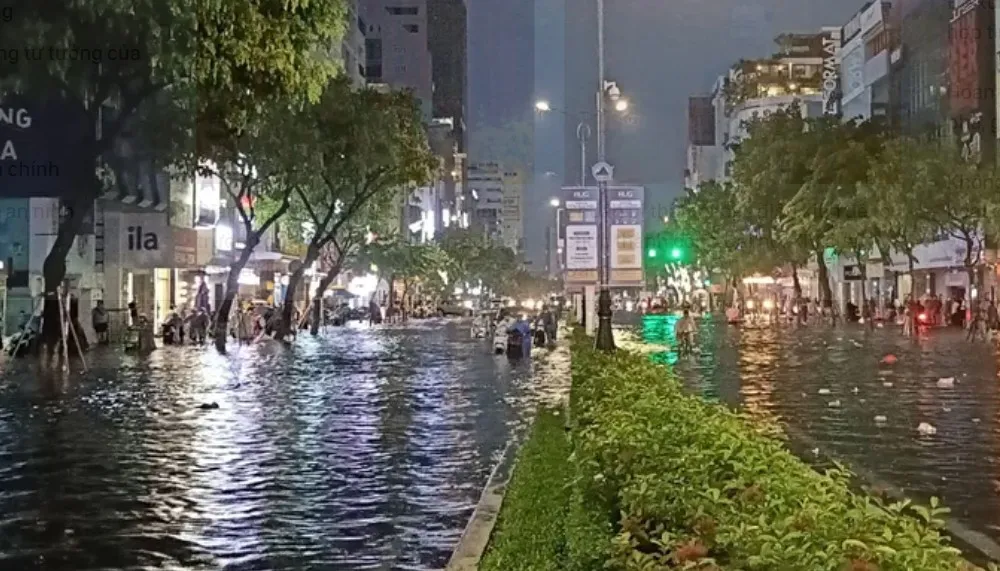
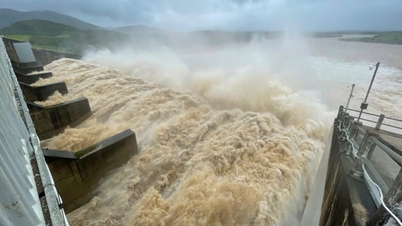
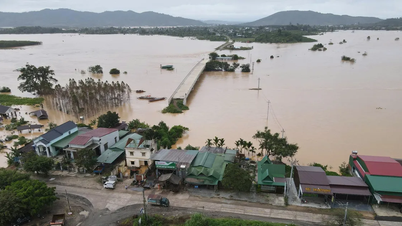
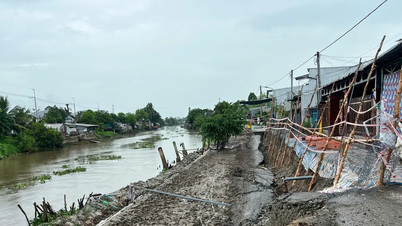
Flood control efforts in the central areas of the former Da Nang City and the former Tam Ky City have shown positive progress recently. Many areas that previously experienced prolonged flooding now see reduced levels of flooding or faster drainage after heavy rains.
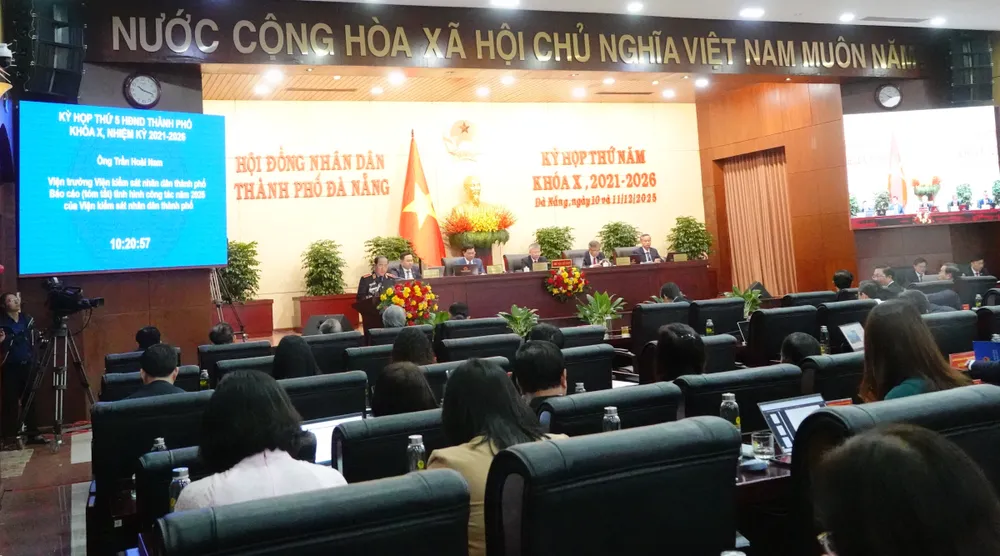
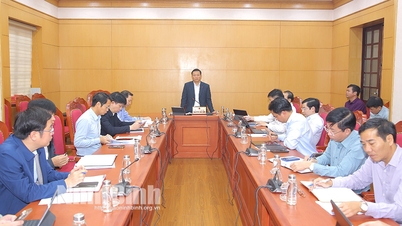
However, the Da Nang City People's Council's supervisory team pointed out many shortcomings that have not been thoroughly addressed, such as the slow progress in approving drainage plans compared to the schedule, some projects being delayed due to land clearance issues, inconsistent design and construction capabilities, and ineffective coordination between units.
During the construction and renovation of technical infrastructure on roads, some construction units failed to clear and remove debris, seriously affecting the drainage capacity of the sewers. Some residents also dumped garbage into sewers and drainage canals, or arbitrarily covered and modified drainage inlets, encroaching on and constructing illegally, damaging drainage structures and reducing their water collection capacity.
In the context of increasingly unpredictable extreme weather events, with the frequency of heavy rainfall combined with high tides tending to increase rapidly, many current drainage design standards and technical regulations are outdated compared to the realities of climate change, and the drainage system faces the risk of not meeting operational requirements in the near future. The increase in urban density, concrete construction, and the shrinking of natural water infiltration areas are making the flooding problem more complex and potentially prolonged if the city does not have a comprehensive strategy and only addresses localized issues.
According to the monitoring team, for the investment process to be effective, Da Nang needs to shift to a systematic, modern, and climate-adaptive approach to urban flood management. It is necessary to research and develop management solutions and strategies tailored to the topography and conditions of each area (such as: opening additional drainage lines, redistributing drainage basins, investing in forced pumping stations, establishing buffer zones "allowing flooding," expanding flood corridors, strengthening and linking regulating reservoirs, and applying science and technology in the management, monitoring, and operation of the drainage system...).
Initially, the monitoring team requested the Da Nang City People's Committee to consider and approve the Project on infrastructure in the central area and special priority areas of the city to effectively respond to and handle flooding caused by extreme weather and rainfall.
Source: https://www.sggp.org.vn/da-nang-chuyen-tu-ung-pho-tinh-huong-sang-chien-luoc-chong-ngap-dai-han-post827936.html









































![[OFFICIAL] MISA GROUP ANNOUNCES ITS PIONEERING BRAND POSITIONING IN BUILDING AGENTIC AI FOR BUSINESSES, HOUSEHOLDS, AND THE GOVERNMENT](https://vphoto.vietnam.vn/thumb/402x226/vietnam/resource/IMAGE/2025/12/11/1765444754256_agentic-ai_postfb-scaled.png)










































Comment (0)