

The National Assembly has agreed to increase health insurance contributions from 2027 to move towards universal free medical care at a basic level, following a roadmap appropriate to the country's conditions, starting from January 1, 2030.
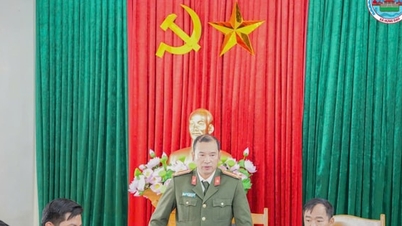
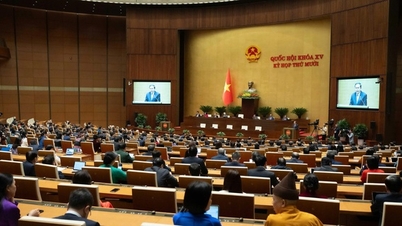
On the morning of December 11th, the National Assembly passed a Resolution on a number of special mechanisms and policies aimed at creating breakthroughs in protecting, caring for, and improving the health of the people. The Resolution assigns the Government the task of regulating the scope and roadmap for increasing health insurance benefits, and the list of diseases covered by the Health Insurance Fund for screening, diagnosis, and early treatment; this must be implemented in conjunction with the roadmap for increasing health insurance contributions starting in 2027.
Increase health insurance contributions to move towards basic free hospital services within the scope of benefits for participants, following a roadmap consistent with socio- economic conditions and the balancing capacity of the Health Insurance Fund.
The National Assembly requested an increase in the percentage and level of reimbursement for medical examination and treatment costs under health insurance, including funding for screening, early diagnosis and treatment of certain diseases, and priority areas from the Health Insurance Fund.
Individuals participating in health insurance who are near-poor households, and those aged 75 and over receiving social retirement benefits, will receive 100% coverage for medical examination and treatment within their eligibility limits. Those covered under social welfare policies, vulnerable groups, low-income earners, and other priority groups will receive increased health insurance benefits. The health insurance fund will cover the costs of screening, diagnosis, and early treatment of certain diseases; health insurance packages will be diversified to meet the needs of the population.

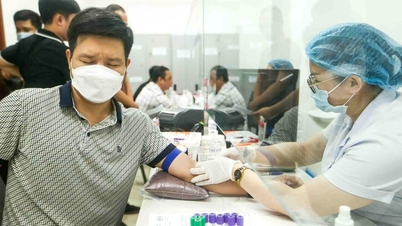
Currently, the health insurance contribution rate is 4.5% of the basic salary. In 2024, the health insurance fund spent nearly 140 trillion VND on more than 183 million medical examinations and treatments, with people having to pay more than 40% of the costs themselves. The burden on healthcare remains significant, while primary healthcare facilities do not yet provide adequate initial care and screening services.
Based on this situation, the Ministry of Health is developing a roadmap for universal free medical examinations linked to increasing health insurance contributions in stages. In the 2026-2027 period, people will receive at least one annual health check-up or screening; the near-poor and those aged 75 and over receiving social retirement benefits will have 100% of their costs covered within their benefit entitlements. Health insurance contributions are expected to increase to 5.1% from 2027.
During the period 2028-2030, the goal is to reduce the proportion of people who have to pay out of pocket to below 30% and to pilot screening for 2-3 cost-effective diseases. The contribution rate will increase to 5.4% from 2030, while simultaneously implementing a pilot program for supplementary health insurance and diversifying service packages.
In the period after 2030, the Ministry of Health proposes moving towards universal health insurance coverage, expanding screening for 3-5 diseases, and waiving hospital fees within the scope of the basic service package. The contribution rate is expected to increase to 6% from 2032. Along with this, the primary healthcare network and the health insurance payment system will be improved, becoming smarter, multi-tiered, and offering a wider range of benefits.
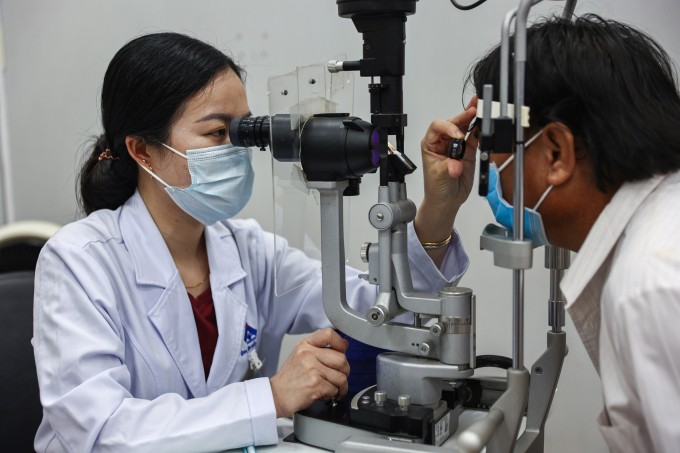
The resolution also allows for the application of salary and allowance mechanisms for healthcare workers. Medical doctors, traditional medicine practitioners, dentists, preventive medicine doctors, and pharmacists will be assigned salaries starting from bậc 2 (level 2) upon recruitment into their respective professional positions until new salary regulations are issued.
Individuals who regularly and directly perform medical professional work in the fields of psychiatry, forensic medicine, forensic psychiatry, emergency resuscitation, and pathology are entitled to a 100% professional incentive allowance. Medical professionals working at commune-level health stations and preventive health facilities in ethnic minority areas, mountainous regions, difficult or extremely difficult areas, border areas, and islands are entitled to 100% of the professional incentive allowance; in other areas, commune-level health station staff are entitled to at least 70% of the professional incentive allowance.
88.6 trillion VND allocated to healthcare and population.
Earlier that day, the National Assembly passed a Resolution approving the investment plan for the National Target Program on Health Care, Population and Development for the period 2026-2035. The total capital for the 2026-2030 period is 88,600 billion VND, including 68,000 billion VND from the central government, 20,000 billion VND from local governments, and nearly 600 billion VND from other sources. For the 2031-2035 period, based on the results of the first phase, the Government will submit to the National Assembly a proposal for resource allocation.
The program aims to ensure that all citizens receive primary healthcare and early disease prevention at the local level; increase the birth rate and adapt to an aging population; care for vulnerable groups; and improve physical and mental health, stature, life expectancy, and quality of life.
The specific targets for 2030 are to reduce the rate of stunting in children under 5 years old to below 15%, and to 13% by 2035. The crude birth rate will increase by 0.5 per thousand in 2030 compared to 2025. The sex ratio at birth will decrease to below 109 boys/100 girls by 2030 and to 107 by 2035. The rate of men and women receiving pre-marital counseling and health check-ups will reach 90% by 2030 and 95% by 2035.
Source: https://baolaocai.vn/tang-muc-dong-bao-hiem-y-te-tu-2027-de-tien-toi-mien-vien-phi-toan-dan-post888694.html


![[Photo] Closing Ceremony of the 10th Session of the 15th National Assembly](/_next/image?url=https%3A%2F%2Fvphoto.vietnam.vn%2Fthumb%2F1200x675%2Fvietnam%2Fresource%2FIMAGE%2F2025%2F12%2F11%2F1765448959967_image-1437-jpg.webp&w=3840&q=75)









































![[OFFICIAL] MISA GROUP ANNOUNCES ITS PIONEERING BRAND POSITIONING IN BUILDING AGENTIC AI FOR BUSINESSES, HOUSEHOLDS, AND THE GOVERNMENT](https://vphoto.vietnam.vn/thumb/402x226/vietnam/resource/IMAGE/2025/12/11/1765444754256_agentic-ai_postfb-scaled.png)







































Comment (0)