

The trick isn't new, but it's becoming increasingly sophisticated.
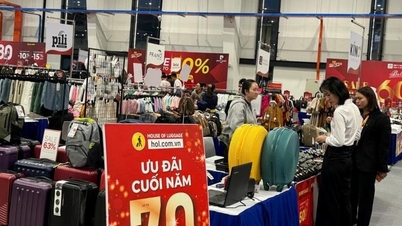
The end of the year is the shopping season, and social media and e-commerce platforms are buzzing with slogans like "Shocking Sale," "70% Off," and "Once-in-a-Year Opportunity"... Many consumers are swept up in this shopping frenzy, believing they're finding a rare bargain. But what lies behind the glitz and glamour of these red-label discounts? In many cases, it's just a "fake discount"—a trick that's not new but is becoming increasingly sophisticated, designed to legally but unethically fleece customers.
In reality, many consumers are all too familiar with the trick of inflating product prices and then labeling them as heavily discounted. A regular shirt that normally sells for 300,000 VND might be priced at 600,000 VND before a shopping festival, and then immediately labeled "50% off." Buyers think they're saving half the price, but in fact, no discount exists.
It's worth noting that this tactic isn't limited to small retailers; even some well-known brands are getting involved. Retaining customers, meeting sales targets, or running marketing campaigns are leading many businesses to sacrifice customer trust for short-term profits. Many online shoppers have experienced this: seeing a heavily discounted product with an attractive design and numerous five-star reviews, only to find the quality far below expectations upon delivery. These "deeply discounted" versions are sometimes not genuine products but rather leftover stock, defective goods, or even counterfeit items disguised with glamorous images and fake reviews.

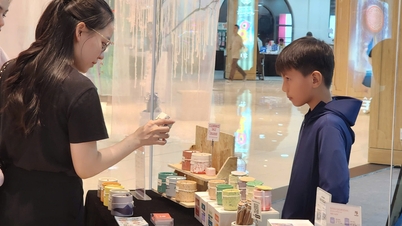
Events associated with Black Friday sales have contributed to stimulating consumer spending at the end of the year. Photo: VGP/Thuy Linh
A more sophisticated tactic involves splitting product packages or omitting accessories, yet still misleading consumers into believing they are getting a fully functional item at a bargain price. Upon receiving the product, customers discover they need to purchase additional accessories or pay extra for the product to function as advertised.
In fact, Vietnamese law has fairly clear regulations on promotional activities, especially regarding discounts not exceeding 50% of the listed price (except in some special cases). However, the loophole lies in the fact that the listed price can be arbitrarily changed, as long as the business publicly announces that price before the discount. Therefore, controlling the practice of artificially inflating prices before discounts is beyond the reach of regulatory agencies without concrete evidence or a system of price monitoring over time. Consumers, even if suspicious, find it difficult to prove that businesses are in violation. These lax regulations inadvertently create conditions for the increasing prevalence of "fake discounts," distorting the market and creating unfair competition.
The psychological factor cannot be ignored. People are easily swayed by the feeling of "fear of missing out" (FOMO) when they see attractive discounts. A countdown timer, the phrase "only 1 item left," or a list of "the 10 people who just bought this item" are simple marketing techniques that effectively target buyers. When emotions override reason, consumers easily click the order button without carefully checking the information. This haste creates opportunities for unethical marketing tactics to flourish.
Consumers need to be more vigilant.
Consumers who are cheated a few times may only lose a small amount of money, but the bigger impact is the erosion of trust. When customers no longer trust promotional programs, businesses that operate honestly will be most severely affected. A market where buyers are constantly suspicious makes trade stagnant and inefficient.
Trust, one of a brand's most valuable assets, is damaged not only by the sale of counterfeit or substandard goods, but also by deceptive practices such as "inflated prices." In the long run, businesses engaging in dishonest practices ultimately lead themselves into a dead end by losing customer support.
To minimize risks and protect their rights during the peak shopping season, the National Competition Commission has issued recommendations to consumers.
According to the National Competition Commission, consumers should use price tracking tools or check community reviews to determine whether discounts are genuine. Comparing prices across multiple stores helps consumers make more accurate assessments. This verification helps prevent businesses from arbitrarily raising original prices before offering discounts. Consumers should prioritize purchasing from authorized stores, large e-commerce platforms, or verified sellers. They should also carefully read return and exchange policies, warranties, additional fees, and discount periods to avoid purchasing products that are non-refundable due to discounts. Avoid buying from independent sellers, sellers without information, or those with many negative reviews. This minimizes the risk of buying counterfeit, low-quality, or unverified goods.
According to the National Competition Commission, consumers should retain invoices, payment receipts, screenshots of prices and promotional programs at the time of purchase, and videos of the unboxing process as evidence in case of disputes. Caution is advised when encountering products with excessively deep discounts exceeding market prices; unusual conditions; or unclear information about the supplier, quality, and safety certifications. These signs often indicate fraudulent pricing practices or the supply of substandard products that harm consumers. Therefore, consumers need to make informed decisions when choosing products.
"Fake discounts" are a worrying phenomenon in today's consumer market. They not only cause financial losses for buyers but also degrade the quality of the business environment. It's time for consumers to be more discerning, businesses to be more transparent, and regulatory agencies to take stronger action.
Year-end promotional programs offer many benefits to consumers and stimulate the market. However, the phenomenon of "fake discounts," price manipulation, and misleading promotions is on the rise, posing significant risks if consumers are not adequately informed. The National Competition Commission advises businesses and individuals to strictly comply with legal regulations and avoid fraudulent practices in promotions, as these actions not only affect consumer rights but also distort competition and erode market confidence. Simultaneously, consumers should proactively verify information, carefully consider their options, and promptly report any unusual behavior to contribute to building a safe, transparent, and fair consumer environment.
Source: https://congthuong.vn/giam-gia-ao-chieu-tro-ban-moc-tui-nguoi-tieu-dung-433335.html


![[Photo] Closing Ceremony of the 10th Session of the 15th National Assembly](/_next/image?url=https%3A%2F%2Fvphoto.vietnam.vn%2Fthumb%2F1200x675%2Fvietnam%2Fresource%2FIMAGE%2F2025%2F12%2F11%2F1765448959967_image-1437-jpg.webp&w=3840&q=75)














































![[OFFICIAL] MISA GROUP ANNOUNCES ITS PIONEERING BRAND POSITIONING IN BUILDING AGENTIC AI FOR BUSINESSES, HOUSEHOLDS, AND THE GOVERNMENT](https://vphoto.vietnam.vn/thumb/402x226/vietnam/resource/IMAGE/2025/12/11/1765444754256_agentic-ai_postfb-scaled.png)









































Comment (0)