

Also attending the Conference were members of the Politburo : Luong Cuong, President; Pham Minh Chinh, Prime Minister; Tran Cam Tu, Standing Member of the Secretariat; and other members of the Politburo, Secretariat, and Central Committee of the Party.
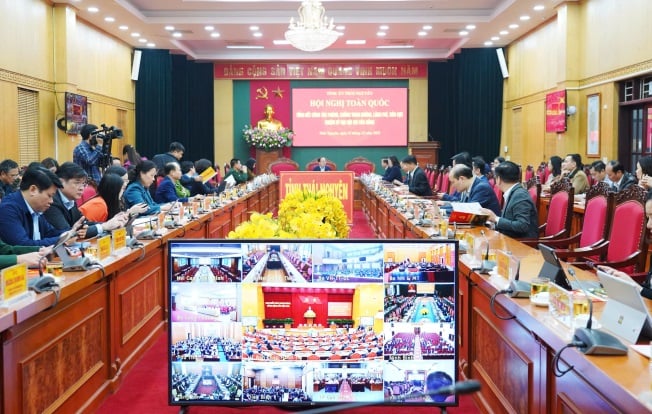
Thai Nguyen province's delegation participated in the online conference.
Comrade Trinh Xuan Truong, Secretary of the Thai Nguyen Provincial Party Committee, attended the Conference at the central headquarters. Attending at the Thai Nguyen Provincial Party Committee's headquarters were Comrade Nguyen Dang Binh, Standing Deputy Secretary of the Provincial Party Committee and Chairman of the Provincial People's Council; members of the Provincial Party Standing Committee; leaders of the Provincial People's Council and People's Committee; and leaders of provincial departments and agencies.
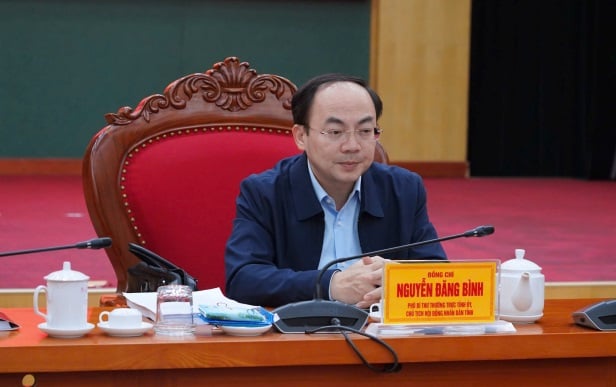
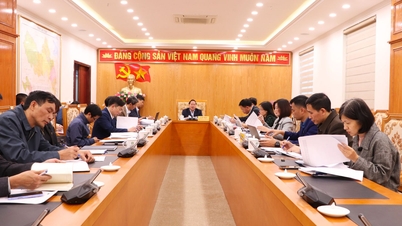
Comrade Nguyen Dang Binh attended the meeting at the Thai Nguyen Provincial Party Committee's location.
The conference was held in a hybrid format, combining in-person and online participation, connecting to over 4,000 locations including central ministries and agencies; military regions, branches of the armed forces; provinces, cities, communes, wards, and special zones nationwide, with the participation of over 190,000 delegates.
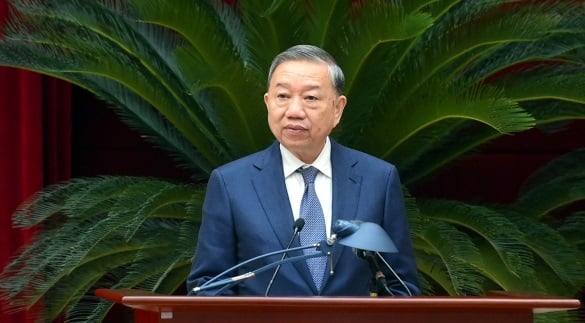
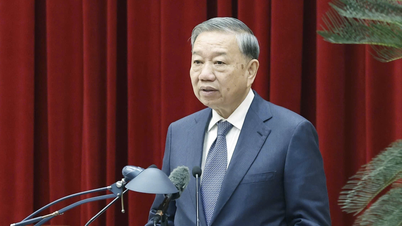
General Secretary To Lam delivered a directive speech at the Conference.
In his address to the conference, General Secretary To Lam stated that this conference is of great significance, not only in assessing the situation and results of the 13th term but also in reviewing 20 years of implementing Central Resolution 3 (10th Congress) on "Strengthening the Party's leadership in the fight against corruption and waste," one of the four major threats to the survival of the Party, the regime, and the country. More importantly, we have drawn lessons learned and agreed on major directions for the fight against corruption, waste, and negative phenomena in the coming period. This is a crucial task that cadres, Party members, and the people are very concerned about, and the demands and expectations are increasingly high.
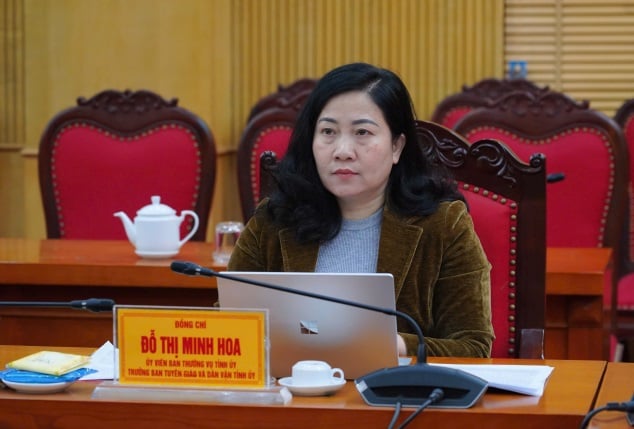
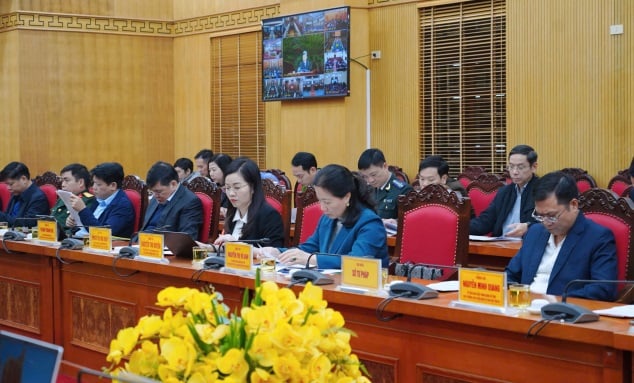
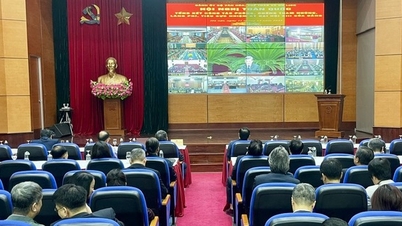
Delegates attending the Conference at the Thái Nguyên province venue.
According to the report presented at the Conference, in recent times, awareness of preventing and combating corruption, waste, and negative practices has improved; the legal system has been perfected to meet practical requirements; and the involvement of all levels and sectors, as well as the consensus of the people, has become increasingly evident.
Over the past five years, the entire sector has detected and advised on the handling of more than 1,000 cases and incidents of corruption, waste, and negative practices. The Central Internal Affairs Commission has advised the Central Steering Committee to monitor and direct 149 cases and 84 serious and complex cases of corruption, waste, and negative practices that have attracted significant public attention; it has also advised on expanding the scope and supplementing the functions and tasks of the Steering Committee to prevent and combat both negative practices and waste.
Besides the achievements, the Conference also frankly pointed out existing shortcomings, limitations, weaknesses, and their causes; thereby accurately forecasting the situation and proposing appropriate policies, tasks, and solutions for the next phase. The overarching goal is to ensure that the fight against corruption, waste, and negative phenomena continues to achieve solid results, contributing to purifying the Party and State apparatus and the political system, consolidating the Party's prestige, and creating a foundation for the country's strong development in the new era.
Agreeing with the reports and opinions presented at the Conference, General Secretary To Lam requested the Standing Committee to fully incorporate them in order to finalize the report and implement it decisively in the coming period. The General Secretary urged that there should be absolutely no complacency or satisfaction with the results achieved, but rather a decisive, resolute, and persistent implementation, with "no forbidden zones" and "no exceptions," of the three requirements and five priorities.
Specifically, the first requirement is that the fight against corruption, waste, and negative practices must prioritize the national interest, the interests of the people, and contribute to building a clean, strong, efficient, effective, and truly honest Party and political system that serves the people and promotes national development.
The second requirement is that the fight against corruption, waste, and negative practices must be resolute, persistent, regular, and continuous, with strict yet humane handling, "no forbidden zones," and "no exceptions." At the same time, it is necessary to protect officials, promote innovation, and encourage bold thinking and action for the common good, without allowing fear of making mistakes or taking responsibility to hinder development.
The third requirement is to shift strongly towards prevention, prioritizing prevention as the main focus, promoting the role and fighting spirit of grassroots Party organizations, the supervision of the people, emphasizing the exemplary responsibility of leaders, proactively identifying, predicting, and warning of violations early, from afar, from the grassroots level and Party branches, preventing small violations from accumulating into major offenses, and preventing the recurrence of old violations.
The General Secretary also demanded the complete elimination of the "request-and-grant" mechanism, the effective implementation of asset declaration and public disclosure measures, and the strengthening of inspection and supervision at the grassroots level and within Party branches. In particular, he called for early reform of the salary system, judicial reform, and the improvement of institutions and laws to ensure that those involved do not dare and cannot engage in corruption.
Besides the achievements, the Conference also frankly pointed out existing shortcomings, limitations, weaknesses, and their causes; thereby accurately forecasting the situation and proposing appropriate policies, tasks, and solutions for the next phase. The overarching goal is to ensure that the fight against corruption, waste, and negative phenomena continues to achieve solid results, contributing to purifying the Party and State apparatus and the political system, consolidating the Party's prestige, and creating a foundation for the country's strong development in the new era.
Agreeing with the reports and opinions presented at the Conference, General Secretary To Lam requested the Standing Committee to fully incorporate them in order to finalize the report and implement it decisively in the coming period. The General Secretary urged that there should be absolutely no complacency or satisfaction with the results achieved, but rather a decisive, resolute, and persistent implementation, with "no forbidden zones" and "no exceptions," of the three requirements and five priorities.
Specifically, the first requirement is that the fight against corruption, waste, and negative practices must prioritize the national interest, the interests of the people, and contribute to building a clean, strong, efficient, effective, and truly honest Party and political system that serves the people and promotes national development.
The second requirement is that the fight against corruption, waste, and negative practices must be resolute, persistent, regular, and continuous, with strict yet humane handling, "no forbidden zones," and "no exceptions." At the same time, it is necessary to protect officials, promote innovation, and encourage bold thinking and action for the common good, without allowing fear of making mistakes or taking responsibility to hinder development.
The third requirement is to shift strongly towards prevention, prioritizing prevention as the main focus, promoting the role and fighting spirit of grassroots Party organizations, the supervision of the people, emphasizing the exemplary responsibility of leaders, proactively identifying, predicting, and warning of violations early, from afar, from the grassroots level and Party branches, preventing small violations from accumulating into major offenses, and preventing the recurrence of old violations.
The General Secretary also demanded the complete elimination of the "request-and-grant" mechanism, the effective implementation of asset declaration and public disclosure measures, and the strengthening of inspection and supervision at the grassroots level and within Party branches. In particular, he called for early reform of the salary system, judicial reform, and the improvement of institutions and laws to ensure that those involved do not dare and cannot engage in corruption.
Thu Huong
Source: https://thainguyen.dcs.vn/trong-tinh/tong-bi-thu-to-lam-phong-chong-tham-nhung-phai-thuong-xuyen-lien-tuc-1439.html



![[Photo] Closing Ceremony of the 10th Session of the 15th National Assembly](/_next/image?url=https%3A%2F%2Fvphoto.vietnam.vn%2Fthumb%2F1200x675%2Fvietnam%2Fresource%2FIMAGE%2F2025%2F12%2F11%2F1765448959967_image-1437-jpg.webp&w=3840&q=75)















![[OFFICIAL] MISA GROUP ANNOUNCES ITS PIONEERING BRAND POSITIONING IN BUILDING AGENTIC AI FOR BUSINESSES, HOUSEHOLDS, AND THE GOVERNMENT](https://vphoto.vietnam.vn/thumb/402x226/vietnam/resource/IMAGE/2025/12/11/1765444754256_agentic-ai_postfb-scaled.png)
















































Comment (0)