

There is a beautiful Southern European country with delicious food , fine wine and not a lot of tourists.
With mountain ranges that offer all four seasons – from lush green hillsides to snow-capped cliffs – North Macedonia appeals to travelers looking for beautiful yet secluded destinations.
North Macedonia is a little- explored land in the Balkans with a long and diverse history combined with majestic mountains, making it a melting pot of carefully preserved cultures and hospitable locals.
Located just north of Greece, the country is one of the most mountainous in the world , and its majestic terrain is at the core of its identity.
“When I get in my car, no matter which direction I drive, I see a mountain in front of me and a mountain behind me,” said Frosina Pandurska-Dramikjanin, who lives in the Macedonian capital Skopje. “I think this is the best way to describe my country.”
The country of 2 million people has yet to experience the tourist crowds that plague much of southern Europe each summer. Those in the tourism industry are wary of this type of mass tourism, which can have a negative impact on the quality of life of its residents.
Aleksandar Bogoevski, owner of Sustainable Adventure Travels, said many tourists drive through the country every year to visit nearby hotspots like Greece or Albania. He wants them to know that Macedonia is a unique destination.
“About a million passengers transit Macedonia in the summer. They don't stop,” Bogoevski said.
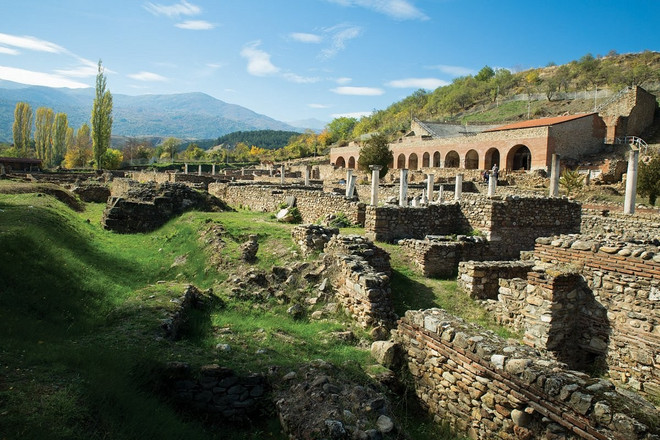
Monasteries, springs and hiking
Much of what can be seen in North Macedonia lies along the winding small roads that wind through the countryside along the valleys.
These routes are dotted with well-preserved Byzantine monasteries, some dating back more than 1,000 years, with ornate mother-of-pearl woodwork, gilded chandeliers and ancient frescoes.
The most famous is Bigorski Monastery, where an affordable guesthouse welcomes weary hikers from nearby Mavrovo National Park. There, the ruby and topaz trees glow on a winding road in October that would put any New England postcard to shame.
Sveti Naum, which has stood on the shores of Lake Ohrid since 905, is another famous monastery – and well worth a visit. Lake Ohrid, with its sparkling waters south of Mavrovo on the Albanian border, is the crown jewel of North Macedonia.
A UNESCO World Heritage Site surrounded by mountains, the Lake Ohrid area attracts visitors from across the Balkans each summer. Some come here for ecotourism. The spring-fed lake boasts some 1,200 species of plants and animals.
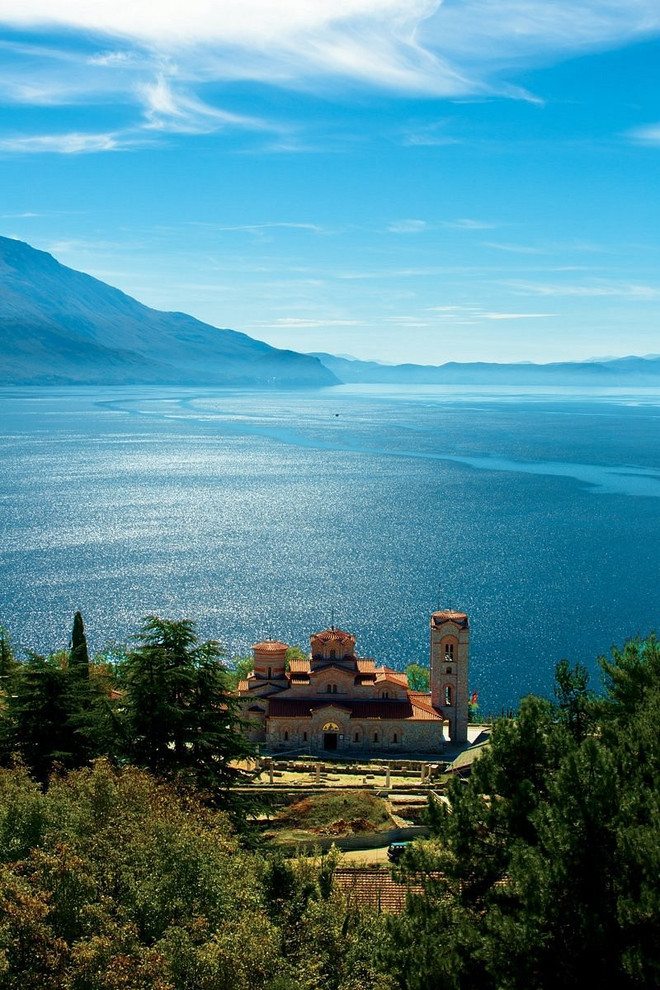
Others come for more traditional tourist experiences: shopping for freshwater pearls along the market streets of the historic town of Ohrid on the lake’s northeast shore, or sipping spritz cocktails at beach bars along the lake’s shore. Another stunning national park, Galicica, hugs the eastern shore, with the majestic Lake Prespa just southeast of it.
More than 100 miles to the north in the Šar Mountains, on the country’s northwestern border with Kosovo, hikers and mountaineers can find a variety of challenging trails. Some mountain villagers still practice ancient sheep-herding practices, known as migratory grazing, by leading seasonal migrations of sheep down to their villages in winter and up to the mountain peaks in summer.
Pandurska-Dramikjanin is grateful that this increasingly rare practice still exists in her country and believes that conservation tourism can help keep it alive. However, she is also wary of over-commercializing the traditional way of life.
“In other countries, I have seen very, very bad examples of how mass tourism has destroyed local culture,” Pandurska-Dramikjanin said. “We want to keep tourists who really appreciate our nature and culture.”
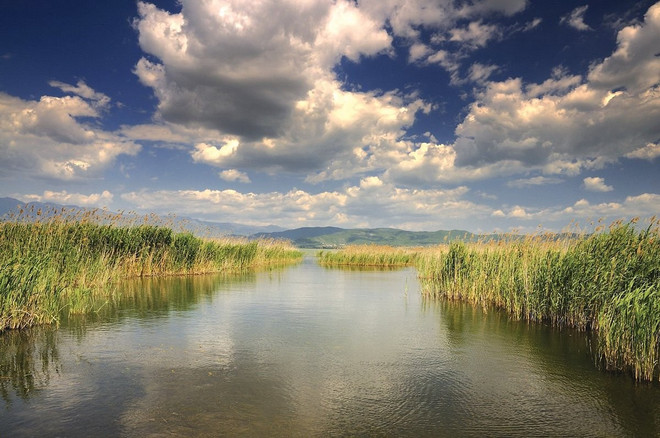
Natural beauty and cultural traditions are preserved
Ana Labor now runs Spirit of Prespa, a community tourism business based on her family’s apple orchard north of Lake Prespa, which covers just five hectares. Small family farms are the norm in Macedonia, allowing farmers to spend more time tending to their crops.
That attention means the average Macedonian diner will be treated to produce that looks like extraterrestrial life in an American supermarket – leeks three feet long, tomatoes the size of tennis balls, and red peppers you can smell from around the corner.
Labor is also working to build rural tourism infrastructure across the country, and she is helping other farmers supplement their family income through agritourism.
She prefers moderate crowds of visitors, where, like her family's apple orchard, she can give each individual the kind of attention that is not possible with large groups.
“I don’t spend enough time with them… because you can’t pay attention to each individual. And then when the group leaves, I always feel bad about myself, because they didn’t get to experience the farm to its fullest,” Labor said.
The mountains, the foundation of North Macedonia’s natural beauty, also act as physical barriers that create distinct cultural regions, fostering and maintaining traditions that have been lost elsewhere. Labor said she once visited a region just a few dozen kilometers away and couldn’t recognize half the dishes on the table.
Although regionally diverse, North Macedonian cuisine shares some commonalities, such as a sparing use of strong spices in favor of highlighting the freshness of farm-fresh ingredients.
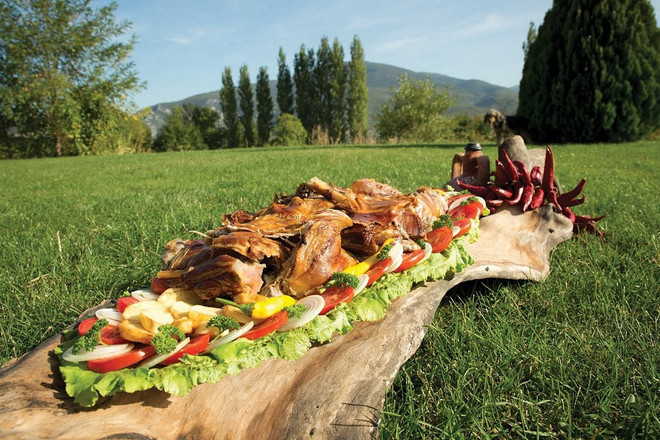
Ajvar, a creamy red bell pepper found throughout the Balkans, is particularly popular here. Rakija, a strong Balkan spirit usually brewed from grapes, is also served neat alongside salads, grilled meats and fresh bread.
North Macedonia's sunny climate may be one of the reasons why it is one of the largest wine-producing regions in the region, particularly concentrated in the Tikves region.
Other must-try dishes include borek, a buttery phyllo pastry often served for breakfast, and kebabs. Other local specialties include pastirmalija, a boat-shaped pastry filled with pork and egg, similar to Turkish pide, and a variety of hearty soups called corbas.
In particular, at kafana taverns, visitors can experience the feeling of jostling each other in front of plates of food large enough to feed an entire village.
Kafana bars often have local bands that go from table to table in mariachi style, playing favorite songs for paying customers.
Mitko Panov, a Macedonian film director, sees the persistence of kafana musicians as a symbol of the survival of Macedonian folk culture.
“Many countries have lost their folk entertainment,” Panov said. “How many places in America can you go to a cafe, listen to live music, pay the waiter and ask them, ‘Hey, sing this song because I like it, and you sing it well,’ so they can feed themselves?”
Kafanas abound in Skopje, especially in the cobblestone corridors of the Debar Malo neighborhood and the nearby Karposh and Bunjakovec districts of the capital, located in the north of the country.
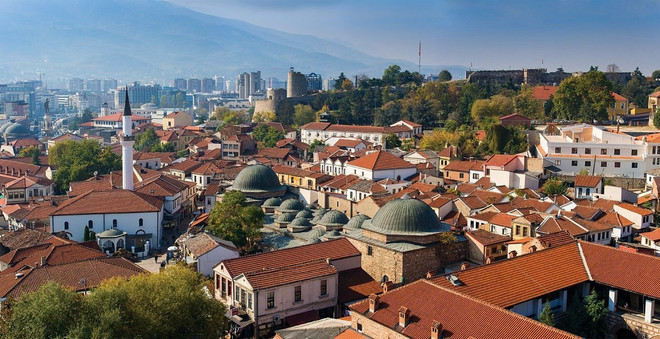
A funicular and a winding market
Nearly leveled in the 1963 earthquake, Skopje is a place where visitors can find anything from fresh produce to dive bars and antiques, among alleyways so tangled they can get lost.
The coffee tables in the market and beyond are packed from early morning to late night, and matcha lattes are always popular alongside Turkish coffee.
This medium-sized city is known for its cultural events, including jazz, film and music festivals. Much of this is a legacy from the Yugoslav era, when the government heavily subsidized cultural centers and arts programs.
For visitors looking to take a break from long nights in kafanas and wandering between the city's myriad cocktail bars, the countryside just outside Skopje has plenty of attractions, including the funicular railway up to Vodno Cross, a towering steel cross perched atop a mountain, offering panoramic views of the city and the mountains beyond.
Visitors can also kayak through the azure waters of Matka Gorge or visit the gorge’s numerous Mars-like caves, which feature surreal dripping stalactites and are a regular stop on global cave diving tours. Hiking tours also take visitors to all three mountains.
Pandurska-Dramikjanin says there's a lot to be excited about.
“It is a multi-layered rural experience with some of the most beautiful natural landscapes you will ever see in such a small country”./.
Source: https://www.vietnamplus.vn/tham-dat-nuoc-nam-au-xinh-dep-noi-phia-truoc-la-nui-va-phia-sau-cung-la-nui-post1081460.vnp


![[Photo] 60th Anniversary of the Founding of the Vietnam Association of Photographic Artists](/_next/image?url=https%3A%2F%2Fvphoto.vietnam.vn%2Fthumb%2F1200x675%2Fvietnam%2Fresource%2FIMAGE%2F2025%2F12%2F05%2F1764935864512_a1-bnd-0841-9740-jpg.webp&w=3840&q=75)


![[Photo] National Assembly Chairman Tran Thanh Man attends the VinFuture 2025 Award Ceremony](/_next/image?url=https%3A%2F%2Fvphoto.vietnam.vn%2Fthumb%2F1200x675%2Fvietnam%2Fresource%2FIMAGE%2F2025%2F12%2F05%2F1764951162416_2628509768338816493-6995-jpg.webp&w=3840&q=75)













































































Comment (0)