

Through bold investment, understanding market demand and applying systematic techniques, Mr. Le Van Ho has built a large-scale pangasius seed production facility, creating a stable supply source for farmers in and outside the province, while bringing in high income, helping his family become well-off.
SUCCESS FROM DETERMINATION
During his time in the agricultural supplies business, Mr. Ho realized that the demand for fish breeding in the locality was very large, but most people only stopped at raising fish fry due to the scarcity of households raising parent fish for reproduction. “At that time, I saw that the market was very open but few people did it properly from raising parent fish, collecting eggs to raising fry. This was what urged me to try my hand,” Mr. Ho shared.
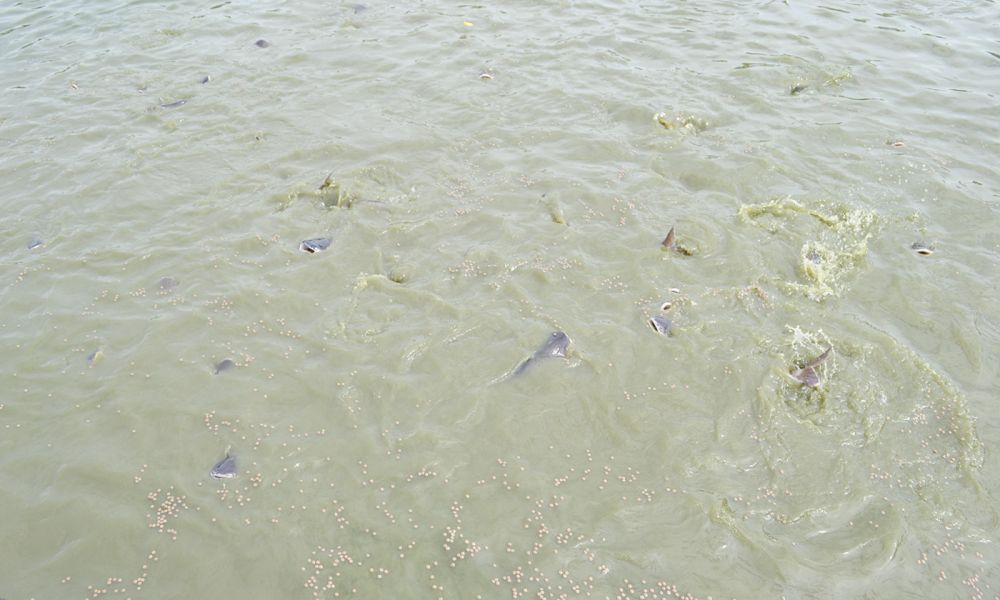
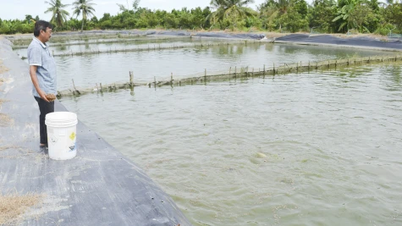
In 2015, Mr. Ho decided to renovate the entire 3.5 hectares of family land, of which 1.5 hectares were used to raise parent fish and the remaining 2 hectares were used as a nursery area for raising fingerlings.
The initial difficulties were not small because this was a profession that required high technical skills, while the local people at that time did not have much experience. With the concept of "doing it must be done thoroughly", Mr. Ho boldly hired an aquaculture engineer from Can Tho University to provide professional support from water treatment, egg creation, incubation to fish fry rearing techniques.
Thanks to the technical and scientific approach from the beginning, his model quickly stabilized. The hatching rate of fish fry from eggs always reached about 80%, a fairly high level in aquaculture seed production. Fish fry from his facility grew well, with little loss, and were highly appreciated by traders for their quality.
For many years, traders and people in the province as well as neighboring provinces have chosen his facility to buy fish fry and fingerlings. The facility has also been certified by the Department of Fisheries to be qualified to produce and raise aquatic breeds, thereby enhancing its reputation and position in the market.
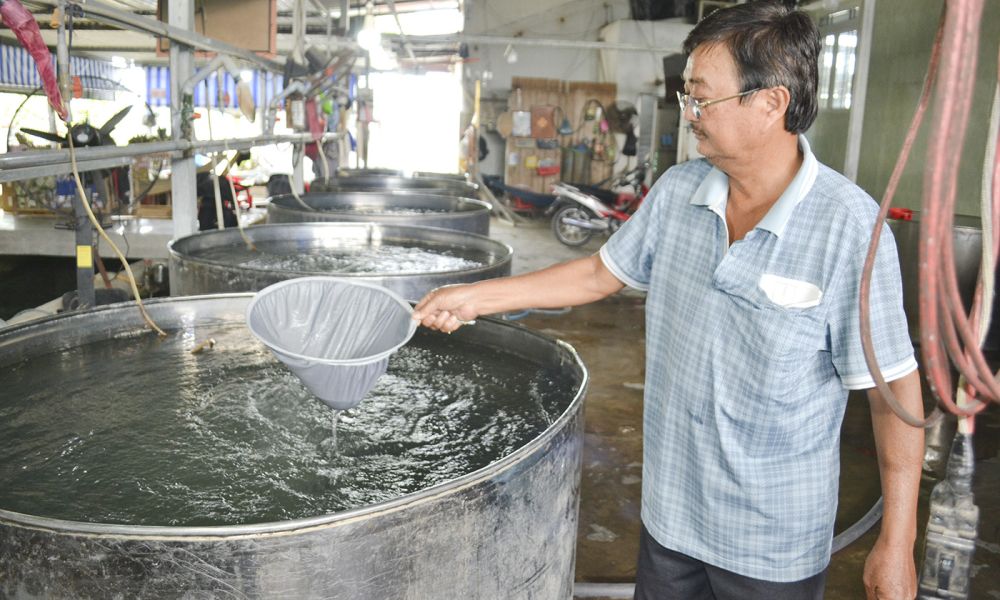
According to Mr. Ho, if you want to have healthy fish, you must first pay attention to the quality of the parent fish. Therefore, he only buys parent fish mostly from the Aquaculture Research Institute II to ensure clear origin and high quality. The parent fish are raised for 4-5 years, reaching a weight of 5-6 kg each before being used for breeding.
| Some notes for effective pangasius breeding: Focus on selecting quality parent fish from reputable facilities; strictly control the water environment from the incubation stage to the fry rearing stage; adhere to standard incubation techniques to achieve a high hatching rate; accumulate experience to promptly handle weather and environmental fluctuations; proactively link output to stabilize the consumption of fry and fingerlings. |
Each mother fish can produce about 800 grams of eggs. The eggs are incubated according to strict procedures, especially maintaining the temperature and water quality to achieve the highest hatching rate.
After about 17 hours of incubation, the eggs hatch into fry and are placed in a suitable rearing environment. During this stage, Mr. Ho closely monitors to ensure the fish are healthy before selling them to traders or transferring them to fish breeding ponds. Thanks to his technical knowledge and years of experience, he can promptly handle problems related to water sources, weather and changes in each stage of fish development.
On the 2 hectare nursery pond, pond treatment and water environment preparation are carefully carried out by him before each release. The fish are raised for about 70 - 80 days to reach commercial size.
In 2025, the selling price of pangasius fry will be stable at 60,000 - 65,000 VND/kg (30 - 50 fish/kg). This price will increase by about 20% compared to 2024 and according to him, with a price of only 40,000 VND/kg, farmers will make a profit.
In addition to catfish fry, his facility also supplies fish fry to the market, with a stable selling price for many years: 1 million fish fry/800 thousand VND. With the stable demand for commercial catfish, the purchasing power of fish fry and fish fry increases accordingly.
Thanks to a stable output, the facility supplies 400 million fish fry to the market each month, earning about 80 million VND/month after deducting expenses. This is a very significant income compared to many other types of agricultural production in the locality, helping his family's economy become increasingly stable.
Currently, the facility creates jobs for 6 local workers, with an income of about 4 million VND/person, an average of about 12 working days/month. This not only helps the model operate effectively but also contributes to increasing the income of local people.
TYPICAL MODEL
According to the Chairman of the Farmers’ Association of Thanh Phu Commune, Le Minh Tri, the model of raising catfish fry of Mr. Le Van Ho, Hamlet 2 has been a typical model of the commune for many years. The success of the model comes from the application of standard technical processes, good water environment management, proactive seed sources and stable output thanks to the association with businesses.

The survival rate of fingerlings is high, production costs are reduced thanks to the application of technical improvements. The model is suitable for the production conditions of local farmers. Compared to many other aquaculture models such as tilapia or snakehead fish farming, the economic efficiency of the pangasius fingerling rearing model is 15-25% higher. Profits depend on the season but average from 60-90 million VND/ha/crop.
Thanh Phu Commune is currently implementing many support policies such as: Technical training, support in accessing preferential loans from banks, connecting consumers with businesses inside and outside the province.
In the coming time, the Commune Farmers' Association will continue to expand the model, support consumption linkage, organize many training courses to improve techniques and orient the construction of production areas according to the commune's planning, creating conditions for people to develop the fish breeding profession in a safe and sustainable direction.
The success of the model of breeding and raising pangasius broodstock in Thanh Phu not only opens up a sustainable economic development direction for farmers, but also contributes to the formation of a high-quality seed production area, meeting the growing demand of the aquaculture industry in and outside the province.
With the right orientation and timely support from relevant authorities, this model promises to continue to spread strongly in the coming time.
FRIENDLY
Source: https://baodongthap.vn/hieu-qua-tu-mo-hinh-nuoi-ca-tra-giong-a233668.html


![[Photo] National Assembly Chairman Tran Thanh Man attends the VinFuture 2025 Award Ceremony](/_next/image?url=https%3A%2F%2Fvphoto.vietnam.vn%2Fthumb%2F1200x675%2Fvietnam%2Fresource%2FIMAGE%2F2025%2F12%2F05%2F1764951162416_2628509768338816493-6995-jpg.webp&w=3840&q=75)
![[Photo] 60th Anniversary of the Founding of the Vietnam Association of Photographic Artists](/_next/image?url=https%3A%2F%2Fvphoto.vietnam.vn%2Fthumb%2F1200x675%2Fvietnam%2Fresource%2FIMAGE%2F2025%2F12%2F05%2F1764935864512_a1-bnd-0841-9740-jpg.webp&w=3840&q=75)



















































Comment (0)