

The film, released in late November, impressed with the residential area scene, where the love story between Khang (played by Lien Binh Phat) and Ky Nam (played by Do Thi Hai Yen) takes place. The sounds of daily life combine with camera angles to show the space, while at other times, close-ups capture the characters' faces in private moments.
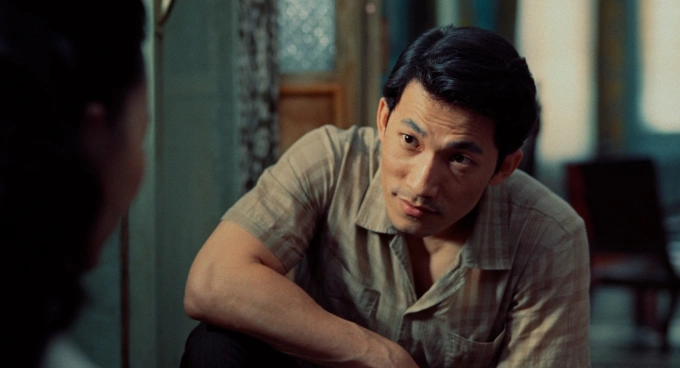
Director Leon Le identified the setting as an important "character" of the film. Therefore, during the script writing stage, the crew considered the possibility of realizing the filming location. Designer La Quy Tung and the director spent two months surveying locations in Ho Chi Minh City, calculating the plan to build the film set.
The biggest challenges came from time and budget. Interior design, camera movement, and additional set construction and feasibility were carefully considered. In addition, the team estimated the cost of construction, repairs, transportation of props, and restoration.
They renovated a row of houses in the old District 5 (HCMC) with typical details of the 1980s. The design, costume and makeup team consulted documents and family photos, then tested many options of colors and materials to recreate the spirit of that period. The film crew considered small details such as colors, lighting, and objects to match the characters and historical context.
They tried many layers of paint to achieve the right tone when filming, the curtain material was constantly changed to ensure light capture, color harmony and compatibility with the props. The apartment complex became an element that shaped the atmosphere of the film, recreating the urban life of the years before Doi Moi. In the apartment structure, each room appeared to reflect the personality of the person living there.
The kitchen is where Ky Nam's lifestyle is revealed, a woman who was once famous for her homemaking skills, so she cannot be sloppy. Despite being poor and earning a living by cooking monthly meals, she still keeps things tidy. The color of the curtains and a few bouquets of flowers in the house are small details but act as emotional "anchors". The corner displaying art objects shows Mr. Hao's old-age interests, while the detail of Luyen tending to the chickens recalls the context of many families trying to find ways to increase their income during the subsidy period.
The apartment complex also symbolizes the " world " of Khang's memories, like the little prince entering a strange planet in the story of author Antoine de Saint-Exupéry. This space retains the breath of each life, while reflecting nostalgia, doubt and salvation for the soul. Throughout the project, director Leon Le paid attention to every detail on the set. Even with the support of a design team, he often directly checked the props, adjusted the position of objects, lighting or decoration.
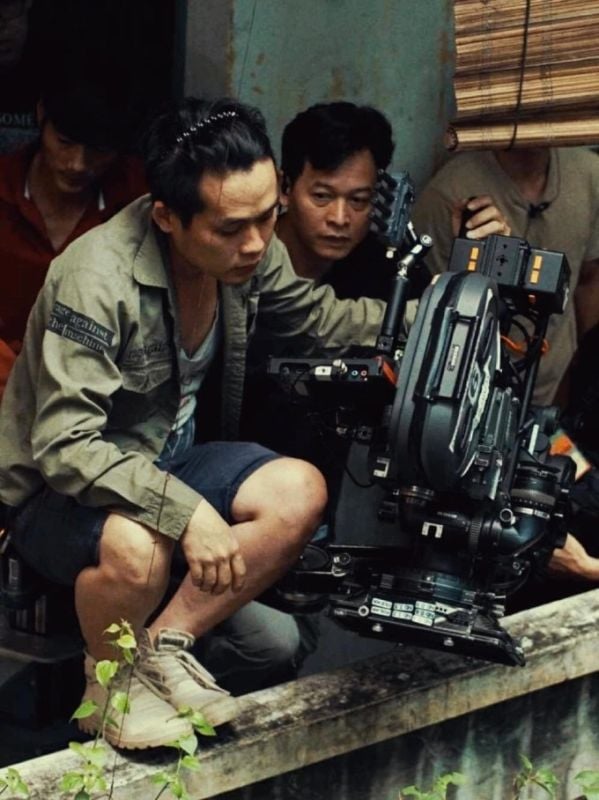
In addition to the art design, the cinematography - by director of photography Bob Nguyen - turns the space into frames that fully convey the story. Filming on 35mm film brings a classic tone. This material leads viewers back to the past, where the city appears with its simple beauty, serving as the backdrop for the harmony between the two main characters.
Bob Nguyen said he had the idea of shooting on film when making Song Lang (2018), but could not do it due to budget constraints. When collaborating on Quan Ky Nam, he and the director decided to use this method, despite the technical difficulties and the difficulties in transporting the film from the US. The crew could not rent a film printer in the country because of the lack of operating personnel and the old machines did not support direct recording on set. Instead, he bought two cameras, along with a team to design a film processing system, saving costs compared to sending it abroad.
Shooting took 52 days, using more than 300 rolls of film, and post-production took six months. The riskiest part was the printing process, where nearly 1,000 frames had to be processed by hand, checking each shot before post-production and adding effects. Some rolls of film were scratched or damaged, forcing him to manually adjust each shot.
Quan Ky Nam is a film project by director Leon Le, revolving around Khang, who translated The Little Prince (author Antoine de Saint-Exupéry). He meets Ky Nam, a middle-aged woman who makes a living by cooking for the residents around, and then forms a bond with her.
In his second film, Leon Le continues to tell the story of memory, art and how people find each other. From seemingly random conversations to meetings in the apartment building, the void in the two characters' souls seems to be filled. They realize their connection but keep their distance because of social prejudices.
The supporting characters do not play a dramatic role but create the culture and behavior in a community. There is an old man who often listens to pre-1975 music, a kitchen boy who is bullied because of his mixed blood, or a Northern girl who admires Khang. From there, the film evokes social factors such as the perspective between Southerners and Northerners after reunification, the wariness of the changing times, and families who suffer post-war losses.
(According to vnexpress.net )
Source: https://baodongthap.vn/hau-truong-boi-canh-sai-gon-thap-nien-1980-trong-quan-ky-nam-a233744.html
![[Photo] 60th Anniversary of the Founding of the Vietnam Association of Photographic Artists](/_next/image?url=https%3A%2F%2Fvphoto.vietnam.vn%2Fthumb%2F1200x675%2Fvietnam%2Fresource%2FIMAGE%2F2025%2F12%2F05%2F1764935864512_a1-bnd-0841-9740-jpg.webp&w=3840&q=75)


![[Photo] National Assembly Chairman Tran Thanh Man attends the VinFuture 2025 Award Ceremony](/_next/image?url=https%3A%2F%2Fvphoto.vietnam.vn%2Fthumb%2F1200x675%2Fvietnam%2Fresource%2FIMAGE%2F2025%2F12%2F05%2F1764951162416_2628509768338816493-6995-jpg.webp&w=3840&q=75)



























































Comment (0)