

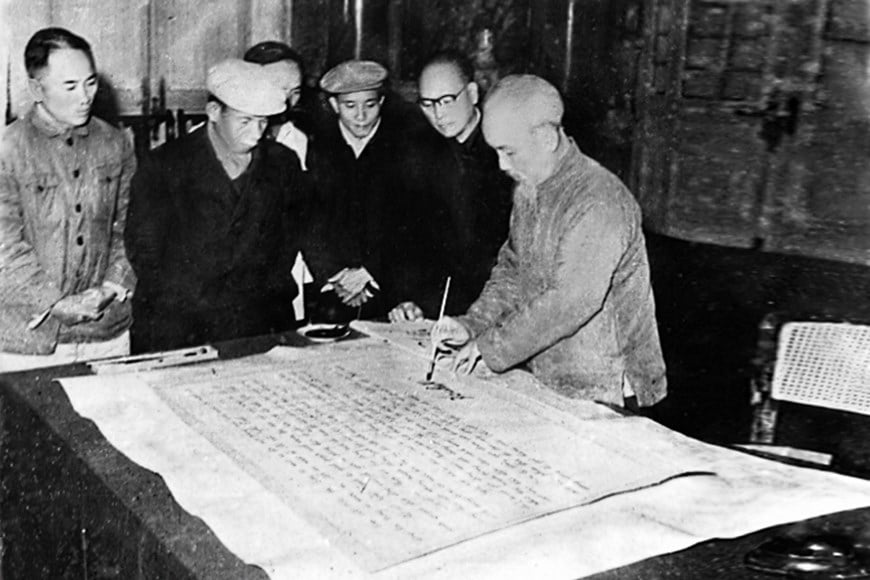
Most proudly, this is one of only two museums nationwide to receive a "Preface" signed by President Ho Chi Minh, affirming the historical significance of the movement and the role of the museum in preserving and promoting the values of revolutionary traditions.
Flags and drums resound throughout the land, rallying the people.
Nearly a century has passed, but the vibrant spirit of the Nghe Tinh Soviet Uprising still resonates throughout the land. The special collections of artifacts, including flags and drums, preserved at the Nghe An - Nghe Tinh Soviet Museum (Nghe An) have become vivid evidence of the tenacious, sacrificial, yet glorious fighting spirit of our people.
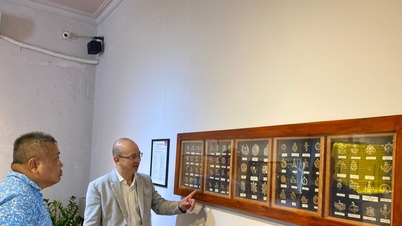
Thousands of documents and artifacts collected and preserved at the Museum are authentically "telling the story" of the struggle for national independence. The artifacts are mainly related to the 1930-1931 uprising, when the people of Nghe An and Ha Tinh , under the banner of the Party, created a glorious heroic epic. The phrase "Soviet Drum" thus became a symbol of the power of the masses, a call to rise up and break the chains of slavery.
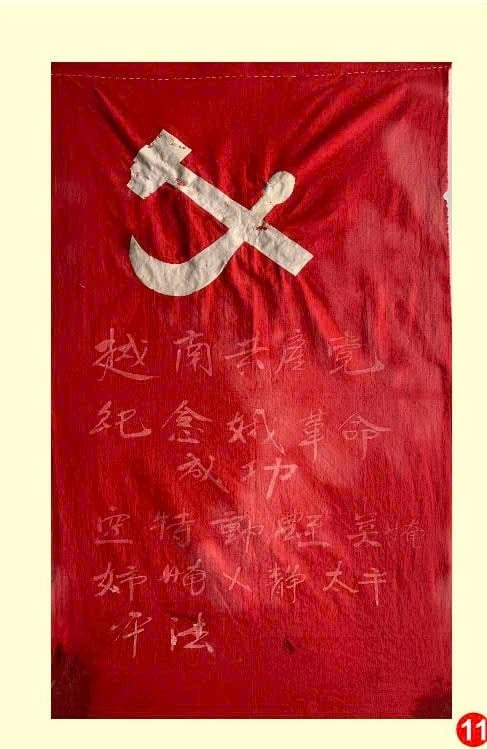
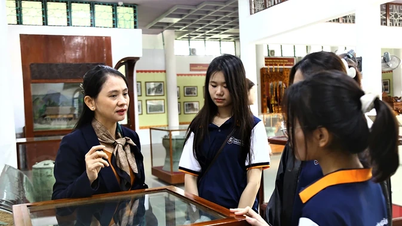
Leading visitors on a tour of the museum, Ms. Tran Thi Hong Nhung, Deputy Director of the Museum, emotionally recounted: “On February 3, 1964, President Ho Chi Minh signed the ‘Preface’ for the Nghe Tinh Soviet Museum (now the Nghe An – Nghe Tinh Soviet Museum). That is a sacred milestone, affirming the museum’s mission in preserving and passing on the revolutionary spirit for generations to come.” To this day, the museum still respectfully preserves the photograph of President Ho Chi Minh signing the “Preface,” along with the manuscript, handwriting, and many other mementos associated with him.
Furthermore, the museum houses over 16,000 documents and artifacts, including more than 3,500 original artifacts, nearly 6,000 personal files of Soviet soldiers who were imprisoned, hundreds of memoirs of veteran revolutionary cadres, and many intangible cultural heritage items such as poetry, folk songs, musical works, and films.
From these simple yet sacred relics, this place has become a "red address" for fostering national pride and educating present and future generations about revolutionary traditions. "Each artifact is a testament, each flag, each drum is a flame. That flame will continue to burn, giving strength to future generations to follow the path our ancestors chose," affirmed Ms. Tran Thi Hong Nhung.
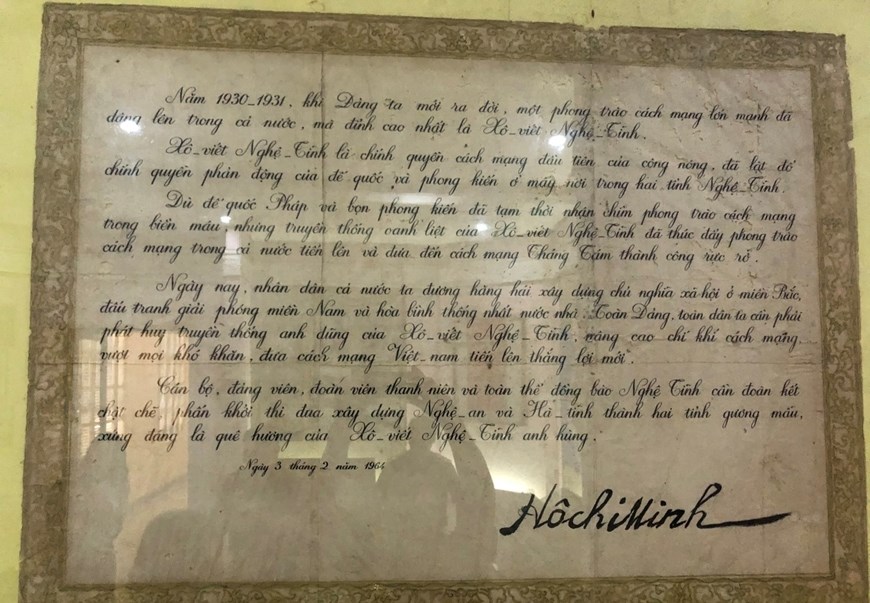
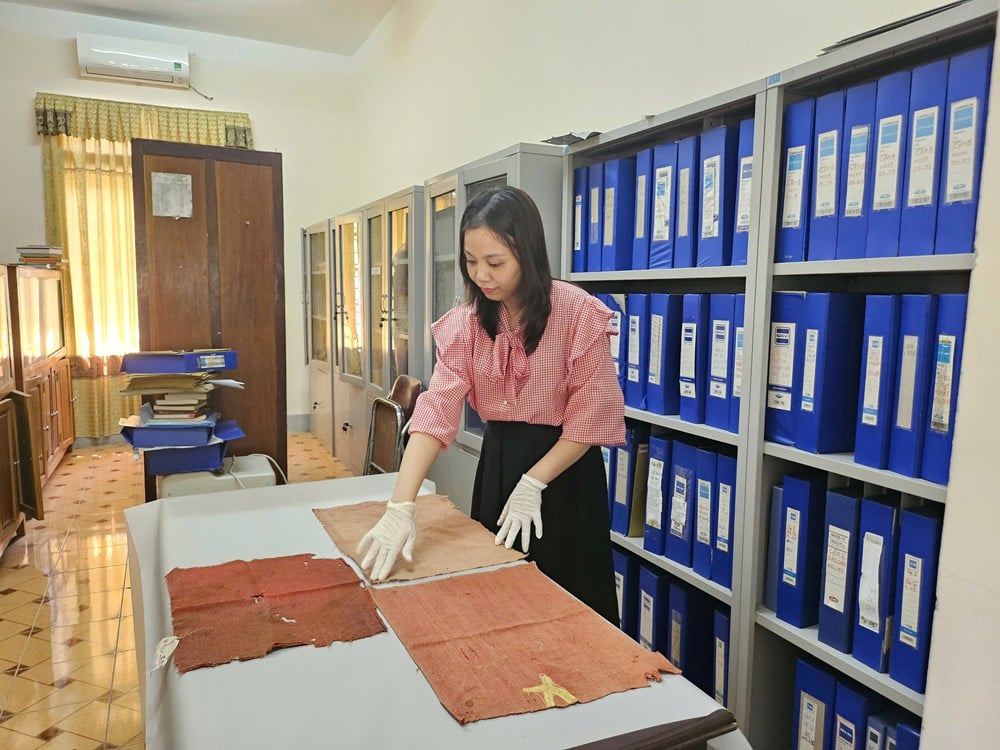
Among the precious artifacts, the most outstanding is the collection of 11 Party flags that once flew during the 1930-1931 movement. Each flag tells a historical story: from the flag of the people of Luong Son village, Bac Son commune, Dang Son district, Do Luong county (now Do Luong commune), the flag hung on the banyan tree in Tien Hoi to rally the masses, to the flag of the Hung Nguyen Party Committee used in the memorial service for martyrs after the bloody demonstration on September 12, 1930. These handcrafted red flags with the hammer and sickle, dyed red fabric and painted with white lime to form the hammer and sickle, became symbols that ignited the uprising spirit of the workers and peasants of Nghe Tinh, and spread the fighting spirit throughout the country.
Besides flags, the drum collection is also a "living witness" to the revolutionary fervor. The drums of Loc Da village, resounding during the Vinh-Ben Thuy demonstration on May 1, 1930, spurred more than 1,200 workers and peasants to take to the streets, shaking the entire colonial and feudal ruling apparatus. The drums of Phu Long initiated a large demonstration in Hung Nguyen on September 12, 1930, where dozens of revolutionary fighters fell, but the fighting spirit only burned brighter.
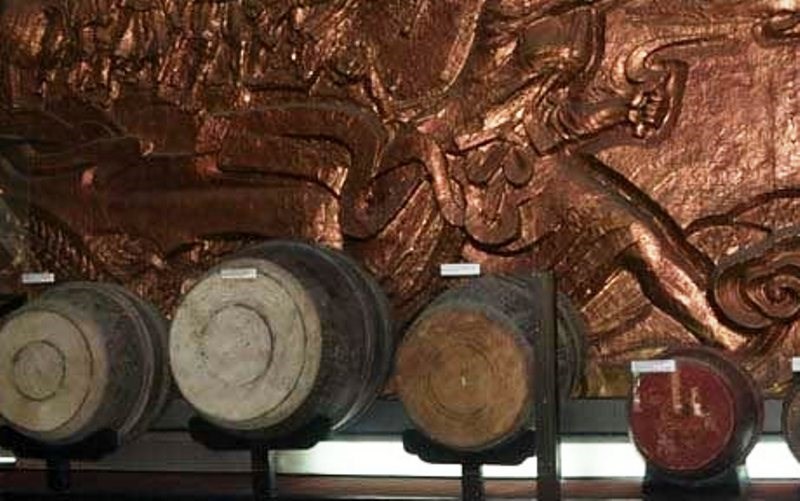
In particular, the drum of the Vi family (Mon Son - Con Cuong) is associated with the August 1931 protest of the people of western Nghe An province, contributing to demonstrating the widespread reach of the Soviet movement. Along with drums, many folk musical instruments such as gongs, wooden clappers, and cymbals also became "special weapons" in these fervent struggles, and are now carefully preserved by the museum.
What is truly remarkable is that today, not only groups of students but also many local people and tourists from all over the world have come to the museum to admire the collection of flags and drums firsthand. Before the faded red flags with the hammer and sickle emblem, or the drums bearing the marks of time, many were deeply moved, clearly feeling the flow of history in their hearts.
Mr. Nguyen Van Tung (a tourist from Ha Tinh) shared: “Standing before artifacts that were once associated with the Soviet movement, I felt like I could hear the resounding drums of yesteryear. It's not just history, but also a source of pride and a lesson for the younger generation like us to follow in the footsteps of our ancestors.”
Connecting heritage tourism tours
The Soviet-era historical site system in Nghe Tinh province spans Nghe An and Ha Tinh provinces, with the majority managed by Nghe An. This is an invaluable cultural and historical resource; however, preservation and restoration efforts still face many challenges. Many sites have received investment for restoration, but due to a lack of funding, only patchwork work has been completed; some completed projects are already showing signs of deterioration. Harsh climate and limited donations also create obstacles to maintaining and protecting these sites.
To address this situation, localities are strengthening the role of Party committees and authorities in preserving and promoting the value of historical relics; at the same time, they are reviewing the current status, marking boundaries for protection, and preventing encroachment. In addition, greater emphasis is being placed on public awareness and education; funding is prioritized for key relics and those in severe disrepair; and social resources are being mobilized to transform the system of relics into attractive cultural and historical destinations for locals and tourists.
In its development orientation, the Nghe An Department of Culture, Sports and Tourism has identified that exploiting the value of the Soviet-Nghe Tinh historical sites must be linked to the development of historical tourism tours and routes. At the Nghe An - Soviet-Nghe Tinh Museum and other historical sites, innovation and diversification of exhibition formats, improvement of interpretive quality, and enhancement of the landscape and environment are prioritized. Along with this, efforts are being made to strengthen the training of staff and tour guides, and to connect with travel businesses to create unique and attractive tourism products. In particular, the digitization and documentation of artifacts are being gradually implemented.
According to Mr. Tran Xuan Cuong, Deputy Director of the Department of Culture, Sports and Tourism of Nghe An province, tourism based on historical sites and heritage is increasingly chosen by tourists because it not only provides sightseeing experiences but also helps them discover and understand the unique historical and cultural values of the locality. “Historical sites need to combine serious preservation with effective promotion, thereby both preserving traditional values and creating momentum for socio-economic development, making heritage tourism a sustainable product.”
Source: https://baovanhoa.vn/van-hoa/dia-chi-do-truyen-lua-long-yeu-nuoc-164750.html


![[Photo] Da Nang: Mountainous commune adorned with flags and flowers, ready for election day.](https://vphoto.vietnam.vn/thumb/1200x675/vietnam/resource/IMAGE/2026/03/10/1773113803384_ndo_br_9-jpg.webp)

















![[Photo] Meeting of the Standing Committee of the National Assembly Party Committee with the Standing Committee of the Government Party Committee on the First Session of the 16th National Assembly](https://vphoto.vietnam.vn/thumb/1200x675/vietnam/resource/IMAGE/2026/03/10/1773107502031_ndo_br_thu-tuong-pham-minh-chinh-va-chu-tich-qh-tran-thanh-man-dong-chu-tri-hoi-nghijpg-jpg.webp)









































Comment (0)