Kinhtedothi - In recent years, Vietnam has become a popular destination for billionaires to host major events. However, attracting VIP guests remains relatively modest, not truly commensurate with its potential due to a shortage of high-quality human resources.
A destination for many of the world's billionaires.
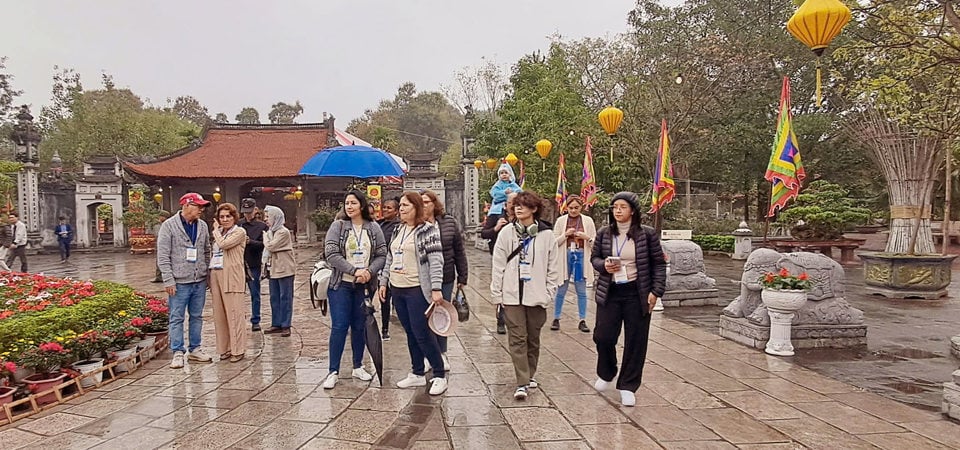
In 2024, Vietnam's tourism industry surprised many by welcoming numerous groups of global billionaires. In August 2024, a group of 4,500 people from India chose Vietnam as their destination for exploration, relaxation, and conference organization. Following that, in October 2024, Vietnam hosted a delegation of 50 global billionaires in Da Nang for the annual customer conference of the Gulfstream aircraft brand (USA).
Not stopping there, in early December 2024, Jensen Huang, the founder of Nvidia's graphics processing company and a Taiwanese-American billionaire, visited Hanoi for work. Amidst his work schedule, the billionaire took time to stroll through the city and enjoy street food such as pho, draft beer, and egg coffee.
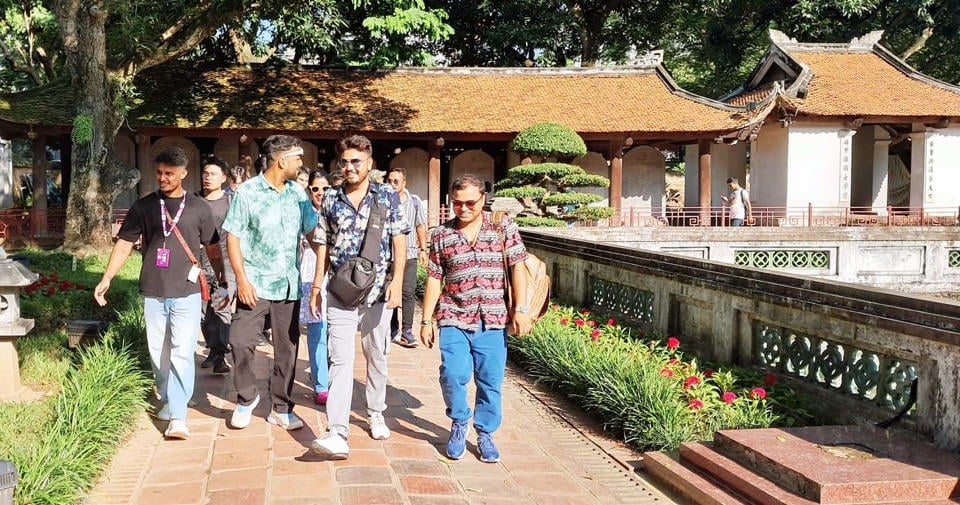
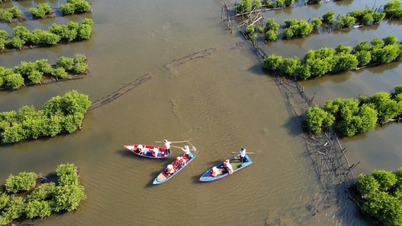
Explaining why high-end international tourists choose Vietnam as their destination, the Director of the Vietnam National Tourism Administration, Nguyen Trung Khanh, stated that Vietnam possesses extremely valuable natural and cultural resources… This forms the foundation for the tourism industry to create attractive and unique products for high-end tourists.
"In recent times, Vietnam has been selected by many international organizations as a safe and attractive tourist destination. Many billionaires and influential figures around the world have chosen Vietnam as the venue for major events, which confirms that Vietnam is very attractive to high-end tourists," Mr. Khanh affirmed.
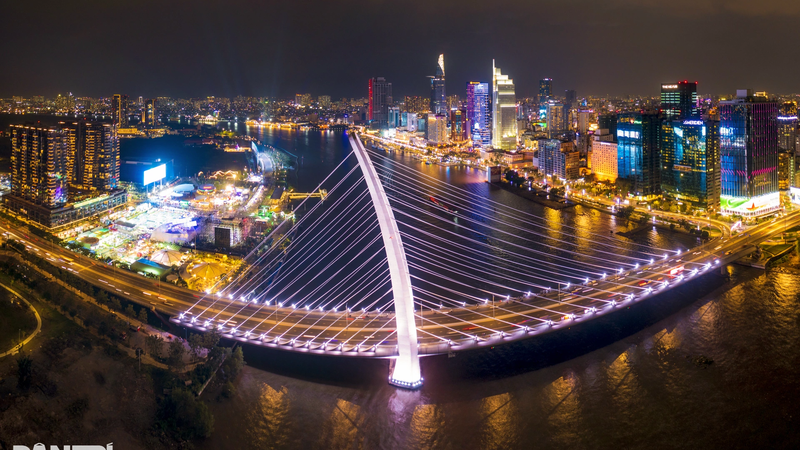
According to Vu Van Tuyen, Director of Travelogy Vietnam, the tourism industry has recently attracted many prestigious international brands such as Inter Continental, Four Seasons, and Ritz-Carlton to invest in high-end resort and hotel systems like Inter Continental Danang Sun Peninsula Resort, JW Marriott Phu Quoc Emerald Bay, and Six Senses Ninh Van Bay. This investment has provided tourists with luxurious experiences, amenities, and 5-star services.


Upgrading the quality of human resources.
According to experts, although Vietnam has great potential to attract high-end tourists, attracting this group requires businesses to build high-quality services. However, achieving this requires upgrading the quality of human resources.
In reality, while the number of international tourists is growing strongly, tourism businesses are facing a shortage of personnel to serve them. A representative from Vietnam Tourism Media Joint Stock Company shared that, despite having welcomed many large international tour groups, the company's biggest headache is a 20% shortage of qualified personnel, and they have yet to recruit high-quality workers.

According to Cao Thi Ngoc Lan, Permanent Vice President of the Vietnam Tourism Association, Vietnam is facing a significant shortage of highly skilled tourism personnel, especially during peak seasons such as holidays and Tet (Lunar New Year). This imbalance in human resources across regions has led to some areas experiencing rapid growth in tourist numbers, but with lower and inconsistent service quality compared to other regions.
Information from the Vietnam National Tourism Administration shows that in the accommodation sector, which is operating at over 70% capacity, the tourism industry currently needs approximately 485,000 workers. It is projected that by 2030, the country will have 1.3-1.45 million hotel rooms, requiring over 1 million workers. To meet this workforce demand, the tourism industry needs to add 60,000 workers annually. Despite this high demand, universities only train about 20,000 students each year, with only 43% of the total tourism workforce receiving professional training.



To address the issue of high-quality human resources, Nguyen Anh Tuan, Director of the Institute for Tourism Development Research, believes that training high-quality human resources requires the education sector to establish training standards that meet international standards. To achieve this, it is necessary to attract investment in infrastructure and teaching staff; and incorporate new knowledge about new types of tourism into the training programs.
Agreeing with this opinion, Dr. Nuno Ribeiro, Head of the Tourism and Hospitality Management Research Group (RMIT University), suggested that in the future, in addition to upgrading the quality of training, in the short term, businesses should connect with domestic and international training systems to recruit new workers from related fields, thereby filling the shortage of tourism personnel.
Source: https://kinhtedothi.vn/dich-vu-cao-cap-nang-tam-du-lich-viet.html
![[Image] National conference summarizing one year of operation of the overall organizational model of the political system, the three-tiered government model.](https://vphoto.vietnam.vn/thumb/1200x675/vietnam/resource/IMAGE/2026/07/01/1782882811691_ndo_br_1-jpg.webp)