

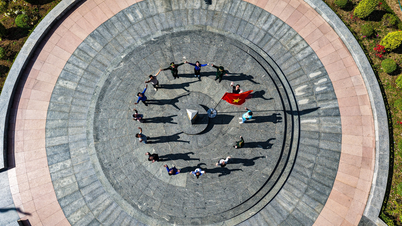
The Indochina Tripoint, located in Bo Y commune, Ngoc Hoi district, Kon Tum province, is the point where three Indochinese countries—Vietnam, Laos, and Cambodia—meet.
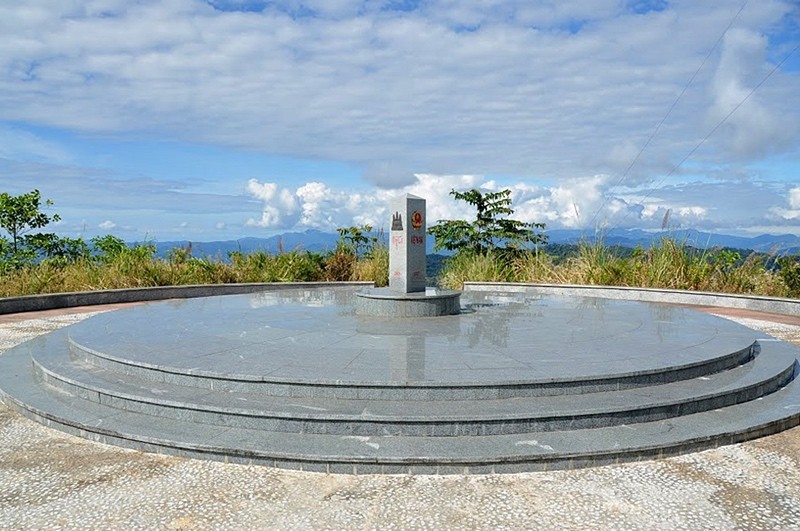 |
| The Vietnam-Cambodia-Laos border marker is located at the Indochina crossroads. |
As a junction point between three Indochinese countries, including Vietnam, Cambodia, and Laos, the Indochina Tripoint is known as the place where "a rooster's crow can be heard in all three countries." Perhaps it is because of this that the Indochina Tripoint has become an attractive destination for many tourists who are passionate about travel , exploration, and experiencing new things.
When talking about the Central Highlands, people will surely immediately think of a sun-drenched, windswept plateau filled with the fragrance of coffee blossoms, or the majestic sound of gongs echoing during festivals in the villages high in the mountains. But that's not all; the Central Highlands also boasts a destination that adventurous travelers yearn to conquer: the Indochina Tripoint – a popular attraction during Kon Tum tours.
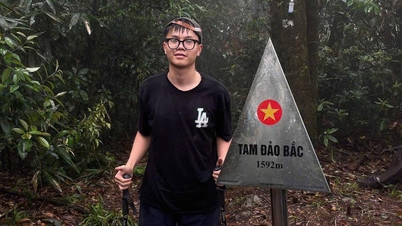
The Indochina Tripoint is located in Bo Y commune, Ngoc Hoi district, Kon Tum province. It is called the Indochina Tripoint because it marks the border of three Indochinese countries: Vietnam, Laos, and Cambodia. A common border marker has been erected here on a hill 1,086 meters above sea level. The marker's location marks the point where three provinces meet: Kon Tum (Vietnam), Ratanakiri (Cambodia), and Attapư (Laos).
This border marker was constructed by Kon Tum province in December 2007 and completed in early 2008, under the supervision of experts from the three countries sharing a common border. The marker, weighing 900 kg, is made of granite in a triangular shape, 2 meters high. Each side facing each country is adorned with the national emblem, the year of placement, and the name of that country in red lettering. The tri-border marker is a clear symbol of the will, aspirations, and determination of the governments and people of the three countries in their goodwill cooperation to resolve border and territorial issues. It is a testament to the trust, understanding, and friendly cooperation between Vietnam, Cambodia, and Laos.
The road to the Indochina Tripoint isn't too difficult; as you drive, you can enjoy the breathtaking view of the majestic mountains unfolding before your eyes. Afterward, you'll climb the steps to reach the most sacred landmark of this border region of our country.
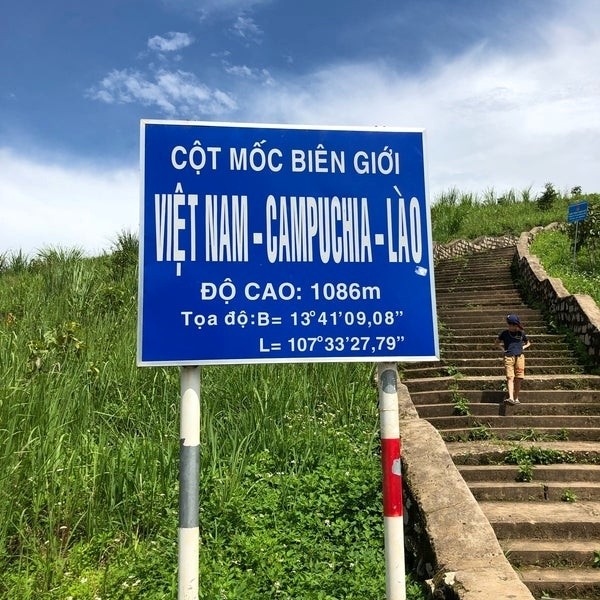 |
| The road leading to the Vietnam-Cambodia-Laos border marker. |
Located in the transitional zone between highland and tropical monsoon climates, Kon Tum currently has two distinct seasons: the rainy season and the dry season. Many tourists choose to visit Kon Tum around October-November (lunar calendar), when the rice fields are ready for harvest. At this time, standing at the high border marker, visitors can admire the entire fertile and lush Indochina border region. This is perhaps the most peaceful scene that any tourist would want to witness.
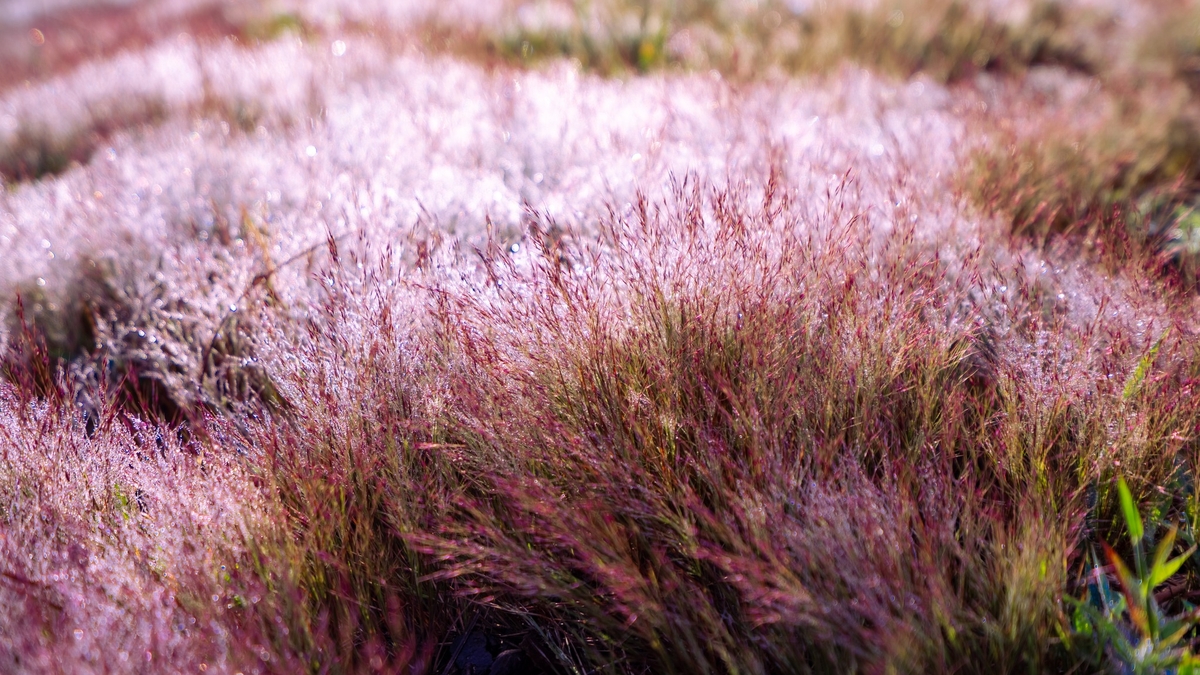
Furthermore, many tourists choose to explore the Indochina Tripoint in December because at this time they will have the opportunity to admire the hillsides covered with vibrant yellow wildflowers. In addition, tourists can participate in and experience the unique festival activities held here at the end of the year.
Besides the Indochina crossroads, visitors to this region can also experience and visit the Plei Kần Victory Historical Site (a national-level historical site), the former Ben Het base; the Truong Son Martyrs Memorial and the Bo Y International Border Gate...
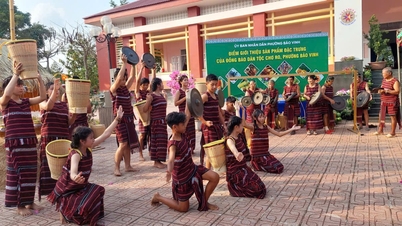
In addition, visitors can explore and experience the unique cultural features of the ethnic groups in Ngoc Hoi district. Seventeen ethnic groups live together here, each preserving and promoting its own distinct cultural characteristics.
These include stilt houses preserved through generations, and very distinctive and unique festivals held on village occasions, such as the festival celebrating the new communal house, the buffalo sacrifice festival of the Gie-Trieng ethnic group, and the rice harvest festival of the Brau ethnic group…
It's also a culinary culture with grilled meats, bamboo-cooked rice, intoxicatingly fragrant and unforgettable rice wine, and the rhythmic dances, the gong and drum music, and the young men and women in traditional costumes around a blazing bonfire...
Source
![[Photo] General Secretary and President To Lam meets with National Assembly delegates from ethnic minorities.](https://vphoto.vietnam.vn/thumb/1200x675/vietnam/resource/IMAGE/2026/04/20/1776696701056_a1-bnd-8331-3342-jpg.webp)
![[Image] National Assembly discusses the implementation of the socio-economic development plan.](https://vphoto.vietnam.vn/thumb/1200x675/vietnam/resource/IMAGE/2026/04/20/1776696707422_ndo_br_img-20260420-185419-jpg.webp)






























































Comment (0)