

Around the lake's edge, a new rhythm of life is unfolding, with nature, culture, and tourism gradually blending together, creating a perfect day trip. Beyond the main viewpoints, visitors can stroll along the lake's perimeter, slowing down to listen to the gentle breeze rustling through the pine forest and feel the cool, refreshing mist.
Leaving the tranquil waters of Lake Pleiku, the journey naturally leads towards Ia Nueng village (Lake Pleiku commune) – an ancient village beside the "Eyes of Pleiku" that still retains many traditional aspects of life. Here, the water source remains – where villagers still come every afternoon to fetch water for daily use, just as their ancestors have done for generations. Along the path to the water source are ancient banyan trees, so large that it would take 5-7 people to encircle them, providing shade over a vast area.
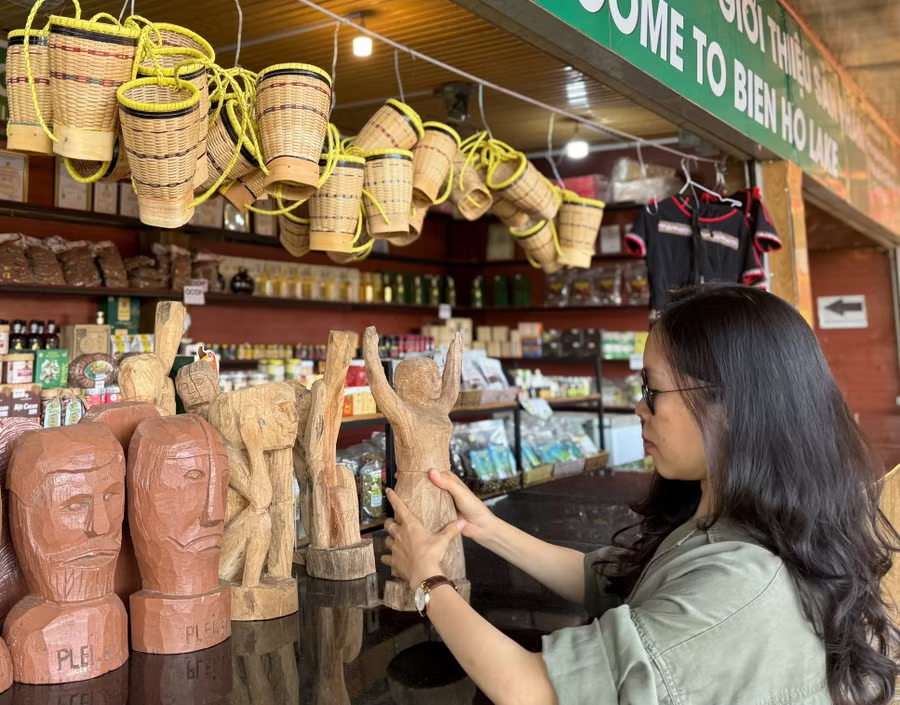
Souvenirs showcasing the unique character of the mountainous region are displayed at the entrance to the Biển Hồ scenic area. Photo: Hoàng Ngọc
Ksor Ayaih, a villager from Ia Nueng, has a coffee plantation next to a water source, under the shade of an ancient banyan tree. He explained that the Jrai people usually build their burial houses at the end of the village, near the water source, for convenience during the annual funeral ceremony. Banyan trees are also planted in this area for shade.
“The water at the stream is very sweet and clean, probably from an underground spring of the Tonle Sap Lake. Cooking with this water also gives a completely different flavor. That’s why people still like to go to the stream to fetch water for use,” said Ayaih.
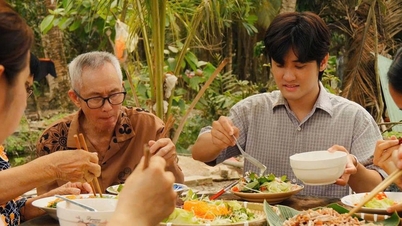
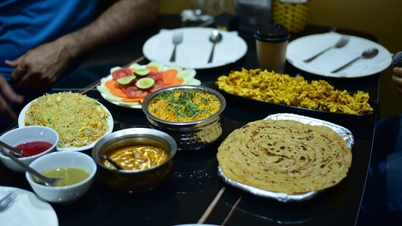
Leaving the village, visitors can stop to enjoy the local cuisine at the traditional restaurants opposite the Lake Gate. Here, from the decor to the dishes, everything offers a glimpse into the local culture.
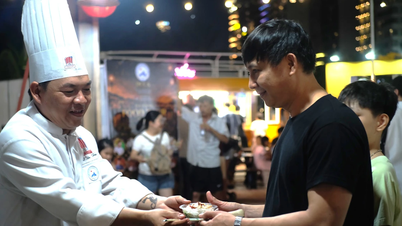
As shared by Mr. Chu Van Chi - owner of To Nung restaurant: "Cuisine is the first door that sparks curiosity and subtly invites tourists to experience local culture. Therefore, we exploit the most distinctive values of Central Highlands cuisine to tell the story of our culture through each dish."
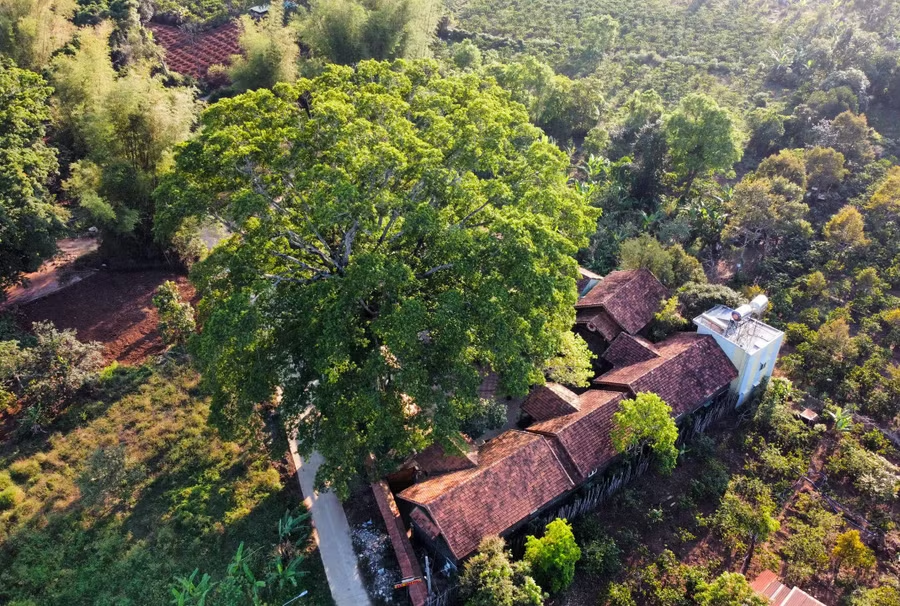
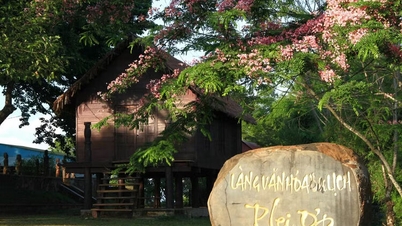
Homestay Tơ Nưng is located under an ancient banyan tree on the road leading down to the spring. Photo: Hoàng Ngọc
Investing in accommodation not only fills the missing link in the chain of experiences around Tonle Sap Lake, but also extends the length of stay for tourists – from "passing by to admire" to "staying to experience." This allows cultural activities, culinary experiences, and community life to fully operate, aiming for a deeper, more sustainable tourism product instead of just short-term sightseeing.
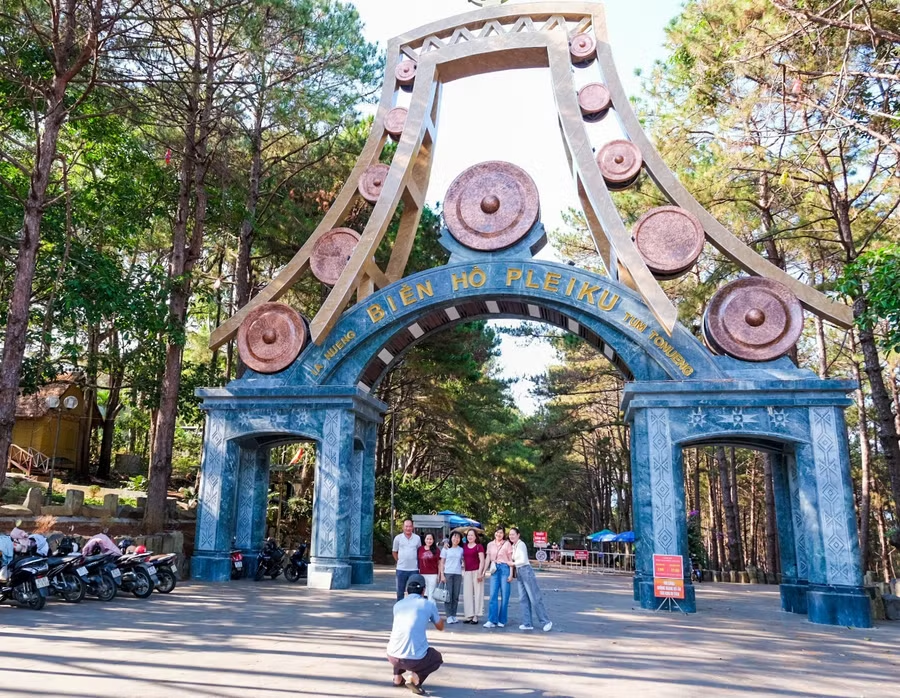
The scenic Lake Biển Hồ always attracts a large number of tourists. Photo: Hoàng Ngọc
Visitors can also easily find stalls selling handicrafts such as wooden statues, baskets, and brocade fabrics within the grounds of the Bien Ho tourist area – items closely associated with daily life but also bearing the aesthetic and spiritual imprint of the Central Highlands people. Alongside these are gifts made from the red basalt soil, such as honey and coffee, enough to carry a little taste of the highlands after the trip.
According to the plan for organizing the National Tourism Year 2026 in Bien Ho commune, this scenic area is being oriented towards development according to a multi-point connection model. In this model, Bien Ho will be the central hub linking experiential spaces such as the Ia Nueng community tourism village, Chu Dang Ya volcano, centuries-old pine forests, and agricultural tourism destinations, accommodation, and lakeside cafes.
Investing in infrastructure, developing community-based tourism products, and organizing cultural and sports experiences are gradually creating a complete tourism ecosystem, allowing visitors to fully experience everything in a short time, in line with the development of the "one-day trip around Lake Biển Hồ" product.
Legend of the Sea Lake
The Jrai people recount that Biển Hồ (Lake Biển) was once a communal water source for the village. One day, because they disobeyed the advice of an elder, the villagers paid the price – the land collapsed, the entire village was submerged, leaving behind a deep lake.
Another story tells of a beautiful ancient village buried by a volcano. The tears of the survivors flowed and formed a lake. These legends, over time, blended into the deep blue water.
Source: https://baoangiang.com.vn/mot-ngay-voi-oi-mat-pleiku--a481988.html










































































Comment (0)