


The durian orchard of Mr. Nguyen Bao Long's family is currently in the harvesting stage. Photo: DUC TOAN
Awakening the impoverished land
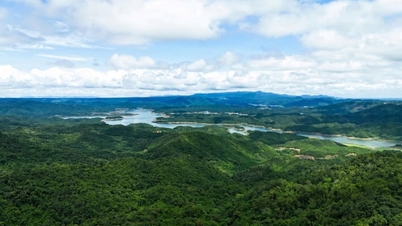
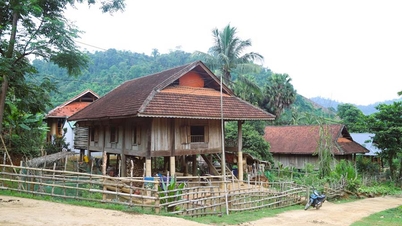
Nui Dai was once a challenging area for agriculture due to its hilly and rocky terrain. Poor transportation infrastructure resulted in large areas of land being left fallow or only used for growing easy-to-grow but low-value crops like bananas, chayote, and papayas. Consequently, the lives of the local people were often precarious, with unstable incomes.
The change began when the people decided to reclaim the mountainous land. During the crop restructuring process, durian was chosen to replace less productive orchards. Mr. Dao Van Dua is one of the pioneering farmers who brought durian seedlings to "take root" here. Mr. Dua said that previously, his family planted protective forests intercropped with mangoes, avocados, jackfruit, and custard apples. When he realized these crops were no longer economically viable, he received support from agricultural experts to switch to durian cultivation, focusing on Ri6 and Monthong varieties.
The initial stages of cultivation were not easy. Due to Mr. Dua's lack of experience in caring for durian trees on hilly terrain, a large number of seedlings died. However, perseverance paid off when the surviving trees began to grow vigorously, proving that the soil here is perfectly suited to this "royal" tree. Mr. Dua shared: "Durian trees on the mountain flower and bear fruit very well, to the point that each season I have to thin out the young fruits, keeping only a few dozen fruits on each tree to ensure sufficient nutrients and prevent branch breakage. Notably, the quality of durian from Nui Dai mountain is considered to be on par with other famous fruit-growing areas in the Mekong Delta."
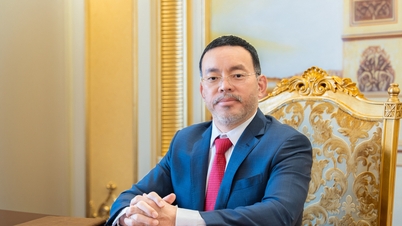
Due to the unique topography, irrigation water here depends entirely on natural rainfall, making it very difficult for farmers to proactively manage their planting seasons. Nguyen Bao Long, who cultivates durian at the foot of Dai Mountain, said: “In years with favorable weather, we have a good harvest; in years with little or too much rain, profits are low. Prolonged droughts cause the trees to shed their leaves; while in years with continuous rain, the trees have excess water, leading to flower and young fruit drop. This year, with little rain and insufficient water for irrigation, my family's durian yield is only about 70% compared to last year.”
To survive and thrive, farmers must find their own solutions. Mr. Tran Van Xi, who grows durian in Nui Dai, said that mountain dwellers build reservoirs in low-lying areas of their orchards to store rainwater and spring water. In addition, water from Nui Dai 2 reservoir is pumped back up the mountain. Thanks to these efforts, farmers can somewhat manage their water supply during short droughts. However, these are still only temporary solutions because when the water reserves run out, they anxiously await the first rains of the season.
The allure of naturally ripened fruit
While durian from the lowlands attracts attention with its eye-catching appearance, durian from Nui Dai mountain wins over consumers with its philosophy of natural farming and authentic flavor. According to Mr. Pham Minh Nhut, the durians from his family, as well as those of other farmers on Nui Dai mountain, are grown with minimal use of chemical fertilizers and pesticides. Thanks to the rugged mountainous terrain, natural farming practices are prioritized, building consumer trust. What makes Mr. Nhut's durian brand special is his harvesting method. He chooses to let the durians ripen and fall naturally instead of harvesting them early. "Partly because harvesting in mountainous terrain is difficult, but mostly to meet the preferences of customers who want to enjoy truly tree-ripened fruit," Mr. Nhut explains.
Careful cultivation practices have yielded outstanding economic value. The durian from Mr. Nhựt's family, and from farmers in Nui Dai mountain in general, consistently sells at very high prices, ranging from 70,000 to 100,000 VND per kilogram. "Because of the large number of orders, we prioritize customers who place their orders in advance. The unique aspect of this business model is that Nui Dai durian is rarely sold through intermediaries, but directly to consumers, ensuring the quality and true value of the product," Mr. Nhựt said.
Lush, fruit-laden orchards not only solve purely economic problems but also open up a promising new direction: agricultural ecotourism. Attracting tourists to visit and enjoy ripe durians directly from the trees in the orchards promises to bring added value and create momentum for the future development of the Nui Dai mountain region.
Source: https://baoangiang.com.vn/sau-rieng-ben-duyen-nui-dai-a486240.html









































































Comment (0)