

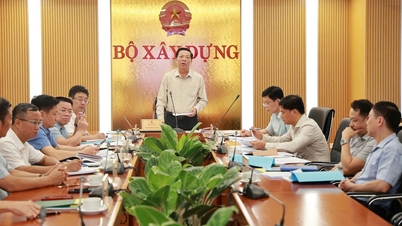
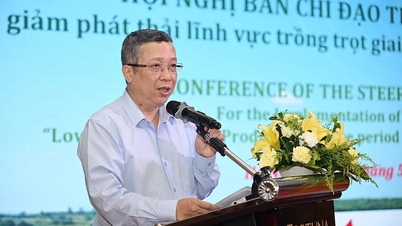
Deputy Prime Minister Ho Quoc Dung made a thought-provoking statement at the Conference on Promoting Exports of Agricultural, Forestry and Fishery Products held in mid-May in Ho Chi Minh City: "A $1 billion worth of mobile phone exports is different from a $1 billion worth of agricultural, forestry and fishery products because agriculture creates real added value, linked to millions of workers and the livelihoods of the people."
At first glance, it might seem like a statement biased towards agriculture. But it's not. It's a very honest perspective on the structure of the Vietnamese economy .
For many years, mobile phones and electronics have consistently been among the country's largest exports, bringing in hundreds of billions of dollars in some years. These enormous figures are enough to make any growth report shine brightly, like a brand-new OLED screen just taken out of its box.
But of that $1 billion worth of phones, how much of that money actually stayed in Vietnam?
An exported smartphone might contain Chinese chips, a Korean screen, Japanese machinery, American design, and patents located somewhere in Europe. Vietnam is primarily involved in assembly, labor, and some logistics. We benefit greatly in terms of jobs, attracting FDI, and economic restructuring—that's undeniable. But the core value still lies elsewhere.

In other words, billions of dollars "fly through the air" in the economy. Meanwhile, $1 billion worth of agricultural products is a different story.
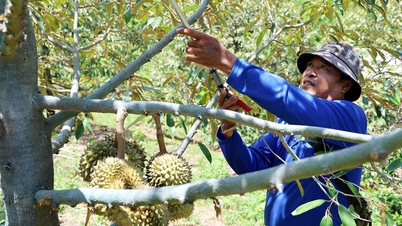
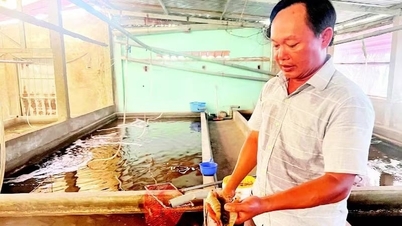
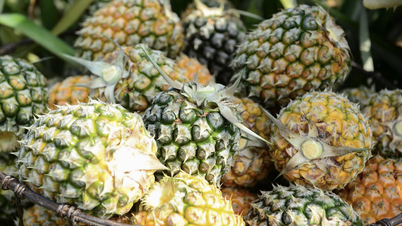
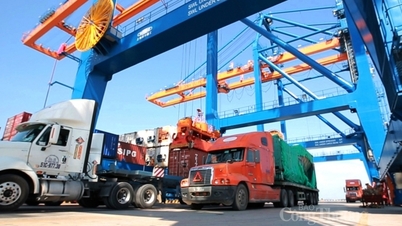
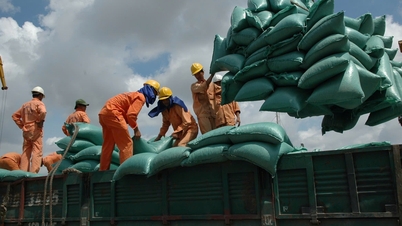
That billion USD is broken down into millions of different flows: money for buying rice in Dong Thap, money for shrimp feed in Ca Mau, money for fuel for fishing boats in Quang Ngai, money for hiring laborers to shell cashew nuts in Binh Phuoc, and money for container truck freight from the Central Highlands to the port.
That kind of money has a very deep impact.
An exported shipment of coffee is more than just foreign currency. It's the tuition for a child in the highlands. It's the cost of a new corrugated iron roof before the rainy season. It's the medical expenses for the elderly. It's the reason why the pho restaurant at the edge of the village is busier after a good harvest.
That's why agriculture is often called the "pillar." Not because it's the most productive, but because in the most difficult times, it supports the most people.
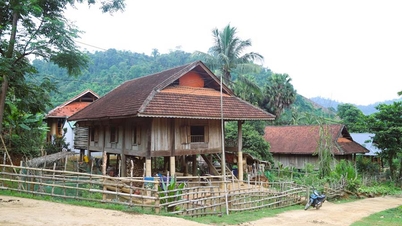
The Covid-19 pandemic is the clearest example. When numerous industries froze and workers left the cities, it was the countryside and agriculture that became the "survival buffer" for society. Those who lost their jobs still had their hometowns to return to, places with thatched roofs as homes, fields to rely on, and fish ponds to make a living.
In an economy where 62% of the population is still tied to agriculture, the story of agricultural products is never just about exports. It's about social stability.
Of course, concluding from that that "agriculture is more important than industry" would be equally extreme.
Without electronics, Vietnam would find it difficult to make a leap forward in terms of export scale, foreign exchange earnings, or global supply chain position. Samsung, Apple, and other technology corporations have driven infrastructure, skilled labor, urbanization, and an entire new class of supporting industries.
The issue isn't about choosing between "phones or agricultural products." The real question is how to ensure that a billion-dollar phone market increasingly incorporates Vietnamese intellectual property? How can we ensure that the "Made in Vietnam" label isn't just a final label? How can we gain more traction in the value chain, instead of remaining stuck in the processing stage with profit margins as thin as a warranty card?

As for agriculture, the challenge is to escape the cycle of "bumper harvests leading to falling prices." A farming sector that feeds tens of millions of people but remains dependent on traders, weather, and border crossings is very fragile.
Ultimately, what the Deputy Prime Minister emphasized was the "social depth" of growth.
There are sectors that are driving GDP growth very rapidly, but the public doesn't feel it. The reports look good, but the coffee shop at the end of the street is still empty. The market remains deserted. Workers are still frugal with their meals.
Conversely, there are industries where even a slight price increase can transform the entire countryside. Repair shops become busier. Building material stores become more crowded. There are more weddings. People start buying new refrigerators, repairing roofs, and enrolling their children in English classes.
That's very Vietnamese economics. It's not all in charts. It's in the lights that turn on in the houses in the countryside.
And perhaps that's why, between a billion dollars worth of phones and a billion dollars worth of agricultural products, the most important thing isn't which number is bigger, but which billion dollars allows more people to live decent lives.
Source: https://danviet.vn/1-ty-do-dien-thoai-hay-1-ty-do-nong-san-d1429440.html







































































Comment (0)