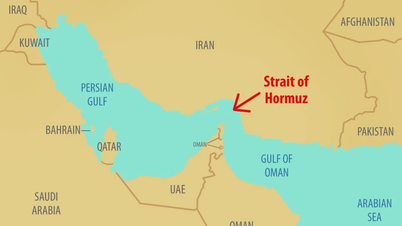
The global economy entered 2026 with more positive expectations than in previous years. However, after only a few months, the growth picture has become significantly more complex. Conflicts in the Middle East increased risks to energy markets, supply chains continued to be under pressure, while trade barriers and geopolitical instability showed no signs of easing.
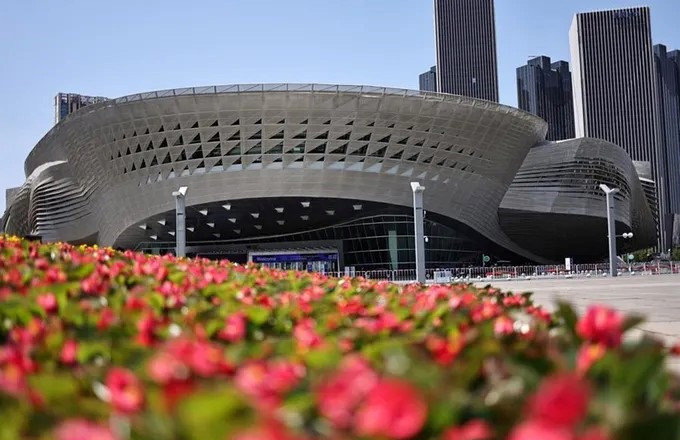
The 2026 Davos Forum in Dalian, China, themed "Large-Scale Innovation," emphasizes the need to find new drivers of growth. Over 1,700 delegates from more than 90 countries and regions attended the forum, focusing on discussing how to translate breakthroughs in artificial intelligence (AI), green technology, and future industries into practice to boost growth, increase productivity, and create jobs.
Discussions at the forum focused on areas considered fundamental to the next growth cycle of the global economy, such as AI, humanoid robotics, advanced manufacturing, semiconductors, biotechnology, clean energy, and quantum technology. Among these, AI was seen as the most prominent driver. AI not only creates new jobs but also has the potential to restructure entire production and service operations.


Another topic attracting particular attention is the green transition. While previously emission reduction was primarily seen as an environmental responsibility, it has now become a competitive economic factor. With energy security becoming a strategic issue following a series of geopolitical crises, countries with robust clean energy ecosystems have a clear advantage in terms of production costs, attracting investment, and resilience to external shocks.
China is a prime example. After years of heavy investment in renewable energy, battery storage, and electric vehicles, it now accounts for more than half of global electric vehicle sales. Wind and solar power have also become major supplementary energy sources for the economy. Many experts believe that China's success stems not from short-term decisions but from a consistent, long-term, and clearly defined investment strategy.
It is no coincidence that China has become the focal point of the 2026 Summer Davos Forum. Beijing's recently announced 15th Five-Year Plan (2026-2030) clearly defines the goal of developing "new quality productive forces," focusing on AI, smart manufacturing, biotechnology, semiconductors, and clean energy. With its enormous domestic market, complete industrial ecosystem, and rapid technology commercialization capabilities, China is emerging as a large-scale laboratory for future industries.
However, technology cannot solve all problems on its own. One of the biggest questions raised at the forum was how innovation can create jobs instead of simply replacing labor. Without accompanying policies for skills training, educational development, and career transition support, AI and automation could exacerbate inequality instead of fostering inclusive growth. That is also why many leaders emphasized that innovation must be people-centric. Technology only truly becomes a driver of growth when it helps improve productivity, create new economic opportunities, and enhance the quality of life.


The overarching message from the 2026 Summer Davos Forum is that future growth will not come from expanding old models, but from the ability to build new industries, harness emerging technologies, and transform them into real economic drivers. This is becoming a necessary condition for countries to maintain competitiveness, ensure growth, and adapt to a world that is changing faster than ever before.
Source: https://hanoimoi.vn/dien-dan-davos-mua-he-2026-tim-dong-luc-tang-truong-cho-kinh-te-toan-cau-1208976.html
![[Image] Ho Chi Minh City: Ma Lang area, Chicken-Rice Market about to change its appearance](https://vphoto.vietnam.vn/thumb/1200x675/vietnam/resource/IMAGE/2026/06/25/1782377698627_ndo_br_m1-jpg.webp)
![[Photo] General Secretary and President To Lam receives Palestinian Ambassador Saadi Salama](https://vphoto.vietnam.vn/thumb/1200x675/vietnam/resource/IMAGE/2026/06/25/1782365384740_a1-bnd-9423-8322-jpg.webp)


![[Image] Schools organize meetings and introduce teaching models to students admitted to grade 10.](https://vphoto.vietnam.vn/thumb/1200x675/vietnam/resource/IMAGE/2026/06/25/1782368077271_ndo_br_z7970052192242-1ec8daeb77a6eed1a4e9f58c564ddd3e-jpg.webp)