SGGP
Electrification is playing a crucial role in China's decarbonization process, particularly in sectors such as steel, construction, and transportation.
According to China Daily, China's electrification momentum has progressed steadily over the past few years, along with rapid decarbonization of its electricity supply.
Gong Ji Cheng, a researcher at the College of Environmental Science and Engineering at Peking University, stated that this is a crucial strategy for China to achieve net-zero carbon by significantly limiting and reducing energy consumption through improved energy efficiency. This comment was made during the recent announcement of China's comprehensive roadmap for carbon neutrality and clean air, jointly organized in Beijing by Tsinghua University, the Chinese Academy of Environmental Planning, Peking University, Nanjing University of Science and Technology, and the National Energy Administration.

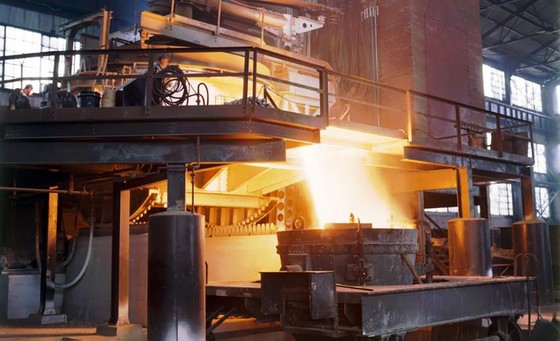 |
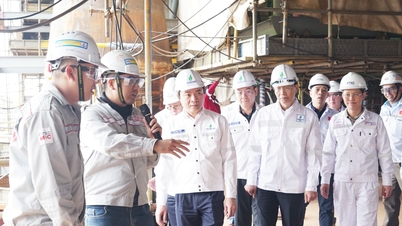
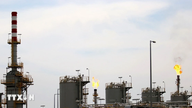
| Electric arc welding technology for melting steel at a factory in China. |
Electrification means replacing fossil fuel-based technologies or processes, such as internal combustion engines and gas boilers, with equivalent electric-powered devices, such as electric vehicle motors or heat pumps. The International Energy Agency states that these replacements are often more efficient, reduce energy demand, and have an increasing impact on emissions as electricity production becomes decarbonized.
For example, in the transportation sector, China has pioneered the development and promotion of electric vehicles. The increasing adoption and expansion of these vehicles has contributed significantly to a cleaner and more sustainable transportation system. Electrification in the steel industry, such as the deployment of electric arc furnaces, which heat materials using electric arcs, can also significantly improve the energy efficiency of the steel industry and reduce emissions of major air pollutants, such as nitrogen dioxide (NO2), by more than 80% by 2060.
According to the China Electricity Council (CEC), the current electricity share of China's energy consumption is 27%, higher than the world average, and is expected to exceed 30% by 2025. The electrification rate in China's industrial and construction sectors is 26.2% and 44.9%, respectively. The CEC notes that this figure is only 3.9% in the transportation sector, despite the country's progress towards electrifying transportation.



According to Yang Kun, Executive Vice President of CEC, China will strongly promote the replacement of coal and oil with electricity in various sectors, including industry, transportation, construction, and agriculture . With significant potential for reducing emissions and decarbonizing the energy supply chain, electrification is and will be a key strategy in achieving China's emissions targets.
However, the electrification journey is not without its challenges. Luo Zuoxian, head of the intelligence and research department at the Sinopec Institute for Economic and Development Studies, stated that the transition away from fossil fuels requires technological breakthroughs, investment, and government planning. Furthermore, electricity production needs to shift to renewable resources, while the power grid also needs to expand its capacity and flexibility to meet growing electricity demand.
Source