

 |
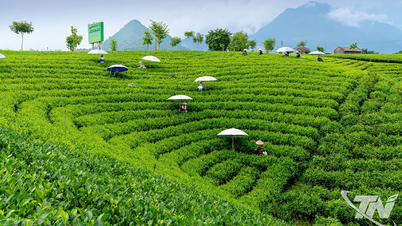
| To ensure the tea is harvested in time, farmers in Phu Luong commune actively engage in reciprocal labor exchange. |
Visiting Phu Luong commune today, we can easily feel the changes along each well-maintained, clean concrete road. On both sides of the road, rows of flowers blooming in the June sun further highlight the new rural landscape of the area.
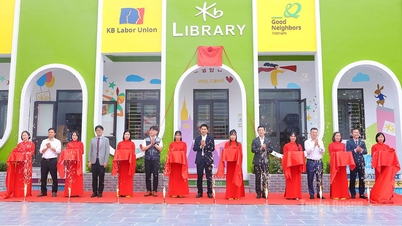
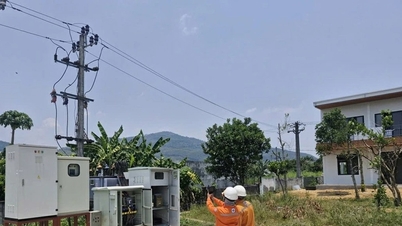
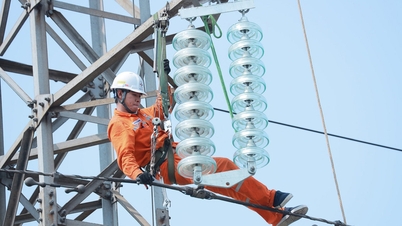
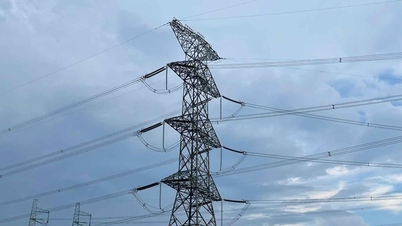
Infrastructure such as electricity, roads, schools, and health centers have been invested in comprehensively; many sturdy and spacious houses are gradually replacing the temporary houses of the past.
Phu Luong commune currently has 74 hamlets with over 10,500 households and nearly 44,000 inhabitants. By 2025, the average per capita income is expected to reach nearly 59 million VND/person/year.
The entire commune still has 98 poor households that are receiving support and assistance from the government, mass organizations, and the local community.
To achieve its current appearance, over the years, the local Party committee, government, and people (based on the merger of Du town, Giang Tien town, and Yen Lac and Dong Dat communes) have made efforts to develop the economy and invest in infrastructure construction.
Over the past five years, the commune has mobilized nearly 80 billion VND, more than 20,000 man-days of labor, and encouraged people to donate nearly 50,000 square meters of land to build and renovate public welfare facilities.
From those resources, 134 roads with a total length of nearly 67km were newly built and upgraded. On National Highway 3 passing through the area, 3.6km of road was equipped with a lighting system.
In particular, the commune has built 45 model illuminated roads, flag-lined roads, and flower-lined roads with a total length of over 61km. In addition, the locality has supported 33 households in building houses and constructing 23 hygienic toilets, with a total cost of nearly 606 million VND.
In its economic development, Phu Luong identifies agriculture as its main strength, contributing to stable livelihoods and creating momentum for growth.
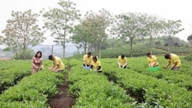
The irrigation system has been invested in comprehensively, meeting production needs. Many tea-growing households have boldly installed automatic irrigation systems, improving farming efficiency.
In addition, professional staff regularly organize training courses, transfer scientific and technological advancements, and introduce effective production models. Through these efforts, people gain more knowledge and apply advanced production methods suitable to their specific conditions.
 |
| In agricultural production in Phu Luong, many stages are mechanized. |
On average, the commune achieves an annual grain production of nearly 12,800 tons; a fresh tea leaf production of over 12,000 tons; and a seafood production of 319 tons. Livestock farming is developing steadily with 16 pig farms and 44 poultry farms.
In order to enhance the value of agricultural products, the commune has implemented 121 models and 10 projects to support economic development. Many models have proven effective, contributing to a shift in production mindset from small-scale to integrated, commodity-based production.
One of the highlights of Phu Luong is the development of the collective economy linked to distinctive local products.
Currently, the commune has 13 active agricultural cooperatives, including two newly established cooperatives at the beginning of 2026: Phu Luong Agricultural and Commercial Services Cooperative (Khe Nac hamlet) and Yen Thuy Tea Cooperative (Yen Thuy 4 hamlet).
To date, the locality has 7 recognized craft villages; 4 OCOP products have achieved 3 stars, including: "Peaceful Sleep" herbal pillow, Phu Luong green tea, Huong Thai tea, and Duom Mountain bamboo shoots. The entire commune has 12 hamlets that meet the standards of model new rural areas.
Besides agriculture, the industrial, handicraft, trade, and service sectors continue to maintain their growth momentum.
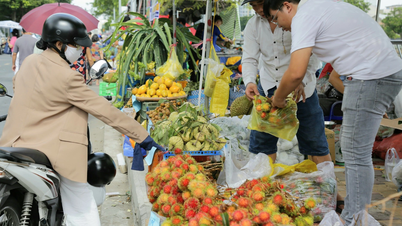
In the first few months of 2026, the supply of goods increased by 15-30%, meeting the consumer demand of the people; over 90% of goods circulating in the area were Vietnamese products.

Many production sectors achieved positive results, such as: producing over 7 million tunnel bricks; more than 1 million cement bricks and tiles; extracting over 100,000 m3 of stone; processing over 2,000 m3 of wood; producing 2,800 mechanical products, 3,500 m2 of aluminum and glass products, over 4,500 garment products, and 300 tons of processed tea...
The stable development of these industries has contributed to increased budget revenue and created jobs for hundreds of local workers.
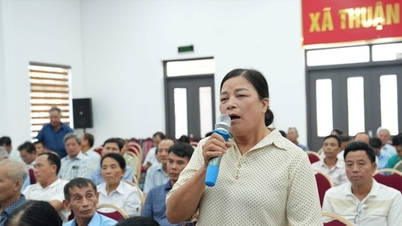
With the foundation already built, along with the determination of the Party committee, the government, and the consensus of the people, Phu Luong commune is continuing to develop its internal strengths and effectively exploit the local potential and advantages.
Source: https://baothainguyen.vn/kinh-te/202606/dien-mao-moi-o-phu-luong-0e85b89/









































![[Video] Sunset at Lap An Lagoon – Where the sun sets over the fishing nets](https://vphoto.vietnam.vn/thumb/1200x675/vietnam/resource/IMAGE/2026/05/31/1780192137701_beach-landscape-sea-water-nature-grass-745871-pxhere-com.jpeg)



























Comment (0)