


1. When was the predecessor of the Independence Palace, the Norodom Palace, built?
- 1867
0% - 1868
0% - 1871
0%
Exactly
In 1858, the French colonialists opened fire on Da Nang, marking the beginning of their war of aggression against Vietnam.
In 1867, France completed its occupation of the six southern provinces of Vietnam (Bien Hoa, Gia Dinh, Dinh Tuong, Vinh Long, An Giang , and Ha Tien). In 1868, the French government began designing and constructing a mansion in the center of Saigon to serve as the residence for the Governor of Southern Vietnam. Upon completion, it was named Norodom Palace.
Construction began on February 23, 1868, and was completed in 1871, with the first stone laid by Lagradière, the French Governor of Southern Vietnam.
From 1887 to 1945, successive French governors-general used this mansion as their residence and workplace throughout the period of their invasion of Indochina.
2. In what year was Norodom Palace renamed Independence Palace?
- 1945
0% - 1954
0% - 1965
0%
Exactly
On March 9, 1945, the Japanese fascists staged a coup against the French, seizing control of Indochina. Norodom Palace served as the workplace of the Japanese government in Vietnam. In September 1945, Japan was defeated in World War II, and France returned to occupy Southern Vietnam. Norodom Palace became the headquarters of the French war machine of aggression in Vietnam.
On May 7, 1954, the French colonialists suffered a heavy defeat in the Battle of Dien Bien Phu, forcing them to sign the Geneva Accords and withdraw from Vietnam. The United States then attempted to intervene and invade the South, temporarily dividing Vietnam into two regions: the Democratic Republic of Vietnam in the North and the State of Vietnam (later the Republic of Vietnam) in the South.
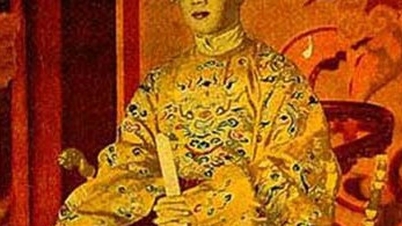
On September 7, 1954, Norodom Palace was handed over between the representative of the French government, General Paul Ely, and the representative of the Saigon government, Prime Minister Ngo Dinh Diem. Ngo Dinh Diem then decided to rename the palace Independence Palace.
On October 26, 1955, Prime Minister Ngo Dinh Diem deposed Head of State Bao Dai, established the Republic of Vietnam, and became President. From then on, the Independence Palace became the residence of the Ngo Dinh Diem family and witnessed many political events.
3. What incident caused the collapse of the Independence Palace?
- Burned
0% - Bombed
0% - Under attack
0%
Exactly
On February 27, 1962, the coup plotters sent two Saigon army pilots, Nguyen Van Cu and Pham Phu Quoc, to fly two AD6 aircraft and bomb the entire left wing of the Independence Palace, causing it to collapse. Because it could not be restored, Ngo Dinh Diem ordered it razed to the ground and built a new palace on the same site.
Ngo Dinh Diem decided to begin construction of the Palace on July 1, 1962. During the construction of the new Palace, his family temporarily moved to Gia Long Palace (now the Ho Chi Minh City Museum). The construction was still unfinished when Ngo Dinh Diem was assassinated by the coup plotters on November 2, 1963. Therefore, on the inauguration day of the Palace, October 31, 1966, the ceremony was presided over by Nguyen Van Thieu, Chairman of the National Leadership Committee.
Ngo Dinh Diem initiated the construction of the Independence Palace but never lived there for a single day. The person who lived in this palace the longest was the second President of the Republic of Vietnam, Nguyen Van Thieu (from October 1967 to April 21, 1975).
4. Which architect designed the Independence Palace?
- Nguyen Van Ninh
0% - Ngo Viet Luc
0% - Ngo Viet Thu
0%
Exactly
On February 27, 1962, the coup plotters sent two Saigon army pilots, Nguyen Van Cu and Pham Phu Quoc, to fly two AD6 bombers, causing the entire left wing of the Independence Palace to collapse. Because it could not be restored, Ngo Dinh Diem ordered it razed to the ground and a new palace built on the same site, according to the design of architect Ngo Viet Thu – the first Vietnamese to win the Rome Prize.
When designing the Independence Palace, architect Ngo Viet Thu wanted to find a cultural meaning for the building, so every arrangement, from the interior to the exterior facade, symbolizes traditional philosophy, Eastern rituals, and the national character.
5. Who planted the victory flag on top of the Independence Palace at noon on April 30, 1975?
- Bui Quang Than
0% - Nguyen Van Tap
0% - Vu Dang Toan
0%
Exactly
At 10:45 AM on April 30, 1975, tank number 843 of the Liberation Army, belonging to Company 4, Battalion 1, 203rd Tank Brigade, 2nd Corps, led the formation and rammed through the side gate of the Independence Palace. Following this, tank number 390 rammed through the main gate and advanced straight into the Palace.
At 11:30 AM that same day, Lieutenant Bui Quang Than, the commander of Tank Company 843, lowered the three-striped flag and raised the flag of the National Liberation Front of South Vietnam. The flag fluttered proudly atop the Presidential Palace, marking the end of 30 years of arduous and heroic war for the Vietnamese people.
6. How many square meters is the Independence Palace?
- 110,000 m2
0% - 120,000 m2
0% - 130,000 m2
0%
Exactly
The Independence Palace covers an area of 120,000 m² (300m x 400m) and is bordered by four main roads: Nam Ky Khoi Nghia Street to the northeast (the main facade of the Palace); Huyen Tran Cong Chua Street to the southwest (the rear facade of the Palace); Nguyen Thi Minh Khai Street to the northwest (to the left of the Palace); and Nguyen Du Street to the southeast (to the right of the Palace).
Source: https://vietnamnet.vn/dinh-doc-lap-co-tu-khi-nao-2391372.html
![[Photo] Prime Minister Pham Minh Chinh receives the Director General of TASS News Agency (Russian Federation)](https://vphoto.vietnam.vn/thumb/1200x675/vietnam/resource/IMAGE/2026/02/25/1772024599891_dsc-8041-jpg.webp)

![[Photo] Prime Minister Pham Minh Chinh presides over the meeting of the Steering Committee for the Development of Science, Technology, Innovation, Digital Transformation and Project 06.](https://vphoto.vietnam.vn/thumb/1200x675/vietnam/resource/IMAGE/2026/02/25/1772024613089_1772024091685-jpg.webp)




























































Comment (0)