


(HNMCT) - The Cao Lo Vuong Temple; the Kinh Duong Vuong Temple and Mausoleum; and the Si Nhiep Temple possess unique cultural and historical value, making them attractive destinations for tourists.
Cao Lỗ Vương Temple
The ancient Cao Lỗ Vương temple was located in Lớ village, now Đại Trung hamlet (Cao Đức commune, Gia Bình district, Bắc Ninh province). He was instrumental in helping An Dương Vương build Cổ Loa citadel and creating the Linh Quang divine crossbow, contributing to the defeat of Triệu Đà's army and protecting the Âu Lạc state. Because of this, he was granted the title of Marquis and was bestowed the title of Supreme Deity by many dynasties.
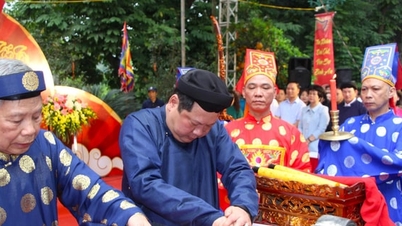
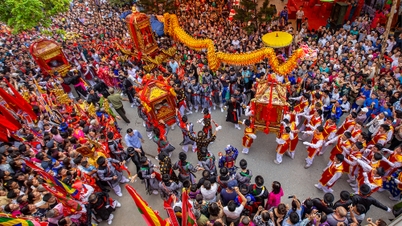
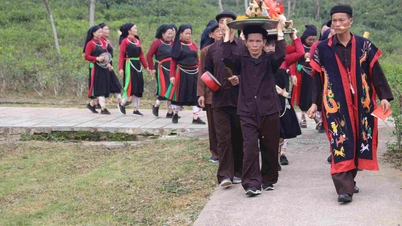
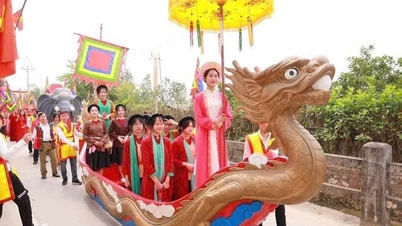
The Cao Lỗ Vương Temple bears the architectural hallmarks of the Lê-Nguyễn dynasties, following the "front for the public, back for the state" style, and is large in scale, comprising the Outer Temple, the Middle Temple, and the Upper Temple. Every year on the 10th day of the third lunar month, the people of the eight villages in the Đại Than region, who worship Cao Lỗ Vương, hold a festival to express their gratitude for the General's contributions. In 2005, the Cao Lỗ Vương Temple was classified as a National Historical Monument.
Temple and tomb of King Kinh Duong Vuong
The Kinh Duong Vuong, Lac Long Quan, and Au Co temple and tomb complex is a place of worship for the founding figures of the nation, located in A Lu village (Dai Dong Thanh commune, Thuan Thanh district). In the past, Kinh Duong Vuong was worshipped at the Upper Temple, while Lac Long Quan and Au Co were worshipped at the Lower Temple, both located west of A Lu village. Additionally, the villagers established a communal house, venerating Kinh Duong Vuong as the village's guardian deity. From 1949 to 1952, the French established a military outpost in the village and destroyed all the communal houses, temples, and pagodas. In 1971, the people restored the Kinh Duong Vuong tomb complex, and in 2000, they built a communal temple to worship the founding figures.
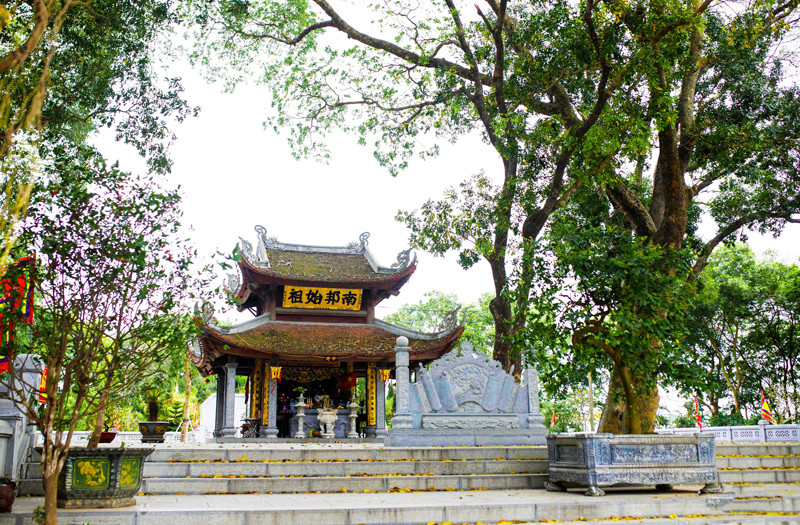
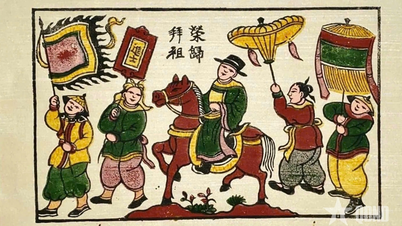
The traditional festival commemorating the ancestors takes place from the 18th to the 25th of January every year. In addition, on the 15th of August, the villagers hold a ceremony to honor their ancestors with three trays of black olives symbolizing the 50 children who followed their mother to the forest, and three trays of fish salad symbolizing the 50 children who followed their father to the sea.
Sĩ Nhiếp Temple
The Sĩ Nhiếp Temple and Mausoleum Complex – “The Founder of Confucianism in Southern Vietnam” – is located in Tam Á village (Gia Đồng commune, Thuận Thành district, Bắc Ninh province). This is the place of worship for Sĩ Nhiếp (137-226), the Governor of Giao Chỉ – an official who played a key role in paving the way for Confucianism in Vietnam. The temple has a “Đinh” (a type of Vietnamese) structure, consisting of five front halls and three rear halls. The temple gate is built in a two-story, eight-roofed style, with four Chinese characters embossed on the front: “Nam Giao Học Tổ” (Founder of Confucianism), and on the back: “Hữu Công Nho Giáo” (Merit of Confucianism). The rear hall houses a bronze statue of Sĩ Nhiếp, flanked by ten 1.6-meter-tall clay statues of civil and military officials. Sĩ Nhiếp's mausoleum is located behind the temple. The annual festival takes place from the 5th to the 7th of January.
The Sĩ Nhiếp temple and tomb complex was classified as a National Historical, Cultural, and Architectural Artistic Monument in 1964.
Source





















































Comment (0)