

Recently, some households in Ngoc Hien District ( Ca Mau Province ) have come up with a way to dry clams to meet the diverse needs of customers, as well as to consume the quantity of commercial clams that do not meet size standards and whose prices are unstable.
Dry the clams because the price of clam meat is unstable.
In Ca Mau, clam meat can be prepared into many simple yet delicious dishes such as: steamed with ginger, boiled with lemongrass, Thai-style steamed... However, dried clams are a novel dish, recently discovered by some households in Ngoc Hien District.
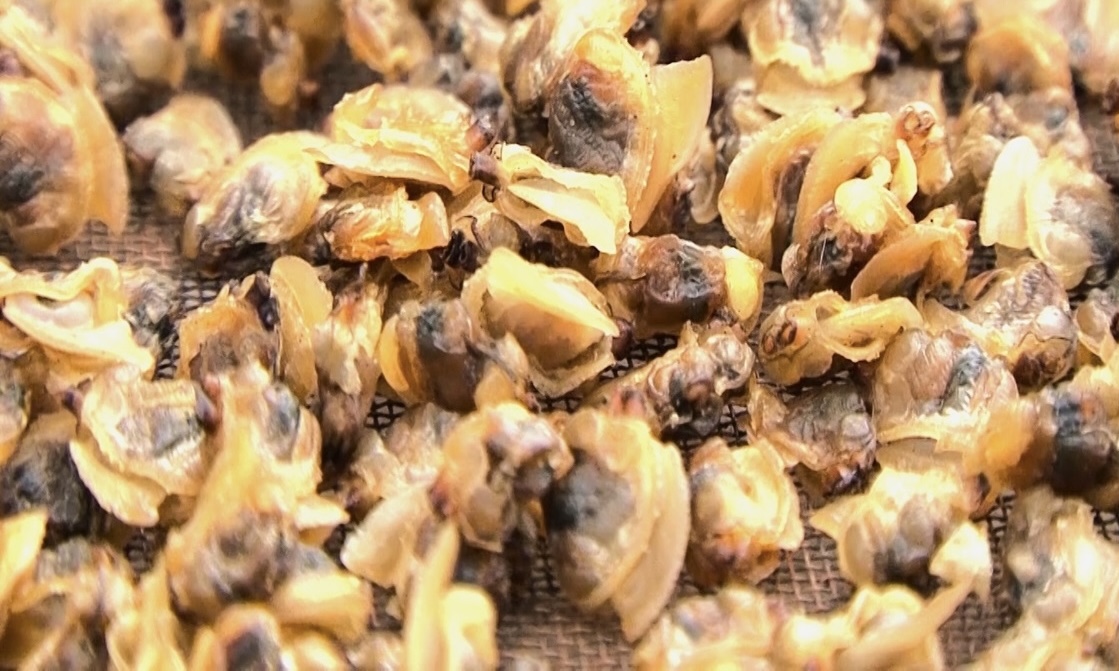
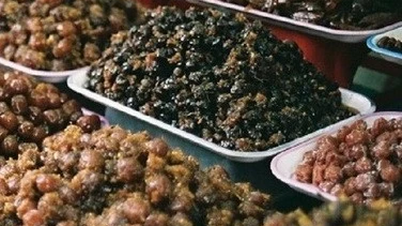
Dried clams are a unique dish of the people in Ca Mau.
Each year, the Dat Mui clam cooperative (Dat Mui commune, Ngoc Hien district) harvests and supplies hundreds of tons of commercial clams to the market. However, fresh clams are difficult to sell, prices are unstable, and clams that don't meet size standards fetch low prices. Furthermore, the abundance of fresh clams doesn't allow for long-term preservation, so the locals came up with the idea of drying them.
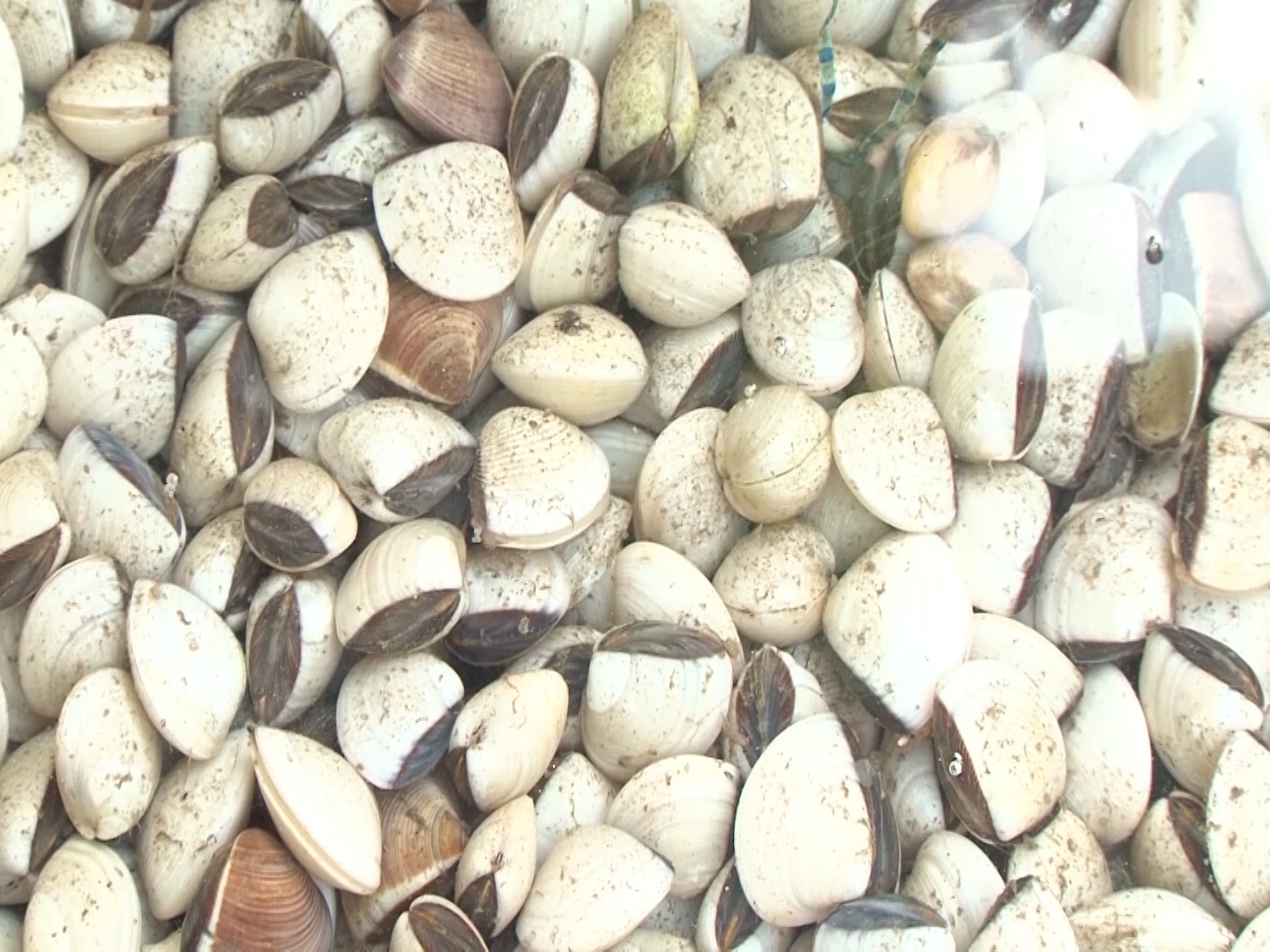
After soaking in clean water for about 10 hours, the clams are boiled until cooked, the meat is separated, and then dried.
Mr. Truong Long Chau (residing in Dat Mui commune) is the creator of dried clams. Initially, he only made them for his family's consumption. Later, he gave them to relatives and neighbors, and many praised their delicious taste, so he decided to produce them in large quantities for sale on the market.
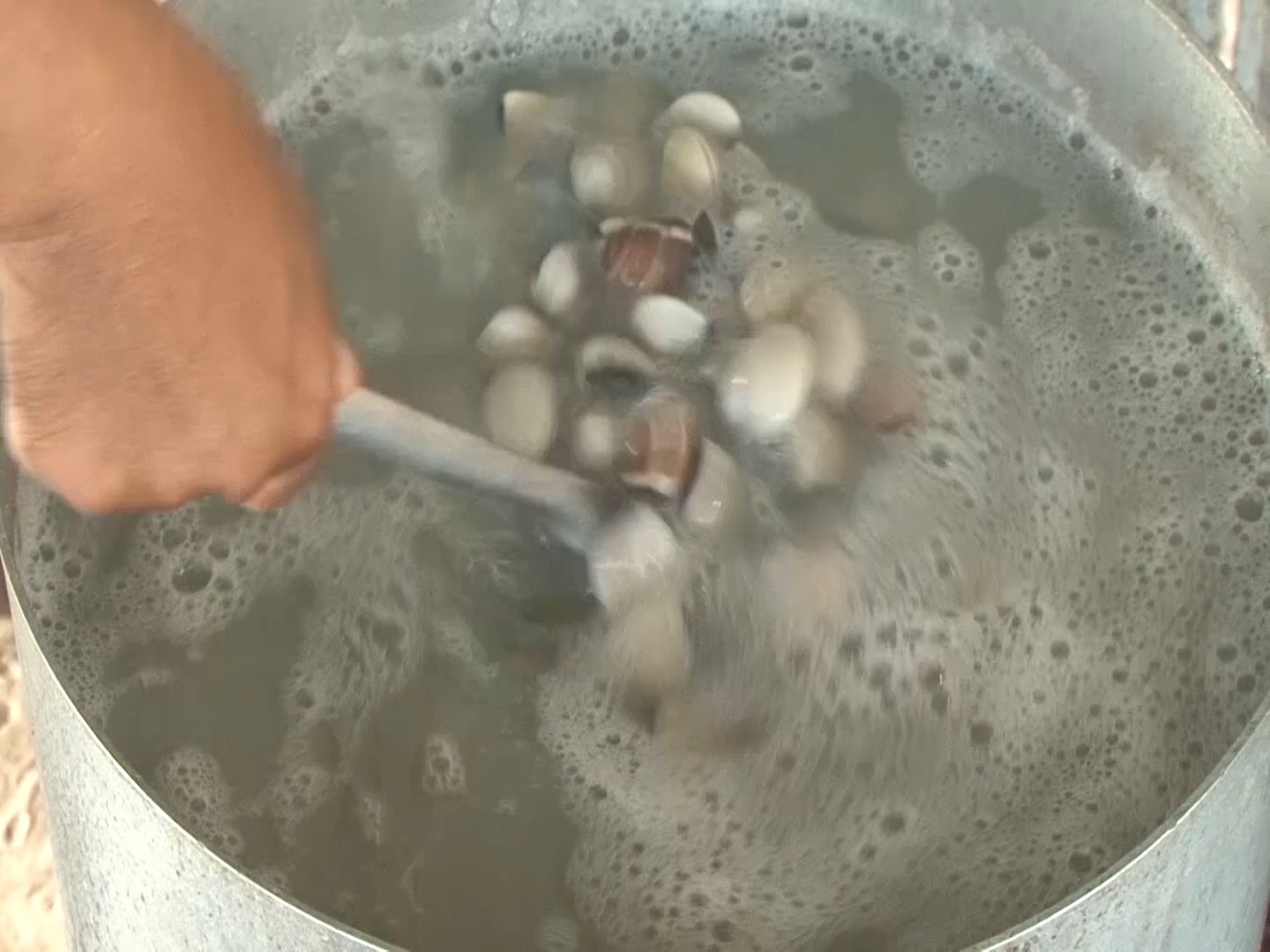
Clams are sensitive to heat, so when boiling them, you need to stir them quickly for 3-4 minutes until they are cooked through.
According to Mr. Chau, after soaking in clean water for about 10 hours, the clams are boiled until cooked, the meat is separated, and then dried. The clam meat is dried directly under the sun, and it takes about 2 days to dry completely. Each kilogram of dried clams requires approximately 40 kg of commercially harvested clams.
Dried clams: a unique and delicious dish.
With its new and appealing preparation method, this dish has been well-received and sought after by customers near and far. "Diversifying processed clam products helps us to be more proactive in production. Drying clams also provides cooperative members with an additional source of income," Mr. Long said.
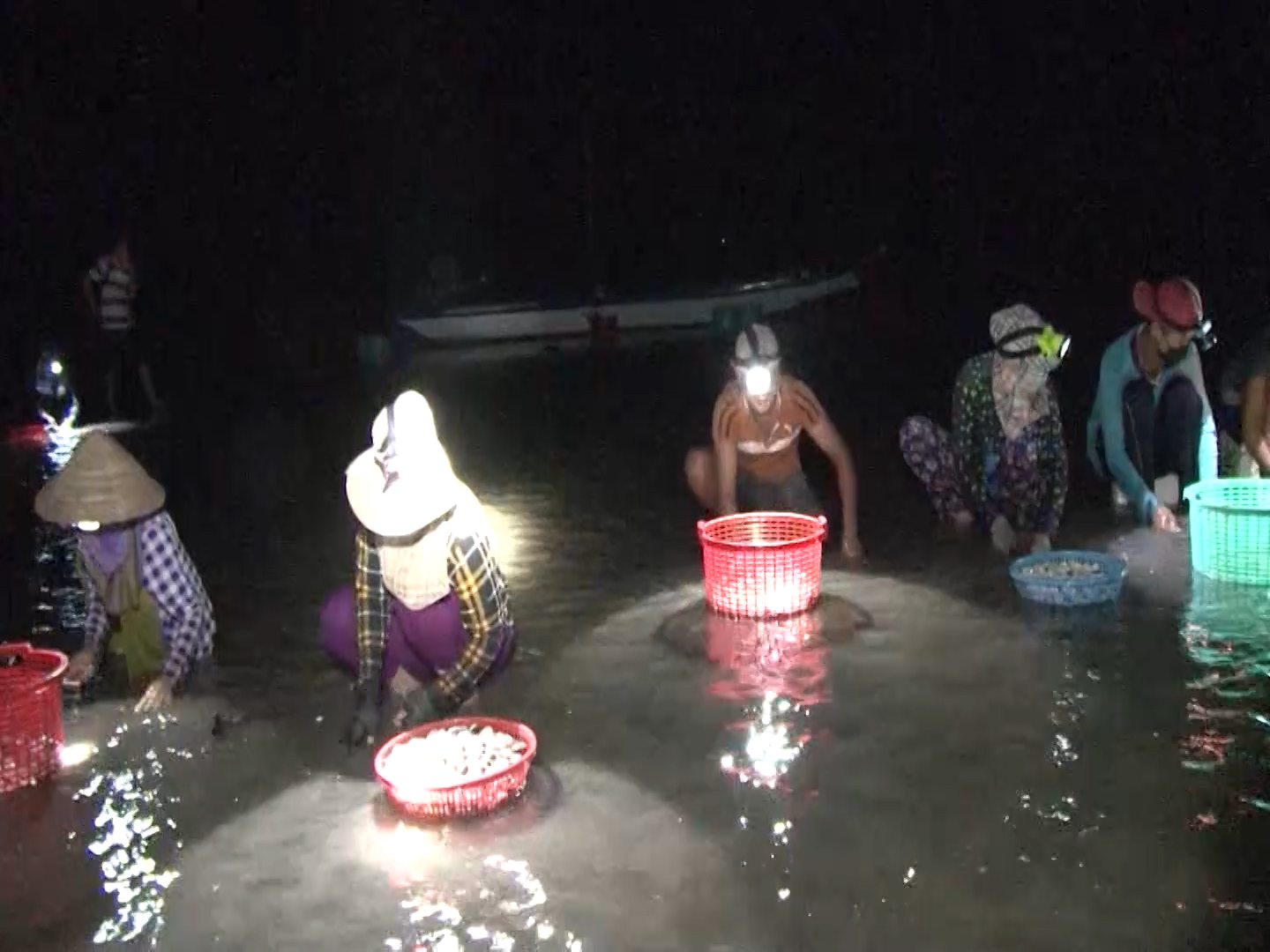
Each year, the Dat Mui clam cooperative harvests and supplies hundreds of tons of commercial clams to the market.
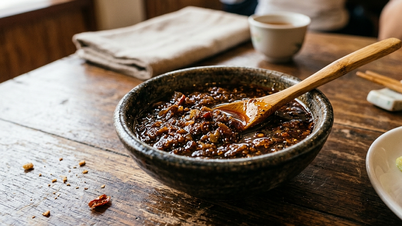
Dried clams from Dat Mui have a sweet taste, a distinctive aroma, and a moderately chewy texture. They are vacuum-packed, allowing for long-term storage, making them suitable as gifts or for stocking up at home during Tet (Vietnamese New Year). Dried clams can be eaten directly, lightly fried and seasoned as desired, or used in soups. This type of dried clam is not too chewy, has a unique and delicious taste, and is currently favored by many people.
Ms. Le Hong Em (residing in Dat Mui commune) said that she earns more than 150,000 VND daily from boiling, separating the meat from, and drying clams. "Recently, this job has provided me with a stable income. It's not physically demanding, but it requires meticulousness and carefulness when separating the clam meat," Ms. Hong Em said.
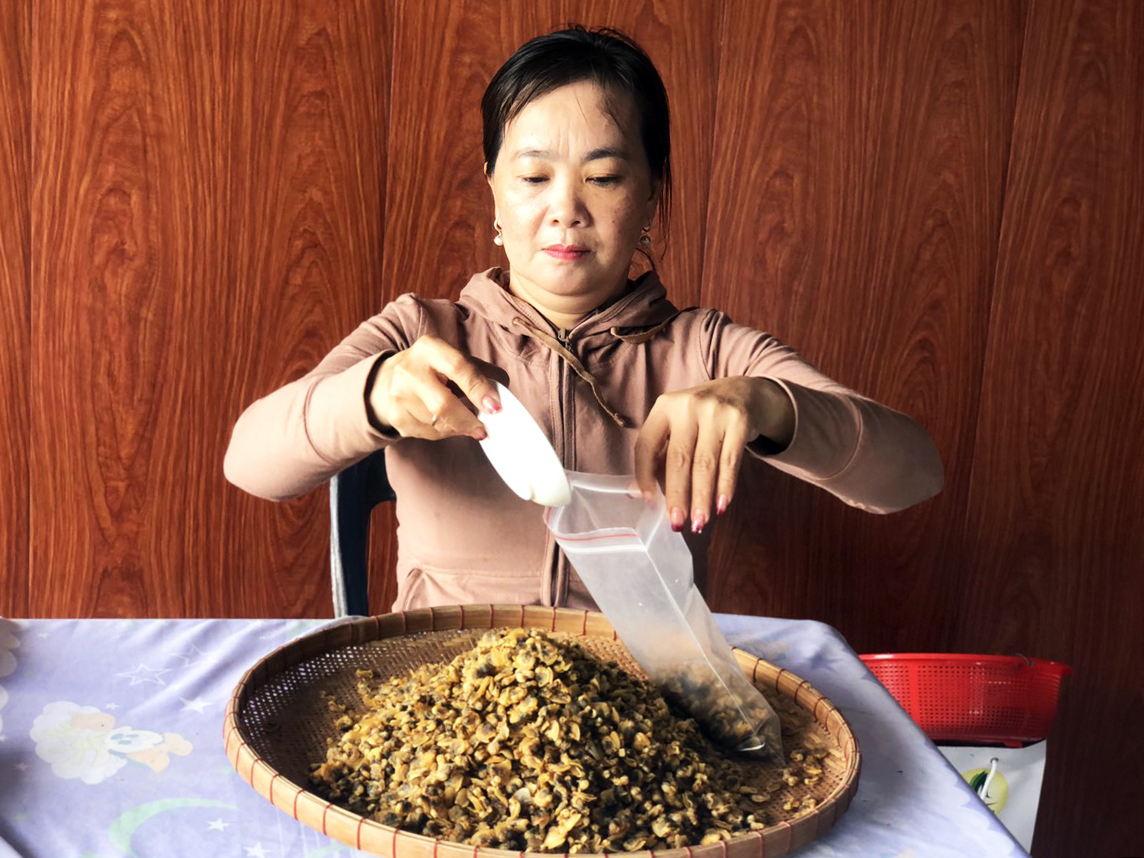
Currently, dried clams are sold at a price of approximately 1.2 million VND/kg.
The ideal clams for drying are those weighing 80-90 clams per kilogram. Smaller clams are cheaper, dry faster, and retain their sweetness better. During the initial processing and drying of clams, facilities prioritize food safety and hygiene to ensure quality.
Having been involved in the commercial clam trade for many years, the family of Ms. Hong Kim Hue (Khai Long hamlet, Dat Mui commune) boldly experimented with processing dried clams.
According to Ms. Hue, compared to making dried shrimp or other dried seafood, dried clams are easier to process and require fewer steps. Because of their pleasantly salty taste, dried clams are easy to eat and can be easily prepared as an accompaniment to many other dishes. Currently, dried clams are sold for approximately 1.2 million VND per kilogram.
Source link
![[Photo] General Secretary and President To Lam works with the Party Committee of the Ministry of Health on the work of Vietnamese traditional medicine.](https://vphoto.vietnam.vn/thumb/1200x675/vietnam/resource/IMAGE/2026/05/20/1779294323718_a1-bnd-2978-3319-jpg.webp)
![[Image] "Journey of Hope" promotes the organ and tissue donation movement in Vietnam.](https://vphoto.vietnam.vn/thumb/1200x675/vietnam/resource/IMAGE/2026/05/20/1779294400833_1-8910-jpg.webp)



















































Comment (0)