

As a religious site and community gathering place for Vietnamese people of Chinese descent, and recognized as a national historical and cultural relic, Kien An Cung Pagoda has attracted 7,000 visitors since the beginning of the year, a 20% increase compared to the same period last year.
Unique architecture
Leading a reporter from Giao Thong Newspaper on a tour of Kien An Cung Pagoda located on Phan Boi Chau Street, Sa Dec City ( Dong Thap Province ), Mr. Phan Thoai Trong, the manager of this religious site, said that Ong Quach Pagoda (Kien An Cung Pagoda) was started in 1924 and completed in 1927.
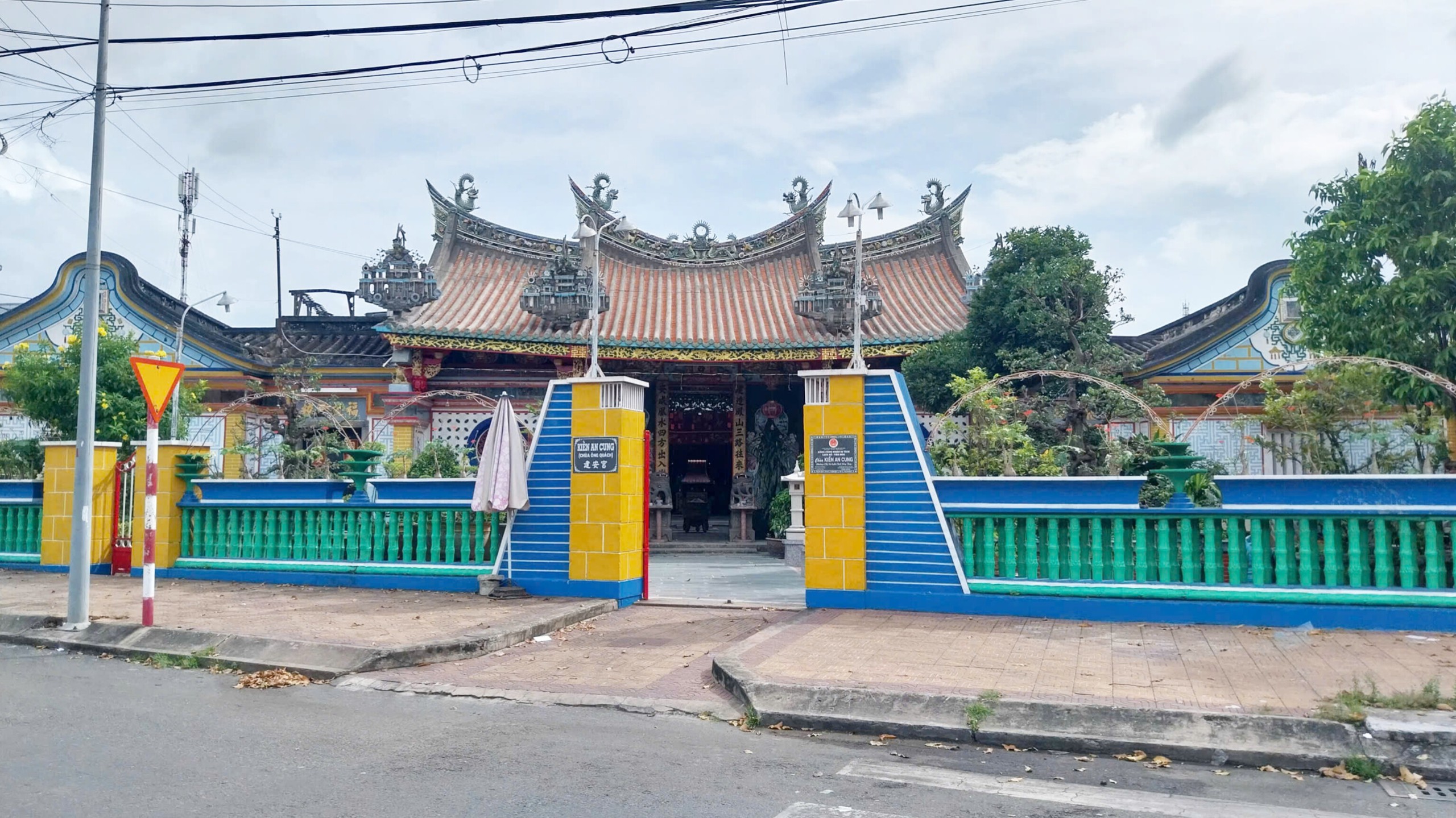
The distinctive architecture of Kien An Palace features a boat-shaped roof with two soaring, curved eaves.
Kien An Palace was built in the shape of the Chinese character "gong," consisting of three sections: the east wing, the west wing, and the main hall, with a tranquil courtyard in the middle. The temple's truss system does not use rafters; instead, it uses only mortise and tenon joints for support, and a three-layered bracing system attached to the main columns provides considerable stability.
One of the distinctive architectural features of the Fujianese Chinese assembly halls is the boat-shaped roof, with two soaring curved eaves, creating a beauty that is both ancient and elegant.
The roof of Kien An Palace is covered with three layers of tiles, the top layer forming undulating waves. From the ridge down to the roof are soaring, curved waves, topped with miniature multi-story palace models and ceramic statues.
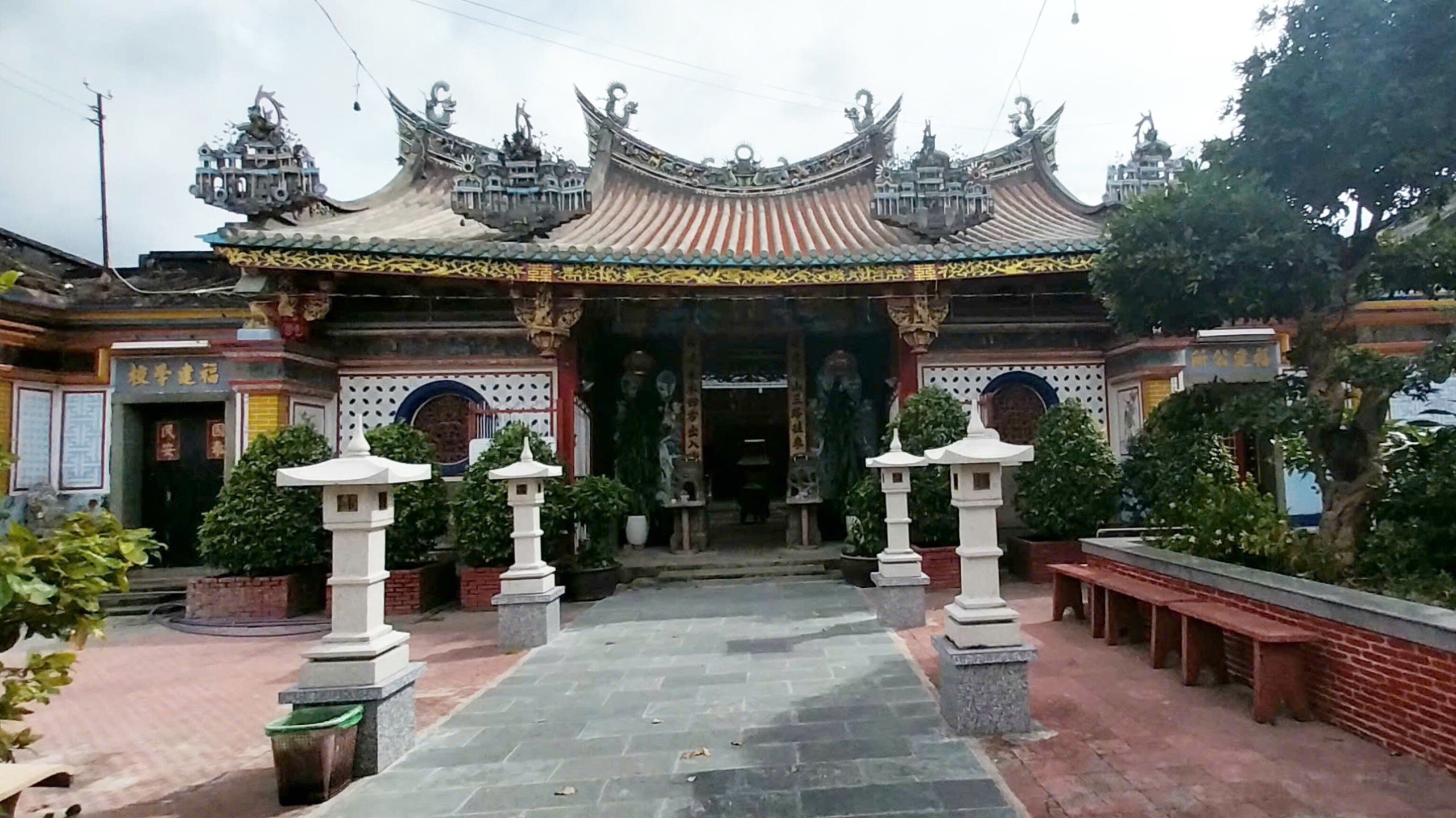
Kien An Cung Pagoda was started in 1924 and completed in 1927.
In the center of the roof are ceramic artworks such as dragons worshipping the moon, fish transforming into dragons, and other decorative patterns created using mosaic techniques of earthenware and porcelain shards, following the curved edges of the roof tiles. At the end of the roof, a tubular structure is fitted with glazed tiles.
The system of ornate frames, featuring floral motifs, pheasants, and the Chinese character for "double happiness," is attached to the walls and column capitals beneath the arched roof. Each column capital is adorned with sculptures resembling lanterns carved with chrysanthemums and pheasants.
Kien An Palace has two entrances, a main one and a side one. In front of the main hall is a guardian deity: a pair of large, majestic green stone unicorns on vividly carved stone pedestals.
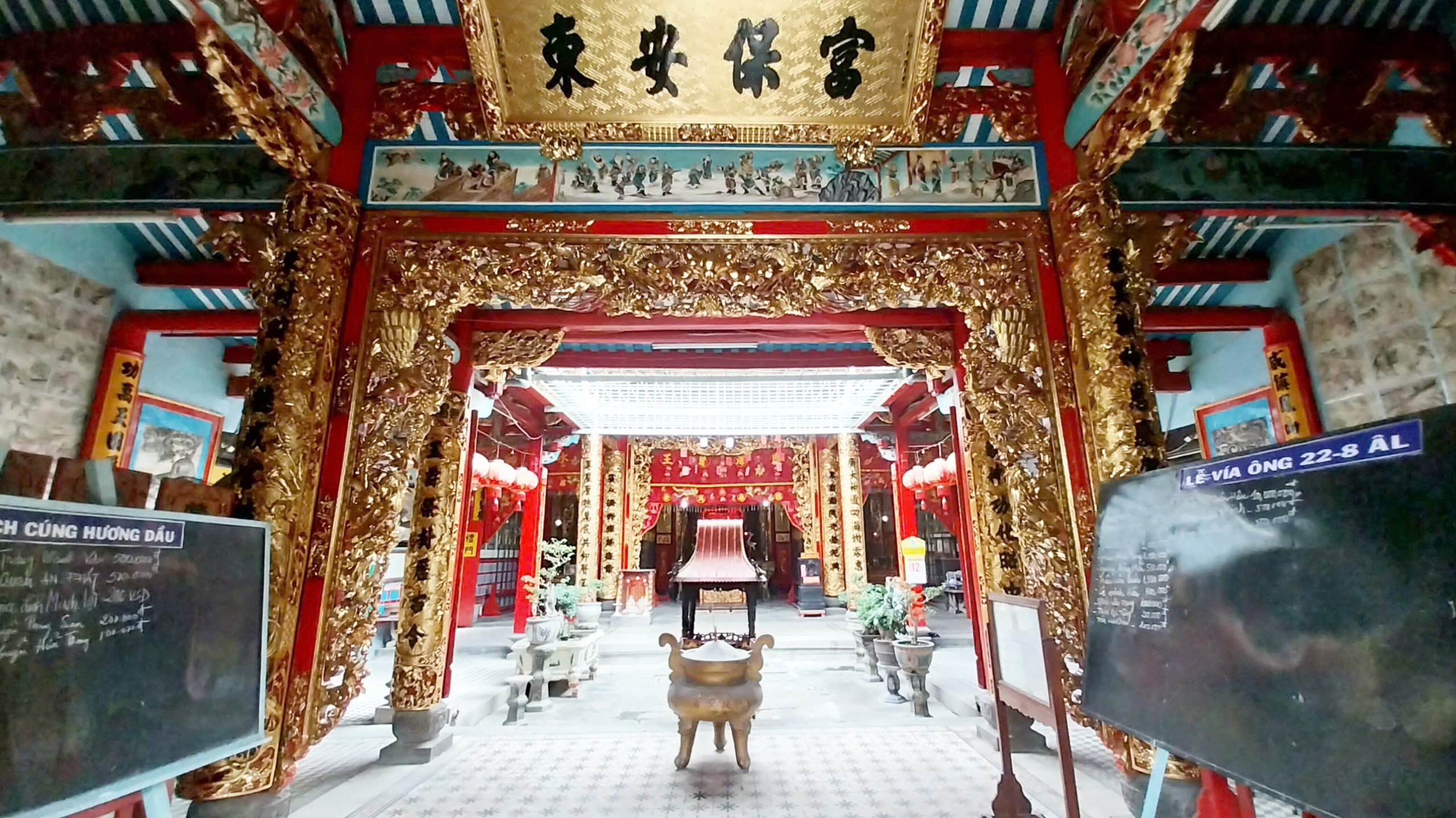
The system of ornate frames, featuring floral motifs, pheasants, and the Chinese character for "double happiness," is attached to the walls and column capitals beneath the arched roof.
The entrance to the main hall does not feature the usual horizontal plaque found in religious establishments, but rather a vertical sign designed like a shrine, intricately carved, with a pair of embossed dragons and flower pots on either side.
Additionally, this area also features ink paintings depicting flowers, plants, and scenes of daily life of the Chinese official class in the past, perhaps as a way of reminiscing about their homeland.
The Chinese believe that the color red brings prosperity, good fortune, and happiness, so everything from the door frame, the decorative panels, the wooden trellis in the main hall... is red.
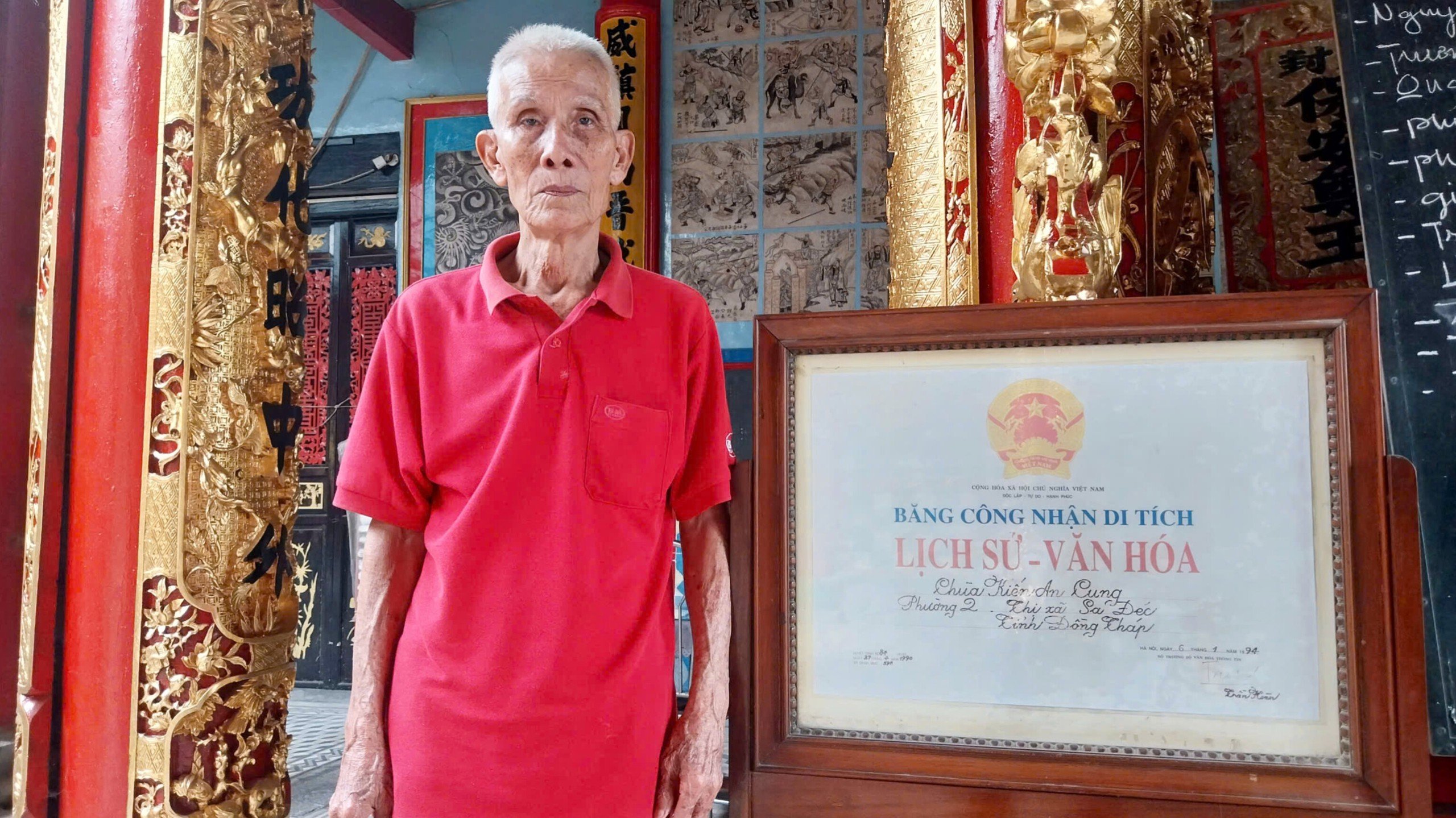
Kien An Cung Pagoda was recognized as a National Historical and Cultural Monument in 1990.
"In particular, the base of the main beam is fitted with carved wooden panels at the intersection of the column and the beam, creating a unique artistic frame."
"With its architecture strongly influenced by Chinese style and its distinctive traditional culture, Kien An Palace was recognized as a National Historical and Cultural Monument by the Ministry of Culture and Information in 1990," Mr. Trong added.
Tourist destination
Unlike the Cantonese Chinese who often worship Guan Yu, the Fujianese Chinese community holds Guo Guo in higher reverence. This is because Guo Guo was originally from Anxi, Fujian, and is considered a prime example of willpower, perseverance, and compassion.
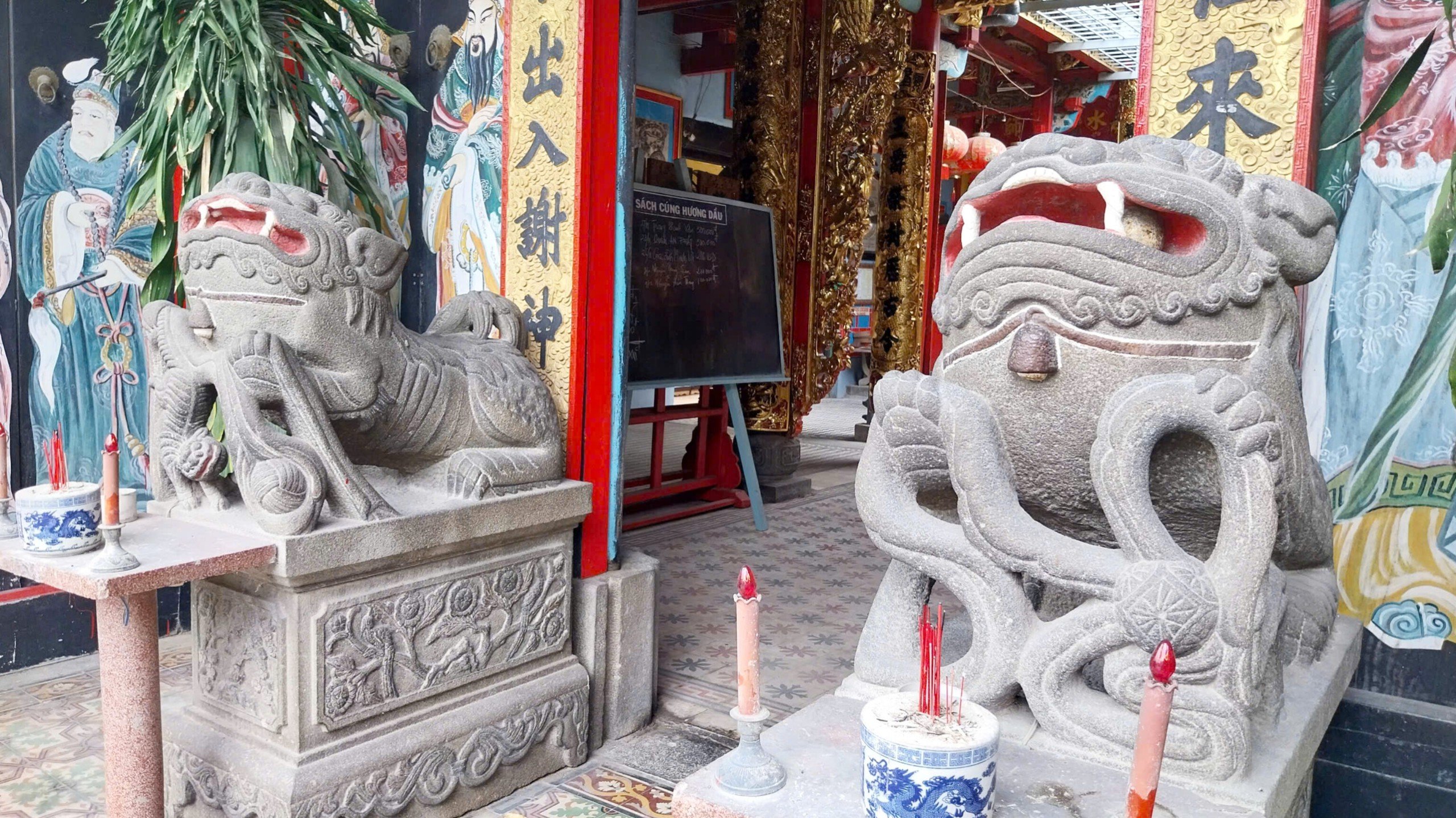
In front of the main hall of Kien An Cung Pagoda, there are guardian statues: a pair of large, majestic green stone unicorns resting on stone pedestals.
Mr. Quách was bestowed the title of Ung Linh Uy Hau by the Chinese feudal court and was considered a deity similar to the tutelary deity of the locality in our country, with the title of Bao An Quang Trach Ton Vuong.
What makes this temple unique is that its worship focuses solely on the local deities of Fujian Province. Specifically, the main hall of Jian'an Palace has three sections, each housing a large altar.
The main deity, Quang Trach Ton Vuong, is worshipped in the central hall. His statue is placed in a shrine, above which is a plaque inscribed with "Quach Thanh Vuong." The shrine is elaborately crafted with three layers of ornate, gilded wooden panels, two outer pillars adorned with embossed dragons, and the top panel is a heart-shaped, intricately carved floral motif.
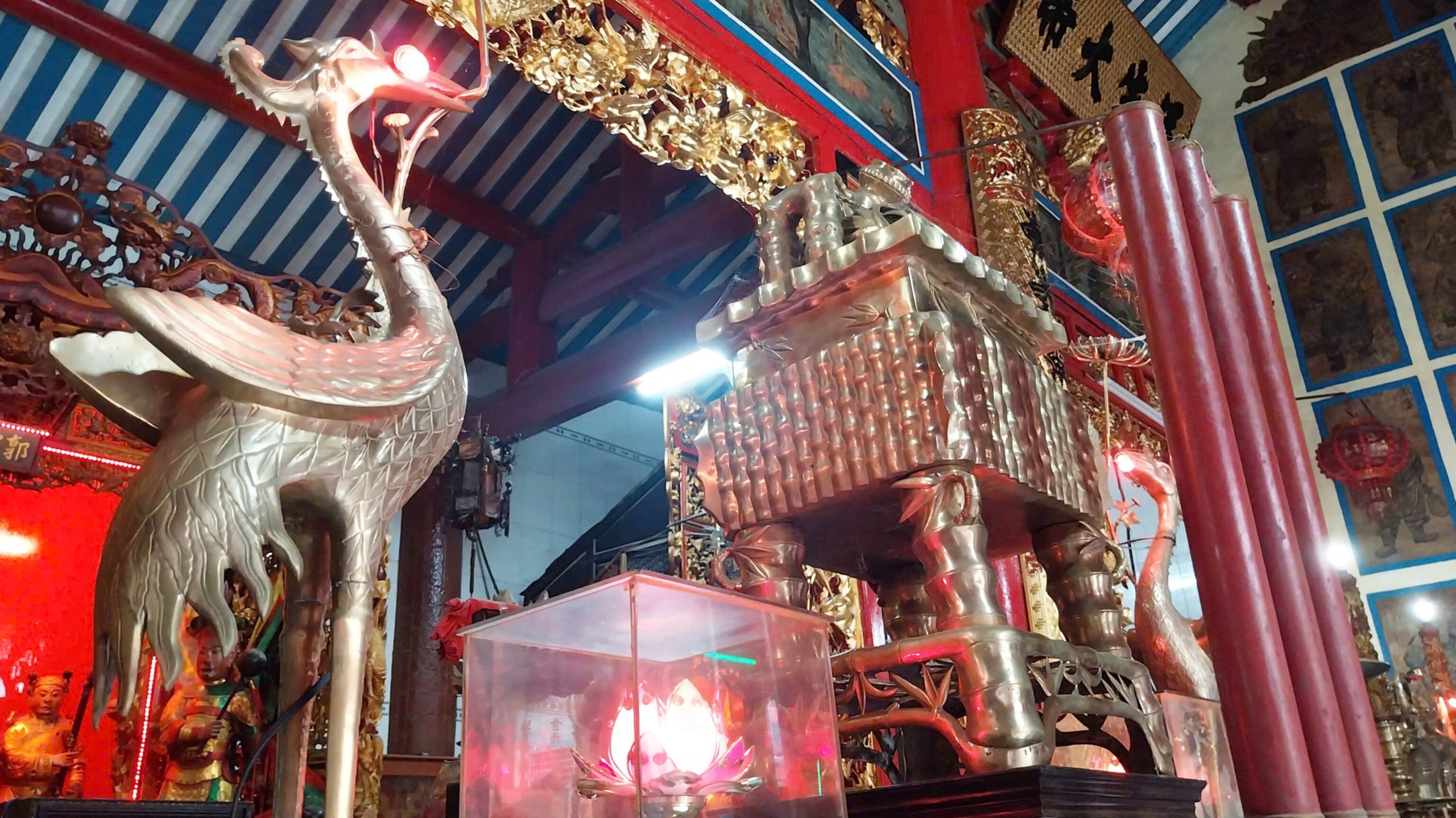
The pair of cranes standing guard and the ornate trellises on either side are similar to those found in Vietnamese temples and shrines.
The statue of Ông Quách is painted red, holding a jade belt in his hand, flanked by attendant deities holding seals and swords. To the right is the shrine dedicated to Bảo Sanh Đại Đế, equally majestic.
Bao Sanh Dai De (commonly known as Lao Yia) is a deity from Bach Hung village, Long Hai, Fujian. Many Chinese temples have two attendants dedicated to this deity: Phuoc Duc Chinh Than and Thien Hau Thanh Mau.
On the left is the shrine dedicated to Master Thanh Thuy, a sorcerer and hero who fought against the Yuan dynasty at the end of the Song dynasty. His name was Tran Chieu Ung, and he was also from Fujian.
In front of the aforementioned three altars is the council table dedicated to the deities Huyền Thiên Thượng Đế and Quan Thánh Đế Quân. Here, ceremonial objects, a pair of cranes standing in attendance, and a trellis of incense burners on either side are also arranged, similar to Vietnamese temples and shrines.
"It is precisely because of these special things that whenever I have the opportunity to visit Sa Dec city, Dong Thap province, I go to Kien An Cung pagoda to light incense and pray for peace and good health for my family," said Ms. Huynh Thi Phuong (55 years old, residing in Ho Chi Minh City).
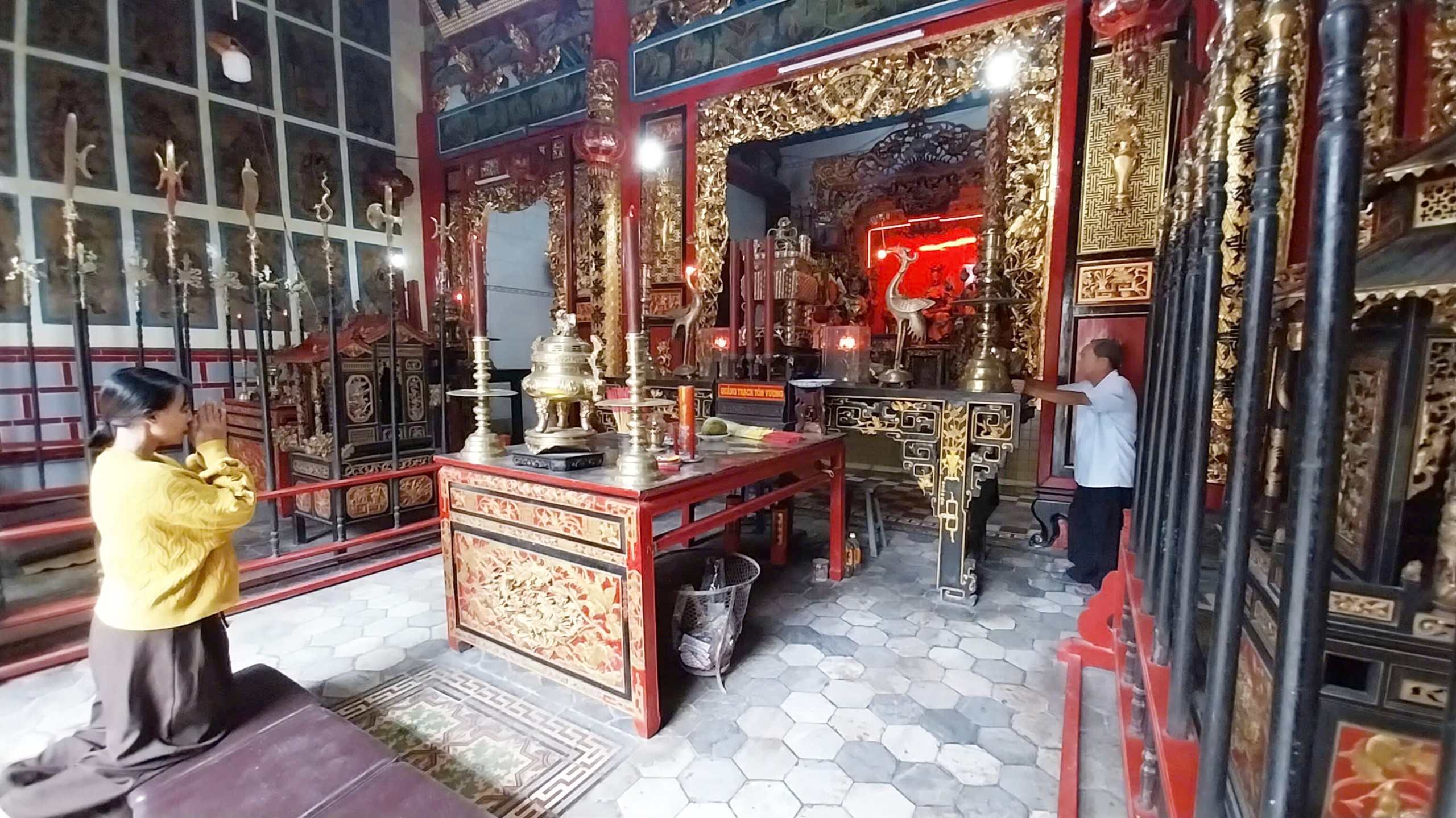
Kien An Cung Pagoda is a popular destination for many tourists, having welcomed 7,000 visitors since the beginning of the year, a 20% increase compared to the same period last year.
According to Ms. Vo Thi Binh, Vice Chairman of the People's Committee of Sa Dec City (Dong Thap province), Kien An Cung Pagoda is one of two national-level historical and cultural relics and belongs to the category of famous architectural and artistic religious relics that attract domestic and international tourists.
Since its construction, the pagoda has been renovated three times, the most recent being in 2022, with a total cost of over 8 billion VND.
To continue preserving and promoting the historical and cultural value of Kien An Cung Pagoda, the City People's Committee has directed the Department of Culture and Information to coordinate with relevant agencies and units to strengthen the dissemination and promotion of its image and develop tourism associated with the image and culture of the people of Dong Thap to tourists.
"In addition, Sa Dec city also directs relevant units to proactively research and implement the digitization of information and standardize the data system of typical village communal houses and ancient houses through explanatory texts and stories... that are rich in local traditional culture, creating unique products to serve tours and routes, contributing to tourism development," Ms. Binh said.
Each year, Kien An Cung Pagoda holds two festivals: one on the 22nd day of the 8th lunar month to commemorate Quach Vuong's enlightenment, and another on the 22nd day of the 2nd lunar month to celebrate his birthday. On these days, visitors from all over, regardless of whether they are Chinese or Vietnamese, come to worship in large numbers.
Source: https://www.baogiaothong.vn/doc-dao-kien-an-cung-192241212125147505.htm
![[Image] Nearly 125,000 Hanoi students completed the Literature exam for the 10th grade entrance exam.](https://vphoto.vietnam.vn/thumb/1200x675/vietnam/resource/IMAGE/2026/05/30/1780117233041_ndo_br_thiet-ke-chua-co-ten-2-png.webp)











![[Video] The timeless beauty of the century-old Capital Railway Station](https://vphoto.vietnam.vn/thumb/402x226/vietnam/resource/IMAGE/2026/05/30/1780132528002_1080-jpg.webp)






































































Comment (0)