

As one of the ethnic groups that have lived on their ancestral land for a long time, the Muong people of Yen Lap district still preserve their traditional identities in language, clothing, and especially the unique characteristics of their cuisine, including the "co la" (leaf feast).
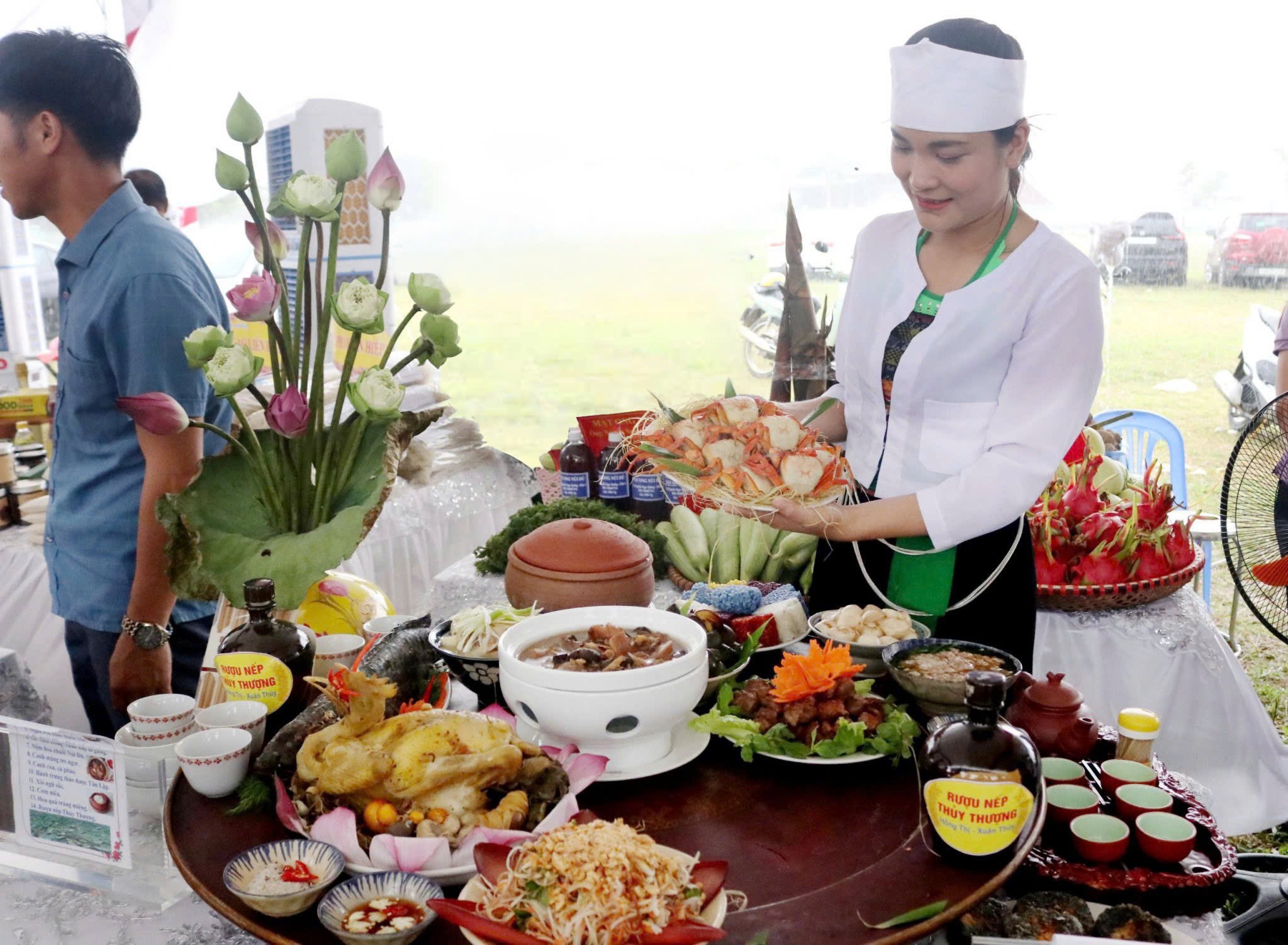
Despite the changes in life over time, the traditional dishes served on banana leaves are still preserved in the lives of the Muong people in Yen Lap.
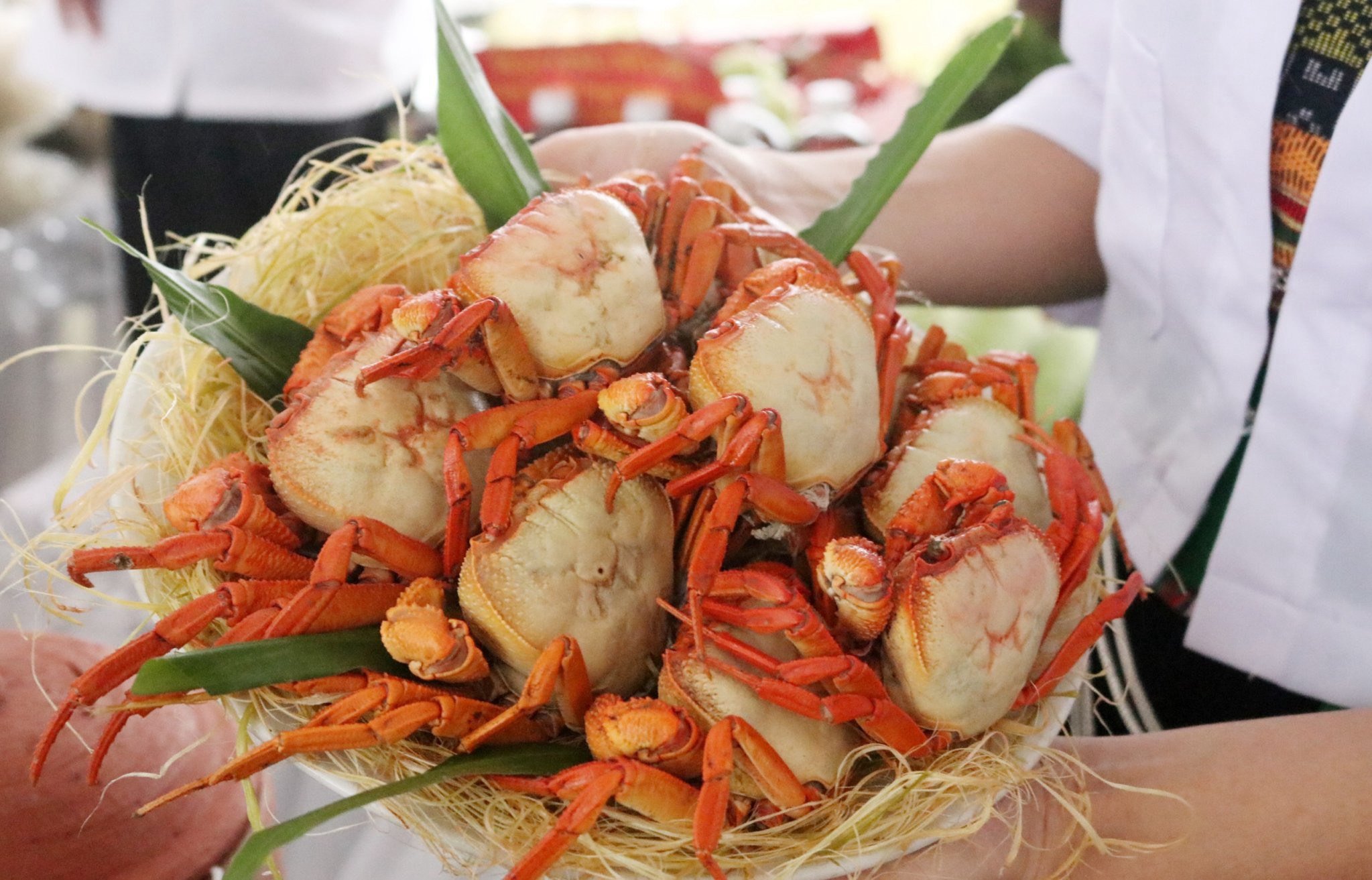
While preparing a traditional leaf-wrapped feast with Ms. Nguyen Thi Thanh Mai from Hon area, Xuan An commune, we listened as she meticulously introduced us to the unique dishes of her people. Ms. Mai said: “The Muong people are very hospitable. When guests from afar come to visit, the Muong people always treat them to a leaf-wrapped feast. A leaf-wrapped feast means a feast arranged on banana leaves. After being cut from the forest, the leaves are trimmed to fit the size of the feast and then briefly heated over a fire to increase their flexibility and softness. The flavor of the wild banana leaves, combined with the flavors of the dishes, creates a rich and unforgettable taste for diners. For the Muong people, the leaf-wrapped feast is also a quintessential aspect of their cuisine ; it embodies the gratitude of the people towards the land, the sky, and the mountains.”
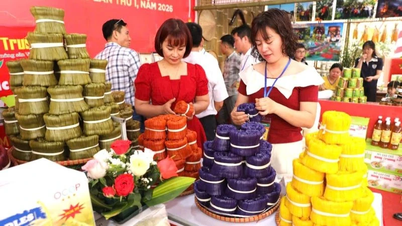
In a traditional feast served on leaves, there are always a variety of dishes made from pork, chicken, fish, stone crab, vegetables, roots, and fruits... These are products that the local people raise, cultivate, and harvest in the forest. Especially indispensable is the five-colored sticky rice, symbolizing the yin and yang and the five elements, representing the unity of the Muong ethnic community in particular and the ethnic communities in the district in general. The fragrant, sticky rice grains are selected from the "Ga Gay" variety, carrying the distinctive aroma of mountain herbs. The grains are plump, glossy, and even when cooled, they become slightly firm but still retain their softness and chewiness, making the five-colored sticky rice unlike any other.
Interspersed among the meat dishes are boiled bamboo shoots and steamed wild vegetables. In the past, when going to the fields, the Muong people often carried baskets to gather various wild vegetables such as: bitter herbs, fern shoots, wild spinach, *Lá Chìa* leaves, bamboo shoots, mushrooms, banana blossoms... The mixed wild vegetables were washed clean and placed in bamboo tubes or steamed in a pot for about 30-40 minutes. The steamed wild vegetables were dipped in a special sauce made from fermented rice vinegar, and when eaten, one can experience the bitter, astringent, sweet, nutty, and spicy flavors of the vegetables blending together. This is also a very healthy dish and still frequently appears on the family dinner table of the Muong people today.
In a traditional feast served on banana leaves, wild banana blossoms are often prepared in various ways. However, the most popular dish is grilled banana blossom with pork ribs. To make this dish, the banana blossom is thinly sliced, soaked in vinegar or lemon juice to keep the strands white and prevent discoloration. After draining, it is mixed with salt, pepper, herbs, and minced pork ribs. Once the flavors are well absorbed, it is placed in bamboo tubes and grilled over charcoal. The cooked grilled banana blossom with pork ribs has a nutty flavor from the banana blossom and a rich, crispy, and aromatic taste from the pork ribs, making the feast even more appealing.
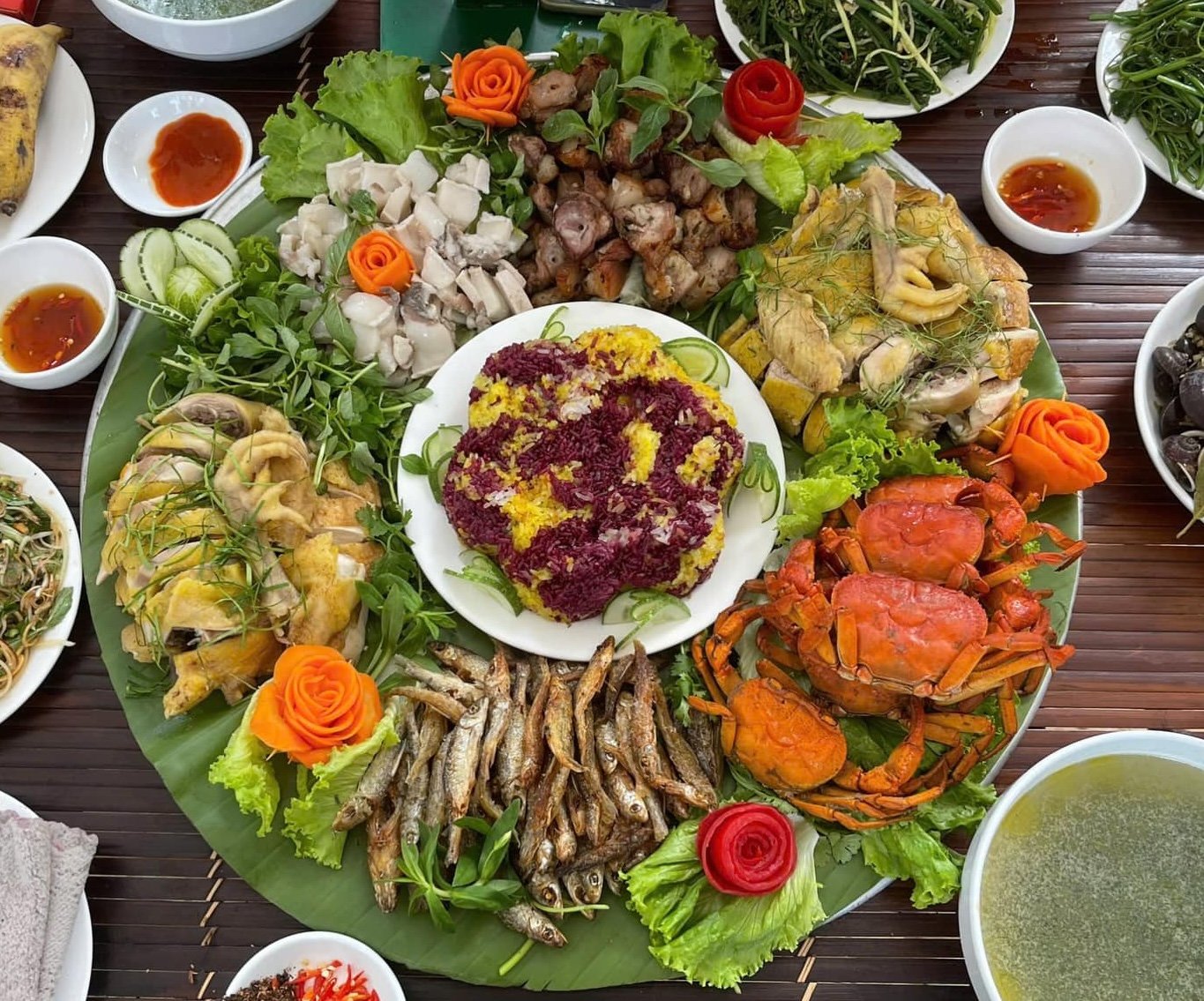
A feast served on leaves, a rich expression of the Muong ethnic identity, Yen Lap district.
The most impressive dish is undoubtedly the grilled fish from Lao stream, a specialty of the Muong people here. The fish are caught manually by the locals, then cleaned and drained. They are marinated with spices, skewered into individual portions using bamboo tongs, and grilled over charcoal until golden brown. The cooked Lao stream fish is spread evenly on banana leaves while still hot; the aroma of the grilled fish combined with the scent of the banana leaves creates an enticing fragrance that awakens both the sense of smell and taste.
Comrade Nguyen Tam Ba - Chairman of the People's Committee of Xuan An commune, said: "The dishes in the leaf-covered feast are all dishes that originated during the labor and production process of the ethnic people and have been processed and adjusted with ingredients to become characteristic dishes of the Muong people. The Muong people consider the arrangement of leaf-covered feasts to entertain guests as an expression of love, solidarity, respect, and hospitality. The leaf-covered feast, imbued with the flavors of the mountains and forests, is always meticulously arranged in a circular shape with a full array of different dishes, representing the harmony of heaven and earth along with the aspirations of the Muong people for abundance, completeness, prosperity, warmth, and the well-being of both people and resources."
Through the leaf-wrapped feast, the Muong people have flexibly demonstrated their community spirit, mutual affection, family traditions, and culture. The leaf-wrapped feast is considered one of the distinctive culinary cultural features of the Muong people in Yen Lap during Tet (Lunar New Year) and traditional cultural festivals.
Thu Giang
Source: https://baophutho.vn/doc-dao-mam-co-xu-muong-225840.htm

























































Comment (0)