

(NLĐO) - The Five Performances of Vien Khe - a familiar name in Dong Anh folk songs - along with Song Ma chant and Xuan Pha performance are typical folk art forms of Thanh Hoa province.
Dong Anh folk songs and dances (also known as Vien Khe Five Performances) is a system of performance acts accompanying folk songs, mainly circulating in Vien Khe village (Dong Anh commune, Dong Son district; now Thanh Hoa city, Thanh Hoa province).
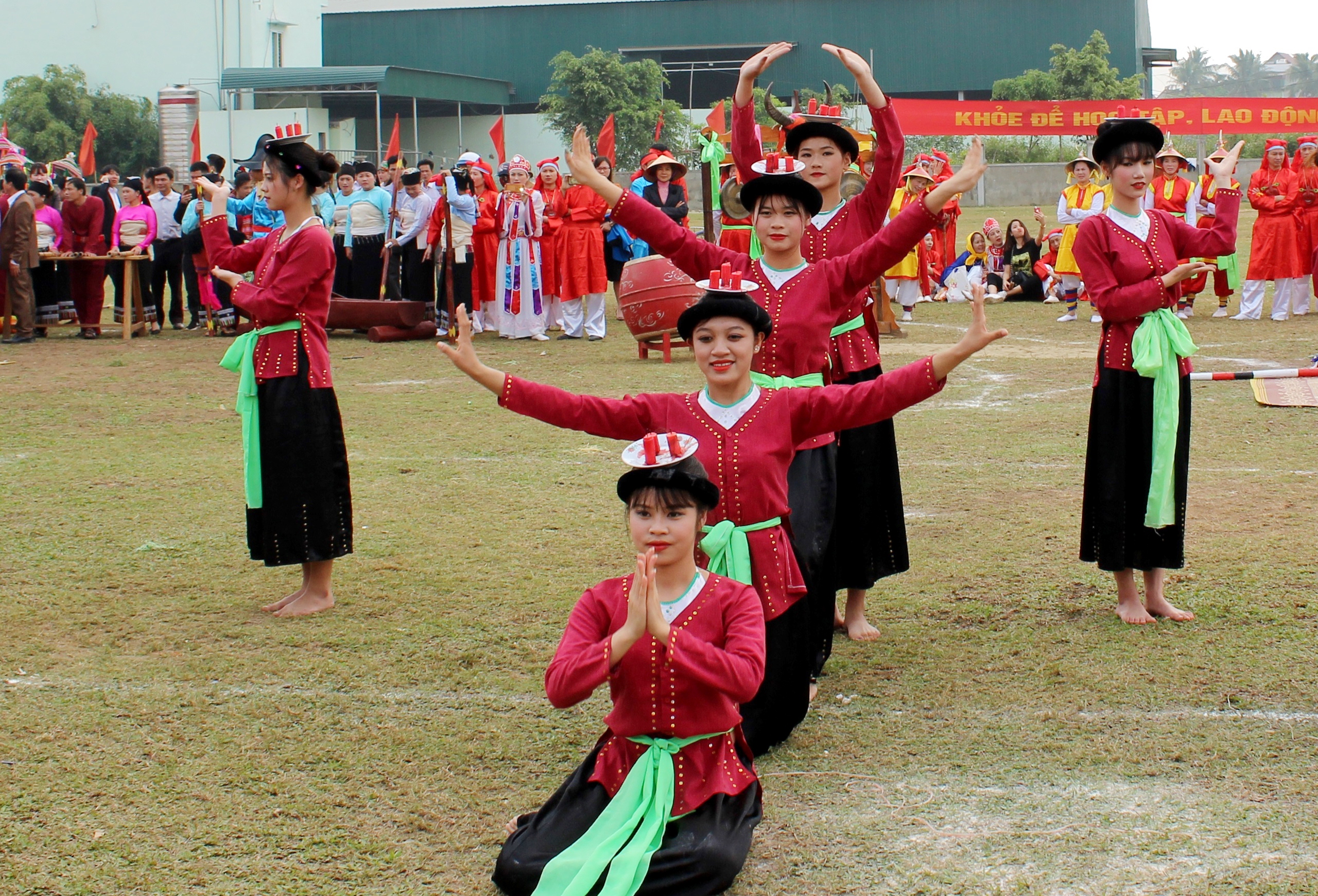
The Five Performances of Vien Khe, also known as the folk songs and dances of Dong Anh, along with the Song Ma folk songs and Xuan Pha performances, are considered the "powerful trio" of folk performing arts in Thanh Hoa province.
The Dong Anh performances are considered typical forms of folk performing arts in Thanh Hoa province, along with the Song Ma river folk song suite and the Xuan Pha performance. The Dong Anh performances reflect the daily life and emotions of Vietnamese farmers in the past.
Legend has it that the eldest son of Emperor (Governor) Le Ngoc, named Lang Dai Vuong, was the progenitor of the games and performances. It is said that Lang Dai Vuong went to villages and hamlets to celebrate with the people, and from there the dances were taught and popularized (from the 5th-7th centuries).
The dances and songs that have been passed down to the present day date back to the 11th century (during the Ly Dynasty), but they were not staged as performances; instead, people sang them only when they were tired from working in the fields or during spring festivals.
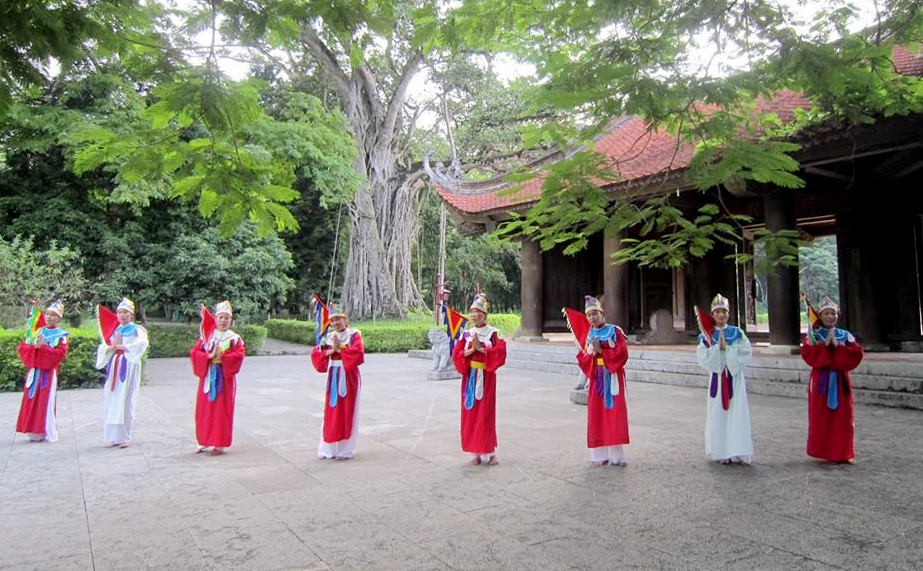
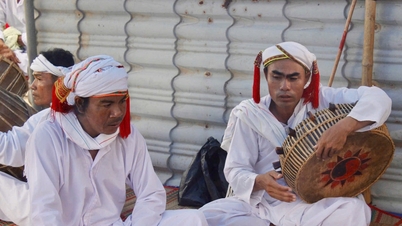
The artists perform the Tien Cuoi trick in the Dong Anh folk song performance.
In the late 14th and early 15th centuries, in Thach Khe district, there was a man named Nguyen Mong Tuan who passed the doctoral examination at the end of the Tran dynasty. During a visit to his hometown, he saw some very beautiful dances and songs, and inspired him to create 12 dance and song performances with his fellow villagers.
From then on, in the years of the Rat, Horse, Rabbit, and Rooster during the lean season, the villages of Tuan Hoa, Thach Khe, and Quang Chieu districts (now belonging to Dong Anh, Dong Thinh, and Dong Khe communes, Thanh Hoa City) all organized performances and judging to compete at the large-scale Sam Village festival in Vien Khe, attracting a large number of people from the region to participate, held every three years in the years of the Dragon, Dog, Ox, and Goat.
The performances consist of songs accompanied by dances, forming a unique and highly distinctive folk melody of the people in the Ma River Delta region.
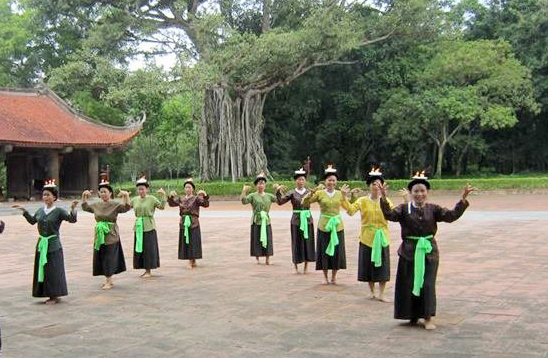
Lantern dance performance at the Lam Kinh historical site.
It's called the Five Performances because initially, the performances in Vien Khe village consisted of five acts, but later, due to cultural exchange, the folk song and dance performances in Dong Anh increased to twelve acts: Lantern Dance, Tien Cuoi (or Tien Phuong), To Vu, Drum and Gong, Thiep, Van Vuong (or Hum performance), Thuy (or Thuy Phuong), Rope Climbing, Siam Thanh (or Chiem Thanh/Sim Thanh), Ha Lan (or Hoa Lang), Tu Huan (or Luc Hon Nhung), and Ngo Quoc. In addition, Dong Anh also has several other acts such as Dai Thanh and Nu Quan...
Among the performances, the Lantern Dance relatively fully embodies the quintessential values of Dong Anh folk songs and dances. Because Dong Anh is a rice-growing area, to create a relaxed and enthusiastic spirit for agricultural production and to pass on experience, the people have created songs and melodies associated with each agricultural activity, from sowing seedlings to harvesting and even during periods of leisure.
The lamp in the performance is an object closely associated with ancient agricultural communities. It was incorporated into the dances as a symbol of the changing seasons, representing light that brings fertility and growth to all things, and embodying the human aspiration for a prosperous and happy life.
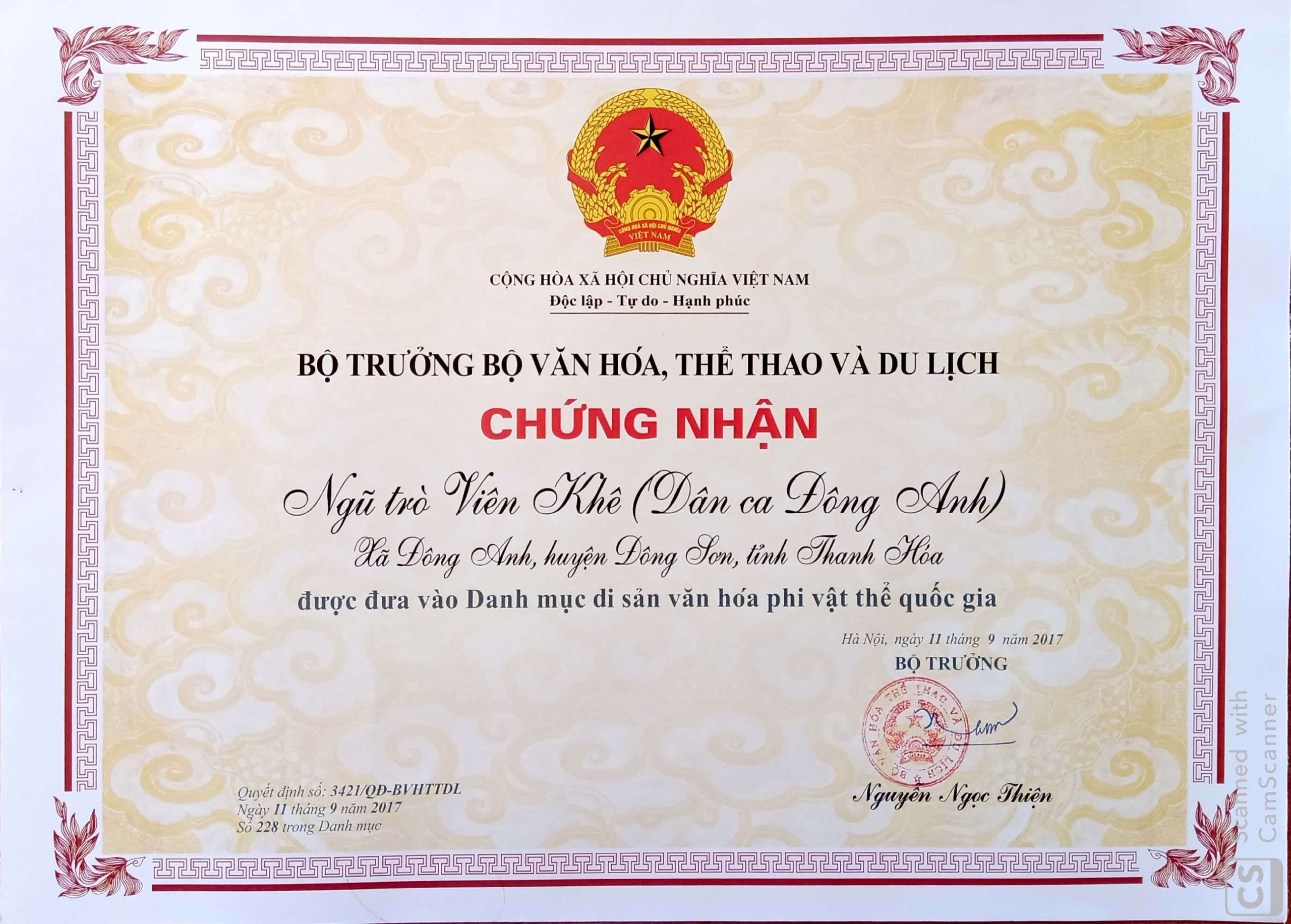
The Five Performances of Vien Khe (Dong Anh folk songs) have been recognized as a National Intangible Cultural Heritage.
Young women in their late teens and early twenties, unmarried, carry lanterns on their heads while performing graceful dances and songs, but without letting the lanterns fall. Therefore, the technical requirements are very difficult. Perhaps because of its charm, beauty, simplicity, and meaningfulness, the Lantern Dance is performed frequently and has been passed down through generations.
Although it was a unique performance closely associated with the lives of the local people, it faded away over time, especially during the war years.
By 2000, the Vietnam National Institute of Music and the Department of Culture, Sports and Tourism of Thanh Hoa province had collected, researched, and restored 11 performances. In 2017, the Five Performances of Vien Khe were recognized as a National Intangible Cultural Heritage.
It is known that, in order to preserve and promote the value of this unique heritage, Dong Son district (now Thanh Hoa City) has established clubs, invited artisans to teach members not only in Dong Anh commune but also in other localities, and organized extracurricular activities for students in the area to become familiar with and participate in performances... thereby helping to preserve and promote the value of the heritage.
Source: https://nld.com.vn/doc-dao-ngu-tro-vien-khe-196250201184001692.htm
![[Photo] The courage of new recruits of Brigade 144 on the training ground.](https://vphoto.vietnam.vn/thumb/1200x675/vietnam/resource/IMAGE/2026/05/27/1779881651341_anh-man-hinh-2026-05-27-luc-18-32-52.png)

![[Photo] General Secretary and President To Lam and his wife begin their official visit to Thailand.](https://vphoto.vietnam.vn/thumb/1200x675/vietnam/resource/IMAGE/2026/05/27/1779881249412_anh-man-hinh-2026-05-27-luc-18-10-51.png)











![[Photo] The heat at the fireworks display site on the opening night of the Da Nang International Fireworks Festival 2026](https://vphoto.vietnam.vn/thumb/1200x675/vietnam/resource/IMAGE/2026/05/27/1779889741485_ndo_br_z7872039145157-fecaba5112f39e8352544099d7ef4738-5140-jpg.webp)



















![[Photo] The courage of new recruits of Brigade 144 on the training ground.](https://vphoto.vietnam.vn/thumb/402x226/vietnam/resource/IMAGE/2026/05/27/1779881651341_anh-man-hinh-2026-05-27-luc-18-32-52.png)


















Comment (0)