My homeland is vast and deep.
Looking at the administrative map, present-day Bac Ninh is a merger of two regions formerly known as Bac Ninh and Bac Giang. But from a cultural perspective, these are two streams that have never truly separated.
 |
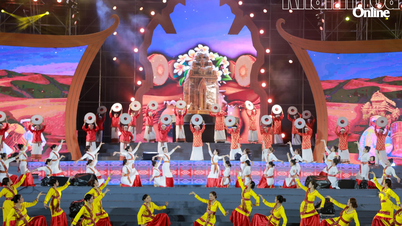
Quan Ho singers, both male and female, dressed up in their finest traditional costumes, flock to the spring festival in Diem village (Viem Xa residential area, Kinh Bac ward). |
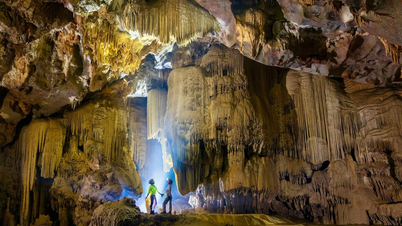
This cultural heritage originates from the alluvial plains along the Duong, Cau, Thuong, and Luc Nam rivers; it meanders through Quan Ho villages; it rises above the Phuong Hoang, Nham Bien, and Yen Tu mountain ranges; and it blends with the echoing sounds of the Then folk songs in the vast forests, creating a rare and expansive heritage region. The intermingling of lowland and mountainous cultures brings forth new nuances—rich, vibrant, yet also mysterious and profound—inspiring exploration and deciphering.
| The intermingling of lowland and mountainous cultures brings new nuances, richer and more vibrant, but also more mysterious and profound, inspiring exploration and deciphering. |
Professor Tran Quoc Vuong once remarked that the Kinh Bac region is a special treasure trove of archaeological sites, historical relics, legends, festivals, beliefs, and folk culture. In this land, one can touch upon layers of cultural memories that have been continuously accumulated over thousands of years of history.
The rich and profound flow of history and culture has left Bac Ninh today with a vast treasure trove of heritage, including more than 4,000 historical and cultural relics; 8 UNESCO-recognized heritage sites; dozens of traditional craft villages that have existed for centuries, along with a unique system of festivals, customs, traditions, and folk performing arts.



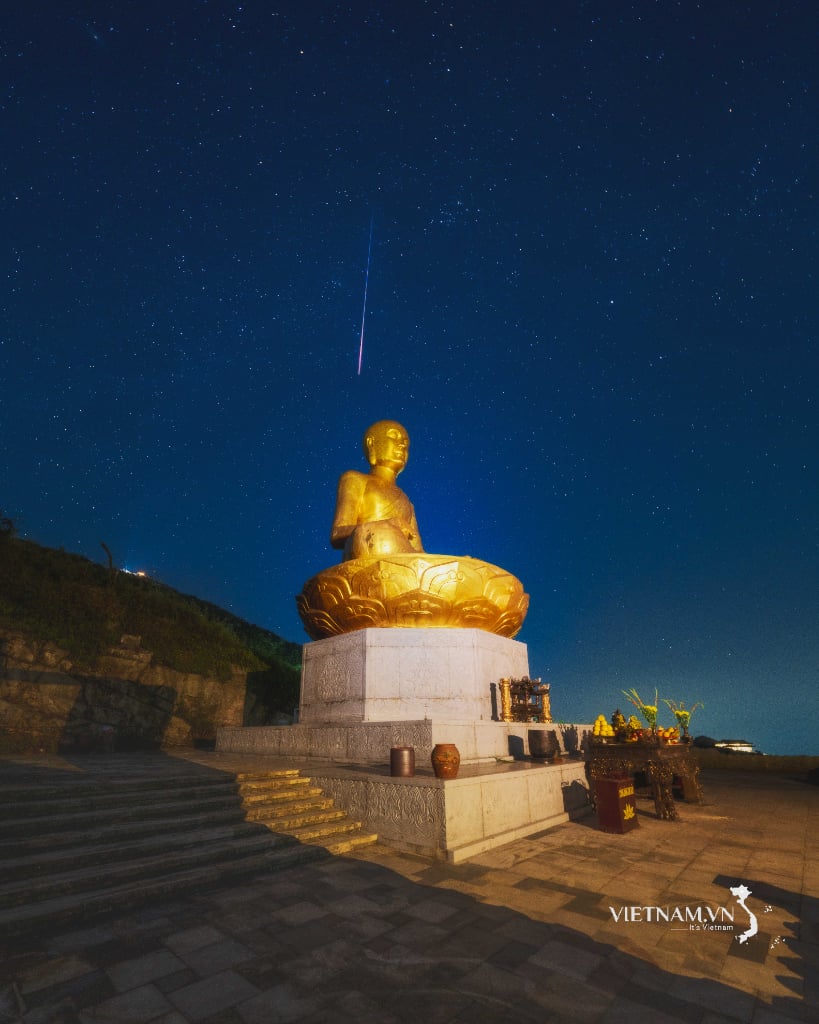
Famous ancient temples such as Dau Pagoda, Phat Tich Pagoda, But Thap Pagoda, Bo Da Pagoda, Vinh Nghiem Pagoda, and Yen Tu Pagoda remain strong spiritual pillars for the community. Traditional crafts such as Dong Ho paintings, Phu Lang pottery, Dai Bai bronze casting, Phu Khe fine art wood carving, and Tho Ha rice paper rolls are still preserved by families through generations. Tens of thousands of members of hundreds of Quan Ho, Ca Tru, Hat Then, Tuong, and Cheo clubs continue to passionately practice and perform day and night.
In Bac Ninh, cultural heritage does not belong to the past but is actively shaping the future. Traditional cultural values are being connected with the economy , tourism, creative industries, and modern service sectors, becoming a resource that regulates development, shapes identity, and creates a unique competitive edge.
Let's write new chapters in history.
Along today's heritage sites, alongside ancient architecture and intangible cultural values that have been passed down, we can also see a new cultural vitality quietly spreading.
These are young people seeking to retell the stories of their ancestors in the language of the digital age. These are traditional craft villages constantly innovating designs and expanding markets to bring their traditional products to the world. These are communities striving to transform heritage into assets.
 |
Bac Hoa village (Tan Son commune) is likened to a "green gem" in the mountainous region. |
Few places are quite like Bac Ninh, where a thousand-year-old culture continues to flow through the lifeblood of a dynamic and rapidly developing region. Amidst new urban areas and modern factories, ancient villages still nestle along the river; vibrant festivals are held throughout the villages in spring and autumn; and the communal houses and temples stand serenely, witnessing the changing times.
In this new development space, many opportunities are opening up for the Kinh Bac heritage region. The transportation infrastructure is increasingly完善, new service centers are being formed, and inter-regional connectivity is becoming more convenient. In particular, the future Gia Binh International Airport will expand connections between Bac Ninh and domestic and international economic and cultural centers.

Along with that, more and more heritage preservation programs and projects are being implemented; many mechanisms and policies are being issued to support those who are directly preserving the cultural values of their homeland. No heritage can endure without people who appreciate and preserve it. For heritage to live on through the ages, it requires both the vision of policymakers and the love and responsibility of every citizen.
Establishing heritage maps, creating key protected areas, developing inter-regional cultural tourism clusters, mobilizing social resources for conservation, and providing direct support to those preserving heritage are all necessary steps. Most importantly, it is crucial to continue fostering in each citizen a sense of respect and responsibility towards the heritage of their ancestors.
Source: https://baobacninhtv.vn/doc-mien-di-san-postid448211.bbg
![[Photo] General Secretary and President To Lam receives Palestinian Ambassador Saadi Salama](https://vphoto.vietnam.vn/thumb/1200x675/vietnam/resource/IMAGE/2026/06/25/1782365384740_a1-bnd-9423-8322-jpg.webp)
![[Image] Schools organize meetings and introduce teaching models to students admitted to grade 10.](https://vphoto.vietnam.vn/thumb/1200x675/vietnam/resource/IMAGE/2026/06/25/1782368077271_ndo_br_z7970052192242-1ec8daeb77a6eed1a4e9f58c564ddd3e-jpg.webp)



![[Image] Ho Chi Minh City: Ma Lang area, Chicken-Rice Market about to change its appearance](https://vphoto.vietnam.vn/thumb/1200x675/vietnam/resource/IMAGE/2026/06/25/1782377698627_ndo_br_m1-jpg.webp)