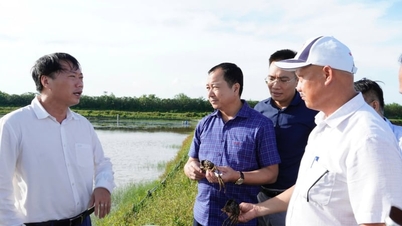
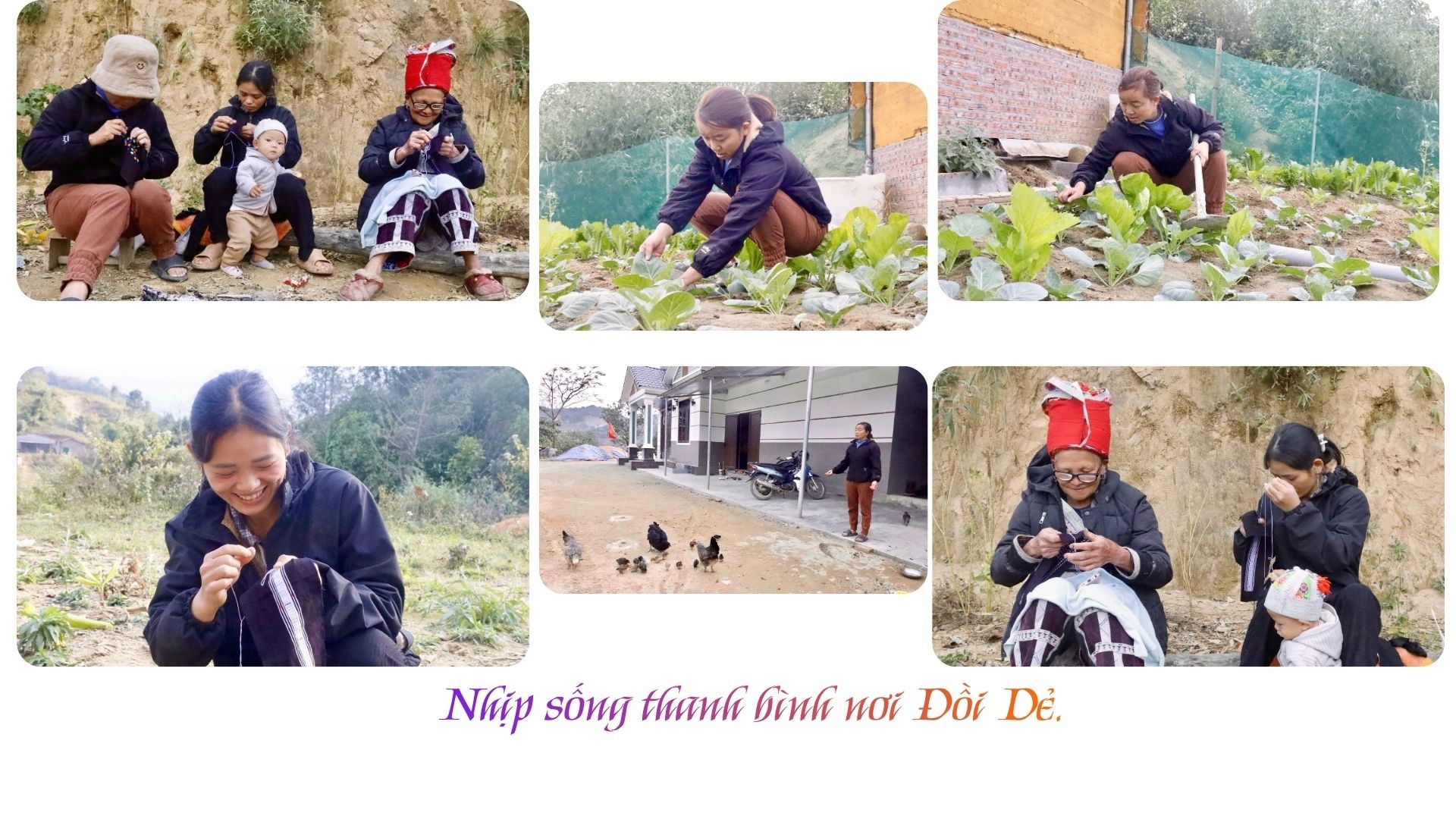
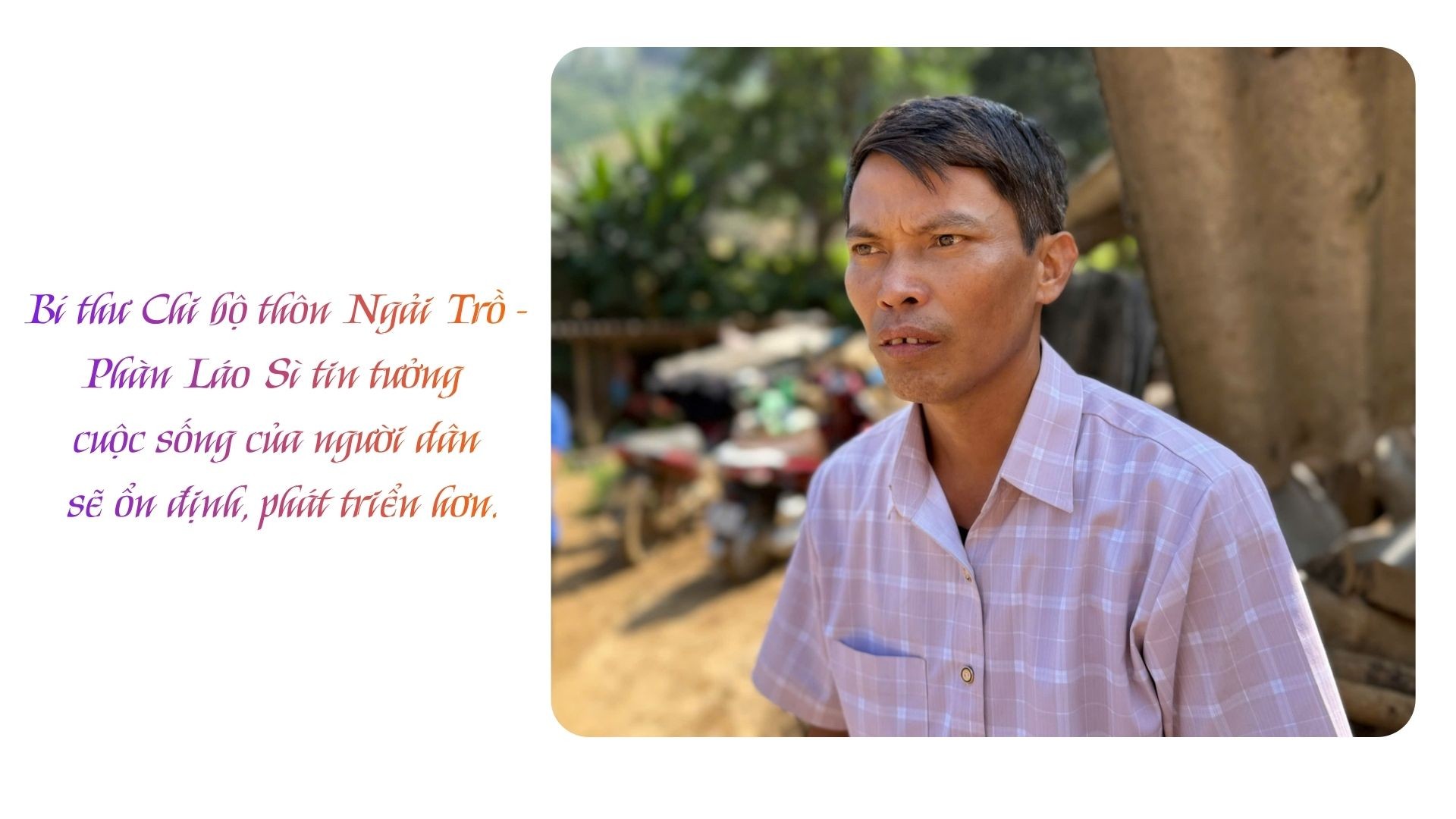
Standing on the top of Doi De Hill in Y Giang village, A Mu Sung commune - the resettlement site for a dozen Red Dao households from Ngai Tro village affected by the remnants of Typhoon No. 3 in 2024 - Phan Lao Si, Secretary of the Ngai Tro Village Party Branch, his eyes brimming with joy, said: “Nineteen households now have stable new homes. A dozen households are in the Doi De area, and others have moved to other villages, so they no longer worry about landslides. Now they can just focus on developing their economy , and they'll get rich in no time.”
After saying that, Mr. Si burst into hearty laughter. His laughter blended with the sound of the wind in the vast forest, echoing far across the sun-drenched hillside.
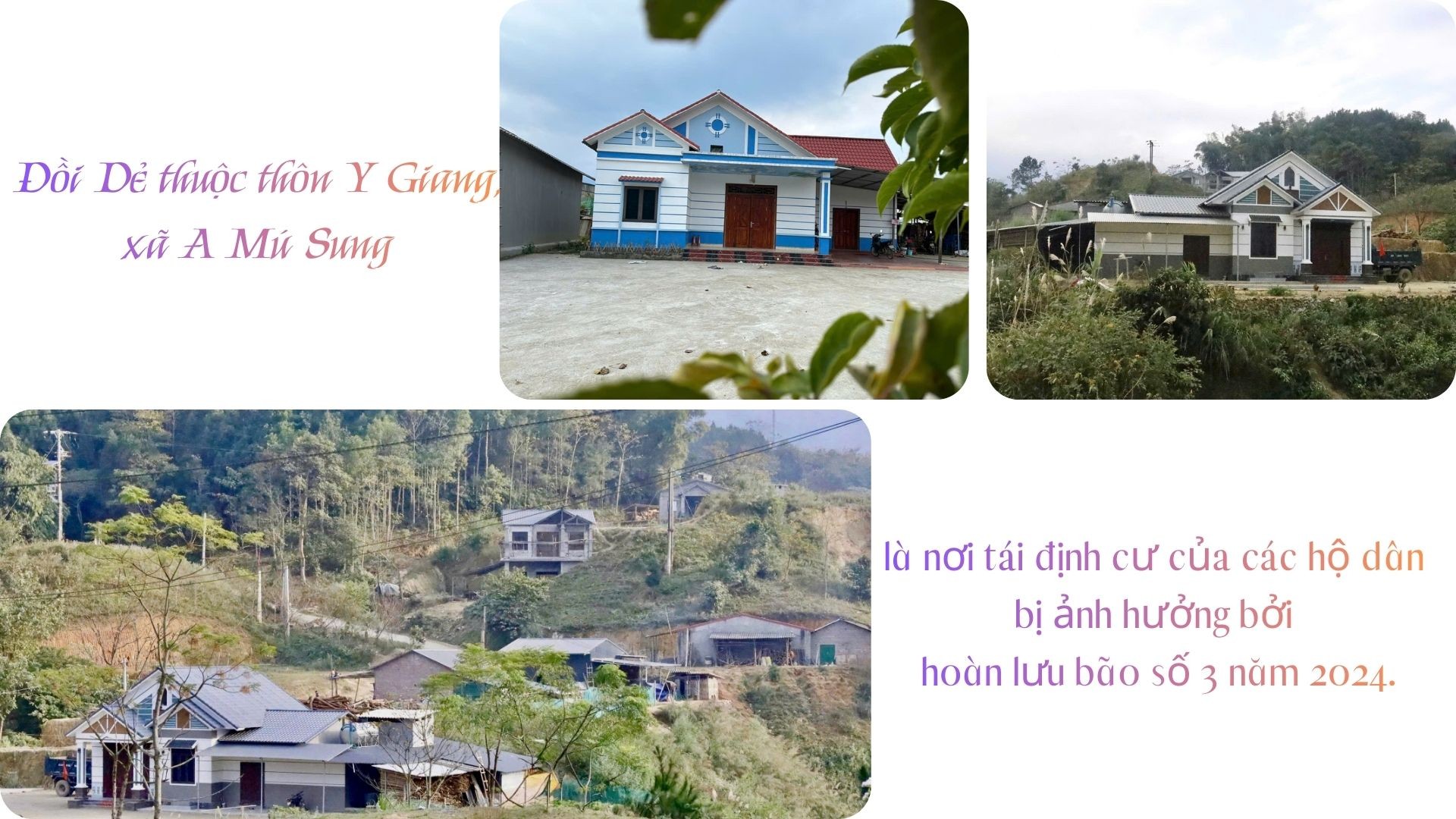
The resettlement area for the households in Ngai Tro village affected by floods is located on a large hill that locals call Chestnut Hill, because in the past, many chestnut trees grew there in patches. The hill has a gentle slope, is situated along a major road, and has no large streams flowing through it, so the risk of landslides is low. These favorable geographical conditions have helped the residents feel more secure, no longer having the constant worry they had about their old homes.
The households that moved to live in Doi De are all residents of Ngai Tro village. Their old homes were nearly ten kilometers away. In September 2024, due to the influence of the remnants of typhoon No. 3, a historic flash flood occurred in Ngai Tro - the village that suffered the most severe damage to housing in the former Bat Xat district. In the entire village, 19 out of 106 households had their houses completely destroyed; many infrastructure facilities such as transportation, electricity, and water were severely damaged.
Thanks to the timely intervention of commune and village officials in disseminating information and mobilizing people before the floods occurred, all residents in the dangerous areas were moved to safe shelters. Although there were no casualties, most of the people's property and crops were buried or swept away. After inspection, the former living areas of the households were assessed as having a high risk of landslides, requiring urgent relocation. In the first few days after the floods, many families had to erect temporary tents or stay with relatives, facing very difficult living conditions.
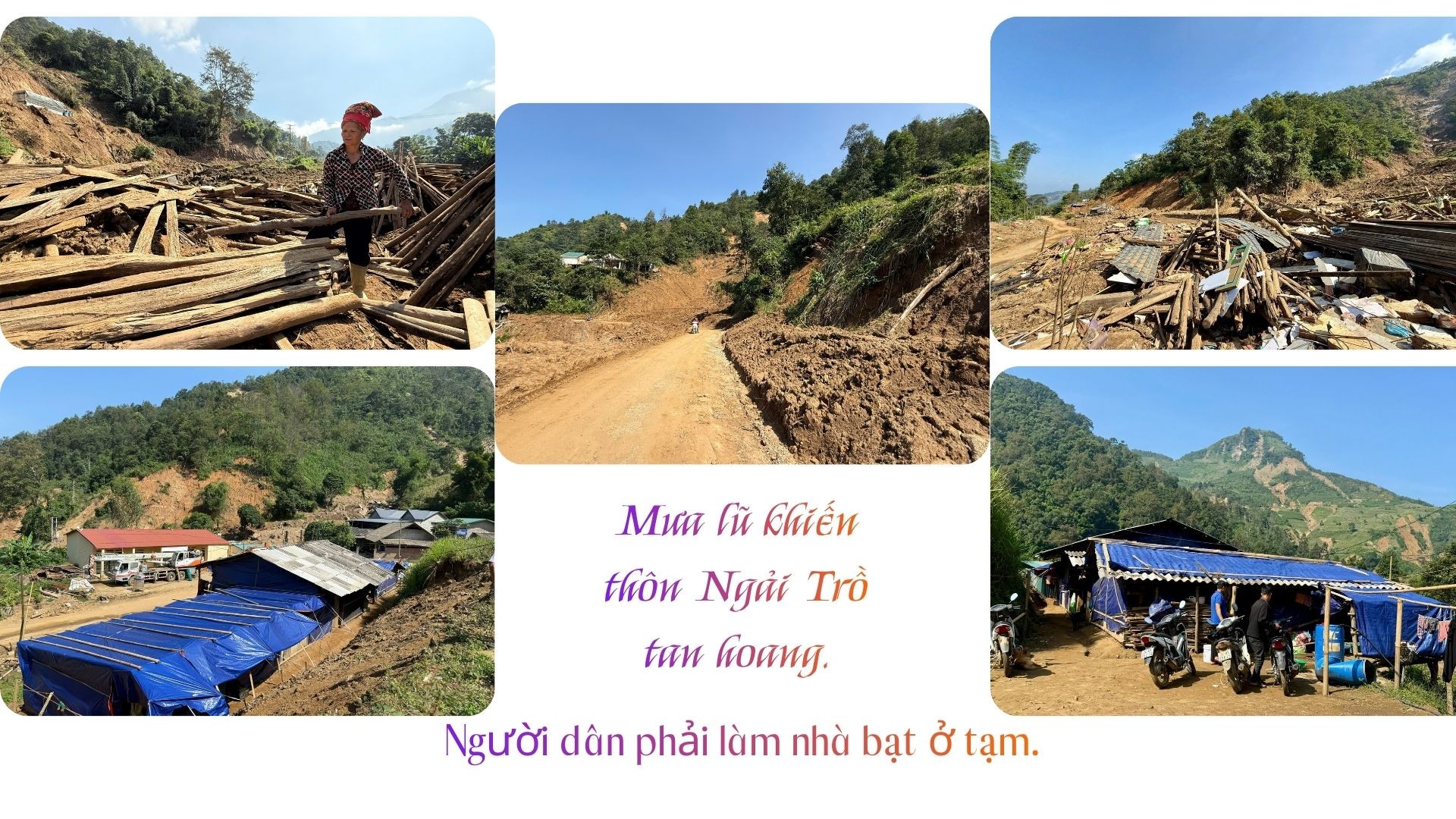
Recalling that moment, Mr. Vang Duan Phu, from Ngai Tro village, couldn't hide his sorrow: "All our possessions were buried, we lost our house, and were left penniless overnight. We had worked hard our whole lives to build this house, but then the natural disaster came and destroyed everything. At that time, my family had to live with relatives, and we didn't know where we would get the money to rebuild our house."
Mr. Phu's story also reflected the shared feelings of many households in the flood-affected areas at that time.

Amidst overwhelming difficulties, when questions like "What will tomorrow bring?", "Where will we go?", and "Where will we get the money to build a new house?" remained unanswered, warmth and sharing came to Ngai Tro. Convoys of relief vehicles, gifts of goods and cash from organizations, individuals, and philanthropists both within and outside the locality provided timely support, becoming a great source of encouragement to help the people overcome this most difficult period.
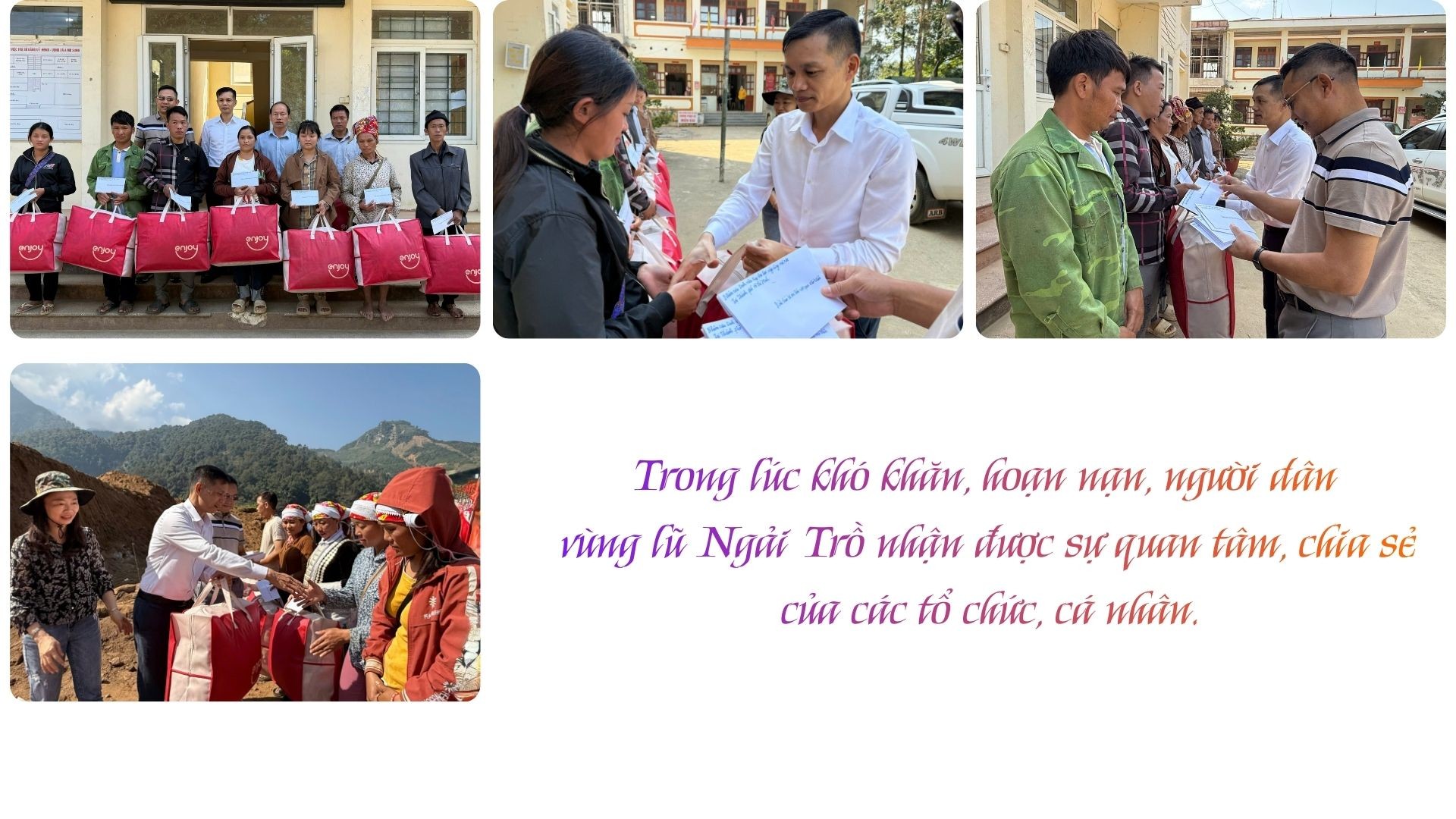
Sitting beside her sturdy house on Chestnut Hill, Ms. Chảo Lở Mẩy from Y Giang village shared emotionally: "During our most difficult times, my family received attention from the local authorities and benefactors, which helped us gradually regain our spirits to overcome difficulties and move forward."
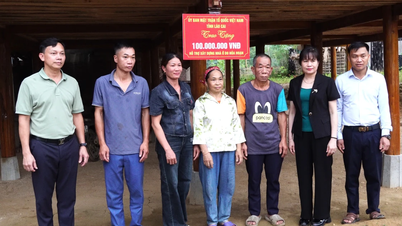
According to Ms. May, each household that lost their home in the recent floods received support from various sources totaling over 350 million VND – a very significant amount of assistance that helped families quickly stabilize their lives.
With the spirit of "All for the people in disadvantaged areas," the local authorities have mobilized and socialized many resources; at the same time, they have encouraged people in villages and hamlets in the area to contribute labor, helping households quickly complete their houses. In addition, to create long-term livelihoods, the local government and organizations and individuals have also donated livestock and supported people in developing production.
In her newly painted house, Ms. Vang Ta May is preparing the evening meal. Ms. May's family has seven members; they used to have some savings, but the flood left them penniless. Sitting in her sturdy home, she talks about life in her new home: "Although there are still many difficulties, we are very happy to be in a safe place. With a stable place to live, my family believes our lives will improve."
For Ms. May and many other households, the belief that "settling down leads to prosperity" is gradually becoming a reality.
Walking around the Doi De resettlement area with Mr. Phan Lao Si, I could clearly see the joy, excitement, and gratitude in everyone's eyes and smiles.


Mr. Si shared: "Once we have a stable place to live, we can focus on our work. Now that we have stable housing, people are looking for additional jobs and actively engaging in production to ensure a sustainable income."
It is believed that, with safer living conditions, the households affected by floods in Ngai Tro will be able to work with peace of mind, actively participate in local movements, and join hands in protecting national security, building an increasingly stable and developed A Mu Sung border. On Doi De Hill today, the joy of settling down is blossoming along with hope for a peaceful future.
Source: https://baolaocai.vn/doi-de-vui-niem-an-cu-post892313.html