|
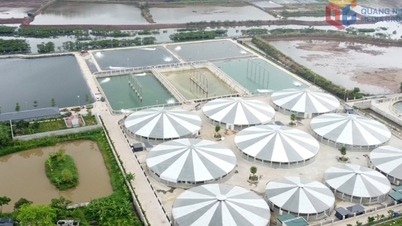
Coral reefs emerged from the water after the 7.8 magnitude earthquake in the Philippines. Photo: ASEAN Today . |
On June 14, the Philippine Institute of Volcanology and Seismology announced that the shifting of the Cotabato Trench has altered the coastal topography in the provinces of Sarangani and Davao.
This phenomenon caused a portion of the seabed, which was previously submerged, to be pushed upwards, exposing it along the coastline. The agency determined the seabed elevation after the earthquake to be approximately 2 meters.
The Cotabato Trench is located about 50 km off the coast of Mindanao Island and is considered one of the most seismically active areas in the Philippines. In January alone, the area recorded thousands of earthquakes, mostly of low magnitude.
Survey teams deployed to the site reported discovering numerous areas of the seabed and coral reefs that were completely exposed. In some places, the coastline appears to have shifted and expanded by approximately 200 meters compared to before.
Local officials said it was not yet possible to fully assess the extent of the impact due to the vast area to be surveyed. Images released by the regional office of the Philippine Department of Environment show large stretches of coral exposed to the sun, while many dead fish and marine life are scattered on the surface.


According to the Philippine Department of Environment, the rising seabed has caused rapid degradation of underwater ecosystems. Many species that depend on coral reefs, such as reef fish, eels, clams, and shellfish, are facing mass extinction due to the loss of their natural habitat.
The 7.8 magnitude earthquake that struck off the coast of Mindanao on June 8th has killed at least 61 people. According to the latest figures from the disaster response agency, at least 40 people are still missing.
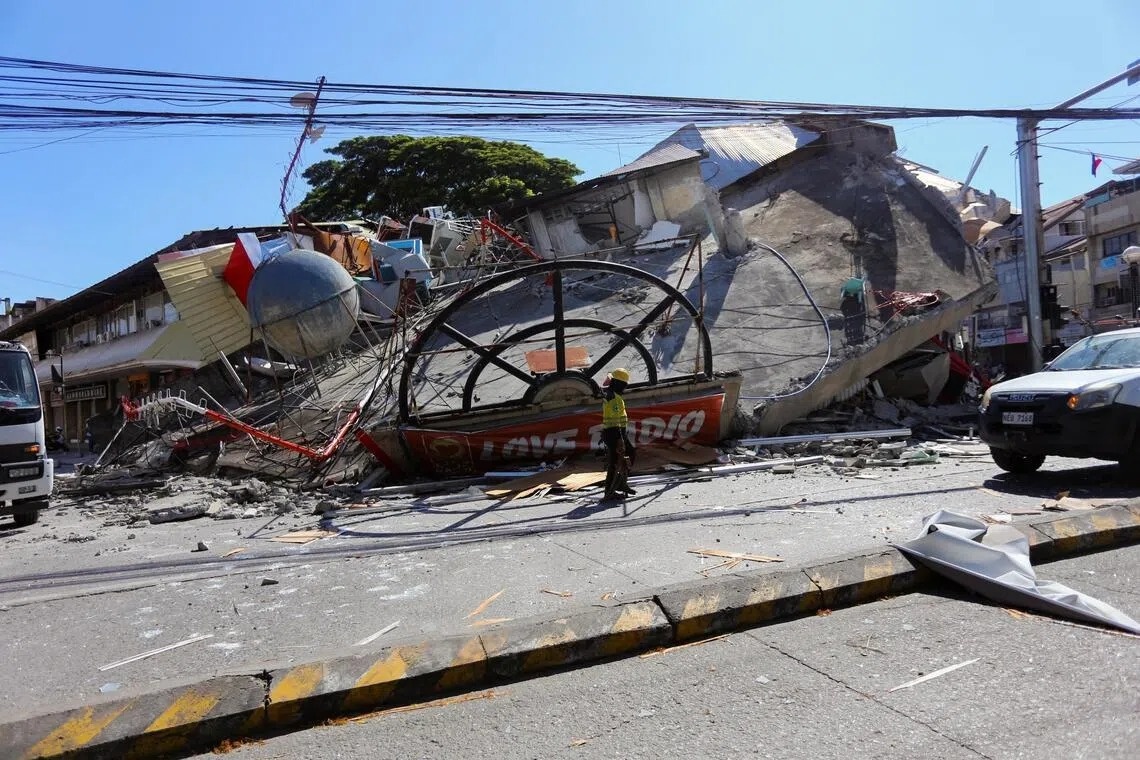 |
Local residents first reported the geological phenomenon, dubbed "coastal uplift," two days after the earthquake. Photo: Reuters. |
Local residents began noticing this unusual seabed phenomenon about two days after the earthquake occurred.
The Philippines lies on the "Pacific Ring of Fire"—a region with a high concentration of fault zones and highly active volcanoes, stretching from South America to the Russian Far East. Therefore, earthquakes occur almost daily in this Southeast Asian nation, although most are of low intensity and cause little damage.



Source: https://znews.vn/dong-dat-o-philippines-nang-day-bien-len-them-2-m-post1659848.html