At the border in Bu Gia Map commune ( Dong Nai city), Mrs. Thi Y Ro (76 years old, a M'nong ethnic minority) still quietly "keeps the flame" of the traditional brocade weaving craft of the M'nong people alive day and night.
In his daily life, the artisan never ceases his journey of passing on the lines and colors of ethnic culture through each piece of brocade to future generations.
Inspiring traditional crafts
The border commune of Bu Gia Map is home to a large population of S'tieng and M'nong ethnic minorities. The people here mainly rely on cashew and rubber tree cultivation or livestock farming for their livelihood. Life has changed for the better in a more modern direction, but the rhythmic clicking of the loom still regularly echoes in Mrs. Thi Y Ro's home.
For Mrs. Y Rơ, the brocade fabric is not just a shirt or a blanket, but the very soul and identity of her inherited roots. Recalling her distant memories, Mrs. Y Rơ shared: "I learned to weave when I was little, taught by my grandmother and mother. In the old days, besides working in the fields, our grandmothers and mothers taught us how to weave even while we were working. Furthermore, after the harvest season, whenever we had free time, everyone would gather around the loom to weave."
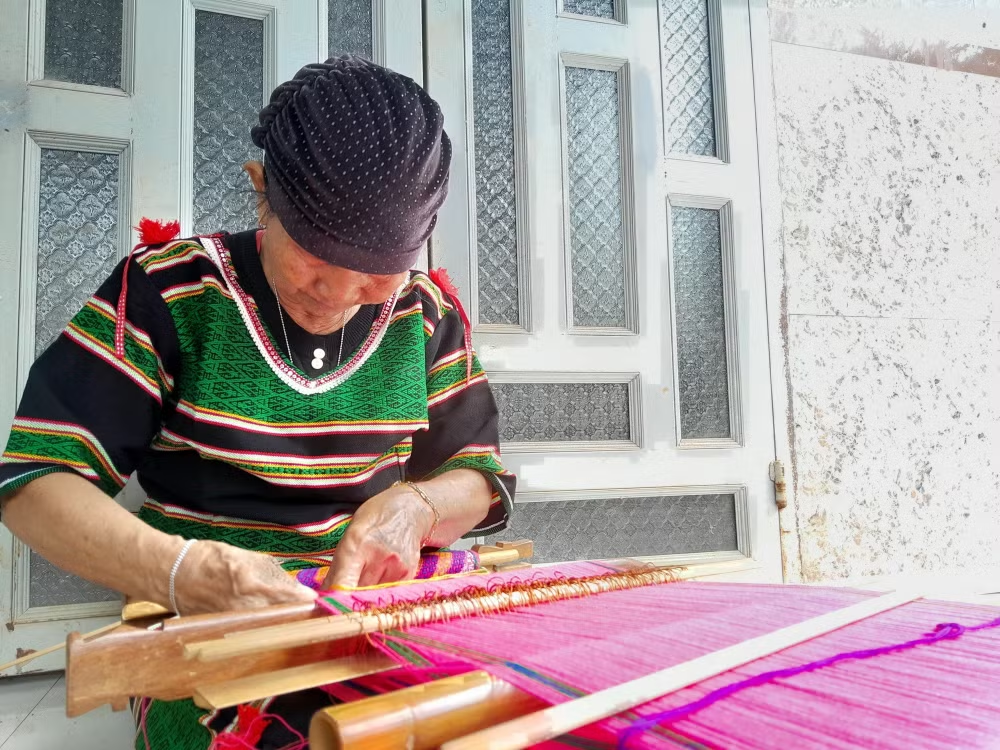
Artisan Thi Y Ro meticulously stitches each thread to create a high-quality brocade fabric. (Photo: K GỬIH/TTXVN)
According to Ms. Y Rơ, the journey of preserving the craft has never been easy. The years of the war against the US to save the country interrupted learning and weaving. Amidst the smoke and fire of war, people had to evacuate constantly, rarely having the opportunity to sit at the loom. Materials for weaving were also extremely scarce at that time.
The brocade fabrics are mainly produced for family use or for use in traditional M'nong ceremonies such as weddings, festivals, and religious rituals.
When the country achieved peace, she vowed to preserve her people's traditional craft. "The previous generation passed it down to us, so we must continue to pass it on to our children and grandchildren so that the craft does not fade away," Y Rơ confided.
Over the years, she has quietly passed on her skills to many women in the village. The "flame of the craft" is kept alive within her own family, as both her daughters and daughter-in-law are skilled weavers.
Watching her children meticulously work with each colored thread, skillfully weaving intricate traditional patterns, the old artisan's eyes couldn't hide her pride. "Now that they know how to weave, and they all weave beautifully, I'm so happy. Even when I'm old and frail, the M'nong people's traditional patterns will surely be preserved on this borderland," Mrs. Y Rơ happily shared.
Among those who mastered the craft taught by Mrs. Y Rơ, Ms. Thị Tức deserves special mention.
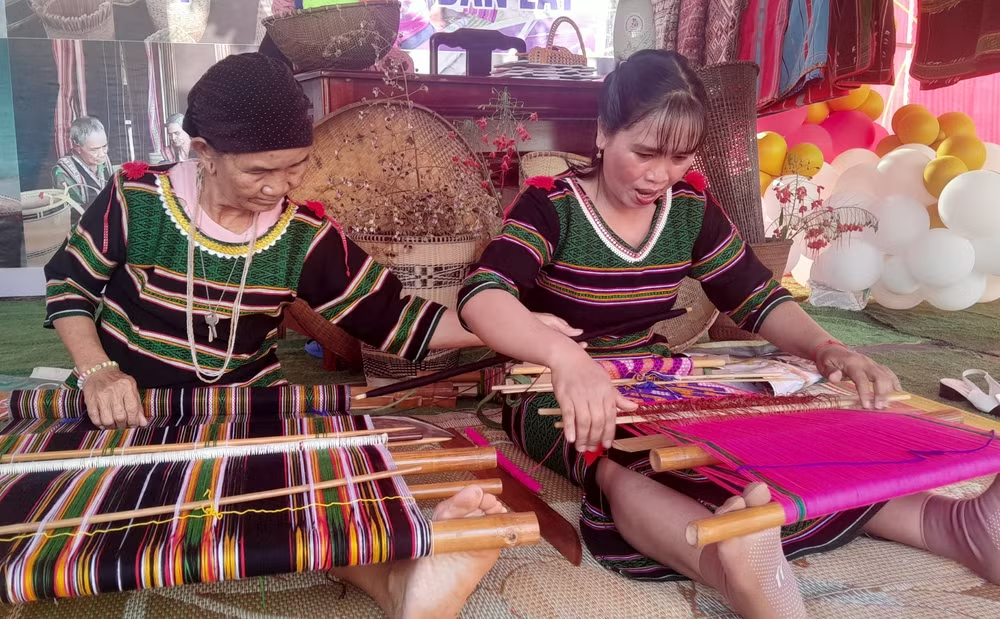
Ms. Thi Y Ro (76 years old, a M'nong ethnic minority) teaches the craft of brocade weaving to her daughter-in-law, Ms. Thi Tuc. (Photo: K GỬIH/TTXVN)
Thi Tuc is a S'tieng woman who married into a M'nong family. Initially, she didn't know the techniques of weaving brocade. However, "slow and steady wins the race," and living under the same roof and witnessing her mother-in-law's meticulous work at the loom ignited in the young daughter-in-law a passionate love for the vibrant colors of M'nong brocade.
Understanding her daughter's aspirations, Mrs. Y Rơ diligently guided her from the most basic steps, such as threading and color matching, to the techniques of weaving intricate traditional patterns that reflect the identity of her ethnic group and village. Thanks to her skill and perseverance, Tức has now mastered the craft, creating many complete and exquisite brocade products with her own hands.
Ms. Thi Tuc said: "When I first came to live with my husband's family, I didn't know how to weave brocade. Later, living together, I saw my mother-in-law weaving every day, and I loved it. Then, my mother-in-law took my hand and taught me how to weave, and I've been attached to the loom ever since."
According to Ms. Thi Tuc, although there are still many difficulties in finding markets for brocade products from the border region, preserving the traditional craft is essential. She hopes to continue preserving the craft and pass it on to future generations so that this beautiful cultural aspect does not fade away.
Preserving national cultural identity
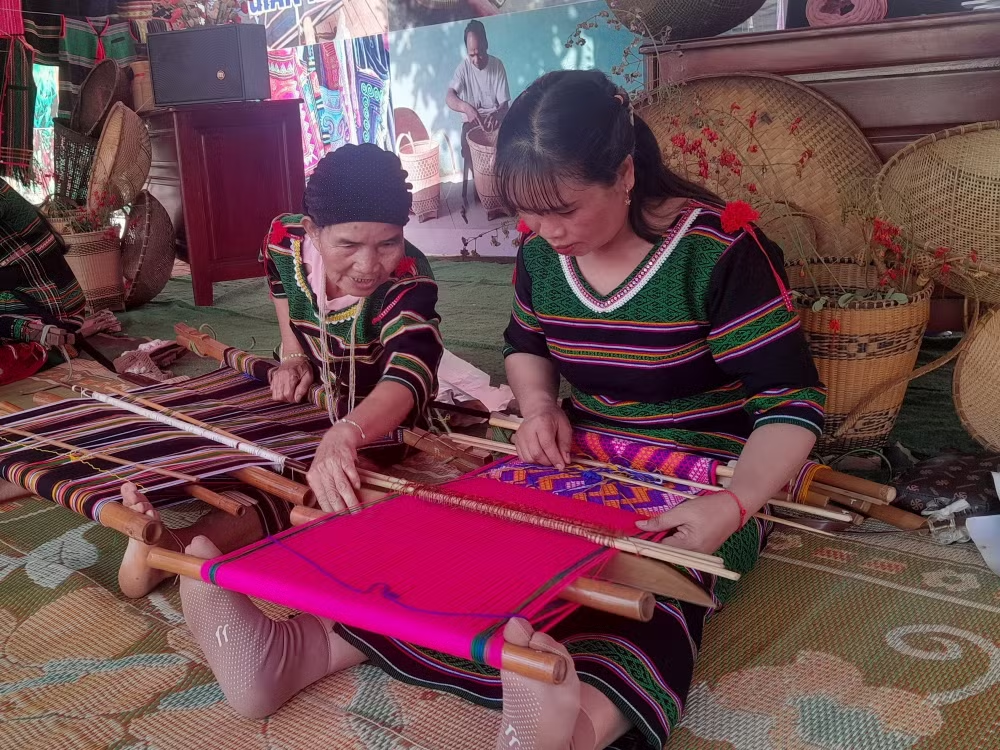
Artisan Thi Y Ro (76 years old, a M'nong ethnic minority) teaches the craft of brocade weaving to people in the village. (Photo: K GỬIH/TTXVN)
Currently, Ms. Thi Y Ro is one of the exemplary women of Bu Gia Map commune in preserving the traditional weaving craft of the M'nong and S'tieng ethnic groups.
Her efforts extend beyond her family to the wider community. Ms. Dieu Thi Nuong, a specialist in the Culture and Social Affairs Department of Bu Gia Map commune, shared that artisans like Ms. Y Ro are preserving their love and burning passion for traditional brocade weaving.
In the context of modern life with its many changes, the fact that the M'nong women and mothers still persevere at their looms is not simply for making a living, but also an effort to preserve the invaluable culture of the M'nong people. This perseverance has created a powerful ripple effect, helping the younger generation to love and be proud of their ethnic roots even more.
Over the years, the local authorities have consistently focused on promoting and encouraging people to actively develop and pass on traditional crafts to their children and grandchildren, so that these unique cultural aspects do not fade away.
According to Mr. Tran Quang Binh, Vice Chairman of the People's Committee of Bu Gia Map commune, the culture of the M'nong and S'tieng ethnic groups here possesses very unique characteristics; and at the same time, there is a unique cultural exchange.
Among these, brocade weaving is one of the most prominent traditional crafts of the ethnic minority communities in the commune. Recognizing its importance, the preservation and conservation of cultural values always receives close attention from the local government as well as relevant departments and agencies.
Through the effective implementation of many practical programs and activities, especially the National Target Program for socio -economic development in ethnic minority and mountainous areas, Bu Gia Map commune has gradually preserved and sustainably maintained this traditional craft.
Over the past period, the locality has organized demonstrations and opened many vocational training classes to encourage the younger generation and teenagers in M'nong and S'tieng families and clans to continue learning and inheriting the traditional weaving techniques.
"In the Resolution of the Party Congress of the commune for the past term, the locality officially included the content of preserving brocade products in conjunction with the orientation of tourism development. This is considered a strategic step to both promote the local tourism industry and create livelihoods and sustainable economic development for ethnic minorities," Mr. Tran Quang Binh added.
Women like Ms. Thi Y Ro are contributing to preserving the vitality of the M'nong and S'tieng cultural heritage in the border region. They not only preserve the unique patterns of their ancestors but are also passionate "keepers of the flame," passing on ethnic pride to future generations.
The unity of the women here, combined with the government's sound tourism development strategies, promises to bring the vibrant colors of the border region's brocade fabrics further and become a driving force for more sustainable economic development.
(VNA/Vietnam+)
Source: https://www.vietnamplus.vn/dong-nai-gap-nu-nghe-nhan-lang-tham-giu-hon-tho-cam-dan-toc-mnong-post1113279.vnp


























































![[Video] Sunset at Lap An Lagoon – Where the sun sets over the fishing nets](https://vphoto.vietnam.vn/thumb/1200x675/vietnam/resource/IMAGE/2026/05/31/1780192137701_beach-landscape-sea-water-nature-grass-745871-pxhere-com.jpeg)






























Comment (0)