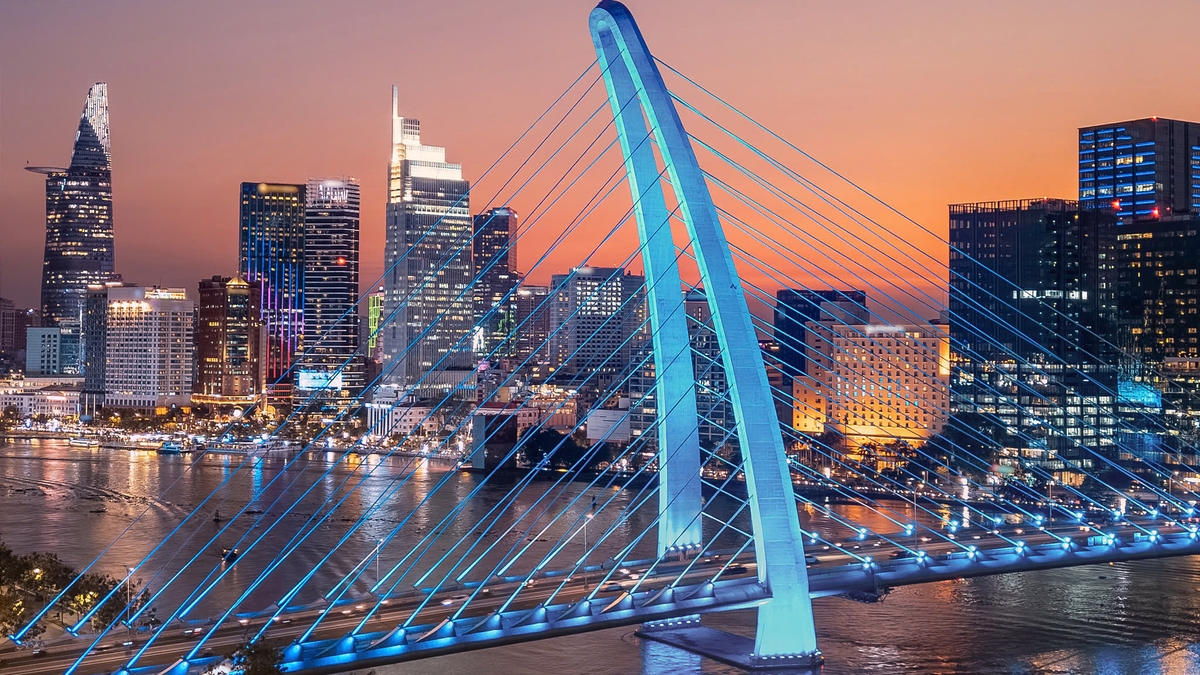
The lower reaches of the Thu Bon River. Photo: QUOC TUAN
The unique heritage axis of Quang Nam province.
Associate Professor Dr. Dang Van Bai, Vice Chairman of the National Cultural Heritage Council, stated that with a systemic, interdisciplinary, and multidisciplinary approach, the late Professor Tran Quoc Vuong summarized the ecosystem of Quang Nam province in two main directions. These directions include mountains - hills - passes - rivers - sea and islands, with rivers serving as a connecting element between mountains and the sea.
From there, a map is sketched out showing Mount Chua (at its foot is the My Son temple complex), followed by Buu Chau hill with the ancient citadel of Tra Kieu, and further east to the trading port of Hoi An with the former port of Cu Lao Cham. Notably, the aforementioned ecological landmarks lie almost on the same straight line and are connected by the Thu Bon River.
If My Son is the religious heritage of Champa culture, and Hoi An is the glorious memory of an international trading port, then Cu Lao Cham preserves the layers of maritime culture and ancient shipping routes. These three spaces form a rare, interconnected heritage axis, linked throughout by the Thu Bon River, creating an attraction that has boosted both domestic and foreign trade for Quang Nam province and neighboring regions from a very early period.
Over time, migrants settling in this land cultivated fertile sugarcane and mulberry fields, creating many thriving craft villages along both banks of the river. With its strategic location, for over two centuries (1602-1832), the Thanh Chiêm administrative center, a leading socio -economic hub of the Southern region, existed along this river, closely associated with the nascent development of the Vietnamese Quốc ngữ script.

Residents along the Thu Bon River have a rich cultural life. Photo: QUOC TUAN
Restless by the river
You may also like

The Da Nang Archaeological Planning Scheme needs to be developed soon.DNO - On the morning of June 26th, the Department of Culture, Sports and Tourism of Da Nang city organized a scientific workshop titled "Archaeology of Da Nang City: Potential, Current Situation, Planning Orientation, Preservation and Promotion of Cultural Heritage Values," with the participation of experts and scientists from within and outside the city. 
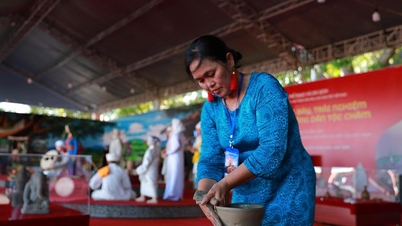
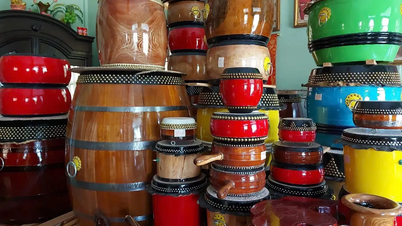
The digital aspirations of young peopleThe "Digital Transformation Initiative for an Inclusive and Community-Connected City" activity in 2026, organized by the Da Nang Youth Union, has recognized many research projects from student groups with high practical applications in daily life. Perhaps nowhere else in Quang Nam province is there such a high density of craft villages as along the Thu Bon River. Names of crafts like Thanh Ha pottery, Kim Bong carpentry, Ban Thach mat weaving, Phu Bong weaving, Ma Chau silk, Phuoc Kieu bronze casting… have become ingrained in the consciousness of the people for generations, and their reputation has spread far and wide.
The idea of reviving traditional craft villages through tourism has been discussed and implemented for a long time, but only Thanh Ha pottery village has a stable source of visitors (averaging 700 visitors per day in 2025), providing a sustainable livelihood for the craftspeople, while most other craft villages are struggling to survive.
Recognizing the tourism potential and connectivity along the Thu Bon River, in 2024, the three localities of Hoi An, Dien Ban, and Duy Xuyen (formerly) proactively signed a cooperation agreement for phase 1, extending to 2030, and oriented towards expanding linkages to several upstream localities along the Thu Bon River. However, in the context of the recent reorganization of commune-level administrative units, this interconnected space is becoming fragmented and awaiting reconnection.
For several years now, the buzz surrounding plans to revive the dream of a "silk stream" on the Thu Bon River has died down. Memories of the thousands of hectares of mulberry plantations on both banks of the river, stretching from Thu Bon commune down to Duy Xuyen and Go Noi, during the 1980s and 90s, have faded into the past. The lasting impression of this region's once-golden silk industry is mainly based on the perseverance of individuals who run attractions like the Hoi An Silk Village (Hoi An Tay ward) or the Ma Chau silk factory (Nam Phuoc commune).

Tourist boats carrying passengers on the Thu Bon River. Photo: QUOC TUAN
Waiting to awaken the Thu Bon River
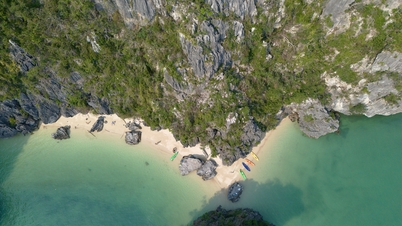
Due to limitations in docks and tour routes, river tourism on the Thu Bon River mainly revolves around the downstream area and a few destinations such as Cam Thanh Coconut Forest, Thanh Ha Pottery Village, and Go Noi. The recent appearance of tourists from the luxury SJourney cruise ship at some riverside destinations partly demonstrates the great appeal of the heritage space along the Thu Bon River.
Upon arriving at Tra Kieu station on the Vietnam xuyên Việt (trans-Vietnam) journey, tourists not only discover well-known World Heritage sites like Hoi An and My Son, but are also drawn deeper into the cultural stories of the villages along the riverbanks.
Along with new tourism products, many plans to restore and revive relics and legends associated with the Thu Bon River are also receiving attention. Notably, there is the story of restoring the value of Thanh Chiem Citadel by building a historical and cultural park in Dien Ban ward.
Although the project is still in progress, restoring this historical site, if done according to the plan, will add an important link to the cultural tourism route along the Thu Bon River. The Thanh Chiem Park, associated with the Vietnamese Quốc ngữ script, if completed, will be a promising destination in the "middle" of the route, enriching the Hoi An - My Son waterway tour.

Vietnam encourages US businesses to expand investment in high technology.On the morning of June 26th, at the Government Headquarters, Deputy Prime Minister Ho Quoc Dung received Mr. Jeff Place, Supply Chain Director of Coherent Group (USA). During the meeting, the Deputy Prime Minister affirmed that Vietnam encourages US businesses to expand investment, especially in high-tech, innovation, and semiconductor industries. According to Dr. Ngo Thi Huong from the University of Education (Da Nang University), the competitive advantage of Thu Bon River tourism lies not in the already popular "sightseeing by boat," but in the ability to transform the river journey into part of a heritage story. Thanh Chiem Citadel, with its layers of historical and cultural sediment, is capable of forming a heritage narrative for tourists.
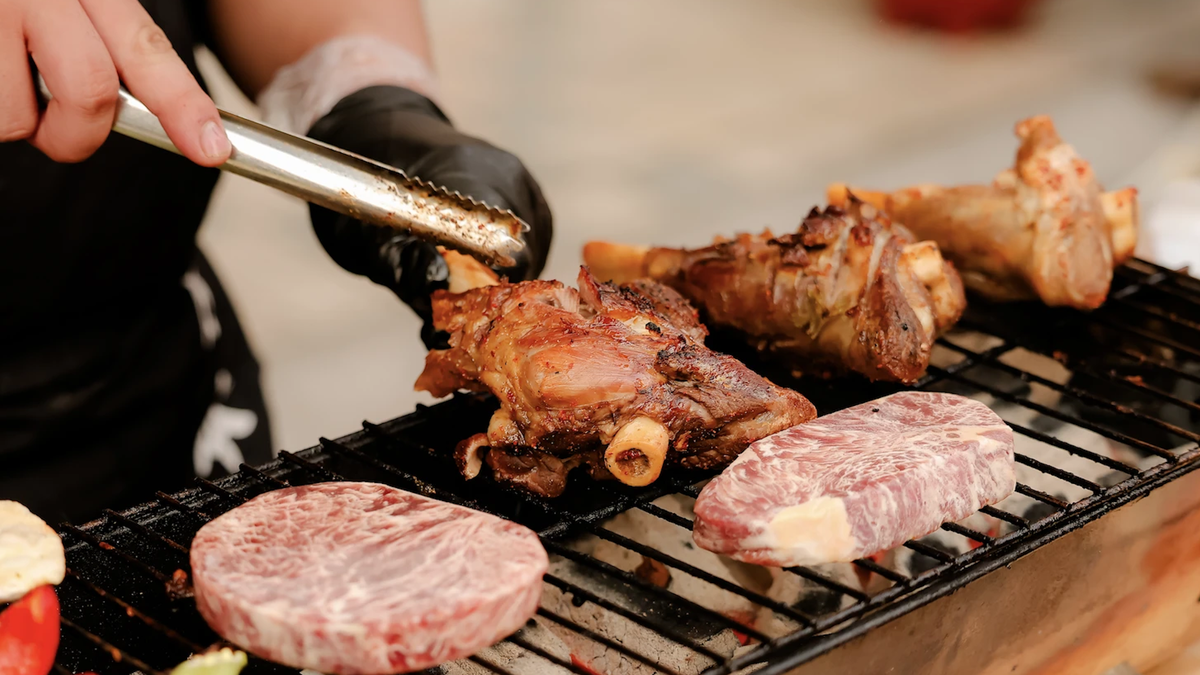
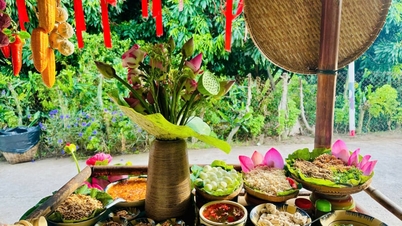
Dr. Ngo Thi Huong suggested that the river cruise could incorporate folk art performances and local culinary experiences to enhance the emotional depth for tourists. In particular, the "Thanh Chiem arrival" experience could be designed as a cultural experience. Before disembarking, tourists could listen to a short narrative about the Thu Bon River as a corridor of memories in Quang Nam province, receive a journey marker in the form of a card, stamp, or souvenir seal, and then enter the historical site with the feeling of "stepping into the context" of history.
From that foundation, it's possible to develop additional half-day sunset experience packages that are greener and slower-paced, suitable for international tourists or travelers seeking a different experience, focusing on cultural depth rather than just sightseeing.
In addition to the long-standing downstream to upstream waterway route, the Department of Culture, Sports and Tourism is reviewing, adjusting, and supplementing the river tourism route to the My Son Sanctuary via the Han River - Vinh Dien River - Thu Bon River to integrate it into the Da Nang City Tourism Development Orientation Plan to 2030, with a vision to 2045. If this route is opened in the future, Thu Bon River tourism will have another avenue to revitalize this heritage river.
Source: https://baodanang.vn/dong-song-di-san-cho-danh-thuc-3341257.html






![[Photo] "Hanoi Lotus Festival" honors the lotus flower that has been associated with Vietnam for thousands of years.](https://vphoto.vietnam.vn/thumb/1200x675/vietnam/resource/IMAGE/2026/06/27/1782516943048_sen-ha-noi-2026-minh-duy-1-jpg.webp)