

 |
| Do BRICS meet the necessary criteria to establish a global currency, comparable to the US? |
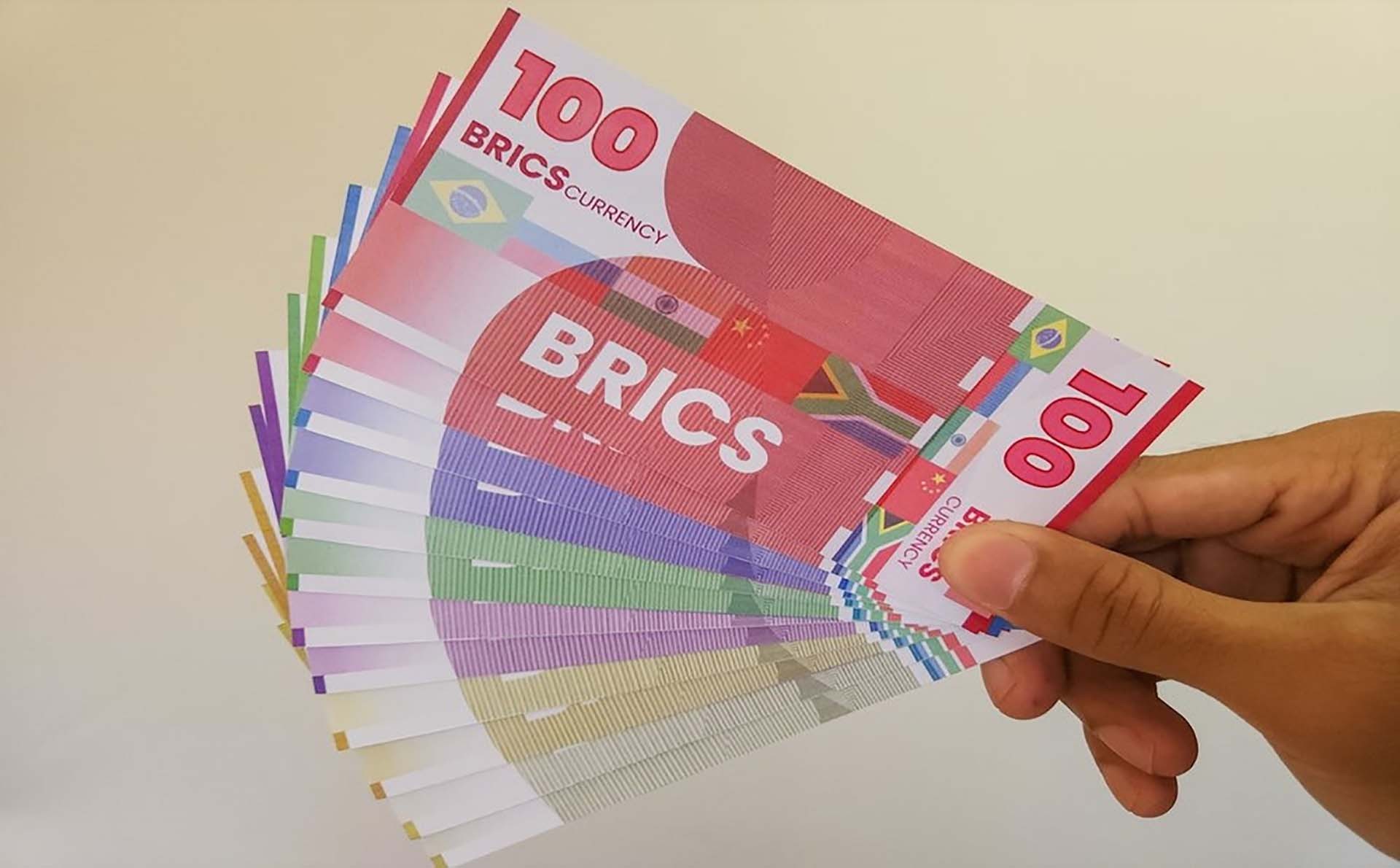
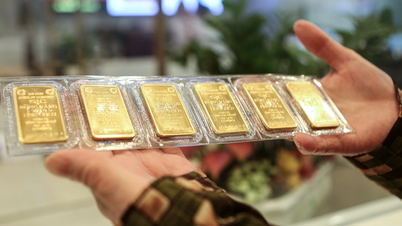
A new financial agreement, considered to have the potential to convert into a common BRICS currency backed by gold, could be announced as early as August at the BRICS summit in South Africa.
A common currency for the BRICS?
Analysts suggest that investors should not expect China or any other major power to abandon the US dollar in international trade immediately. This is because, to date, no potential "rival" has emerged that is "qualified" to immediately replace the USD.
Leslie Maasdorp, Vice President of the Bank for New Development (BIRCS), stated: “It will take a very long time to develop a currency that can replace a previous one, perhaps in the medium term, the long term, or even longer…”
However, that being said, the trend toward de-dollarization is not a distant fantasy. It is happening, as the US Federal Reserve (Fed) notes that its foreign exchange reserves have been steadily declining in recent years.
Recently, there have been increasing calls among countries for transactions in currencies other than the USD, due to the economic disruption stemming from US and Western sanctions against Russia. In particular, to avoid sanctions, Russia has had no choice but to challenge the USD-dominated financial system, having been blacklisted and deprived of international payment access – "expelled" from the SWIFT system.
Some other countries are “switching on defense” by paying more attention to “retaliation blacklists”—something the US didn’t use during the Cold War. Meanwhile, China—America’s biggest competitor—has never given up its ambition for a yuan that could replace the dollar.
In an article titled "BRICS Currency: A Feasible Idea?" on the ORF website, senior expert Kanishk Shetty, considering the possibility of BRICS developing a new global currency to compete with the USD, argues that BRICS is actively promoting internal trade using its own currency because it offers advantages. A common currency would not only boost intra-BRICS trade but also eliminate the high USD conversion costs in international transactions.
As a first step, member states, led by India and China, explored bilateral trade agreements using national currencies. After the transition to national currency transactions was completed, BRICS actively considered introducing and circulating digital currencies or an alternative form of currency.
However, each BRICS country supports this new initiative for different reasons. Russia and China are leading the way for political gain. India, South Africa, and Brazil also have their own reasons, facing a shortage of US dollars and finding it easier to repay debts to international organizations.
A 2019 study by Global Business Review compared the regime-switching behavior of real exchange rates in five BRICS countries before and after the group's formation. The study concluded that the introduction of stronger policy interaction opens the door to a robust monetary union among BRICS members.
Shared ambitions, individual challenges
Do BRICS meet the necessary criteria to establish a global currency, comparable to the US?
The US dollar plays a dominant role in global finance. According to the Bank for International Settlements, the USD is the most traded currency, accounting for nearly 90% of global foreign exchange transactions. One reason for the USD's dominance is that the US is the world's largest economy with a GDP of approximately $25.46 trillion, or 24% of the world's GDP. The higher a nation's national income, the greater its demand for assets, leading to a greater demand for holding its own currency.
The BRICS bloc has a GDP of over $32.72 trillion, which is 31.59% of the world's GDP. Thus, BRICS has a much larger economic power than the United States.
The United States has a large and complex financial system, including a network of banks, investment firms, and other financial institutions capable of handling international transactions. Investors worldwide prefer to buy securities in USD because of its safety and liquidity.
In 2014, the BRICS established the New Development Bank (NDB) as an alternative to international organizations such as the World Bank (WB) and the International Monetary Fund (IMF). The NDB's Reserve Agreement (CRA) liquidity mechanism attracted many developing countries facing shortages of USD reserves and an inability to repay international debt.
Furthermore, the IMF's structural adjustment program forced countries to reduce government spending, increase privatization, and deregulation. As a result, the inability to develop independent policies compelled these countries to turn to the NDB for loans and development assistance.
The NDB issues bonds in local currencies. These developments demonstrate the increasing access to financing for BRICS to utilize its liquid assets.
With its military power and position in global politics, the United States has significant influence on international affairs. This global influence helps the US solidify the position of the USD as an unchallenged global currency.
However, the BRICS bloc—comprising Russia, China, and India—possesses formidable military forces, second only to the United States, according to the Global Defence Index. Russia ranks second, China third, and India fourth.
Just as the possibility of a BRICS military alliance is unlikely due to differing viewpoints, the scenarios for a monetary union are also complex, with each country having its own calculations and varying levels of readiness.
Given the differences among BRICS member economies, it is unclear whether the benefits of a common currency outweigh the costs. Leaving aside the political will behind de-dollarization, the challenge of increasing dependence on China could also lead to conflicts of interest, and even disputes, within the bloc.
Thus, while a common alternative currency could effectively eliminate the USD conversion costs in international payments, BRICS members may need to exercise caution before taking steps toward creating a new currency, as such action could contradict the foreign policy interests of each country, given the differing reasons for supporting this initiative.
Source
![[Photo] General Secretary and President To Lam presides over a meeting on assessing national development resources.](https://vphoto.vietnam.vn/thumb/1200x675/vietnam/resource/IMAGE/2026/05/20/1779253785852_a1-bnd-2943-8519-jpg.webp)



![[Photo] National Assembly Chairman Tran Thanh Man working with the Standing Committee of the Economic and Financial Committee](https://vphoto.vietnam.vn/thumb/1200x675/vietnam/resource/IMAGE/2026/05/20/1779249584387_ndo_br_1-jpg.webp)










































































Comment (0)