

 |
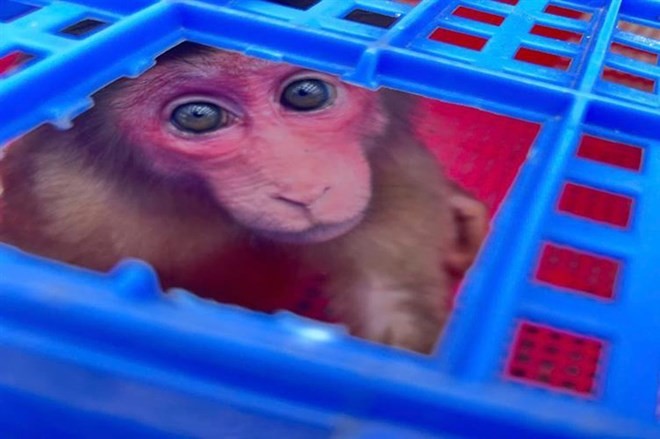
| On March 31st, the Bai Tu Long National Park Management Board announced the reception of a red-faced monkey ( scientific name Macaca arctoides) from Tien Yen district. After completing the necessary legal procedures, the monkey, which was in good health, was released back into its natural forest area at Section 7, Sub-area 201, Ba Mun Island, Bai Tu Long National Park. Photo: Bai Tu Long National Park Management Board. |
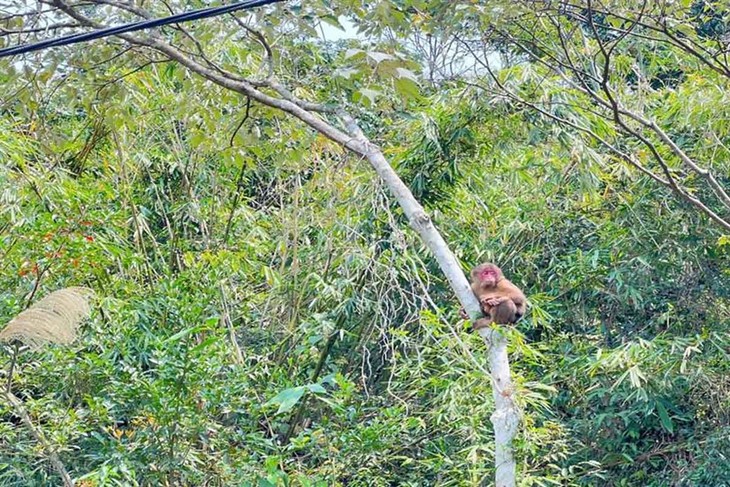 |
| Previously, the red-faced monkey was discovered by a resident in Dong Hai commune, Tien Yen district ( Quang Ninh province) after wandering into their garden, and they captured it. The family then reported the incident to the local forest rangers and brought the monkey to the Dong Hai commune police station (Tien Yen district) to hand it over, hoping the male monkey, weighing approximately 3.5 kg, would be released back into its safe natural environment. Photo: Bai Tu Long National Park Management Board. |
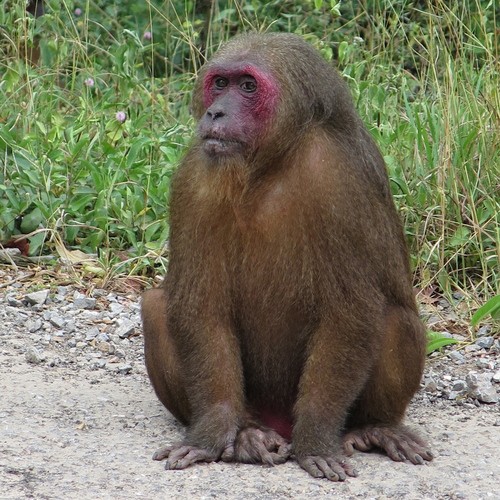 |
| The red-faced monkey (scientific name Macaca arctoides) is an endangered, rare, and precious forest animal belonging to Group IIB, protected under the regulations of Government Decree No. 84/2021/ND-CP on the management of endangered, rare, and precious forest plants and animals and the implementation of the Convention on International Trade in Endangered Species of Wild Animals and Plants. Photo: iNaturalist. |
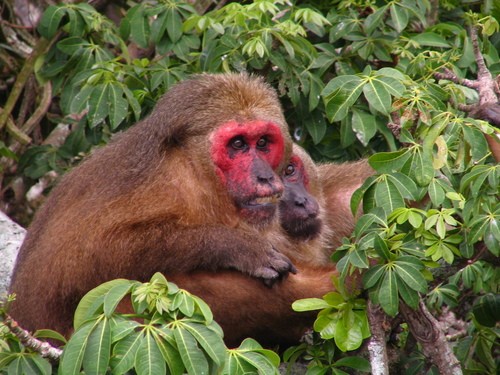 |
| The red-faced monkey, also known as the short-tailed monkey, is a unique primate species belonging to the Cercopithecidae family, primarily distributed in South Asia and Southeast Asia. Photo: iNaturalist Mexico. |
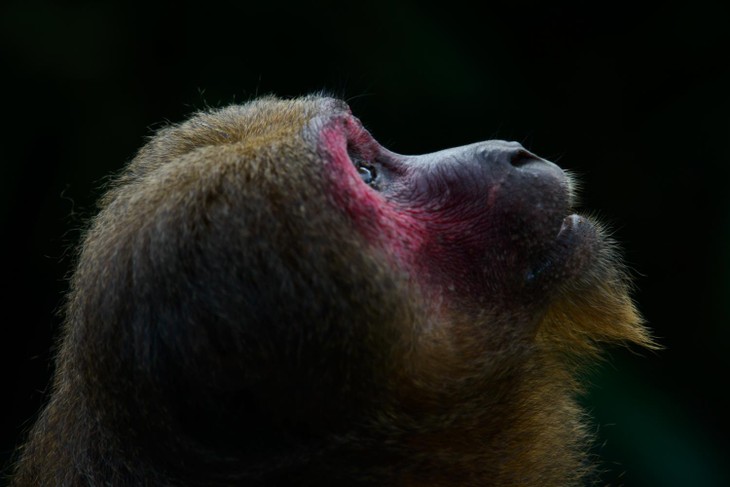 |
| Distinguished by their characteristic red faces, the red-faced monkeys typically have dark brown fur. However, they can sometimes exhibit a gradient of black to red. The underside of their bellies is usually lighter than the upper body, with their backs ranging from reddish-brown to dark brown. Photo: thainationalparks. |
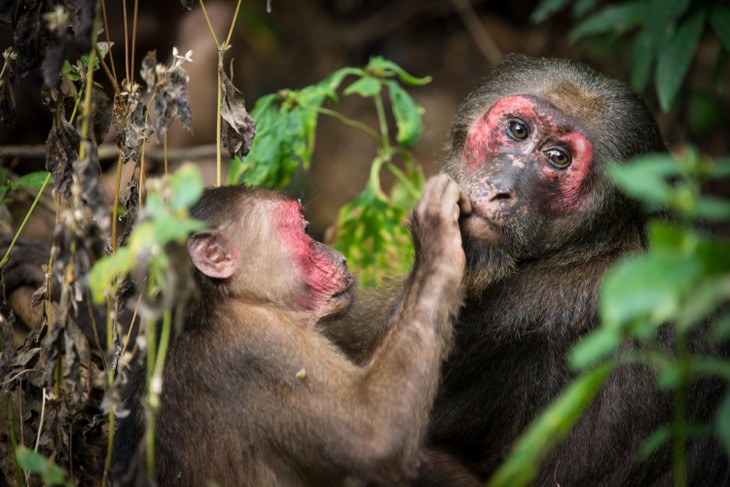 |
| When fully grown, each red-faced monkey measures 485-700 mm in body length and 30-50 mm in tail length. They weigh an average of 7-18 kg. Photo: thainationalparks. |
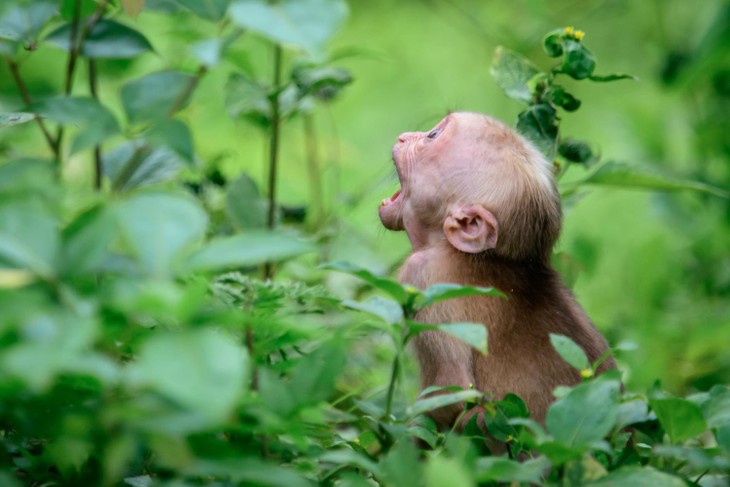 |
| Red-faced monkeys are typically found in lowlands, monsoon forests, dry forests, and dense forests in mountainous areas up to 2,000 meters above sea level. Photo: thainationalparks. |
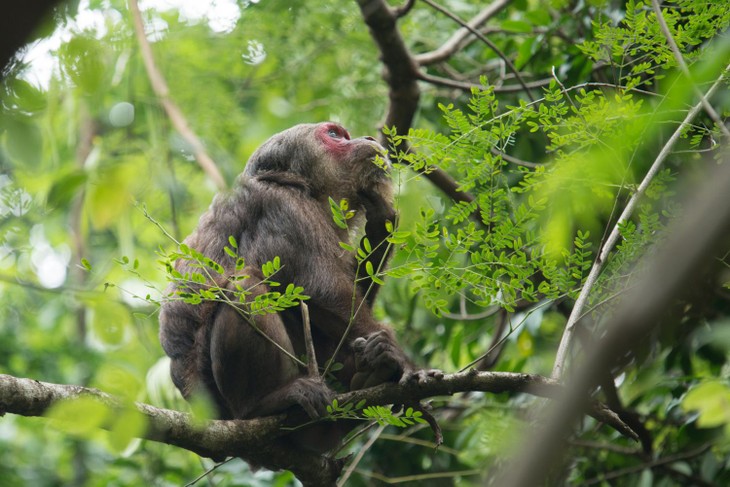 |
| Primarily diurnal, the red-faced monkey climbs and moves across the ground to find food. Photo: thainationalparks. |
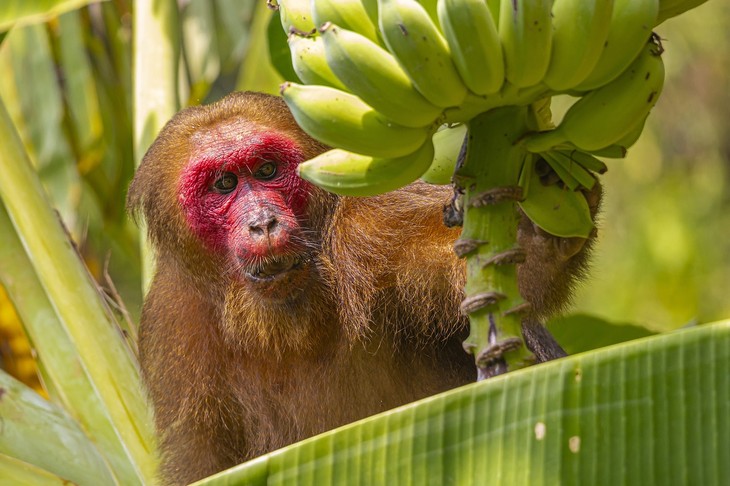 |
| The diet of the red-faced monkey includes fruits, seeds, young leaves, shoots, and even small animals such as insects and birds. Photo: karits. |
Readers are invited to watch the video: A wild monkey casually drinks a bottle of wine and then giggles.
Source: https://khoahocdoisong.vn/dong-vat-quy-nhu-vang-di-lac-o-quang-ninh-dan-lap-tuc-giao-nop-post266989.html


![[Photo] Prime Minister Pham Minh Chinh presides over a meeting on private sector economic development.](/_next/image?url=https%3A%2F%2Fvphoto.vietnam.vn%2Fthumb%2F1200x675%2Fvietnam%2Fresource%2FIMAGE%2F2025%2F12%2F20%2F1766237501876_thiet-ke-chua-co-ten-40-png.webp&w=3840&q=75)







































































Comment (0)