

Supply exceeds demand, prices drop by 50%.
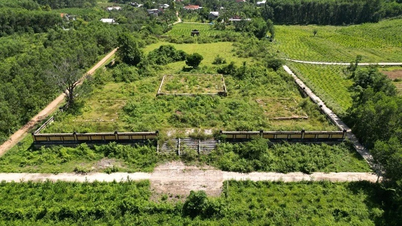
In Tra Tan commune, traders are buying grade 1 purple taro at around 13,000 VND/kg. Meanwhile, yellow waxy taro is slightly more expensive at 15,000 VND/kg. For grade 2 taro, the price is only about 4,000 VND/kg. Compared to the same period in 2024, the price of taro has decreased by nearly 50%. In addition, current yields are not as expected. Each hectare only yields about 15 tons, lower than the 17 tons/ha in 2024. The main reason is that many growing areas in the localities are harvesting at the same time. This situation is often called "taro oversupply," causing supply to exceed demand and pushing down the price of this agricultural product. Furthermore, the price of taro in 2024 reached a high of 26,000 - 30,000 VND/kg, so growers expanded their cultivated area, increasing pressure on supply this year.
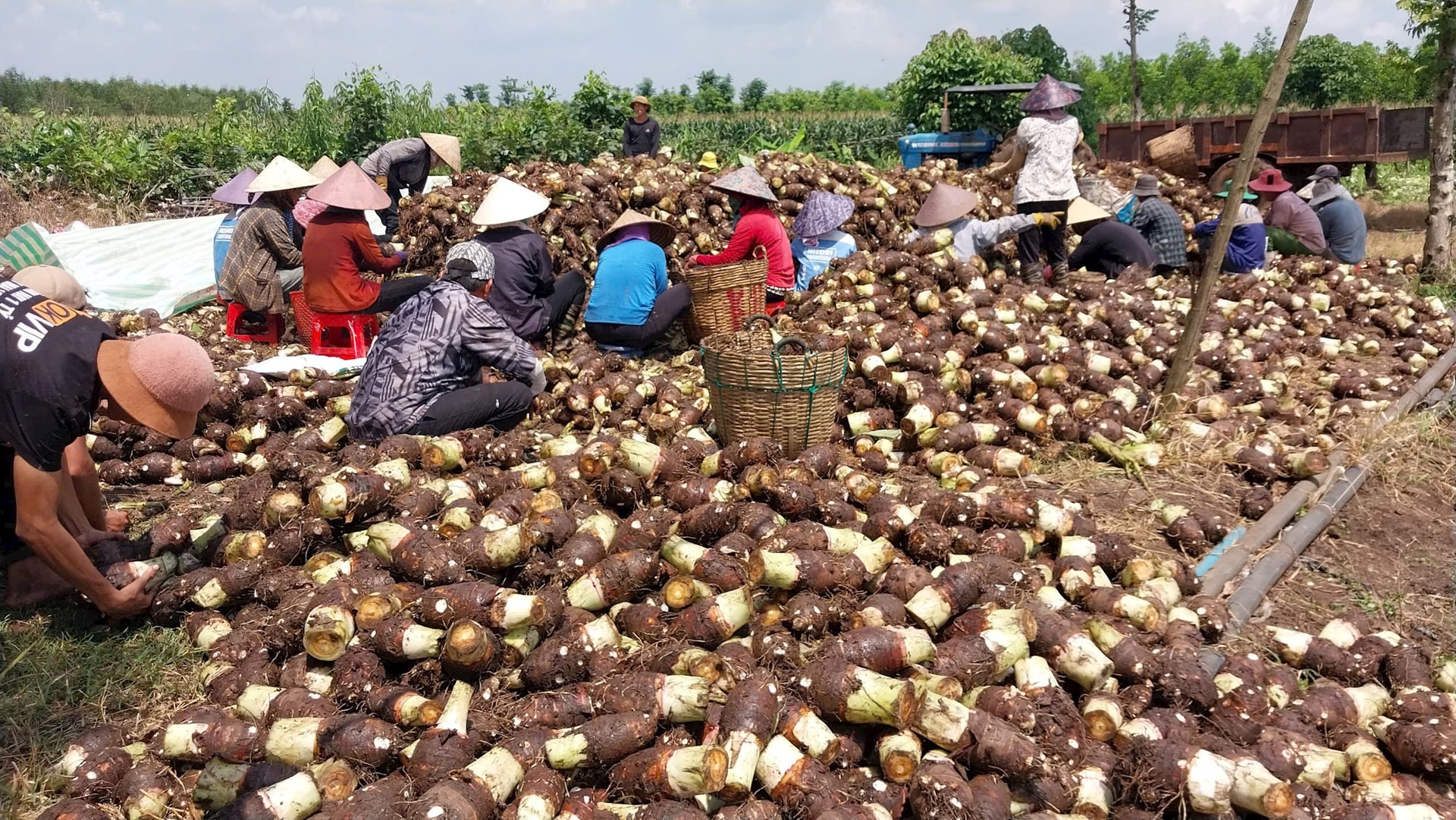
Ms. Nguyen Thi Suoi, a taro farmer in Tra Tan commune, shared: "The price of purple and yellow taro decreased in 2025, causing many farmers to only break even or even lose money on cultivation costs. Although families still maintain a rotational farming model to ensure year-round production, the current price only covers the costs of materials, fertilizers, seeds, etc., leaving no surplus to account for labor."
Some farmers and traders in Tra Tan expect sweet potato prices to rise slightly in the near future. The rainy season has made cultivation and harvesting difficult in many areas due to wet and waterlogged soil, reducing short-term yields and narrowing supply. In addition, the end of the year is a peak consumption season when processing facilities, jam makers, and dried goods producers begin purchasing heavily from October to serve the Tet holiday. However, a price recovery to last year's levels is unlikely. This is because sweet potatoes are mainly consumed domestically, while the export market to Thailand, as in previous years, has not yet seen any signs of resuming purchases by traders.
We need a fundamental solution.
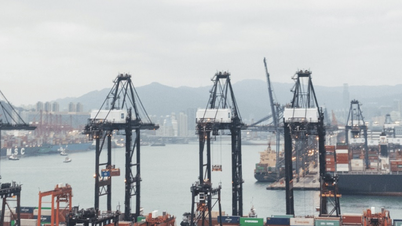
According to data from the international trade platform Volza, from the beginning of 2024 to April 2025, countries worldwide imported approximately 20,527 shipments of fresh taro. With packaging specifications of 10-14 tons per shipment, the estimated total volume of imported fresh taro is between 205,000 and nearly 287,000 tons. The United States is the largest importing market, with approximately 9,500 shipments, equivalent to 95,000–133,000 tons, followed by countries such as the UK, UAE, and Malaysia. The majority of the imported taro is in the form of fresh, unprocessed tubers with the skin intact. Processed products such as dried taro, taro flour, and taro snacks are showing growth but still account for a small proportion. Countries exporting fresh taro include Ecuador, China, and India.
This reality shows that, if market opportunities are well-utilized and the quality of taro growing areas is improved, it is entirely possible to access potential export markets. Establishing taro growing areas that meet GlobalGAP standards not only opens up export opportunities to major markets but also helps increase product value, creating conditions for signing stable, long-term consumption contracts. To achieve this, it is necessary to form a closed-loop production-processing-consumption chain.
Without fundamental, long-term solutions, the problem of "bumper harvest, low prices" will be a constant worry for taro farmers. When farmers collectively shift towards this direction, taro will not only avoid price drops during bumper harvests but also have the opportunity to reach international markets, bringing in a more sustainable source of income.
Source: https://baolamdong.vn/du-chuan-khoai-mon-vuon-xa-381387.html



































































































Comment (0)