

Resolution 57 of the Politburo affirms that science and technology, innovation, and digital transformation are the decisive driving forces for development. How will Hanoi concretize this spirit in the next term, sir?
Resolution 57-NQ/TW identifies science, technology, and innovation as "key drivers of the new growth model." As the capital city, Hanoi deeply understands that this is not only a central political task but also a pioneering requirement. The city is committed to the spirit of "not waiting, taking a step ahead through institutions, infrastructure, and people," and is translating the spirit of Resolution 57 into clear goals and policies for the next term.
The city has set a set of key targets: By 2030, the science and technology-based and innovation-based economic sector will account for over 40% of GRDP; GRDP per capita will reach US$12,000; and GRDP growth will reach double digits (approximately 11% per year). These are challenging goals, but achievable if solutions are consistently and comprehensively implemented.

A notable step forward is the City People's Council's issuance of six specific resolutions on science, technology, and innovation. This is a comprehensive set of policy tools capable of leading the market and creating a comprehensive support mechanism from research, development, and testing to commercialization and market connectivity. The application of such a sandbox mechanism affirms the city's consistent stance that institutions must pave the way for innovation, preventing legal barriers from hindering progress.
Along with institutional reforms, Hanoi is investing heavily in digital and scientific infrastructure: data centers, shared data analytics systems, smart city platforms, research spaces, and a high-tech ecosystem. During the 2021-2025 period, the digital economy is projected to account for approximately 23% of GRDP; labor productivity is expected to reach 347 million VND per person; and the Hoa Lac High-Tech Park will continue to attract large-scale projects. These steps lay the foundation for the city to transition to a knowledge-based development model, aiming to achieve over 40% of GRDP from the knowledge economy by 2030.
Innovation is considered a major area for Hanoi to achieve breakthroughs. In your opinion, which sectors have the potential to create rapid breakthroughs in the 2026-2030 period?
With the largest system of research institutes, universities, and technology enterprises in the country, Hanoi has a strong foundation for developing innovation. In the period 2026-2030, the city has identified three areas with the fastest potential for breakthroughs.
Firstly, there's digital technology and the digital economy, with core technologies such as AI, big data, cloud computing, fintech, and e-commerce. The city aims for the digital economy to contribute over 40% of its GRDP by 2030. A sandbox mechanism and policies encouraging R&D will shorten the journey of bringing technology products from the laboratory to the market. It can be said that the digital economy is not a distant future; Hanoi is determined to make it a reality starting today.
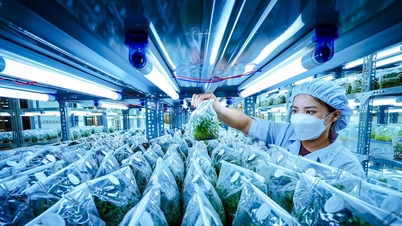
Secondly, there is biotechnology, biomedical science, and smart healthcare. Hanoi has a strong system of central-level hospitals and laboratories, providing the conditions for developing next-generation vaccines, biopharmaceuticals, and genetic technology. The city's Venture Capital Fund will support biomedical startups and promote the AI-powered smart hospital model.
Thirdly, there is environmental technology and the circular economy, which aim at solutions for reducing emissions, managing waste, recycling, and developing green cities.
What policies will Hanoi prioritize to attract businesses, universities, experts, and startups to participate in developing the innovation ecosystem?
Developing an innovation ecosystem requires a comprehensive, consistent, and distinctive policy environment. Hanoi is building this ecosystem with the motto: "The State creates, businesses lead, universities provide knowledge, and startups create breakthroughs."
For businesses, Hanoi offers a series of substantial incentives: support for R&D, intellectual property, product testing, access to premises, hiring of experts, and priority for high-tech projects. This is how Hanoi fulfills its role as a facilitator, ensuring businesses have the necessary conditions to expand investment and innovate.
With research institutes and universities, the city promotes mechanisms for commissioning research, co-funding R&D projects, and sharing the benefits of commercialization. The Hanoi Technology Exchange becomes a channel connecting knowledge, finance, and the market, helping to bridge the gap between research and application.
For startups, the City's Venture Capital Fund acts as "seed capital," helping businesses overcome the most challenging stages. The Hanoi Innovation Center is built as a comprehensive support ecosystem: providing legal advice, product testing, fundraising, and market expansion.
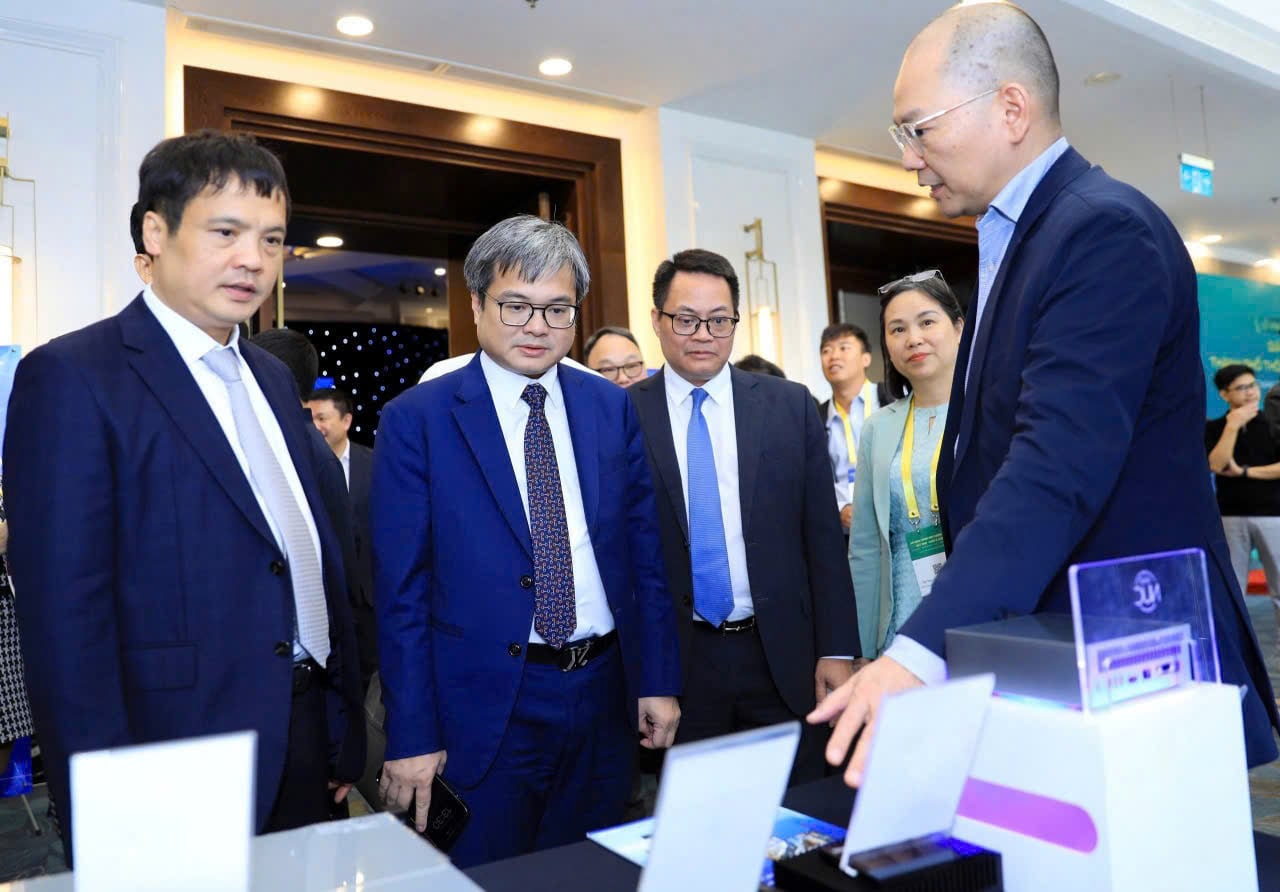
High-quality human resources are a core element of innovation. What mechanisms will Hanoi use to attract and develop this workforce?
In reality, without human resources, innovation is just a slogan. Therefore, the city's overarching principle is to invest in people before investing in technology. Because people are the solid foundation of all innovation processes. The city implements special incentive mechanisms to attract experts in fields such as AI, semiconductors, biomedical science, and the environment, including housing support, favorable working conditions, flexible contracts, and a high-quality living environment. This is a crucial factor in ensuring that both domestic and international experts feel secure and committed to the city.
The city is also stepping up training in new skills for its workforce. The goal is to train approximately 50,000 highly skilled technical personnel in digital and emerging technologies by 2030. A training model aligned with the needs of businesses and research institutions will help ensure that the workforce meets market demands.
Hanoi is simultaneously developing research and education spaces in Hoa Lac and planning to relocate several universities and research institutes to this area to form a "learning and high-tech city." This promises to be a destination for intellectuals, scientists, and startups from both domestic and international backgrounds.
In the context of increasingly fierce competition among economic and technological centers, what will Hanoi do to maintain its leading position in innovation and spread development throughout the Capital Region?
Hanoi aims to become an innovative city with regional-scale R&D centers in Hoa Lac, Tay Tuu, and Yen Xuan, linked to a high-tech ecosystem and smart urban infrastructure. This is a crucial upgrade towards the goal of being among the top 50 smart cities in the world by 2030.
The city is strengthening regional linkages with Bac Ninh, Hung Yen, Vinh Phuc, Ha Nam, etc., forming a unified high-tech value chain, sharing data, logistics infrastructure, and human resources. Hanoi plays a leading role, but development must be chain-like, creating ripple effects for the entire region.
In the long term, Hanoi focuses on improving policy communication capacity so that new mechanisms are correctly understood, implemented synchronously, and put into practice. The 90-day communication campaign on the six resolutions is just the beginning; the city will maintain in-depth communication activities and build a culture of innovation throughout society.
Thank you very much, sir!
Source: https://baotintuc.vn/thoi-su/du-dia-mo-duong-cho-ha-noi-but-pha-20260220143533040.htm


















































































Comment (0)